How PAG-03, High pH Wash Water, and Truck Traffic Decide Whether Your Pennsylvania Batch Plant Needs DEP Stormwater Coverage
In most cases, yes. A ready-mix concrete plant falls into a category of industrial facilities that the Pennsylvania Department of Environmental Protection (DEP) expects to hold National Pollutant Discharge Elimination System (NPDES) stormwater coverage, and the way these plants operate makes it very likely that rain and snowmelt touch industrial materials. Aggregate piles, cement dust, trucks moving all day, and washout areas all sit outdoors, so the usual route is coverage under PAG-03, DEP's general permit for stormwater associated with industrial activity. The exceptions are narrow, and they mostly come down to where your water goes and whether everything at the plant is protected from the weather.
This article covers why ready-mix plants land under PAG-03, which pollutants cause the most trouble (high pH from concrete, sediment from aggregate and yards, and oil from trucks and equipment), and how washout and truck washing water should be handled, since that water is process water and not stormwater. We also walk through a table of typical plant areas, what the permit asks you to sample, and what coverage costs. We developed the National Ready Mixed Concrete Association's (NRMCA) environmental course, and Doug Ruhlin has taught it since the start, so this is a topic we know well. If you'd rather talk through your own plant than read about it, you can reach out to RMA at any point.
Table of Contents
TL;DR
Yes, in most cases. Ready-mix concrete plants are a covered industrial category in Pennsylvania, and aggregate piles, cement dust, trucks, and washout areas leave materials exposed to rain, so most plants need coverage under PAG-03, DEP's industrial stormwater general permit. The main pollution concerns are high pH from concrete, sediment from stockpiles and yards, and oil from trucks and equipment. Truck washout and wash water count as process water, not stormwater, and PAG-03 doesn't cover discharging it, so most plants collect and reuse that water in a closed system.
Why Do Ready-Mix Concrete Plants Usually Need Pennsylvania Stormwater Permit Coverage?
Federal stormwater rules sort industrial facilities by Standard Industrial Classification (SIC) code, a four-digit number that describes what a facility mainly does. Ready-mix concrete is SIC 3273, and PAG-03 places it in Appendix N, the section for glass, clay, cement, concrete, and gypsum products, which includes SIC 3271 through 3275. Stormwater associated with industrial activity means runoff that touches the parts of a plant where manufacturing, material handling, or storage happens, and our post on what counts as stormwater associated with industrial activity covers that definition in more detail.
A ready-mix plant checks every box. Sand and stone sit in open piles, cement and fly ash move through silos and transfer points that shed dust, mixer trucks and loaders cross the yard all day, and washout areas collect alkaline water and solids. Rain and snowmelt cross all of it before leaving the site, which is why DEP lists these plants as a covered category. The current PAG-03 took effect March 24, 2023, and runs through March 23, 2028. Our producer's guide to concrete plants and stormwater permits is a good companion if you want the industry-wide picture.
"Usually" is still the right word. Permit need depends on your primary SIC code, whether industrial materials and activities are exposed to weather, and where your water ends up. A site that only parks mixer trucks may be classified differently, and a plant that sends all of its runoff to a sewer authority may answer to that authority instead of DEP's stormwater program. Local rules differ too, so confirm your own situation before assuming either way.
Which Pennsylvania Stormwater Permit Fits a Ready-Mix Plant: PAG-03, Individual, or No Exposure?
Pennsylvania offers three paths for industrial stormwater, and a ready-mix plant usually lands on the first or second. Our guide to general, individual, and no-exposure permits covers the differences for any industry, and the table below applies them to a concrete plant.
| Permit Path |
What It Is |
Fit for a Ready-Mix Plant |
| PAG-03 General Permit |
DEP's standard industrial stormwater permit, obtained by filing a Notice of Intent (NOI) with a PPC Plan |
The usual fit when the plant discharges stormwater only and doesn't send it directly to special protection waters |
| Individual NPDES Permit |
A permit written for your specific facility |
Needed when PAG-03 is off the table, such as process water discharges, discharges to High Quality or Exceptional Value waters, or a DEP denial |
| No Exposure Certification |
An exclusion for facilities where all industrial materials and activities sit indoors or under roof, renewed every five years |
Rarely realistic, since aggregate, trucks, and washout are typically outdoors |
The individual permit path catches plants by surprise. PAG-03 says a facility that already has, or is required to have, an individual NPDES permit for non-stormwater discharges can't use PAG-03 for its stormwater, because the stormwater gets folded into the individual permit. A plant that wants to discharge truck washout water to a stream therefore ends up with an individual permit covering everything. DEP can also deny PAG-03 coverage after reviewing an NOI, which is the application for general permit coverage. In one recent DEP review of a ready-mix plant, a PAG-03 denial cited the washout retention structure and a stormwater sample with a pH of 10.5.
High Quality (HQ) and Exceptional Value (EV) waters are special protection classifications under Chapter 93 of Pennsylvania's water quality rules, and stormwater discharging to them can't use PAG-03 or No Exposure. Our explainer on what no exposure means shows how strict the No Exposure standard is. Our Pennsylvania NPDES and stormwater page lays out all three paths from a facility's point of view.
What Stormwater Pollution Comes From a Ready-Mix Concrete Plant?
Three pollutants account for most of the stormwater problems at ready-mix plants: high pH, sediment, and oil. Each has a different source in the yard, and each calls for different controls.
High pH From Concrete and Cement
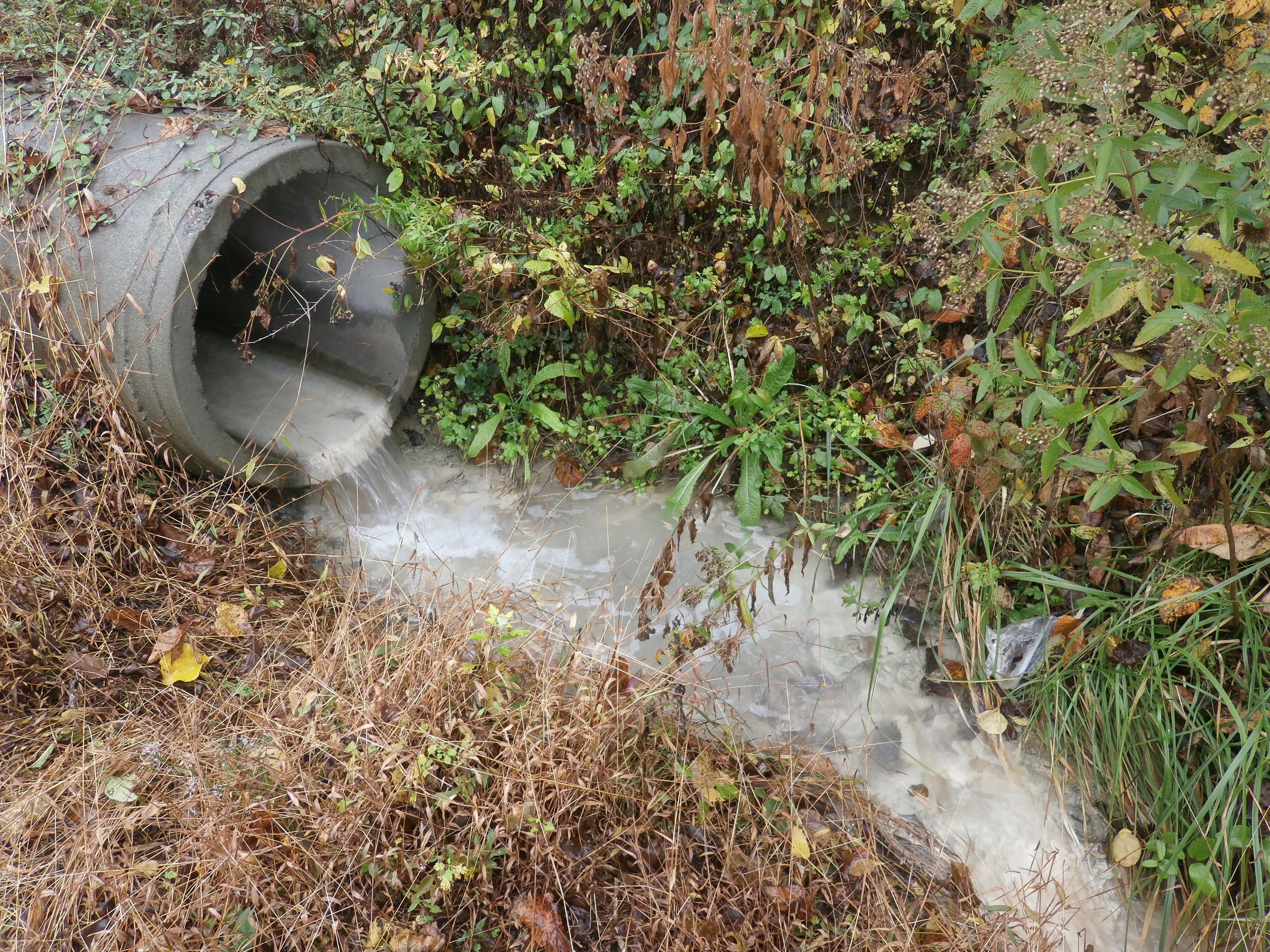
Cement is strongly alkaline, so water that touches fresh concrete, cement dust, or returned concrete picks up alkalinity fast. Wash water commonly runs well above pH 11, and stormwater that mixes with it, or that crosses a dusty yard or a pile of crushed returned concrete, can leave the plant outside Pennsylvania's water quality criteria of pH 6.0 to 9.0. PAG-03 Appendix N sets a pH benchmark of 9.0, and pH is the number ready-mix plants tend to struggle with most. Sample pH also drifts while it sits, which our post on whether stormwater pH changes after 15 minutes explains.
Sediment From Aggregate and Yards
Sand, stone, and fines wash off stockpiles, unpaved travel areas, and truck track-out. Appendix N sets a benchmark of 100 milligrams per liter for total suspended solids (TSS), the measure of particles carried in the water. Sweeping, stabilized surfaces, berms that keep clean water away from piles, and settling basins do most of the work. We cover the design side in our post on settling basins at concrete plants, and our explainer on stormwater best management practices (BMPs) covers the rest.
Oil and Grease From Trucks and Equipment
Mixer trucks, loaders, and fueling areas leak and drip. Appendix N doesn't set an oil and grease benchmark, but PAG-03 prohibits discharges that leave a sheen on the receiving water, so a visible sheen at an outfall is a problem whether or not you've sampled. Drip pans, spill kits, covered or bermed fueling areas, and maintenance done indoors or under cover keep it in check. The permit also requires a Preparedness, Prevention, and Contingency (PPC) Plan, the written plan that identifies pollutant sources, the controls in place, and how you'll respond to spills, and an existing Spill Prevention, Control, and Countermeasure (SPCC) plan can cover part of it if it meets the PPC minimum requirements.

How Should a Ready-Mix Plant Handle Concrete Washout and Truck Washing Water?
Stormwater is rain and snowmelt runoff. Process water is water your operation uses or generates, such as drum rinse water, chute washout, and water from cleaning equipment. The two are regulated differently. PAG-03 covers stormwater plus a short list of low-risk flows like fire-fighting water and potable water line flushing, and it doesn't authorize process water. Appendix N goes a step further and names truck barrel cleaning water and solids as a discharge that requires an individual NPDES permit. Our post on stormwater versus process water covers the distinction for any industrial site.
The practical result is that most Pennsylvania ready-mix plants run washout as a closed system. Appendix N calls for an adequately sized, impermeable retention structure that collects truck barrel cleaning water and solids, with the water reused where feasible, plus runoff controls around any truck wash-off area so the wastewater is contained, reused, recycled on site, or disposed of properly. Many plants send collected wash water back into the batching process. Sending process water to a sewer authority is another route, but it brings its own approval and rules.
Three details cause most of the trouble. A washout basin has to handle normal wash water plus rain, and DEP has flagged basins that couldn't absorb a large design storm. Clean yard runoff has to stay out of the washout system, or it fills the basin faster than the plant can reuse the water. And floor drains can't tie into storm sewers under PAG-03. Solids you clean out of pits and basins fall under Pennsylvania's solid waste rules, so settle handling and disposal before you haul, and our post on what to do with concrete waste covers the options.
Which Areas of a Ready-Mix Concrete Plant Need Stormwater Attention Under PAG-03?
The table below walks the plant from stockpiles to outfalls. These are the areas a PPC Plan should identify as pollutant sources, and they're the same areas your twice-yearly visual inspections need to cover.
| Plant Area |
Main Concern |
What to Watch |
| Sand and stone stockpiles |
Sediment |
Berms and run-on diversion, stabilized surfaces, sweeping of fines. Appendix N doesn't require aggregate to be covered unless DEP determines it's causing pollution |
| Cement and fly ash silos and transfer points |
Cement dust, high pH |
Enclosed storage, dust collection around handling and mixing, with dust control logs kept on site |
| Truck loading and travel lanes |
Sediment, dust, oil |
Routine sweeping, track-out controls, berms or piping that keep clean stormwater away from loading areas |
| Washout pit and truck wash-off area |
High pH, solids |
Impermeable structure sized for wash water plus rain, regular cleanout, clean stormwater kept out |
| Fueling and maintenance areas |
Oil, grease, fuel |
Cover and berms, drip pans, spill kits, maintenance indoors or under cover |
| Outfalls and stormwater basins |
Everything the yard sheds |
Accessible sampling points, maintained basins, a look for sheen or discoloration at every inspection |
What Does PAG-03 Appendix N Require From a Ready-Mix Concrete Plant?
Twice a year you sample stormwater at your representative outfalls, the points where runoff leaves the site, collecting grab samples, which are single samples taken at one moment, and you report results through DEP's electronic Discharge Monitoring Report (eDMR) system. Appendix N lists these parameters.
| Parameter |
Benchmark Value |
Frequency |
| pH |
9.0 standard units |
Once every six months, grab sample |
| Total suspended solids |
100 mg/L |
Once every six months, grab sample |
| Total nitrogen, total phosphorus, total aluminum, total iron |
None, monitor and report only |
Once every six months |
Samples must come from a storm larger than 0.1 inch of rain that follows at least 72 hours after the last measurable storm, with limited exceptions. Grab samples are collected within the first 30 minutes of discharge, analyzed by an accredited lab, and taken where stormwater hasn't mixed with non-stormwater flows like washout water. Reports are due within 28 days after each six-month period closes. Our guides to taking stormwater samples under PAG-03 and Pennsylvania eDMR reporting walk through the mechanics.
The permit also calls for an annually reviewed PPC Plan, twice-yearly visual inspections, annual employee training, and an Annual Report due each March 23. Our comparison of SWPPPs and PPC Plans explains how Pennsylvania's plan differs from the stormwater plans used in other states.
What Happens When a Ready-Mix Plant Exceeds the pH or Solids Benchmark?
Benchmarks aren't effluent limits, and one high result isn't a permit violation. The trigger is repetition. If the same outfall exceeds a benchmark for two or more consecutive monitoring periods, you have to develop a Corrective Action Plan (CAP) and submit it to DEP within 90 days after the end of the period that triggered it. After four or more consecutive exceedances, the CAP has to include DEP's Stormwater BMPs Checklist, and DEP may require an individual permit application if the problem continues. Our explainer on benchmark values versus effluent limits and our post on what to do when sampling results are high help when numbers start creeping up.
What Happens When You Build a New Ready-Mix Plant or Expand an Existing One in Pennsylvania?
Construction comes first, and it's a separate program. Moving soil to build or expand a plant brings Pennsylvania's construction stormwater requirements into play, including erosion and sediment control plans under Chapter 102 of DEP's rules and, above certain thresholds, the PAG-02 general permit, which is usually handled through the county conservation district. Township land development approvals can add stormwater requirements too. RMA doesn't prepare construction-phase permits or approvals, and your engineer, contractor, or an erosion and sediment control specialist typically handles them. We can help you work out which construction-phase requirements apply and point you toward the right professionals.
Once the plant is built, the operational permit takes over, and that's where we help. A new discharge needs a complete NOI submitted at least 60 days before it starts, and you can't begin discharging until DEP authorizes coverage. An expansion that adds impervious surface or exposes new materials to rain requires notice to DEP at least 30 days before the work, and sometimes an amended NOI.
What Does Ready-Mix Plant Stormwater Permitting Cost in Pennsylvania?
DEP charges a $500 application fee for PAG-03 coverage and a $500 installment each year after that, due by March 23. Consultant cost is the larger piece, and it depends on how many outfalls your plant has, how complicated drainage and washout are, whether you already have a PPC Plan and site map, and whether you end up needing an individual permit. For a relatively straightforward facility, professional help with the full PAG-03 application typically runs about $5,000 to $10,000, and ongoing compliance support often runs $3,000 to $6,000 per year. Individual permits take more work and cost more. Our breakdown of PAG-03 permit costs in Pennsylvania goes into detail, and the pricing calculator below gives an estimate for your plant with no email and no sales call.
You can also do this yourself, and our post on doing PAG-03 yourself versus hiring a consultant covers where people get stuck. The calculator estimates what RMA's help would cost, not the permit itself.
How Can RMA Help With Ready-Mix Plant Stormwater Permits in Pennsylvania?
We work with Pennsylvania facilities all the time, and ready-mix plants are familiar ground. We can work out which permit path your plant fits, walk the yard to map outfalls and drainage areas, build the PPC Plan and site maps, line up your first sampling, prepare the NOI, and stay with you through DEP's review. After coverage, we can help with sampling, eDMR reports, Annual Reports, plan updates, and employee training, including courses from our online environmental training library. Our concrete industry page shows the rest of what we do for producers, and if an inspection is coming, our post on what happens during a PA DEP stormwater inspection helps you prepare.
If your plant already has PAG-03 coverage, a current PPC Plan, and sampling that comes in under the benchmarks, you may not need us at all, and we'll tell you so. There's no pressure and no obligation. You can call us, email us, or fill out the form on our website, and we'll look at your situation and tell you what applies. When you're ready, reach out to RMA.