Recycling Center Stormwater Permits in Pennsylvania: When PAG-03 Applies, What Rain on Bales Does to Runoff, and How to Control It
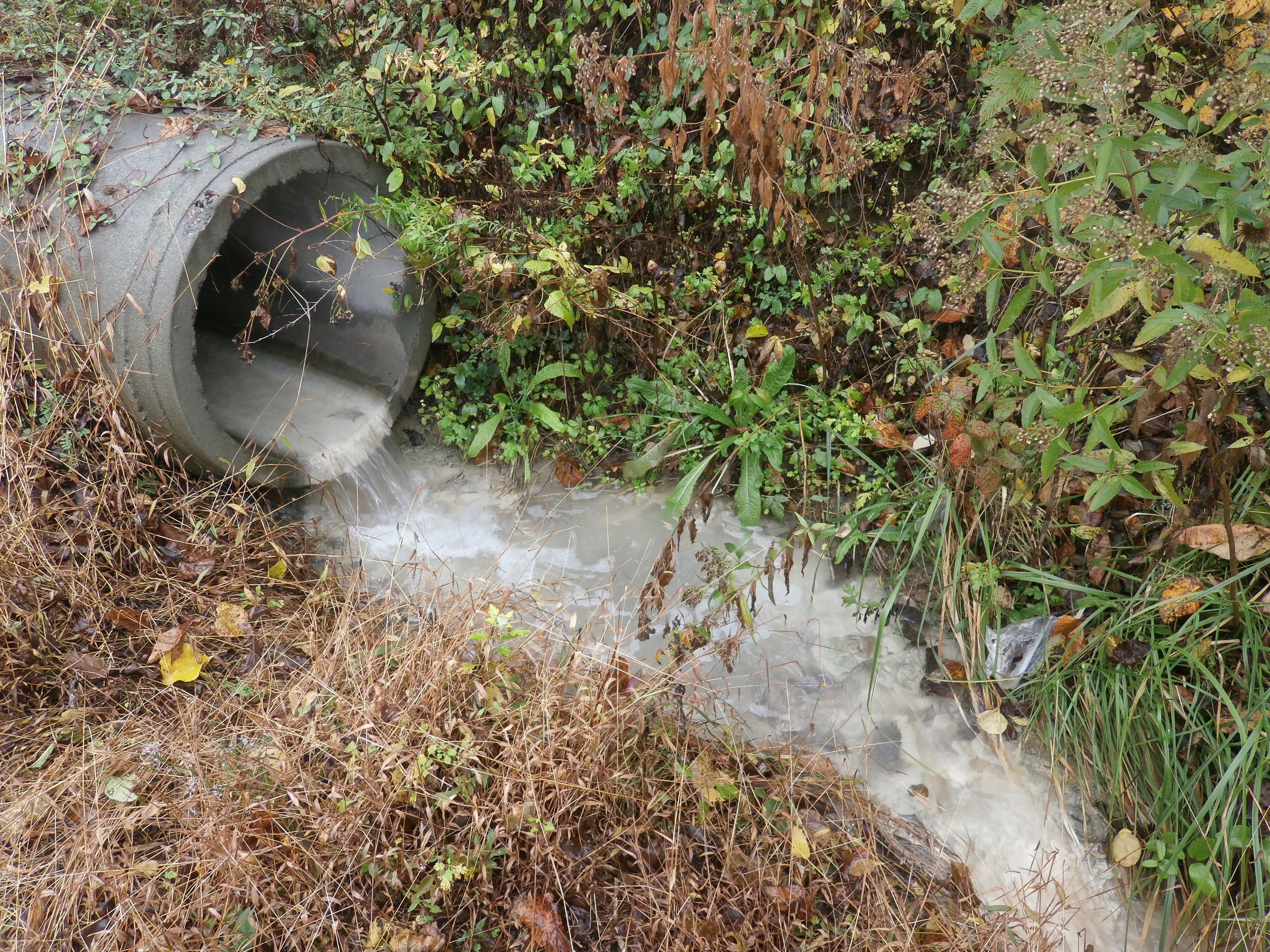
If you run a scrap yard, a material recovery facility, a baling operation, or any site that takes in paper, cardboard, plastics, glass, or metals and keeps some of it outside, you've probably wondered whether Pennsylvania expects a stormwater permit. The short answer is that it often does. Rain that lands on bales, stockpiles, and equipment picks up dirt, oil, and metals on its way to a storm drain or a stream, and DEP treats that runoff as industrial stormwater. Whether your site needs a permit depends on your industry code, how much of your work happens outdoors, and where the water ends up.
This article covers the industry code and permit section that usually apply to recycling centers, how rain on bales turns into polluted runoff, which controls help, what coverage involves once you have it, and how municipal drop-off sites under Act 101 are different. We work with Pennsylvania recycling and scrap facilities all the time, so if you'd rather have someone look at your site and tell you where you stand, you can reach out to RMA at any point.
Table of Contents
TL;DR
Most Pennsylvania recycling centers that store or process scrap and waste materials outdoors need coverage under DEP's PAG-03 general permit, usually under the appendix written for scrap and waste recycling facilities. Rain on outdoor bales, stockpiles, and equipment carries dirt, oil, and metals into storm drains and streams, and that runoff is what the permit controls. A facility that keeps all of its materials and activities indoors or under roof may qualify for a No Exposure Certification instead, and a site whose runoff goes to a sewer authority may be handled under local rules. Municipal drop-off sites under Act 101 are a separate question that depends on what actually happens on the site.
What Counts as a Recycling Center Under Pennsylvania's Industrial Stormwater Rules?
Federal stormwater rules name recycling facilities as an industrial category, including metal scrapyards, battery reclaimers, salvage yards, and automobile junkyards (40 CFR 122.26(b)(14)(vi)). Pennsylvania follows that list. A few terms are worth defining up front. Stormwater is just rain and snowmelt that runs off a site. NPDES is the federal permit system for discharges to surface waters, and in Pennsylvania DEP runs it. PAG-03 is DEP's general permit for industrial stormwater, which works like a pre-written permit that a facility signs up for by filing a Notice of Intent, usually shortened to NOI. Our guide to stormwater associated with industrial activity covers the underlying definition in more detail.
In practice, a site that takes in scrap metal, paper, cardboard, plastics, or glass, processes it by shredding, baling, sorting, or sizing, and sells it on is in this category. A material recovery facility, which is a plant that sorts mixed recyclables into marketable grades, usually lands here too. The classification rests on the industry code DEP assigns, though, and DEP's NOI instructions say it can require a facility to follow an appendix when its activities are similar even if the code doesn't line up exactly. If your site sits in a gray area, it's worth confirming with DEP or with us before assuming you're outside the rules. A quick check now costs far less than learning about the gap during an inspection.
Being a recycler isn't what triggers permit coverage. Exposure does. If industrial materials and activities sit outside where rain can reach them, and the runoff leaves your site toward a stream, a ditch, or a storm sewer that drains to one, you're in permit territory. Our overview of which Pennsylvania stormwater permit path fits a facility walks through the general permit, individual permit, and no exposure options side by side.
Which SIC Code and PAG-03 Appendix Apply to Recycling Centers?
A Standard Industrial Classification code, or SIC code, is a four-digit number describing what a business does. PAG-03 uses those codes to decide which sector-specific appendix applies to a facility. Wholesale scrap and waste materials fall under SIC code 5093, and PAG-03 sends them to Appendix P, titled Scrap and Waste Recycling Facilities. Appendix P lists two entries under 5093: scrap recycling and waste recycling facilities except source-separated recycling, and source-separated recycling facilities. Source-separated generally means the materials were sorted by whoever generated them before they reached you, such as clean cardboard from a retailer, as opposed to mixed loads you sort yourself. The two entries come with different requirements, so read the language in your appendix closely.
Auto salvage is a close cousin. Yards that mostly sell used parts are usually SIC code 5015 and fall under a separate appendix, Appendix O, while yards that mostly break vehicles down for scrap metal tend to be 5093. A facility with more than one activity can end up under more than one appendix, because the NOI asks for the appendices that apply to secondary SIC codes as well as the primary one.
Each appendix sets the best management practices and the monitoring pollutants for that industry. DEP's reissued PAG-03 took effect on March 24, 2023, and it added total nitrogen and total phosphorus monitoring to every appendix, including this one. The appendix is the document that tells you exactly which pollutants to sample for, so keep it next to your plan.
If you're not sure which code is yours, start with paperwork you already have, such as a prior permit, state business records, or an insurance application, and compare it against the appendix list. The NOI asks for the primary SIC code and any secondary ones, so getting them right at the start saves a round of corrections with DEP later. When a facility does several kinds of work, such as buying scrap, shredding it, and also dismantling vehicles, the primary code should reflect where most of the revenue comes from, and the other activities still need to be accounted for in the plan.
How Does Rain on Bales and Stockpiles Become Polluted Stormwater?
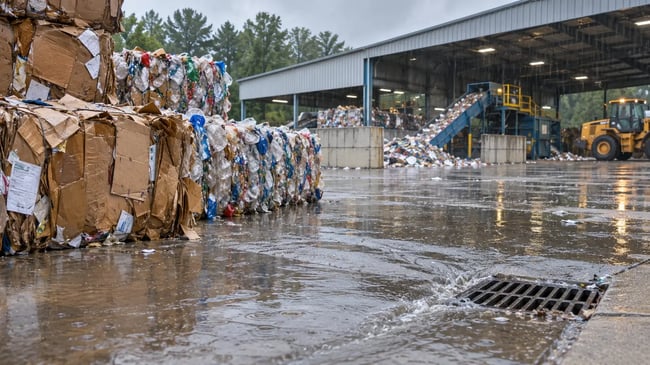
Bales and piles look inert, but they aren't. Cardboard and paper arrive with food residue, ink, and grit from the trucks and floors they've been on, and rain soaks through and washes out fibers and fine particles. Plastics carry leftover product in the containers, plus fines and litter that blow and wash off. Metals shed rust, zinc, copper, aluminum, and sometimes lead, especially when wiring, batteries, appliances, or painted and galvanized pieces are in the mix. Equipment adds hydraulic oil, fuel, and grease drips, and loaders and trucks track dirt and debris onto paved areas that then rinse into drains.
The dirtiest spots at many sites are the ones people don't think of as storage: the outdoor tipping area where loads get dumped, the sorting zone, the residue pile of non-recyclable leftovers waiting for disposal, and the staging area for batteries and fluid-bearing items. Rain moves across pavement or gravel, picks up whatever it touches, and heads to the nearest inlet, swale, or stream. The measures DEP and EPA focus on are total suspended solids, which is a lab measure of the particles in a water sample, along with metals and oil and grease.
Weather and site layout decide how much of that reaches the water. A hard summer downpour pushes loose fines and surface grime off a yard quickly, and a long steady rain keeps soaking bales and leaching out whatever they hold. Snowmelt adds its own problem, because material that sat under snow for weeks releases its contaminants in one stretch, which is one reason winter results can run high (our post on snowmelt and stormwater samples goes deeper). A yard that slopes toward a drain, has no curbing, and keeps its piles in the flow path will send more pollutants downstream than one with the same material laid out on level pads with berms. The table below shows where the common sources come from and what typically controls them.
| Source on Site |
What Rain Can Carry Off |
Common Control |
| Outdoor paper and cardboard bales |
Fibers, ink, grit, food residue |
Roofed storage or secured covers |
| Plastic bales and loose plastics |
Container residue, fines, litter |
Covered storage, regular litter pickup |
| Scrap metal piles |
Rust, zinc, copper, aluminum, lead, oil |
Paved pads with berms, inlet protection |
| Tipping and sorting areas |
Dirt, debris, mixed residue |
Roofed floor or scheduled sweeping |
| Batteries, fluids, oil-filled equipment |
Acid, oil, lead, other contaminants |
Indoor or covered storage, drip pans, spill kits |
| Residue piles and roll-offs |
Mixed solids and leachate |
Covered containers, prompt hauling |
What Stormwater Controls Work for Recycling Centers?
The physical fixes are called best management practices, or BMPs, and our explainer on stormwater BMPs covers the general toolbox. For a recycling center, the most direct fix is keeping rain off the material. Roofed bale storage removes the contact entirely, and tarps or covers do the same job when they're secured well enough to stay on in a storm. Where bales or piles stay uncovered, put them on paved or otherwise controlled surfaces with curbing or berms, and grade the ground so runoff doesn't flow straight across the material toward a drain.
Housekeeping does as much work as hardware. Sweeping paved areas on a schedule keeps fines and debris from reaching inlets, and keeping residue in covered containers and hauling it promptly stops the messiest pile on site from sitting in the rain. Batteries, fluids, and oil-filled equipment belong indoors or under cover, with drip pans and spill kits close by. Drain fluids from vehicles and appliances over containment, and protect storm drain inlets with filters or barriers that get checked and cleaned. A truck-tracking routine at the gate prevents a surprising amount of dirt from ending up on the road and in the drain.
Under PAG-03, these controls get written into a plan. Pennsylvania calls it a PPC Plan, and our comparison of SWPPPs and PPC Plans for PAG-03 explains what goes in one. DEP's reissued permit also lets a facility propose an alternative to a sector-specific BMP with DEP's prior authorization, which can help when a standard control doesn't fit your layout.
What Does PAG-03 Coverage Involve for a Recycling Center?
A facility without coverage files an NOI with DEP. One legal summary of the reissued permit says to submit it at least 60 days before the planned start of any stormwater discharge, and our guide on how long PAG-03 coverage takes covers realistic timelines. Once DEP approves coverage, the work shifts to running the program. That means following your plan and BMPs, doing routine inspections, collecting runoff samples for the pollutants listed in your appendix, and reporting results to DEP through eDMR, the electronic Discharge Monitoring Report system. Our eDMR reporting guide and our post on how to take PAG-03 stormwater samples walk through both. Sample results are measured against benchmark values, and we explain how those differ from hard limits in our article on benchmark values versus effluent limits.
Not every recycling center fits the general permit. A facility that already has, or is required to have, an individual NPDES permit for non-stormwater discharges can't use PAG-03 for its stormwater. A site in a High Quality or Exceptional Value watershed generally can't use the general permit either and applies for an individual NPDES permit instead, using DEP's individual permit application for industrial stormwater (3800-PM-BCW0403). Individual permits generally last five years, with renewal applications due at least 180 days before expiration if the discharge will continue.
The alternative to coverage is a No Exposure Certification. DEP generally requires all industrial materials and activities to be stored and conducted indoors or under roof, the option isn't available in High Quality or Exceptional Value watersheds, and the certification has to be renewed every five years. An outdoor bale yard or open scrap pile won't qualify, but a recycling operation that moves everything under roof can. If you're building a new or expanded facility, the construction phase is its own set of approvals, including construction stormwater coverage and erosion and sediment control plans reviewed through your county conservation district. We don't prepare those, and your engineer or contractor will usually handle them. Once the facility is running, the operational permit and plan we've described here are where we can help, and we're glad to point you to the right construction professionals while you sort that part out.
Local rules can add to this. Some sites send runoff to a combined or sanitary sewer that goes to a treatment plant, and in those cases the sewer authority may govern the discharge instead of a DEP stormwater permit. Municipalities can also have their own stormwater ordinances and fees, so confirm your situation locally before you assume anything. DEP inspectors also look at all of this on site, and our post on what happens during a DEP stormwater inspection sets out what to expect.
Do Municipal Recycling Drop-Off Sites and Act 101 Programs Need a Stormwater Permit?
Act 101, Pennsylvania's Municipal Waste Planning, Recycling and Waste Reduction Act, took effect in 1988 and requires larger municipalities to run recycling programs. DEP counts roughly 1,050 curbside programs and 870 drop-off programs across the state. Act 101 sets the recycling mandates and gives the local context for why so many of these sites exist, but it doesn't answer the stormwater question. That comes from the Clean Streams Law and the NPDES program.
A municipal drop-off site is a different animal from a processing yard. Residents or businesses bring cans, paper, cardboard, and glass and put them into bins or roll-off containers that a hauler takes away. If that's all that happens, with materials in closed or covered containers and no sorting, baling, or loose stockpiling outside, the site often isn't treated like an Appendix P facility. It changes if the site starts processing material, stacking loose piles or bales in the open, or acting as a transfer point where mixed loads sit exposed to rain. At that point the runoff can look like industrial stormwater, and DEP may see it that way.
Because the answer depends on what physically happens on the site, a township, authority, or private operator running a drop-off center should confirm with its DEP regional office, and check for any local stormwater program that applies. A short conversation about your layout and container setup usually settles it quickly.
How Does RMA Help Pennsylvania Recycling Facilities With Stormwater Permits?
We work with Pennsylvania facilities all the time, and recycling and scrap operations are a regular part of that. We can work out which PAG-03 appendix fits your site, prepare the NOI, write the PPC Plan, set up inspections and sampling, handle eDMR reporting, and prepare you for a DEP visit. If it turns out a roof over your bale storage or a cleaner site layout puts you in a better position, we'll tell you that, and if you already have a plan that works, we won't try to rewrite it.
There's no pressure and no obligation. You can call us, email us, or fill out the form on our website, and we'll look at your situation and give you a straight answer on what you need. To get started, contact RMA whenever it suits you.