A Five-Minute Self-Check Across Air, Waste, Tanks, Wastewater, Construction, and Stormwater
Most Pennsylvania business owners don't think about the Department of Environmental Protection (DEP) until a letter shows up, an inspector pulls into the lot, or a customer asks for proof of permit coverage. "Does my business need a DEP permit?" doesn't have one answer, because DEP runs several separate programs and each one looks at a different part of your operation. Plenty of businesses, including offices, most retail, and shops where everything happens indoors, don't need anything from DEP. Others need a permit, a registration, or a written plan they've never heard of. Six quick questions will show you which programs deserve a closer look, and the one that catches the most businesses off guard is industrial stormwater.
Below, we walk through a yes-or-no checklist covering air, waste, storage tanks, wastewater, construction, and stormwater, then explain what a yes in each area usually leads to. A yes doesn't automatically mean you need a permit. It means that program is worth checking. Five minutes won't give you a final answer, but it will show you where to look and what to ask. If you'd like a second set of eyes on your results, you can reach out to RMA and we'll tell you straight, including when you don't need us.
Table of Contents
TL;DR
Many Pennsylvania businesses, especially offices, retail stores, and shops that keep everything indoors, don't need any DEP permit. Six questions point to where you might: air emissions, hazardous or industrial waste, fuel and oil tanks, process water going to a sewer or stream, land disturbance for construction, and industrial work where rain can hit materials, equipment, or vehicles. A yes to any of them means that program is worth checking, not that a permit is automatically required. The stormwater question is the one businesses miss most often, and it can lead to a general stormwater permit, an individual permit, or a certification that nothing is exposed to rain.
What Does Pennsylvania DEP Regulate at a Typical Business?
DEP is the state agency that enforces most environmental rules in Pennsylvania, working through a central office in Harrisburg and six regional offices that handle most permits and inspections. Its authority comes from laws like the Clean Streams Law and the Storage Tank and Spill Prevention Act, and it adds up to a handful of separate programs, each with its own forms and thresholds. Being fine in one tells you nothing about the others. Some programs issue permits, while others require a registration, an on-site plan, or an annual report.
A few things owners lump in with DEP are run by someone else. SPCC oil spill plans are a federal EPA rule. Tier II chemical inventory reports go to the Pennsylvania Department of Labor & Industry through its PATTS system, due March 1 each year. Wastewater going into a public sewer is usually controlled by the local sewer authority, and townships and cities can add their own rules. Getting any of it wrong can be expensive. Under the January 2025 inflation adjustment in 40 CFR Part 19, federal Clean Water Act civil penalties can reach $68,445 per day per violation, and DEP can bring its own enforcement under state law.
The Five-Minute Pennsylvania DEP Permit Self-Check
Grab a site map or aerial photo and answer each question with yes, no, or not sure. Answer for what physically happens at your site, not for how your business is registered.
| Question |
If yes, look into |
Who handles it |
| 1. Smokestacks, spray booths, boilers, generators, or dust and fumes? |
Air plan approval, operating permit, or exemption |
DEP Air Quality (local agencies in Philadelphia and Allegheny County) |
| 2. Hazardous or industrial waste like spent solvents, sludges, or used oil? |
Generator status, EPA ID number, residual waste reporting |
DEP Waste Management |
| 3. Fuel, oil, or chemicals stored in tanks? |
DEP tank registration and possibly a federal SPCC Plan |
DEP Storage Tanks and EPA |
| 4. Process water sent to a sewer or stream? |
Pretreatment approval or an individual NPDES permit |
Sewer authority or DEP Clean Water |
| 5. Building, expanding, or grading land? |
Erosion control plan, construction stormwater coverage, Chapter 105 |
Conservation district, DEP, township |
| 6. Industrial work, by SIC code, where rain can hit materials, equipment, or vehicles? |
PAG-03, No Exposure Certification, or individual NPDES permit |
DEP Clean Water |
Any yes means that program deserves a closer look, not that a permit is required. Many air sources are exempt, small waste generators often have light obligations, and plenty of tanks fall below the state threshold. If every answer is a clear no, DEP probably isn't expecting a permit from you, though local rules can still apply. Question six is where we see the most surprised owners, so it gets the most space below. RMA's online environmental assessment is another quick way to screen your facility.
Do Spray Booths, Boilers, or Dust Mean You Need a Pennsylvania Air Permit?
Under 25 Pa. Code Chapter 127, installing or modifying equipment that releases air contaminants generally requires a plan approval from DEP before construction, followed by an operating permit. At small and mid-sized businesses, the usual suspects are spray booths, boilers and process heaters, emergency generators, solvent parts washers, and dust from crushing, grinding, sanding, or woodworking.
A lot of small equipment is exempt. The regulation exempts combustion units rated at 2.5 million Btu per hour or less from plan approval, and DEP publishes a list of other exempt source categories. Equipment not clearly on the list can get a case-by-case answer through a Request for Determination (RFD). Exempt doesn't mean unregulated, since emission and recordkeeping rules can still apply. Philadelphia and Allegheny County run their own air programs, so businesses there deal with the local agency. If you aren't sure, list each piece of equipment with its rating and fuel use, since that's what DEP will ask for first.
Does Your Business Generate Hazardous or Residual Waste in Pennsylvania?
Hazardous waste rules scale with monthly generation. A business generating 100 kilograms (about 220 pounds) or less a month is a very small quantity generator with fairly light obligations. Above that you're a small quantity generator, and at 1,000 kilograms (about 2,200 pounds) or more you're a large quantity generator. Each step adds requirements, such as an EPA ID number, limits on how long waste sits on site, manifests, training, and for large generators, a biennial report.
Pennsylvania also regulates residual waste, its term for non-hazardous waste from industrial and commercial operations like scrap, sludges, spent media, and off-spec product. Under 25 Pa. Code 287.51, a generator averaging more than 2,200 pounds per location per month must file a biennial residual waste report and keep a source reduction strategy. For most businesses, generating waste means paperwork and handling rules rather than a permit. Permits come in when you treat, store, or dispose of waste on site or accept it from others. Landfills, transfer stations, and compost sites fall under DEP's waste program, which can overlap with the water program, so confirm those details with DEP.
Do Fuel or Oil Tanks Mean DEP Tank Registration or a Federal SPCC Plan?
Pennsylvania's Storage Tank and Spill Prevention Act covers stationary aboveground tanks over 250 gallons and underground tanks over 110 gallons holding regulated substances, including petroleum products. Regulated tanks must be registered with DEP, with an annual fee of $50 per tank for aboveground tanks of 5,000 gallons or less. The law has a long list of exemptions, including some heating oil tanks, so check yours before assuming it's covered.
SPCC is a separate federal EPA rule. A facility generally needs a Spill Prevention, Control, and Countermeasure Plan if it stores more than 1,320 gallons of oil aboveground, counting only containers of 55 gallons or more, or more than 42,000 gallons in completely buried tanks, and a spill could reasonably reach navigable waters. Diesel, gasoline, hydraulic oil, and used oil all count, and so does oil-filled equipment. A yard with a 2,000-gallon diesel tank can need DEP registration, an SPCC Plan, and stormwater controls around the fueling area all at once. Our comparison of an SPCC plan and a SWPPP shows how they relate, and our page on how RMA prepares SPCC plans covers the process.
Does Sending Process Water to a Sewer or Stream Need a Pennsylvania Permit?
Process water is any water that touches your manufacturing or cleaning operations, like wash, rinse, cooling, or scrubber water. Discharging it to a stream requires an individual NPDES permit under 25 Pa. Code Chapter 92a, with limits written for your discharge, and a treatment system may need its own approval [VERIFY: whether a Part II Water Quality Management permit applies to on-site industrial treatment systems]. If it goes to a public sewer, approval comes from the sewer authority, not DEP. Larger authorities run pretreatment programs and issue industrial user permits, while smaller ones may only require notice, so call yours before sending anything new. Our piece on the difference between stormwater and process water explains where the line falls.
Some older cities, including Philadelphia and Pittsburgh, have combined sewers that carry stormwater and sewage together to a treatment plant. Where a site's runoff goes into one, the sewer authority may govern it instead of a DEP stormwater permit. That depends on where your water goes, so confirm it with the authority, such as the Philadelphia Water Department, PWSA, or ALCOSAN [VERIFY: current PWD, PWSA, and ALCOSAN industrial discharge and stormwater requirements].
Does Building or Expanding Trigger Chapter 102 or PAG-02 Coverage in Pennsylvania?
Under 25 Pa. Code Chapter 102, all earth disturbance needs erosion and sediment controls, and a written Erosion and Sediment Control Plan is required once disturbance reaches 5,000 square feet. At one acre or more, including phases of a larger plan of development, the project needs NPDES construction stormwater coverage, most often through the PAG-02 general permit. County conservation districts review most of these. Work in or along streams or wetlands can also need a Chapter 105 permit, and townships usually require their own land development approvals.
RMA doesn't prepare construction-phase permits or approvals. That work belongs to your civil engineer, contractor, or an erosion and sediment control specialist, though we can help you figure out what the construction phase needs and point you to the right people. Once a new or expanded facility is running, it almost always has operational requirements, such as PAG-03 coverage or a No Exposure Certification, a PPC Plan, inspections and sampling, and often SPCC or Tier II. We help with those ongoing permits and plans.
Why Is Industrial Stormwater the Pennsylvania DEP Permit Businesses Miss Most?
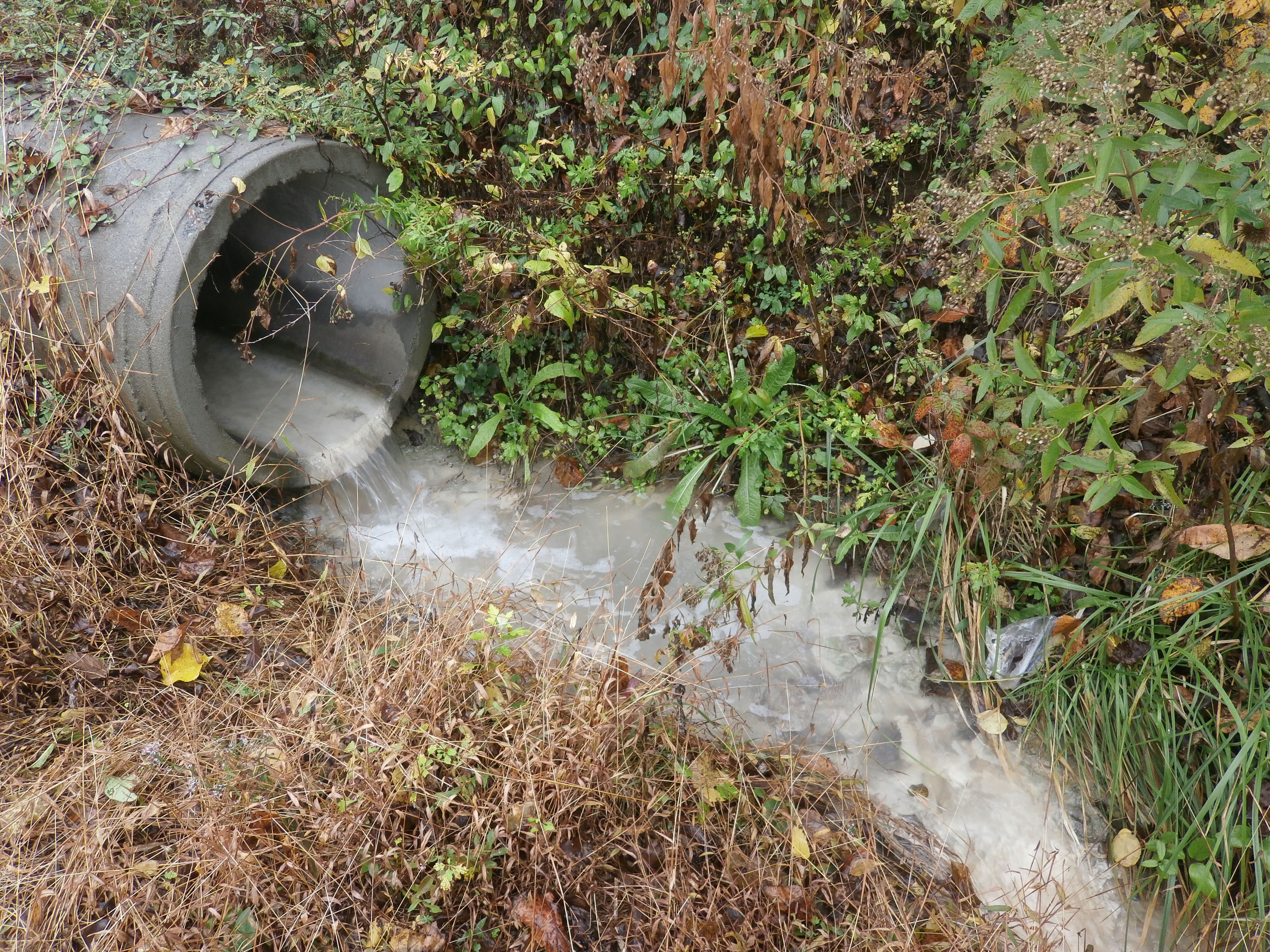
Industrial stormwater falls under NPDES, the National Pollutant Discharge Elimination System, the Clean Water Act permit program DEP runs in Pennsylvania. It applies when rain or snowmelt runs across areas where industrial activity happens and then leaves the property. Owners miss it because nothing about it feels like a discharge. There's no pipe, just rain falling on a yard. Three screens decide it: your SIC code, what's exposed, and where the water goes. Our guide on who needs an NPDES stormwater permit has more examples.
How Your SIC Code Screens You In or Out of PA Stormwater Permits
A Standard Industrial Classification (SIC) code is a four-digit number describing what your business does, and stormwater permits still sort industries by it. Covered sectors include scrap and recycling, metals, chemicals, concrete products, and fleets that maintain vehicles on site, while lighter manufacturing counts only when something is exposed. Your code is a screen, not a verdict. Scrap dealers often carry a wholesale code (SIC 5093), yet scrap yards are squarely covered. Trucking, bus, rail, and airport operations are covered only for their maintenance, equipment cleaning, fueling, or deicing areas. Steel service centers are often classified as wholesale and not covered. Warehouses, body shops, dealerships, quick-lubes, and most contractors usually don't need coverage.
What Counts as Exposure and a Discharge in Pennsylvania
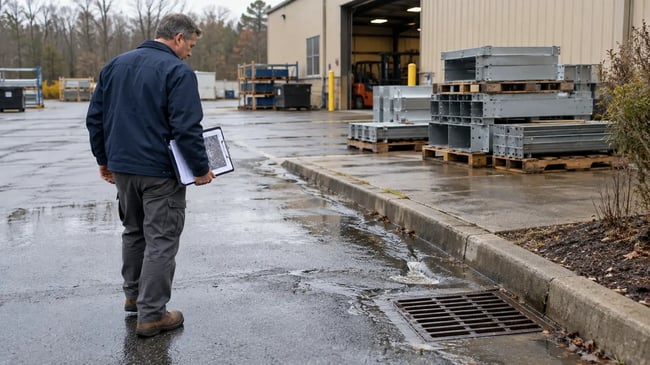
Exposure includes outdoor piles of material, product, or scrap, loading docks, vehicle fueling and repair, outdoor machinery, uncovered dumpsters, and the winter salt pile. Walk your site and picture rain falling on anything industrial sitting outside. If you can point to it, an inspector can too. Our article on stormwater associated with industrial activity breaks down the term. The water also has to reach waters of the Commonwealth, which includes streams, ponds, wetlands, and the storm sewers that feed them. Runoff into a lot drain that empties into a creek counts the same as a direct pipe. If your site soaks in all its runoff, confirm that before treating it as an exemption. Our article on sampling stormwater when water doesn't leave your site covers that situation.
PAG-03, No Exposure Certification, or Individual Permit: Which Pennsylvania Stormwater Path Fits?
PAG-03 is Pennsylvania's general NPDES permit for industrial stormwater, and most eligible facilities use it. Getting covered means mapping drainage and outfalls, preparing a PPC Plan (a Preparedness, Prevention and Contingency Plan, Pennsylvania's written plan for preventing and responding to pollution), and submitting a Notice of Intent to DEP. Then come inspections, sampling, eDMR reporting, training, and records. Our guides to the PAG-03 permit and stormwater sampling, PPC Plans versus SWPPPs, and eDMR reporting cover each piece.
A facility that discharges to High Quality or Exceptional Value waters (DEP's designations for its cleanest streams under Chapter 93) can't use PAG-03 and needs an individual permit, generally issued for five years. If every industrial material and activity is sheltered from rain and snow, you can ask DEP for a No Exposure Certification instead. DEP has to approve it, it must be renewed every five years, and it isn't available for High Quality or Exceptional Value discharges. Indoor-only facilities in covered categories usually still file one rather than doing nothing. Our articles on what no exposure means and which NPDES permit you need go deeper.
What Do Pennsylvania DEP Permits and Stormwater Coverage Cost?
Agency fees are usually the small part. Most of the cost comes from preparing what each program requires and keeping up with it. Here's how common items compare.
| Requirement |
Agency fee |
Typical cost of RMA's help |
| PAG-03 coverage |
$500 to apply, then $500 a year |
About $5,000 to $10,000 to apply, plus $3,000 to $6,000 a year ongoing |
| Individual NPDES stormwater permit |
[VERIFY: current DEP individual industrial stormwater permit fee] |
Typically considerably more than PAG-03 |
| No Exposure Certification |
[VERIFY: current DEP No Exposure Certification fee] |
[RMA TO FILL: typical range for a No Exposure review and filing] |
| SPCC Plan |
None, the plan stays on site |
$2,500 to $15,000 |
| Tier II report |
$10 per chemical for non-exempt facilities, plus county fees in some counties |
$1,500 to $7,500 |
Some owners handle stormwater coverage themselves. Our guide on getting a PAG-03 permit yourself lays out what that takes, and our articles on PAG-03 permit costs, how long PAG-03 coverage takes, and what happens during a PA DEP stormwater inspection fill in the rest. For a number specific to your facility, the pricing calculator below gives an instant estimate for RMA's help with stormwater permitting, with no email required and no sales call afterward.
How Does RMA Help Pennsylvania Businesses Sort Out DEP Permits?
If your self-check came back with a few yeses and maybes, that's normal, and it's a good time to talk it through. We're based in New Jersey and work with facilities across Pennsylvania, and senior staff do the work. We can go over your answers, sort out which programs apply, and handle the stormwater side from the permit decision through the PPC Plan, sampling, and eDMR reporting. We also help with SPCC Plans and Tier II, and an environmental audit can find gaps across every program at once. If you've already received a notice of violation, an environmental attorney may be worth bringing in too. And if you don't need a permit, we'll say so. Our Pennsylvania NPDES and stormwater services page lays out the process.
There's no pressure and no obligation. You can call us, email us, or fill out the form on our website and tell us a little about your site, and we'll help you figure out the next step. Whenever you're ready, contact RMA and we'll talk it through.