How Pennsylvania's High Quality and Exceptional Value Streams Can Change Your Industrial Stormwater Permit Options
Pennsylvania's Department of Environmental Protection (DEP) sorts every stream in the state into classes, and two of those classes carry extra protection: High Quality (HQ) and Exceptional Value (EV). Most facility managers have never looked up what their creek is classified as, because the stormwater permit conversation usually starts with industrial activity and exposure, not with the water at the end of the pipe. The classification still counts, because it can decide which stormwater permit a facility is allowed to use in the first place.
Here's the short version. Many Pennsylvania industrial facilities get stormwater coverage through PAG-03, DEP's general permit for stormwater associated with industrial activity (a general permit is a standard permit that eligible facilities join by filing paperwork, instead of getting one written just for them). PAG-03 generally isn't available for stormwater that goes directly to an HQ or EV stream, and neither is the No Exposure Certification, which can push a facility toward an individual NPDES permit. NPDES stands for National Pollutant Discharge Elimination System, the federal discharge permit program DEP runs in Pennsylvania. Below we cover what the classifications mean, what antidegradation is, how to look up your stream, and where to go from there. If you'd like a second set of eyes on your site, you can reach out to RMA.
Table of Contents
TL;DR
Pennsylvania classifies streams under Chapter 93 of its water quality rules, and the two highest protection levels are High Quality (HQ) and Exceptional Value (EV). According to DEP's permit documents, stormwater discharged directly to an HQ or EV stream isn't eligible for PAG-03 coverage or a No Exposure Certification, so a facility may need an individual NPDES permit instead. You can look up a stream's classification in DEP's eMapPA mapping tool and confirm it against the Chapter 93 drainage lists or with DEP. Whether a classification changes your permit path depends on where your stormwater goes and when your discharge began, so confirm with DEP before you assume.
What Do HQ and EV Stream Classifications Mean in Pennsylvania?
Pennsylvania's water quality standards live in Chapter 93 of Title 25 of the Pennsylvania Code. Chapter 93 gives every water body a "designated use," which is the job the state says that water has to be able to do, like supporting cold water fish or warm water fish. Those uses are listed stream by stream in the drainage lists in sections 93.9a through 93.9z, and each listing is itself a regulation. That's why you'll see labels like HQ-CWF or WWF, MF next to a stream name.
The letters work like a code. CWF means cold water fishes, WWF means warm water fishes, TSF means trout stocking, and MF means migratory fishes. HQ and EV are the special protection classes layered on top of those uses, with EV as the top tier and HQ one step below it. A stream earns either label by meeting the criteria in 25 Pa. Code § 93.4b, which look at water chemistry, biology, and other qualifiers. A stream the state recognizes as a Class A wild trout stream, for example, qualifies as HQ.
| Designation |
What it means in plain terms |
Antidegradation protection |
| CWF, WWF, TSF (no HQ or EV) |
A standard aquatic life use for the stream |
Existing uses and the water quality needed to protect them must be maintained |
| HQ-CWF, HQ-WWF, HQ-TSF |
High Quality special protection water |
Water quality must be maintained and protected, with one exception for a demonstrated social or economic justification |
| EV |
Exceptional Value, the highest tier |
Water quality must be maintained and protected, with no social or economic justification exception |
Designations don't stay frozen. DEP evaluates streams through its own monitoring, and any person can petition the Environmental Quality Board (EQB), the state board that adopts Chapter 93 changes, to redesignate a stream. A stream listed as standard one year can show up as HQ or EV in a later rulemaking, so a lookup is only good as of the day you do it.
What Is Antidegradation, Explained in Plain Language?
Antidegradation is the idea that clean water shouldn't be allowed to get dirtier just because a new discharge would still squeak past a minimum standard. Normal permit limits ask whether the water stays clean enough for its use. Antidegradation asks whether the water stays as clean as it is today. Pennsylvania's version is in 25 Pa. Code §§ 93.4a through 93.4d, and it works in three layers.
At the base, every surface water has its existing uses and the water quality needed to protect them maintained. For HQ waters, the water quality has to be maintained and protected, except where a person seeking a permit or approval can demonstrate that lower water quality is necessary to accommodate important economic or social development in the area. That exception is called the social or economic justification, or SEJ. For EV waters, the water quality has to be maintained and protected with no SEJ exception. So an HQ stream is a "no change unless you can make a serious case" water, and an EV stream is a "no change" water.
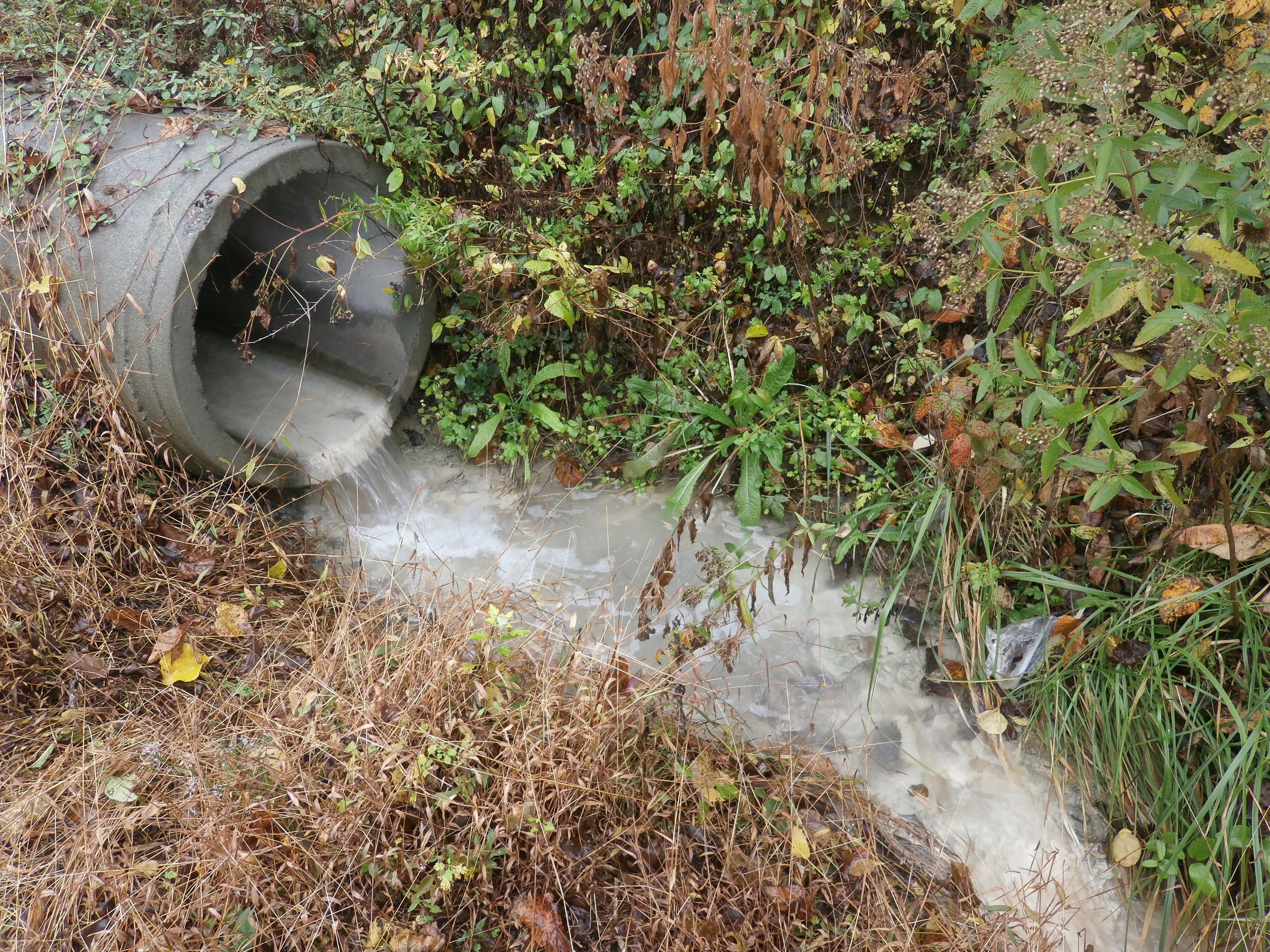
The implementation rules in § 93.4c are written for point source discharges to HQ or EV waters. A point source is any identifiable outlet like a pipe, ditch, or outfall, and the outfall that carries industrial stormwater off your site counts. That's the link between a stream classification in Chapter 93 and a stormwater permit that looks like a separate subject.
Why Can an HQ or EV Stream Affect PAG-03 Coverage?
PAG-03 includes a list of discharges it doesn't authorize, and stormwater discharges directly to surface waters classified as HQ or EV under Chapter 93 are on it. DEP's instructions for the Notice of Intent (NOI), the form a facility files to request PAG-03 coverage, go further and say that applicants discharging to HQ or EV waters aren't eligible for PAG-03 or for approval of a No Exposure Certification. That second point surprises people. A facility that keeps all its industrial materials and activities indoors might expect to file a No Exposure Certification and be done, but that shortcut isn't open to a facility discharging to an HQ or EV stream.
| Permit path |
What DEP's documents say about discharges to HQ or EV waters |
| PAG-03 general permit |
Stormwater discharges directly to HQ or EV waters are listed as not authorized, with a limited "grandfathered" exception that DEP decides on |
| No Exposure Certification |
DEP states that facilities discharging to HQ or EV waters aren't eligible for approval |
| Individual NPDES permit |
DEP's stated route for facilities that aren't eligible for PAG-03, written for the specific facility |
The edges of this rule need care. The permit text says "directly to" HQ or EV waters, and DEP's industrial stormwater page describes a common reason for PAG-03 ineligibility as location in an HQ or EV watershed, based on Chapter 93 designated uses or existing uses DEP determines. DEP's NOI instructions also treat a discharge that reaches an HQ or EV stream farther downstream differently than one that goes straight in. The line between those cases can get finicky, and DEP makes the call, not the applicant. The "grandfathered" exception covers certain discharges that existed when the HQ or EV designation was made, and whether yours qualifies is a question for DEP too. Our guide to Pennsylvania's PAG-03 permit covers how the permit works for facilities that do qualify.
HQ and EV status isn't the only water-related reason DEP can deny PAG-03 coverage. Discharges to impaired waters, meaning streams that aren't meeting their water quality standards, can also limit coverage, and we explain that issue in our article on TMDLs and impaired waters. If you already hold PAG-03 coverage and a stream you discharge to is redesignated, ask DEP how it affects you, since the permit has conditions for discharges that become ineligible.
How Do You Find a Pennsylvania Stream's HQ or EV Classification?
DEP's resources make this a lookup you can do in an afternoon. The steps below get you to a reliable answer, and the last one keeps you from relying on a map alone.
- Trace where your stormwater goes. Follow your site's drainage through ditches, storm sewers, and culverts to the first named stream it enters, and write down the name and the spot where it leaves your property. If you have a site map showing outfalls, start there.
- Look the stream up in eMapPA. DEP's eMapPA mapping tool has a layer for Chapter 93 designated use streams. Use the identify tool on the stream and read the use description in the results instead of judging by the line color, since DEP's own guidance for the layer says not to infer a use from color. Keep only one stream layer visible at a time so the layers don't confuse you.
- Handle unnamed tributaries. A small stream that isn't listed individually takes the designated use of the listed water body it flows into, so an unnamed ditch behind your plant usually leads you to the named stream downstream.
- Check for an existing use. A stream can be protected at a higher existing use than the designated use listed in Chapter 93. If DEP's evaluation shows a stream attains the HQ use, for example, it's protected as HQ before any rulemaking catches up, and DEP publishes existing use information separately from the designated use layer.
- Confirm with the regulation or DEP. The maps are a spatial picture of the Chapter 93 drainage lists in §§ 93.9a through 93.9z, not the regulation itself. Your DEP regional office can confirm a classification, and so can your county conservation district in many cases. Save a dated screenshot or note of what you find.
Landing on "HQ" or "EV" after that lookup is a starting point and not a verdict. Whether your discharge counts as going directly to that stream, and whether yours is an existing discharge, are the questions that decide your permit path, and both go through DEP.
What Happens If You Need an Individual NPDES Permit Instead of PAG-03?
If your facility can't use PAG-03, DEP's industrial stormwater page points to an individual NPDES permit, requested with DEP's Individual NPDES Permit Application for Industrial Stormwater (form 3800-PM-BCW0403). An individual permit is written for one facility, so its conditions come from your operations, your discharge, and the stream it enters instead of from the standard PAG-03 text. DEP generally issues individual permit coverage for five-year terms, and facilities that plan to keep discharging have to file a renewal application before the permit expires. Our guide on which NPDES permit you need compares general permits, individual permits, and No Exposure side by side.
This is where the antidegradation rules from earlier come in. Chapter 93 includes public participation requirements for discharges to HQ or EV waters, and for HQ waters it includes the SEJ process in § 93.4c. Which of those pieces applies to you depends on your facility's circumstances, including whether the discharge is new or increasing, and on what DEP finds about the receiving stream. We'd rather not guess at a timeline here, because it moves with the facts and with DEP's review.
On cost, PAG-03 coverage carries a DEP fee of $500 for the application and $500 per year, and professional help with a full PAG-03 application for a straightforward facility typically runs about $5,000 to $10,000. An individual permit is usually more involved and can cost considerably more, but we won't put a number on it without knowing your site. The drivers are how your site drains, what sampling you need, the receiving stream, and how much DEP asks for during review. For individual permit application fees, check DEP's current fee schedule. Our article on the cost of a PAG-03 permit in Pennsylvania breaks down the general permit side, and the pricing calculator below gives you a ballpark for RMA's help with Pennsylvania stormwater permitting.
What About Building or Expanding a Facility Near an HQ or EV Stream?
Construction brings its own set of rules. Erosion and sediment control and post-construction stormwater management fall under Chapter 102, and the Chapter 93 antidegradation requirements apply in addition to Chapter 102 when the receiving water is HQ or EV. Sites near special protection waters can face closer review during design and approval. It's worth checking the receiving stream's classification before you buy, lease, or lay out a site, since it shapes both the construction approvals and the operational permit path you'll face afterward.
We don't prepare construction-phase permits or approvals. That covers Chapter 102 plans, construction stormwater coverage, county conservation district approvals, and township land development stormwater approvals, which typically go through your engineer, contractor, or an erosion and sediment control specialist. What we can do is help you work out what the construction phase will need and point you toward the right construction-side professionals. Once the facility is running, we help with the operational permits and plans it needs, including PAG-03 coverage or an individual permit, the Preparedness, Prevention and Contingency (PPC) Plan, inspections, and sampling. Our comparison of SWPPPs and PPC Plans for PAG-03 explains the plan side.
How Can RMA Help With Stormwater Permits for HQ and EV Streams?
We help Pennsylvania facilities work out which stormwater path fits them: PAG-03, an individual NPDES permit, or a No Exposure Certification. For a site that might discharge to an HQ or EV stream, that starts with tracing your drainage, checking the classification and any existing use information, and talking through what DEP is likely to ask. From there we can prepare the application and plans, work with DEP during review, and keep up with sampling, reporting, and renewals after you're covered. We're based in New Jersey and work with facilities across Pennsylvania, and senior staff do the work themselves.
If you look up your stream and it turns out not to be HQ or EV, you may be able to handle more of this yourself, and our article on getting a PAG-03 permit yourself lays out where that makes sense. If you'd like help instead, there's no pressure and no obligation. You can call us, email us, or fill out the form on our website, and we'll tell you straight whether we're the right fit. Just reach out to RMA whenever you're ready.