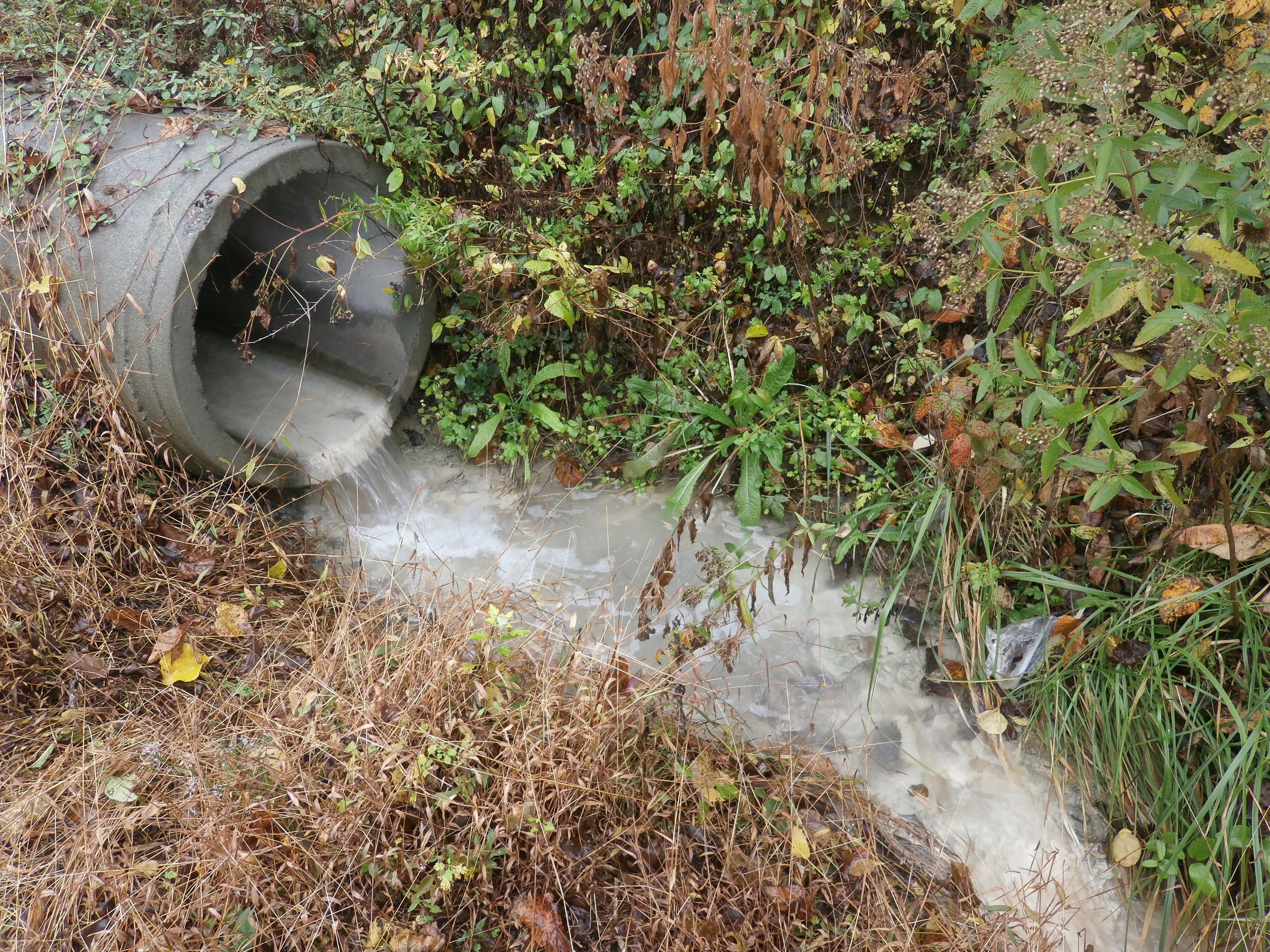
A Step-by-Step DIY Walkthrough for Finding Outdoor Materials, Equipment, Waste Areas, Spills, and the Drainage Paths That Carry Pollutants Off Your Site
If your Pennsylvania facility has equipment, materials, or waste sitting outside where rain and snowmelt can reach them, that runoff can carry oil, metals, sediment, and chemicals into a storm drain, a ditch, or a creek. Pennsylvania DEP regulates that runoff through the federal National Pollutant Discharge Elimination System, or NPDES, and most industrial facilities that need coverage get it through a general permit called PAG-03. Whether you're applying for the first time, rewriting an old plan, or just trying to picture what an inspector would see when they walk your yard, everything starts with the same question: what on your site can pollute stormwater, and how does it get to the water?
You can answer that yourself with a site map, a camera, and a couple of hours, and this article walks through how, one step at a time. The short version is to follow the water, list everything it touches, and write down every spot where a material, a machine, or an old spill could end up in it. We cover drainage paths, outdoor materials and equipment, waste and loading areas, past spills, and the hidden pathways like floor drains that people tend to miss. If you get partway through and want experienced eyes on the site, you can reach out to RMA, and if you finish and find you don't need us, that's a perfectly good outcome too.
Table of Contents
TL;DR
To find stormwater pollutant sources at your Pennsylvania facility, start with a site map and trace where rain and snowmelt flow across the property and where they leave it. Walk every outdoor area and list the materials, equipment, waste containers, loading areas, and stained spots that the water touches, then check for non-stormwater sources like floor drains and wash-down areas. Put what you find on a map and in a table, because DEP's industrial stormwater permit application (PAG-03) and the Preparedness, Prevention, and Contingency (PPC) Plan that goes with it are built on that same information. If everything turns out to be indoors or sheltered, you may qualify for a No Exposure Certification instead of PAG-03 coverage.
What Counts as a Stormwater Pollutant Source at a Pennsylvania Industrial Facility?
A pollutant source is any material, machine, activity, or spot on your property that can put something other than clean rain into your runoff. Think of oil dripping from a parked loader, an uncovered pile of scrap, a dumpster with the lid propped open, sediment tracked out by trucks, or a drum with a slow leak. The regulatory term for runoff that touches areas like these is "stormwater associated with industrial activity," and we break down what that phrase covers in our guide to stormwater associated with industrial activity.
A few terms will come up as you go. PAG-03 is DEP's general permit for industrial stormwater, meaning a standard permit that many facilities can sign onto instead of getting one written just for them. A PPC Plan, short for Preparedness, Prevention, and Contingency Plan, is the written plan DEP requires with PAG-03 coverage, and it covers your pollutant sources, spill prevention and response, inspections, and training. If you've heard the term SWPPP (stormwater pollution prevention plan) from other states, the PPC Plan is Pennsylvania's version, and we compare the two in our SWPPP vs. PPC Plan comparison. The Notice of Intent, or NOI, is the application form you file with DEP.
Whether your facility needs PAG-03 coverage at all depends on your industrial classification, whether industrial activity is exposed to rain and snow, and where your runoff ends up, and local sewer rules can add their own requirements. The walkthrough gathers the facts you need to answer that, and our overview of general, individual, and no-exposure permits shows how those facts point to a permit type.
How Do You Prepare for a Stormwater Pollutant Source Walkthrough?
Gather a few basics before you step outside. You'll want a large printed site map, and a satellite image from a free online mapping service works fine as a starting point. Add a clipboard or tablet for notes, a phone or camera that stamps the date on photos, the safety data sheets for the chemicals you keep on site, and a rough list of the outdoor equipment you run. Bring along someone who knows the daily routine, like a yard supervisor or maintenance lead. They know where the leaks usually happen, which corner of the lot floods, and what got spilled three winters ago.
If you can, walk the site twice. Do the first pass on a dry day so you can see everything, and do the second during or right after a rain, when you can watch where the water goes. A rain walk shows ponding, flow paths, and oily sheens that a dry day hides. Wear rain gear, stay clear of truck and equipment traffic, skip any confined spaces, and leave manhole and vault covers alone. Before you start, divide the property into numbered zones on your map, such as the main yard, loading docks, and fueling area, so every note and photo ties to a specific place.
How Do You Map Where Stormwater Flows on Your Site?
Start with the water, not the pollutants. A spill only becomes a stormwater problem if water can carry it somewhere, so you need to know the routes before you can judge which sources are a concern. Mark the high and low points on your map, draw arrows showing which way water runs, and note every inlet, catch basin, ditch, swale, culvert, and downspout. Then mark every outfall, which is the spot where runoff leaves your property, whether that's the end of a pipe, a ditch at the property line, or a broad sheet of water crossing a gravel apron.
| Drainage Pathway |
How to Find It |
What to Write Down |
| Sheet flow across pavement or gravel |
Watch during rain, and look for eroded or stained paths |
Direction of flow and what the water crosses before it leaves |
| Storm drain inlets and catch basins |
Walk the perimeter and check every low spot |
Location, condition, and where each one discharges, if known |
| Ditches, swales, and culverts |
Follow the low ground toward the property edge |
Standing water, sediment buildup, sheen, and flow direction |
| Roof downspouts and gutters |
Look at where each downspout ends |
Whether the roof water lands on work areas or on clean ground |
| Points where water leaves the property |
Walk the boundary during or after rain |
Pipe, ditch, or sheet flow, and the creek, storm sewer, or neighboring property it reaches |
Where your water ends up shapes your permit options, so follow it as far as you can. DEP's PAG-03 isn't available to facilities with direct discharges to High Quality or Exceptional Value waters, and those facilities generally go the individual permit route. Some older Pennsylvania cities also have combined sewers, where site runoff goes to a treatment plant and the sewer authority may set the rules instead of a DEP stormwater permit, so confirm with your local authority before you assume anything. If your water soaks in or pools on site and never seems to leave, our article on what to do when stormwater doesn't leave your site covers how that changes things.
How Do You Inventory Outdoor Materials and Equipment Exposed to Stormwater?
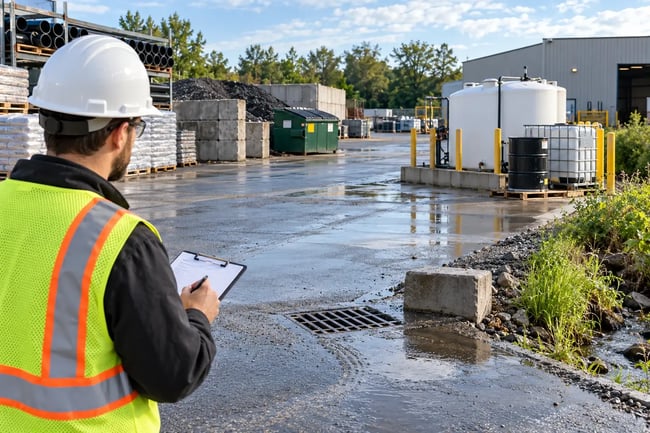
Now walk each zone and write down everything stored or used outdoors, plus anything indoors that rain can reach through open bay doors. DEP's PPC Plan guidelines call for a material and waste inventory, and this walk is where it comes from. For each item, record what it is, where it sits, how it's stored (covered, contained, or on bare pavement), roughly how much there is, and how close it is to the nearest drain. Then look at the ground, because stains, rust trails, dust films, and sheens show what's been escaping.
| Source |
What to Look For |
What It Can Put in Runoff |
| Bulk material, scrap, and product piles |
Uncovered piles, runoff stains, material washing toward drains |
Sediment, metals, and other solids |
| Drums, totes, and tanks |
Open or unlabeled containers, corroded fittings, damaged containment, wet spots underneath |
Oils, fuels, solvents, and chemicals |
| Vehicles and mobile equipment |
Drip stains where machines park, worn hoses, fluid trails |
Oil and grease, hydraulic fluid, and coolant |
| Outdoor processing equipment |
Dust buildup, residue on the ground, leaks at connections |
Process residues, sediment, and metals |
| Salt and deicing material |
Uncovered storage, spread near drains |
Chloride and salts |
Photograph each finding with the zone number in the frame, and note whether it's covered, contained, or open to the weather. A machine that's been parked in one spot for years usually leaves a stain that shows exactly where fluids drip. Once you know what's exposed, the fixes are often simple, like a cover, a drip pan, or moving a drum indoors, and our explainer on stormwater best management practices covers the common options.
How Do You Check Waste Handling, Loading, and Fueling Areas for Pollutant Sources?
DEP's PPC Plan guidelines name several activities as having a reasonable potential to contribute pollutants to runoff, including loading and unloading, outdoor storage, outdoor manufacturing or processing, and waste handling and storage. The same task gets done dozens of times a week in these areas, so a small drip each time adds up. Give each one a slow look, and ask the people who work there what they'd change if they could.
For waste areas, check dumpsters, roll-off containers, scrap bins, and anywhere used oil or batteries are collected. Look for overfilled containers, open lids, leaking bottoms, and stained pavement, and note how close each one sits to a drain. At loading and unloading areas, look at the transfer points, hose connections, and the ground beneath them for spilled product, drips, and material swept toward a drain instead of picked up. Fueling and vehicle maintenance areas deserve the same attention, along with any spot where equipment gets washed, since wash water carries oil, detergent, and solids to wherever the ground slopes.
Truck traffic is easy to overlook. Tires carry mud and material off unpaved areas and onto paved ones, and the next rain moves it toward the nearest inlet. Note where trucks enter and leave, and write down your current housekeeping routine too: who sweeps, how often, and what happens to what they collect. DEP's PPC guidelines include a housekeeping program, so the habits you already have belong in the picture.
How Do You Document Past Spills and Leaks at Your Facility?
Stains aren't the only record of what's happened on your site. Ask long-time employees, and check spill logs, incident reports, insurance claims, and any correspondence with DEP or your local fire department. DEP's PPC guidelines include a pollution incident history, and DEP's Notice of Intent asks existing facilities to account for past leaks and spills, so this step feeds directly into your application.
For each incident, write down the date, what was released, roughly how much, where it happened, how it was cleaned up, and whether any of it reached a drain or the ground. Old releases on exposed pavement or soil can still wash out in a heavy rain, so they belong on your map even if the cleanup happened years ago. If you turn up a past release that was never reported, talk to an environmental attorney before it goes into a document DEP will read. We're consultants, not attorneys, and that call is worth making early.
How Do You Find Non-Stormwater Discharges and Hidden Drainage Pathways?
Some common problems at industrial sites have nothing to do with rain. Do a dry-weather check after a few days without rain, and look for water flowing out of outfalls or into inlets. Flow in dry weather means something other than rain is getting into your drainage system. The usual suspects are floor drains and trench drains tied into the storm sewer, hose-down water from wash pads, vehicle and equipment washing, leaking hydrants or water lines, sump pumps, air conditioning condensate, and overflow from process or cooling water. Our article on the difference between stormwater and process water explains why the two are regulated so differently.
PAG-03 covers stormwater plus certain non-stormwater discharges that the permit lists, and some industry appendices add their own, so a wash-down discharge that nobody wrote down can fall outside what your coverage allows. A facility that already has, or is required to get, an individual NPDES permit for non-stormwater discharges generally can't use PAG-03 for its stormwater either. If you're not sure what's allowed, check the permit's list of authorized non-stormwater discharges or ask someone who works with it every day.
Floor drains are easy to forget. A dye test or a look at the old building plans can show where a drain goes, and if you can't tell where one ends up, treat that as an open question to resolve before you submit anything to DEP. Mark every drain on the map, along with what you know about its destination.
How Do You Turn Your Findings Into a Pollutant Source Map and Action List?
Now pull everything into two documents: a marked-up site map and a pollutant source table. The map shows your zones, drainage arrows, inlets, outfalls, and every source you found. The table gives each source its own row so you can see the whole picture at once and sort it later. Here's what a couple of rows might look like.
| Zone |
Source |
Possible Pollutants |
Nearest Drain |
Current Control |
| 2 (main yard) |
Uncovered scrap pile |
Metals, sediment |
Catch basin at west fence |
None |
| 4 (loading dock) |
Hose connection at transfer point |
Product, oil and grease |
Trench drain, destination unknown |
Spill kit nearby |
Rank what you've found by two questions: how exposed is it, and how close is it to a drain or a path to the water? Sources that answer "very" to both go to the top, and many of those fixes are cheap, like covers, drip pans, berms, moving containers indoors, and a tighter sweeping routine. We've written up the gaps we see most often in our guide to common NPDES permit problems. Once controls are in place, regular walks keep them working, and our walkthrough on how to do a stormwater visual inspection shows what to check and record. The people doing those inspections need to know what they're looking for, which is where the RMA online training library can help.
Your notes also feed the paperwork. DEP's PAG-03 application package asks for a site plan and topographic map showing your facilities and discharge locations, along with your PPC Plan, and your map and table are the raw material for both. Some facilities can handle that paperwork themselves, and we lay out the tradeoffs in our guide to getting a PAG-03 permit yourself. And if your walkthrough shows that every industrial material and activity is indoors or sheltered from rain and snow, a No Exposure Certification may be an option instead of PAG-03. It has strict eligibility criteria, though, and we explain them in what no exposure means under an NPDES stormwater permit.
How Can RMA Help With Stormwater Pollutant Source Identification in Pennsylvania?
A DIY walkthrough works well for a small, simple site where the drainage is easy to follow. It gets harder on multi-acre yards with several outfalls, sites where nobody's sure where a floor drain goes, facilities with a long spill history, and operations that mix several industrial activities. We work with Pennsylvania facilities all the time, and in those cases we walk the property with you, identify the pollutant sources, work out how stormwater moves across the site, document the drainage areas and outfalls, and turn what we find into the maps and PPC Plan DEP expects. DEP inspectors look at much of what you just covered, and we describe what that visit involves in our guide to PA DEP stormwater inspections.
If you'd like a second set of eyes on your findings, or help figuring out whether PAG-03, an individual permit, or No Exposure fits your site, we're glad to talk it through, with no pressure and no obligation. You can call us, send an email, or fill out the form on our website, and you can also contact RMA here and tell us a little about your facility. If we're not the right fit, we'll say so and point you in a useful direction.