How Precast, Block, and Other Concrete Products Plants Fit Under NJDEP's Concrete Products Manufacturing General Permit, and the Stormwater Controls That Keep Them Compliant
If you run a precast, block, brick, or pipe plant in New Jersey, you've probably heard that ready-mix plants have their own stormwater permit and wondered whether it covers you too. In most cases it does. NJDEP's Concrete Products Manufacturing (CPM) general permit was written for the whole concrete products family, not just trucks and batch plants, and the way rain touches your curing yard, form shop, and washout area decides what you need to manage.
This article walks through how concrete products plants fit under the CPM permit, the exposures we see most often at precast and block operations, and the controls that work in practice. If you'd rather talk through your own plant, you're always welcome to reach out to RMA.
Table of Contents
TL;DR
Yes, precast, block, brick, pipe, and ready-mix plants all generally fall under New Jersey's CPM general permit, and NJDEP can also place similar concrete operations under it. The usual trouble spots are curing yards, cement and aggregate piles, form oils, and washout. Good housekeeping, covered or contained materials, a separate plan for washout water, and regular inspections handle most of it. Confirm the specifics against your own permit authorization.
Does the CPM General Permit Cover Precast and Block Plants?
NJDEP describes the CPM as the general permit for industrial stormwater discharges to surface water and groundwater from facilities that make concrete or concrete products, including block and brick and ready-mixed concrete, along with facilities NJDEP classifies as concrete or concrete-related manufacturers. That last part matters for precast. Precast and pipe plants usually sit under SIC code 3272 (concrete products, except block and brick), block and brick plants under 3271, and ready-mix under 3273. The permit isn't limited to those codes, though, so a plant coded differently on paper can still end up here.
That's different from New Jersey's Basic Industrial Stormwater General Permit (5G2), which is aimed at regulated facilities without an industry-specific permit. Concrete plants generally look to the CPM first. If you want the comparison, our article on the 5G2 permit in New Jersey lays out where it applies.
A CPM authorization comes with a stormwater pollution prevention plan, which New Jersey calls an SPPP (you'll also hear SP3, or just a stormwater plan). We'll call it a SWPPP from here on. It also brings an annual inspection, employee training, and an annual certification. Unlike the 5G2, the CPM includes stormwater sampling. The parameters, frequency, and reporting steps are set in the permit, so check them against your authorization rather than relying on a general article, ours included. The CPM is also one of New Jersey's older industry permits, so it's worth confirming its current status with NJDEP. For the bigger picture on how these permits stack up, see NJPDES stormwater permit requirements.
One more caution. If your site drains to a sewer instead of a storm drain or the ground, a local sewerage authority may have its own rules, either instead of or alongside NJDEP's permit. Where your water goes is the first thing to confirm.
What Stormwater Exposures Do Precast and Block Plants Have?
Concrete products plants look different from ready-mix plants, and the exposures shift with them. Ready-mix is about trucks, batching, and returned concrete. Precast and block plants spend more of their time on forming, curing, stacking, and storing finished product outside, which puts a lot of fresh concrete surface in front of the rain.
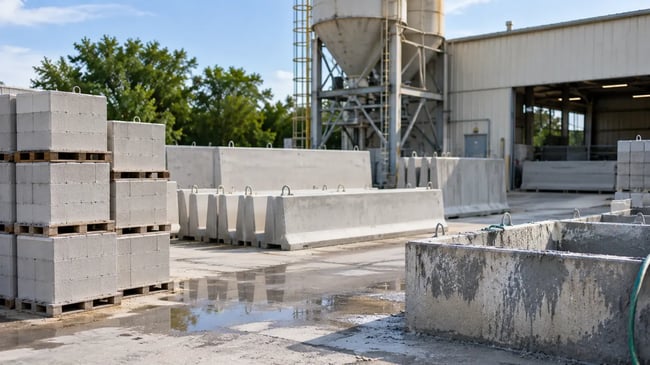
Curing yards are the one we see first. Fresh product, cement fines, broken pieces, and sediment all wash off in a storm, and runoff that touches fresh concrete tends to be high in pH. Stacked pallets of block and finished precast pieces that sit outside for weeks add to it. Cement, fly ash, and slag dust settles on yards and roofs and rinses off later, and aggregate and sand piles shed sediment whenever it rains hard.
Form release oils are the second big one. They're sprayed, brushed, and wiped onto forms, and they drip. Drums stored outside, open containers, overspray onto the slab, and forms stacked in the yard can all end up as an oil sheen at your outfall. Forklifts, loaders, and fueling areas add the usual hydraulic and fuel leaks. Our article on precast plant regulations covers more of how precast differs from other concrete operations.
How Should Washout and Process Water Be Handled at a CPM Plant?
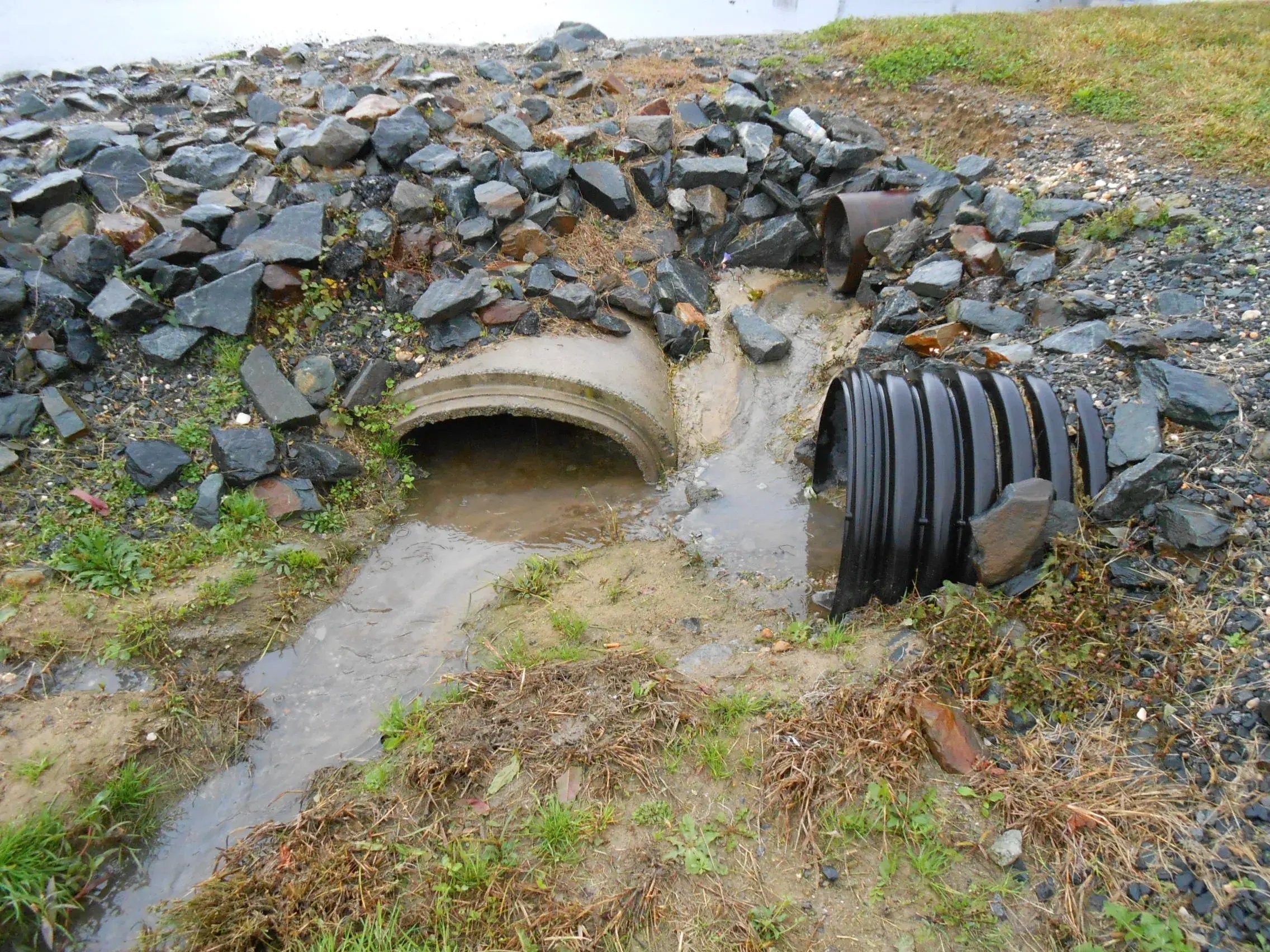
Washout water is process water, not stormwater, and treating the two as one thing causes a lot of trouble. Rinsing mixers, hoppers, forms, saws, and equipment produces alkaline, solids-heavy wastewater. That water shouldn't go to a storm drain, a ditch, or bare ground, and it shouldn't be allowed to mix with your stormwater and become part of your permitted discharge by accident. Our guide on the difference between stormwater and process water goes into why the line matters.
Most plants deal with it by containing it. A lined, dedicated washout area or settling basin lets solids drop out, and many plants recycle the water back into production or into a reclaimer instead of discharging it. Whether any process water discharge is authorized for your plant depends on your permit and your site, so don't assume it is. If you're designing or fixing a basin, settling basin design points and our piece on what to do with concrete waste are good places to start. A basin that's full of solids stops working, so it needs regular cleanout.
What Practical Stormwater Controls Work Under the CPM Permit?
The CPM is written so one set of requirements works for many different plants, which means the permit tells you what to achieve more than exactly how to do it. Your SWPPP is where you decide how. Here's how the common exposures usually get handled.
| Exposure |
What Goes Wrong |
Common Controls |
| Curing yard and product storage |
High pH runoff, cement fines, sediment |
Regular sweeping, berms or swales, routing yard drainage to a basin, moving product under cover |
| Cement, fly ash, and aggregate |
Dust and sediment washing off |
Covered or bunkered piles, silo and loading area cleanup, inlet protection |
| Form oils and release agents |
Drips, overspray, sheen at outfalls |
Drums under cover with secondary containment, drip pans, spill kits, forms cleaned indoors |
| Washout and sawcutting |
Alkaline process water reaching storm drains |
Lined washout area, settling basin, recycling water into production |
| Fueling and equipment |
Fuel and hydraulic leaks |
Covered fueling areas, regular leak checks, absorbents on hand |
Housekeeping carries a lot of this list. A plant that sweeps the yard and cleans up spilled cement and broken product on a routine schedule has less to catch downstream. Our overview of stormwater BMPs explains the thinking behind these controls.
Oil storage brings in a separate federal rule. If your plant keeps more than 1,320 gallons of oil in aboveground containers of 55 gallons or larger, and a spill could reasonably reach a waterway, you'll likely need an SPCC plan too. Form oil, diesel, hydraulic oil, and lubricants all count toward the total, and our article on whether a concrete plant needs an SPCC plan walks through it.
Then there are people. The best controls fail when the forklift operator or form crew doesn't know why they matter. Short, regular training and routine inspections, after storms as well as on a schedule, catch problems early, and our online environmental training library can help with the basics. Knowing what inspectors look for at a concrete plant is a useful way to walk your own yard before they do. For broader context, see our producer's guide to concrete plant stormwater permits.
How Does RMA Help With CPM Permit Compliance?
We've worked with ready-mix, precast, block, and pipe producers since 1992, and we're based in New Jersey, so NJDEP's permit categories are familiar ground. We can help you confirm the CPM is the right fit for your plant, build or update your SWPPP so it reflects how your yard really runs, and set up the inspection and annual certification routine. We train your team to take their own stormwater samples correctly, because your people know your plant and the storm windows rarely line up with a consultant's calendar. We can also keep supporting you after you're permitted, from reminders to results review to annual updates.
We don't do engineering design or build treatment systems. If your basin or drainage needs real engineering, we'll tell you so and help you scope it. If you have questions, you can call, email, or fill out the form on our site and we'll tell you honestly whether we're the right fit. No pressure and no obligation, just contact RMA whenever you're ready.