How New Jersey Yards That Dismantle Vehicles and Process Scrap Metal Figure Out Which NJDEP General Permit Applies
Plenty of New Jersey yards start out as one thing and slowly become two. A family dismantles cars and sells used parts for years, then scrap prices climb and someone starts cutting, sorting, and baling metal in the back corner. Now there's a vehicle recycling operation and a scrap metal operation on the same lot, and the same rain falls on both. NJDEP has an industry-specific stormwater permit for each business, and a yard owner looking at the two can't always tell which one is theirs.
Here's the short answer. NJDEP describes the Scrap Metal (SM2) general permit as the one for facilities that recycle scrap metal, with or without used vehicle parts, and its Vehicle Recycling (RVR) permit page says facilities that dismantle vehicles and also process scrap aren't eligible for the RVR. For most mixed yards, that points toward the SM2. Where your vehicle work ends and scrap processing begins is the part that can get fuzzy, and NJDEP is the one that makes the call, so confirm before you file anything. This article walks through how the two permits differ, the gray areas, what the plan and inspections look like, and how to get a clear answer from NJDEP. If you'd like a second set of eyes on your yard, reach out to RMA.
Table of Contents
TL;DR
New Jersey has one stormwater general permit for yards that only recycle vehicles (the RVR) and one for yards that recycle scrap metal, with or without used vehicle parts (the SM2). NJDEP's descriptions point a yard that does both toward the SM2, because the RVR isn't open to facilities that also process scrap. The tricky part is deciding what counts as scrap processing at your yard, and since NJDEP makes that call, it's worth confirming with the department before you file or change anything.
What Are the RVR and SM2 Stormwater Permits in New Jersey?
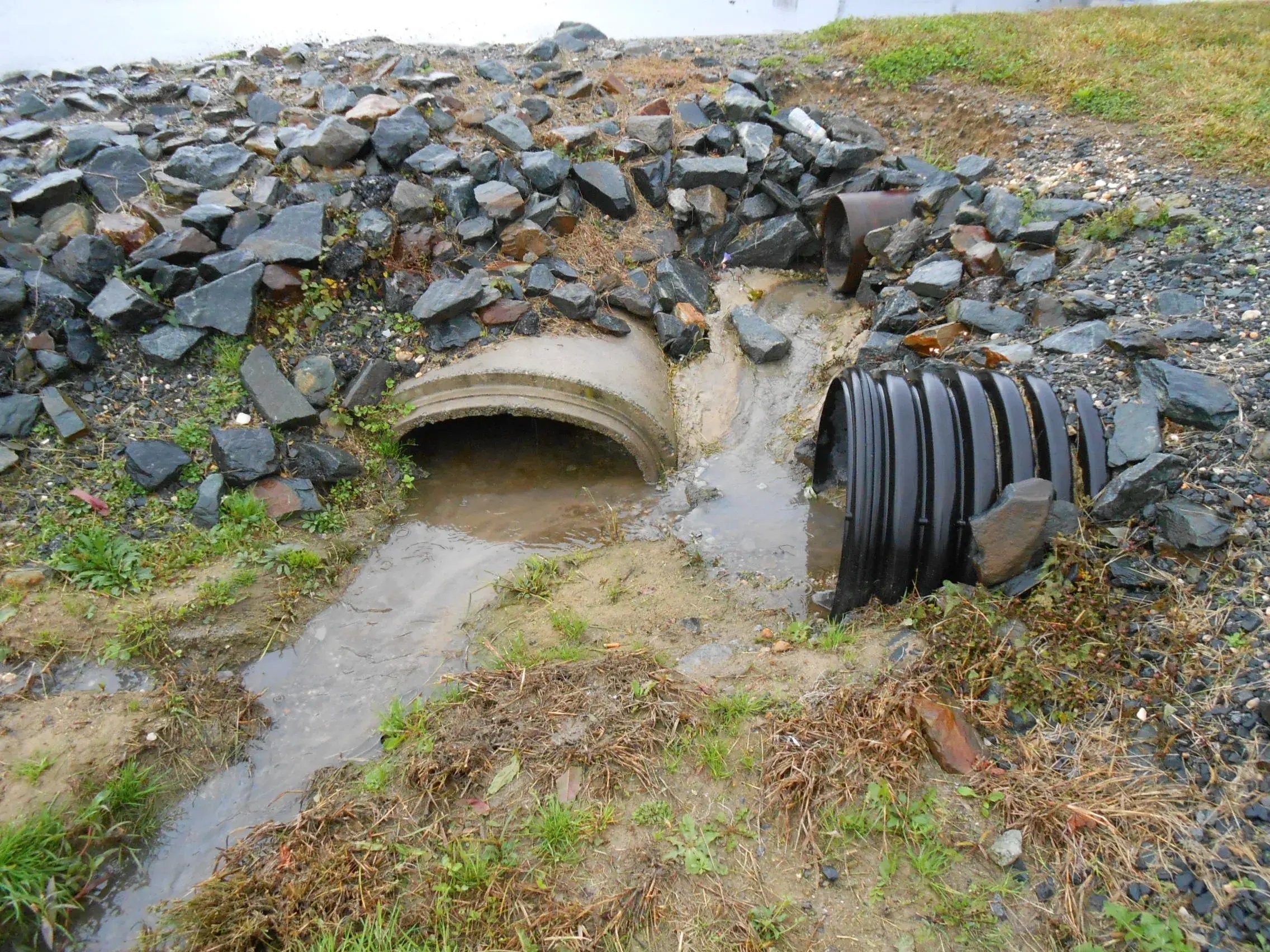
Start with the rain. When it falls on car bodies, fluid drums, scrap piles, and bare ground at a yard, it picks up oil, metals, and sediment, and then it runs to a storm drain, a ditch, a stream, or into the soil. New Jersey regulates those discharges through NJPDES, the New Jersey Pollutant Discharge Elimination System, which is the state's version of the federal NPDES program. NJDEP, the New Jersey Department of Environmental Protection, runs it.
For industrial sites, NJDEP offers a basic general permit (the 5G2), a set of industry-specific general permits, individual permits, and a no exposure exclusion. A general permit is a master permit NJDEP wrote once. Your yard doesn't get its own permit written from scratch. You file a Request for Authorization (RFA), and NJDEP issues an authorization showing you're covered under the master permit for your category. Our article on which NPDES permit you need covers how those paths differ.
Two of the industry-specific permits matter for yards. The Vehicle Recycling general permit, called the RVR, is written for facilities that dismantle motor vehicles and distribute used parts. The Scrap Metal general permit, called the SM2, is written for scrap recyclers. There was an earlier scrap permit called the SM, but NJDEP lists it as expired and no longer available, so the SM2 is the one on offer today.
Which Permit Covers a New Jersey Yard That Handles Both Vehicles and Scrap?
The line NJDEP draws isn't about vehicles. It's about scrap processing. NJDEP's description of the SM2 says it authorizes stormwater discharges from facilities involved in recycling scrap metal, or in recycling both scrap metal and used vehicle parts. Its RVR page covers facilities that dismantle motor vehicles and sell used parts, and says facilities that dismantle vehicles and also process and recycle scrap materials aren't eligible. Put those two descriptions side by side and a yard doing both lands on the SM2.
| What your yard does |
Permit NJDEP's descriptions point toward |
Why |
| Dismantles vehicles and sells used parts, no scrap processing |
RVR (Vehicle Recycling) |
This is the operation the RVR was written for |
| Recycles scrap metal, no vehicles |
SM2 (Scrap Metal) |
The SM2 covers scrap metal recycling |
| Does both vehicle dismantling and scrap metal processing |
SM2 (Scrap Metal) |
The SM2 covers scrap with used vehicle parts, and the RVR excludes yards that also process scrap |
| Shreds metal |
Often an individual permit |
Our understanding is that the SM2 doesn't cover shredding, so confirm with NJDEP |
| Can't tell which row you're in |
Ask NJDEP before filing |
The department decides which authorization fits your operations |
We covered the basic split in our guide for scrap yards and auto recyclers, and what the SM2 asks of a facility is in our SM2 permit article. This post goes further on the case those articles only touch, which is the yard that really does both.
Where Does Vehicle Recycling End and Scrap Metal Processing Begin?
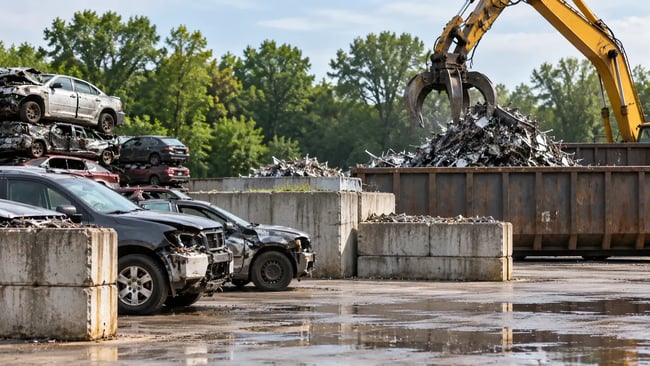
This is where yard owners get stuck. Picture two yards that both take in end-of-life cars. The first drains the fluids under cover, pulls the parts it can sell, and ships the stripped bodies off to someone else to process. The second does the same, but it also buys loose metal from contractors and walk-in customers, sorts it into piles, and cuts or bales it before it leaves. The first looks like the vehicle recycling the RVR describes. The second is running a scrap metal operation, and that's the kind of yard the RVR page says isn't eligible.
Plenty of yards sit between those two pictures. A yard might shear a few oversized pieces off its own dismantled vehicles, or keep a modest pile of loose scrap that comes mostly from its own work. A yard might also lease part of its lot to a separate scrap operator. Owners and inspectors can read cases like these differently, and we're not going to hand you a rule of thumb here, because the answer depends on what NJDEP considers processing and on the wording of the permit you'd be covered under.
Why the Details of Your Daily Operations Decide the Answer
When you ask NJDEP which permit fits, the department will want to know what physically happens at the yard. What comes in, from whom, and in what form? What do you do to it on site (draining, dismantling, sorting, cutting, baling, crushing)? What leaves, and in what condition? Write those answers down before you call. A vague description gets you a vague answer, and a clear one gets you something you can act on.
Where the yard's water goes also plays a role. Some sites drain to a storm drain or stream, some to the ground, and some to a sewer. If your drains go to a sewer, a sewerage authority's rules may apply instead of or alongside an NJPDES stormwater permit, and you should confirm that too. Our article on facilities that drain to the sewer explains why.
Can One Yard Hold Both an RVR and an SM2 Authorization?
Owners ask this a lot, and it's a reasonable question. If you do vehicle work and scrap work, why not cover each with its own permit? Based on how NJDEP describes the two permits, that isn't the setup the department seems to have in mind. The SM2 is written to cover scrap metal recycling together with used vehicle parts, and the RVR excludes yards that also process scrap. A mixed yard is meant to be handled under the SM2 as a whole, not split down the middle with one permit per activity.
We can't promise how NJDEP would treat every layout, though. A lot occupied by two separate companies, one dismantling cars and one processing scrap, is a different question from one company doing both. Each operator may have its own obligations, and who holds which authorization can turn on leases, drainage, and who controls what. A yard that already holds an RVR authorization and has since added scrap work is in a similar spot: NJDEP may want it moved to a different permit. Our article on what happens when changes move you to a different permit walks through that kind of shift.
What Does the SWPPP Cover When a Yard Does Both Vehicle and Scrap Work?
Under either permit, the core document is a stormwater pollution prevention plan. NJDEP calls it an SPPP, you'll hear it called an SP3 or just a stormwater plan, and we'll use SWPPP here since that's what most of the industry says. The plan maps your site, identifies where rain can pick up pollutants, and spells out the best management practices (BMPs) you'll use to keep those pollutants out of the water. Our SWPPP explainer covers the basics.
For a mixed yard, the plan has to cover both sets of activity. On the vehicle side, NJDEP's October 2025 compliance advisory for scrap metal and vehicle recyclers points to storage of fluids and storage of parts with oily residues as BMP areas, and the vehicle side of the plan usually centers on where and how fluids are drained, where drained vehicles and parts sit, and how leaks get contained. On the scrap side, the plan has to deal with the piles themselves, the material coming in, and the places where runoff leaves the yard.
The permits also differ in what they ask you to do on a schedule. Our understanding is that the SM2 includes stormwater sampling, regular documented inspections, and an annual certification and summary report. NJDEP's RVR page describes an annual inspection, annual report, and annual certification, and it doesn't mention sampling. Sampling requirements vary by permit and can change when a permit is renewed or reissued, so read the current permit document for the category NJDEP assigns you. If sampling applies, we strongly recommend taking your own samples, since you're the one standing at the yard when the storm hits. Our online training library can help your team get comfortable with the routine.
What Happens Under the Wrong Permit, and How Do You Confirm Which One Fits?
NJDEP has been paying attention to this industry. Its October 2025 compliance advisory applies to vehicle recycling and scrap metal operations that have, or should have, an RVR or SM/SM2 permit, and it says the Division of Water Enforcement will inspect all permitted facilities. If a facility turns up without the permit it should have, or with a permit that doesn't match what it does, the department can issue a Notice of Violation. If you've already received a notice, or you're worried about exposure from past operations, an environmental attorney may be appropriate alongside any permit work.
The fix for uncertainty is a straight conversation with NJDEP. The advisory points permitting questions to the department's Bureau of NJPDES Stormwater, so that's the group to contact. A few habits make that conversation go better:
- Write a plain description of what comes in, what you do to it, and what leaves, as described above.
- Gather any authorization, permit number, or past correspondence you already have for the site, including paperwork from a previous owner.
- Ask which authorization fits your operations, and ask for the answer in writing so you can file it with your SWPPP.
- If the answer is different from what you hold today, ask what NJDEP expects you to do next and by when.
If you've just bought or taken over a yard, don't assume the existing authorization matches what the yard does now. Our article on determining which industrial stormwater permit fits is a good starting point, and if the answer turns out to be an individual permit, our post on individual NJPDES industrial permits explains what that involves.
How Can RMA Help With an RVR or SM2 Permit Question?
We're a family-run firm based in New Jersey, and our senior staff do the work themselves. For a yard that does both vehicle and scrap work, we can help you lay out what your operations look like, work out which permit they point toward, build or update your SWPPP, and train your team to run inspections and take their own samples. After you're permitted, we offer annual support if you want it, from inspection prep to reading your results.
There are things we don't do. If your yard needs drainage engineering or a treatment system, that's engineering firm work, and we'll tell you so. If you only dismantle vehicles, already hold a clean authorization, and feel comfortable with your plan, you may not need us at all. If you'd like to talk it through, you can call, email, or fill out the form on our website, with no obligation. Just reach out to RMA and tell us what your yard does.