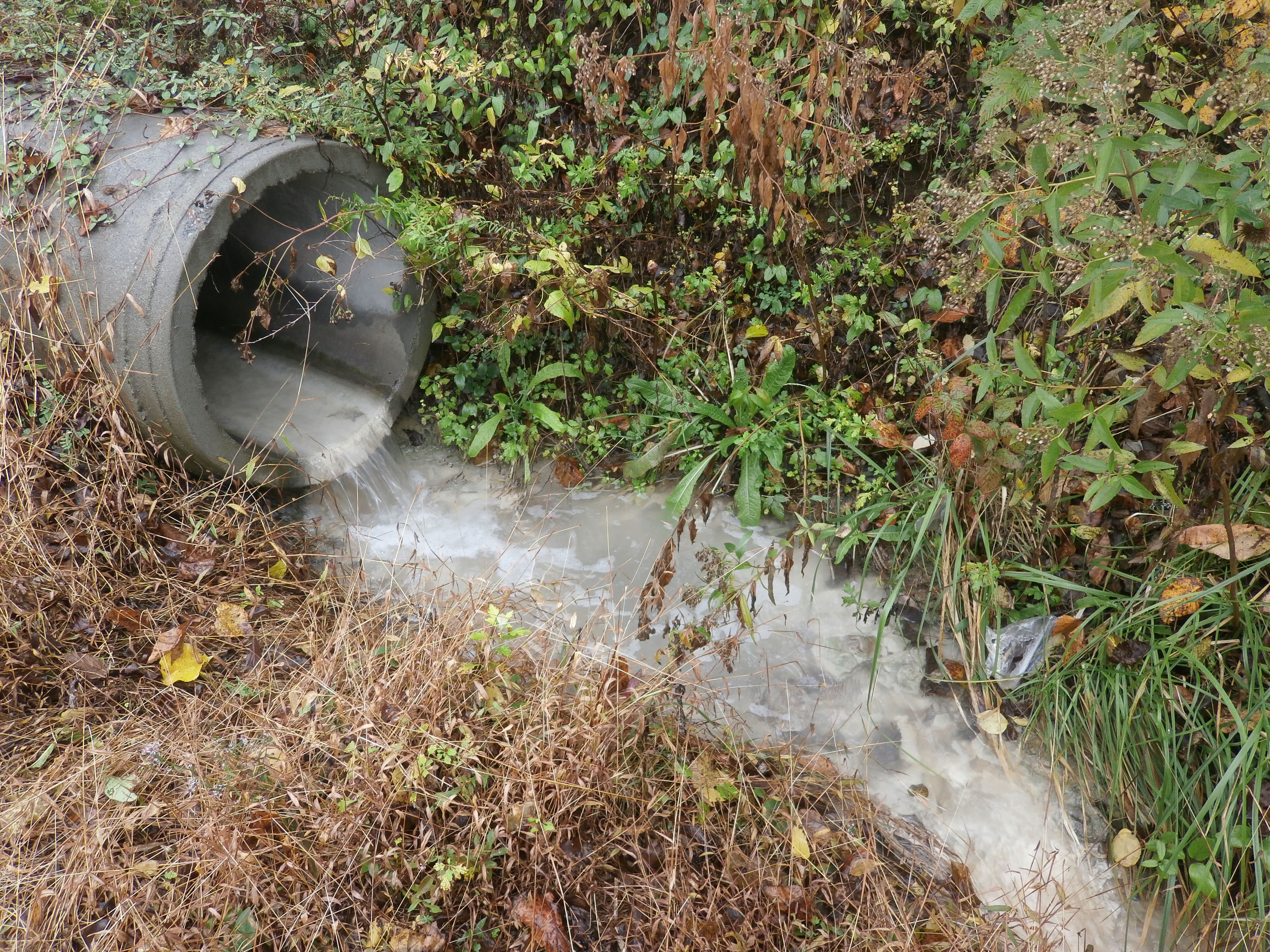
Registering with the Department of State gets you a legal entity and a name. It doesn't tell you what DEP, EPA, or your township will expect once you start operating.
Registering a business in Pennsylvania is mostly paperwork with the Department of State, and when the confirmation comes back it feels like the hard part is behind you. For a consulting firm or a design studio, it more or less is. For someone about to start machining parts, running a truck yard, or stacking material outside, that confirmation says nothing about the environmental permits that come with the work, and nobody in the registration process is going to bring them up.
This article covers what state registration does and doesn't include, which permits and approvals new manufacturers and yards miss most often, how earth disturbance rules can catch you while the site is still being built, and what to check before you open. If you'd rather talk through your own situation, you can reach out to RMA at any point, and we'll tell you plainly if you don't need us.
Table of Contents
TL;DR
Registering with the Pennsylvania Department of State creates your legal entity and reserves your name. It doesn't tell DEP or anyone else that you plan to store chemicals, generate waste, or discharge stormwater. New manufacturers and yards most often miss industrial stormwater coverage, air plan approval, hazardous waste ID numbers, Tier II reporting, and SPCC plans, and building a site can trigger Chapter 102 earth disturbance rules before you ever open. A short review before you start operating costs far less than learning about these from an inspector.
What Does Pennsylvania Business Registration Cover, and What Does It Skip?
Registration with the Pennsylvania Department of State covers entity filing and fictitious name registration. That's the step where you form an LLC or corporation, or register a trade name. The state's own business site points out that you may also need to register with the Department of Revenue and the Department of Labor and Industry, and it lists local registrations, permits, and zoning as a separate category. Environmental permits don't show up anywhere in that process.
Each agency runs its own program on its own authority, and DEP's permits attach to what a facility does on the ground: what it discharges, what it emits, what it stores, and what waste it ships off site. None of that exists on the day you file. A new LLC with a name and an address looks identical on paper whether it's going to run an accounting office or a metal finishing line, so nothing in the process is built to ask the question.
What usually follows is a familiar sequence. You sign a lease, buy equipment, hire people, and start production. Environmental compliance comes up when an inspector shows up, when a customer sends a supplier questionnaire, or when a neighbor calls DEP about runoff. By then you're already operating without coverage you needed on day one. Under the Pennsylvania Clean Streams Law, DEP can seek civil penalties of up to $10,000 per day for each violation, and a facility discharging stormwater without a required permit can rack up days for as long as it operates.
The approvals you need also won't all come from the same place. DEP handles water, air, and waste permits, and county conservation districts handle much of the construction stormwater work. The Department of Labor and Industry collects Tier II reports, EPA enforces SPCC plans directly, and townships add their own land development and stormwater rules. Our post on who regulates environmental compliance for small businesses breaks down how federal, state, and local requirements stack up, and our guide to the top environmental requirements for small businesses is a good companion read if you're just getting oriented.
Which Environmental Permits Do New Pennsylvania Manufacturers Commonly Miss?
Manufacturing ranges from a small shop with two CNC machines to a plant with paint lines and process wastewater. What new manufacturers miss is rarely the exotic permit. It's the routine ones that attach to ordinary operations: stormwater, air, waste, and chemical reporting. Our overview of environmental compliance for manufacturing facilities covers the full landscape, and these are the ones we see skipped most often in Pennsylvania.
Industrial Stormwater Coverage Under PAG-03
Stormwater that touches industrial activity and then leaves your site needs permit coverage in Pennsylvania, usually under the PAG-03 general permit. Which activities count depends on what you do at the site, not on how small the operation is. Our explainer on stormwater associated with industrial activity walks through what DEP looks for, and who needs a stormwater permit helps you sort out whether your site is in or out.
If every industrial material and activity at your site is under cover and protected from rain, you may qualify for a No Exposure Certification instead of full PAG-03 coverage. That's a lighter filing without the sampling requirements, and for an indoor-only shop it's often the right answer. The catch is that a pallet of material by the loading dock or a dumpster with a loose lid can disqualify you, so it takes an honest walk around the property before you certify anything.
DEP's fees for PAG-03 are modest, and we break down the numbers in our post on what a PAG-03 permit costs in Pennsylvania. A straightforward site can handle the filing without a consultant, and our PAG-03 DIY guide shows how.
Air Plan Approval Before You Install Equipment
In Pennsylvania, constructing or installing an air contamination source generally requires plan approval from DEP before the equipment goes in, unless the source is exempt. The exemption list is real and it's generous to small operations. Under 25 Pa. Code § 127.14, units rated at 2.5 million Btu per hour of heat input or less are exempt, as are certain gas-fired and light oil units under 10 million Btu per hour, and DEP maintains a published list of other sources it has determined to be of minor significance.
New owners tend to assume they're exempt without checking. A paint spray booth, a dust collector on a grinding operation, a larger boiler, or a thermal process can land outside the list, and the time to learn that is before the equipment goes in. Our post on whether you need an air permit explains how to think through it.
Hazardous Waste IDs and Tier II Reporting
Any facility that generates hazardous waste needs an EPA identification number, which you get by filing a Notification of Regulated Waste Activity (EPA Form 8700-12) with DEP. Pennsylvania accepts it on paper or through the GreenPort ePermitting system. What you owe after that depends on your generator category, which is based on how much waste you produce in a month, and the rules cover training, accumulation limits, manifests, and licensed transporters. New shops often generate waste they've never classified, from spent solvents to waste paint and used batteries, so our waste and hazardous waste overview is a useful starting point.
Tier II is a separate obligation that surprises people because it doesn't come from DEP at all. In Pennsylvania it's collected by the Department of Labor and Industry through an online system called PATTS, and the annual report is due March 1. You report any hazardous chemical you hold at 10,000 pounds or more, and extremely hazardous substances at 500 pounds or the threshold planning quantity, whichever is lower. There's a $10 fee per chemical. Bulk lubricants, acids, and propane add up quickly, and we cover the basics in our Tier II reporting overview.
What Do New Pennsylvania Yards and Outdoor Storage Sites Commonly Miss?
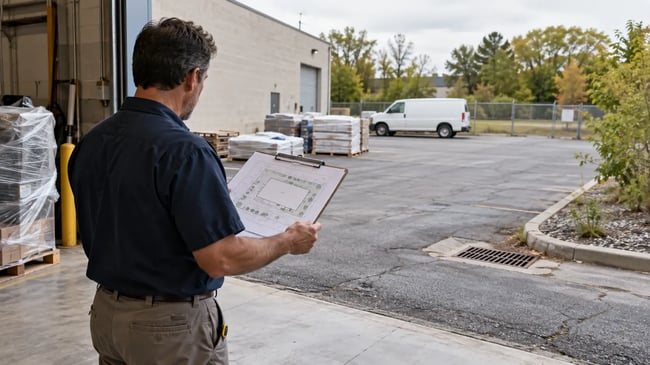
Yards cover trucking and fleet operations, equipment rental, landscape and building material supply, towing, and scrap handling. They share one feature that changes the picture compared with an indoor shop: nearly everything is outside. That makes the No Exposure option harder to reach, and it puts stormwater at the top of the list.
Depending on what happens at the yard, the activity may fall under an industrial stormwater category. Vehicle maintenance and scrap handling are common examples. The activity counts, not the business name, so a landscaping company that fuels and services its own trucks on site can be treated differently than one that only parks them. DEP also expects a Preparedness, Prevention and Contingency (PPC) plan at sites that store pollutants, and our comparison of SWPPPs and PPC plans for PAG-03 explains how the two documents relate.
Fuel is the next gap. A diesel tank for the fleet, a generator, drums of hydraulic oil, and totes of used oil all count toward the same total. Federal SPCC rules apply when you store more than 1,320 gallons of oil in aboveground containers of 55 gallons or larger (counting everything added together), or more than 42,000 gallons in completely buried tanks, and there's a reasonable chance a spill could reach a waterway. Plenty of new yards cross 1,320 gallons without anyone adding it up. Because SPCC is a federal EPA program, DEP isn't the agency that enforces it, so a business can be fully squared away with DEP and still be out of compliance. Our SPCC plan overview explains the threshold and the plan itself.
Waste is the third. Used oil, antifreeze, solvent parts washers, batteries, and shop rags are all regulated in some way, and a yard that services its own equipment generates a steady supply of them. The earlier a yard sets up proper containers, labeling, and a hauler, the fewer old problems it has to clean up later.
How Do Chapter 102 Earth Disturbance Rules Affect a New Pennsylvania Business Site?
Chapter 102 of the Pennsylvania Code governs erosion and sediment control, and it applies to the construction work itself, not just to operating facilities. That's why it catches new businesses off guard. You can be months away from your first customer and already be subject to it, because grading a yard, adding a gravel pad, building a parking lot, or putting up a new building all disturb soil.
The thresholds are low. Earth disturbance over 5,000 square feet requires a written erosion and sediment control plan, and smaller disturbances still have to use erosion and sediment control practices. Once the disturbance reaches an acre, you need an NPDES permit for construction stormwater, along with a post-construction stormwater management plan that deals with the runoff the finished site will produce for years afterward. Sites near streams or wetlands, and sites in special protection watersheds, face additional requirements.
Much of the review happens at the local level. County conservation districts, working under delegation from DEP, review erosion and sediment control plans and inspect sites, and DEP regional offices take on larger permits. Review and processing take time, and you generally can't start moving dirt until they're done, so a schedule that treats the permit as a last-minute task can lose weeks. Our post on environmental consultants for construction projects covers when it makes sense to bring in help, and when your civil engineer already has it covered.
Township approvals are a separate layer. Land development approval, zoning, building permits, and local stormwater management ordinances come from the municipality, and none of them substitutes for a DEP or conservation district approval. A township signing off on your site plan tells you the township is satisfied, not DEP, and the reverse is true as well.
Does Leasing an Existing Pennsylvania Building Mean the Environmental Permits Are Handled?
Not necessarily. A building that has housed a manufacturer or a trucking company for thirty years might have permits and plans on file, or it might have let them lapse a decade ago, or never had them at all. Permit coverage is issued to a specific operator at a specific site, so the previous tenant's paperwork doesn't automatically cover you, and coverage generally has to be transferred or applied for fresh in your name. Don't take a landlord's word that everything's in order, because the landlord may not know.
The other risk is what's already in the ground. A site with a history of industrial use can carry contamination from earlier operators, and you don't want to find that out after you've moved in and spent money on equipment. A Phase I Environmental Site Assessment before you sign a lease or a purchase agreement reviews the site's history, records, and visible conditions, and documents what the property looked like when you arrived. For our clients that typically runs about $4,000 to $6,500. It's not needed for every lease, and a short-term lease on clean office space probably doesn't call for one. For a long-term lease on an industrial property, or any purchase, it's worth pricing out.
Growth creates the same problem later. A business that was fully indoors in year one can cross a threshold in year three by adding a fuel tank, a new line, or more outdoor storage. We cover the common triggers in 6 ways business growth can trigger new environmental requirements.
How Can You Check Your Pennsylvania Environmental Permit Needs Before Opening?
You don't need a consultant to do the first pass. You need honest answers to a short list of questions about what the site will do, ideally before you sign a lease or order equipment:
- What will be stored, handled, or parked outside, and what will be under cover?
- How much oil and fuel will be on site in total, counting drums, totes, tanks, and equipment reservoirs?
- Which chemicals will you hold in bulk, and could any approach 10,000 pounds, or 500 pounds for an extremely hazardous substance?
- What equipment burns fuel, sprays coatings, or creates dust or fumes?
- What waste will you generate besides ordinary trash?
- How much ground will be graded, paved, or built on?
Those answers point toward the programs that apply. Our five key questions for determining your compliance needs works the same way, and the quickest way to get an environmental compliance check describes what a more formal review looks like if you want one.
Some businesses come out of that exercise with very little to do. An office-based company with no outdoor storage, no equipment that emits, and no waste beyond what the cleaning service hauls away may have no DEP permits to hold at all. A light assembly shop that works entirely indoors may qualify for a No Exposure Certification and little else. If that's you, you've saved yourself a consulting bill, and we'd tell you so if you called us.
If something does apply, the sooner you know the cheaper it is. Stormwater coverage, an SPCC plan, or an air determination before opening is routine work. Doing it after an inspection, with a deadline and a possible penalty attached, costs more. Our post on what happens if you're not in environmental compliance covers the options if you've already opened and think you missed something. For staff, our online training library covers the common topics.
How Does RMA Help New Pennsylvania Businesses With Environmental Permits?
We help new businesses figure out which environmental requirements apply before they open, and we put the ones that do in place. That can mean a review of the site and the planned operations, PAG-03 or No Exposure filings, SPCC plans, Tier II reports, hazardous waste setup, air permit determinations, or a Phase I assessment on a building you're thinking about leasing or buying. Our senior staff does the work directly, and we're upfront about cost and timelines before anything starts.
There's no pressure and no obligation here. If you want a second opinion on a checklist you've already put together, or you aren't sure whether anything applies to you at all, you can call us, email us, or fill out the form on our website. You can also reach out to RMA directly to get started. Sometimes the answer is "you're fine," and we're glad to give it.