A Plain-English Starting Point for New Jersey Concrete Plants, Asphalt Plants, Quarries, and Sand and Gravel Operations Sorting Out the CPM, R4, R13, and RSG Permits
If you run a concrete plant, an asphalt plant, or a quarry in New Jersey, the rain that falls on your stockpiles, trucks, and equipment is regulated by NJDEP as an industrial discharge, even if nobody has ever described it that way to you. And New Jersey doesn't have one permit for it. It has a separate stormwater permit for each of these industries, with names and codes that don't mean much until someone explains them.
This article is a plain starting point. We'll explain why New Jersey splits these industries apart, walk through the four permits side by side, and show you how to tell which one fits your site. If you'd like to skip ahead and talk to someone, you can reach out to RMA anytime, and we'll tell you whether you need our help.
Table of Contents
- Why Does New Jersey Have Separate Stormwater Permits for Concrete, Asphalt, and Quarries?
- What Are the CPM, R4, R13, and RSG Stormwater Permits in New Jersey?
- How Do You Tell Which of These Permits Fits Your Operation?
- What If Your Site Has More Than One Operation, Like a Quarry With a Ready-Mix Plant?
- What Do the CPM, R4, R13, and RSG Permits Require From You?
- What About Building a New Plant or Expanding a Quarry in New Jersey?
- How Does RMA Help Concrete, Asphalt, and Quarry Operations With NJ Stormwater?
- Additional Information About NJ Stormwater Permits for Concrete, Asphalt, and Quarry Operations
TL;DR
New Jersey has four industry-specific stormwater permits for these operations. The Concrete Products Manufacturing (CPM) permit covers ready-mix concrete and block and brick plants, R4 covers hot mix asphalt production, R13 covers mining and quarrying, and RSG covers sand and gravel operations whose stormwater goes to groundwater. Which one fits comes down to what you make or mine and where your water goes. Sites with more than one operation need a closer look before you assume a single permit covers everything.
Why Does New Jersey Have Separate Stormwater Permits for Concrete, Asphalt, and Quarries?
NJDEP regulates industrial stormwater through NJPDES, the New Jersey Pollutant Discharge Elimination System, which is the state's version of the federal NPDES program. Instead of one catch-all permit, New Jersey writes general permits around specific industries. A general permit is one NJDEP issues once for a whole category of facilities, and you apply for coverage under it. New Jersey has more industry-specific stormwater permits than most states we work in, and four of them are built for the industries covered here.
The reason is that these industries pollute in different ways. A concrete plant deals with cement, washout, and high pH. An asphalt plant works with hot mix and petroleum products. A quarry moves huge volumes of rock and sediment and sometimes pumps water out of the pit. A permit written around what really happens at the site can ask for more specific controls than a generic permit could, and that's also why picking the right one matters. Each comes with its own plan contents, forms, and conditions.
What Are the CPM, R4, R13, and RSG Stormwater Permits in New Jersey?
Here's the short version. The names and codes are NJDEP's, and the descriptions follow its permit pages.
| Permit |
Full name |
Written for |
Discharges it covers |
| CPM |
Concrete Products Manufacturing |
Facilities that manufacture concrete or concrete products, including ready-mix concrete and block and brick |
Stormwater to surface and ground waters |
| R4 |
Hot Mix Asphalt Producers |
Facilities that manufacture hot mix asphalt, identified by SIC code 2951 and NAICS code 324121 |
Stormwater to surface and ground water |
| R13 |
Mining and Quarrying Activity |
Mining and quarrying operations |
Stormwater and certain process wastewater to surface water, and stormwater only to groundwater |
| RSG |
Sand and Gravel Activity |
Sand and gravel mining and quarrying operations |
Stormwater to groundwater, for operations with no discharge to surface water |
Each permit also has its own fact sheet, plan requirements, and forms on NJDEP's website. NJDEP issued a renewed sand and gravel permit effective January 1, 2026, so if you run a sand and gravel operation, make sure you're looking at the current version instead of an older copy.
How Do You Tell Which of These Permits Fits Your Operation?
Ask three questions, in this order. The first is what you make or mine. If you manufacture ready-mix concrete, block, or brick, CPM is the permit written for you. If you make hot mix asphalt, R4 is. NJDEP defines the asphalt category using SIC and NAICS codes, which are federal industry classification numbers, so it helps to know the codes tied to your facility. If you mine or quarry, you're looking at R13 or RSG.
The second question is where your water goes, and it's the one that separates R13 from RSG. RSG covers stormwater discharged to groundwater at sand and gravel operations with no discharge to surface water. R13 can cover discharges to surface water and certain process wastewater. If your site drains to a stream or ditch, RSG probably isn't available to you. Where water goes sounds simple until you walk the site during a storm and watch.
The third question is whether anything besides stormwater leaves your site. Truck washout, slurry, wash water, and pit dewatering are process water, not stormwater, and how a permit treats them differs by operation. Our articles on the difference between stormwater and process water and on concrete plant water management cover this in plain terms.
One more note for quarry operators. NJDEP states that mining and quarrying are no longer authorized under the Construction General Permit (5G3) or the Basic General Permit (5G2). If an older file at your quarry points to either one, check your coverage.
What If Your Site Has More Than One Operation, Like a Quarry With a Ready-Mix Plant?
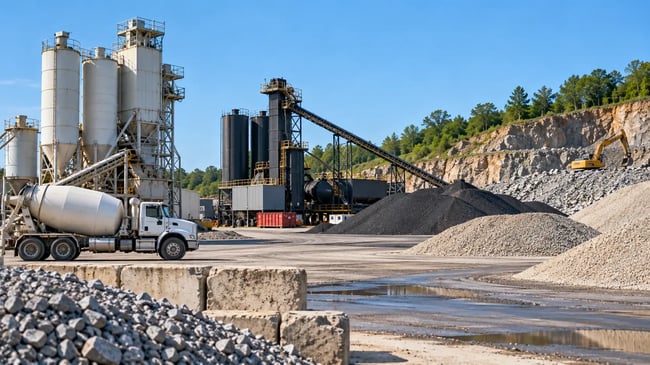
This is common in New Jersey. A quarry with a ready-mix plant on the property, an asphalt plant next to a sand and gravel pit, a yard that crushes recycled concrete and asphalt. Each activity points toward a different permit, and which permit covers what depends on how NJDEP authorizes the site and how the operations share drainage. We won't pretend there's one simple rule.
What we can say is don't assume a single permit covers every activity on your property, and don't assume NJDEP's records match what you do today. Plants get added, ownership changes hands, and permits get left behind. A site walk and a look at your existing authorizations usually answers the question quickly.
Recycling crushed concrete and asphalt can also raise a separate set of questions, because New Jersey has recycling approvals that sit apart from stormwater permits. We handle those too, so mention it when you call.
What Do the CPM, R4, R13, and RSG Permits Require From You?
Each of these permits requires a written stormwater pollution prevention plan. New Jersey's rules call it an SPPP, and you'll also hear SP3 or just stormwater plan, but we'll use SWPPP, the term most of the industry uses. The plan describes your site, where water flows, what could pollute it, and the best management practices, or BMPs, you use to keep pollution out. Our article on what a SWPPP is goes into more detail.
Beyond the plan, expect a routine of documented inspections, staff training, and annual paperwork to NJDEP, though the details differ by permit. Sampling is the biggest variable. Some permits require it, some require none, and what you test for depends on the permit and the industry, so read your own permit instead of relying on a general article. Where sampling applies, we explain why your own staff should do it in why you should take your own stormwater samples.
Some operations fall outside all four permits, and NJDEP writes an individual permit for those. Our guide to individual NJPDES permits explains when that happens, and NJPDES permit requirements in plain English gives the wider picture.
What About Building a New Plant or Expanding a Quarry in New Jersey?
Construction brings its own stormwater and soil rules, separate from the operating permits above. The ones that usually come up are construction stormwater coverage under NJDEP's 5G3 general permit, soil erosion and sediment control certification through the local Soil Conservation District, and stormwater management design for major development under N.J.A.C. 7:8. We don't prepare any of those. Your engineer, your contractor, or a soil erosion specialist handles them, and we're glad to point you toward the right people.
Once the plant or quarry is built and running, you'll need the operating permit that matches what you do, whether that's CPM, R4, R13, RSG, or something else, along with a SWPPP, inspections, and annual certifications. That's where we help. NJDEP can take a few weeks to several months to authorize coverage, as we describe in how long a New Jersey stormwater permit takes, so start early.
How Does RMA Help Concrete, Asphalt, and Quarry Operations With NJ Stormwater?
We've worked with concrete producers since 1992, and our concrete industry page shows what we do across that industry. RMA helped develop the NRMCA Green-Star EMS, and our founder, Doug Ruhlin, has taught NRMCA's environmental course for years. We also do mining NJPDES work and have plenty of experience with the mining industry. We're based in New Jersey and know NJDEP's permit categories well.
We can work out which permit fits your site, put together the SWPPP and forms, and build an inspection routine your team can keep up. We train your people to inspect and sample correctly, and we offer annual support after you're permitted if you want it, from reminders and result reviews to inspection prep. We don't take your samples ourselves. Storm events don't wait on a consultant's calendar, and your own staff know the site, so we teach them to do it properly. Our online training library is another place to start for staff training.
We're not the right fit for everything. We don't do construction permits or engineering work, a very large portfolio of sites might not suit our team, and if you're shopping on the lowest price or the fastest turnaround, we're probably not your match. We'll tell you up front. If you've already received a notice of violation, an environmental attorney may be appropriate alongside any permit help.
If you'd like to talk it through, call us at 888-RMA-0230, email info@rmagreen.com, or fill out the form on our website. You can also contact RMA directly. No pressure and no obligation.