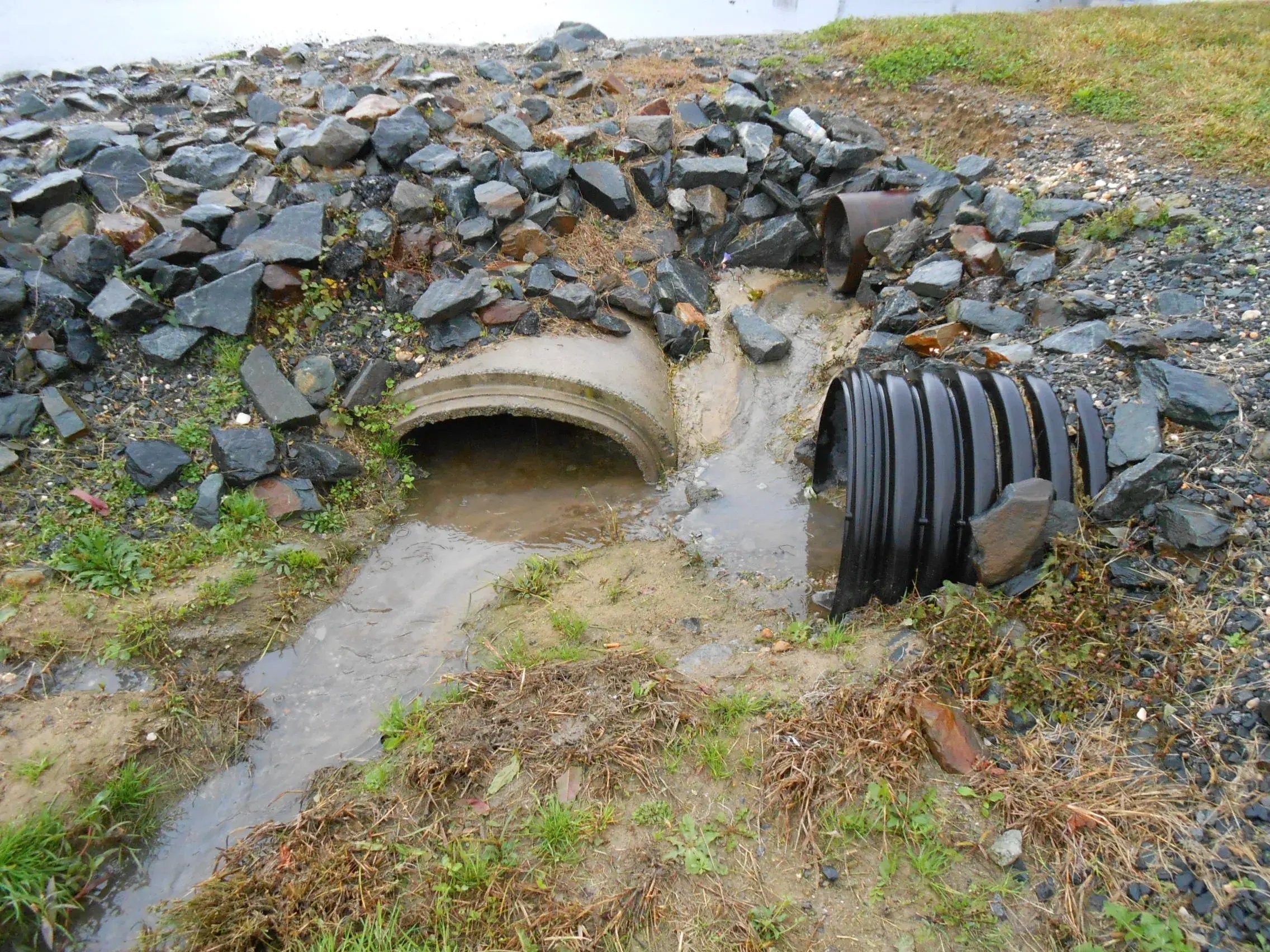
Why Concrete Plants Usually Belong Under the Concrete Products Manufacturing Permit, When a Larger Facility Changes the Answer, and What Happens on the Wrong One
If you run a ready-mix, block, brick, or precast plant in New Jersey, the rain that hits your aggregate piles, cement silos, and truck lanes and then runs off site is regulated. The New Jersey Department of Environmental Protection (NJDEP) treats it as an industrial discharge, so a concrete plant typically needs coverage under the New Jersey Pollutant Discharge Elimination System (NJPDES), the state's version of the federal NPDES stormwater program. Two permit names come up again and again: the Concrete Products Manufacturing (CPM) general permit and the Basic Industrial Stormwater General Permit, known as the 5G2. The short answer is that concrete plants generally belong under the CPM, because the 5G2 is open only to facilities that have eliminated, or can eliminate within six months, all exposure of industrial materials and activities to rain and snowmelt, and a working concrete plant almost never can.
This article covers why the CPM is the usual fit, what the 5G2 is built for, and the edge cases where the answer gets murkier, such as a concrete operation that's one piece of a quarry or a larger industrial site. We'll also cover what happens on the wrong permit and how to confirm which one you're on. If you'd rather talk through your own situation, you can reach out to RMA, and we'll tell you straight whether you need help at all.
Table of Contents
TL;DR
Concrete plants in New Jersey generally belong under the Concrete Products Manufacturing (CPM) general permit, not the Basic Industrial Stormwater (5G2) permit, because the 5G2 requires a facility to eliminate, or be able to eliminate within six months, all exposure to rain and snowmelt, and a working plant with open aggregate, silos, and truck lanes can't. Edge cases arise when concrete is a small part of a larger facility, and the answer then depends on what else happens on site, how water drains, and what NJDEP will authorize. A plant on the wrong permit risks a notice of violation, penalties of up to $50,000 per violation, and discharges that aren't properly authorized.
What Are the CPM and 5G2 Stormwater Permits in New Jersey?
New Jersey doesn't hand every industrial site the same stormwater permit. NJDEP uses a basic general permit (the 5G2), industry-specific general permits (concrete, hot mix asphalt, mining and quarrying, sand and gravel, scrap metal, vehicle recycling, and wood waste), individual permits written for one facility, and an exclusion for facilities with no exposure. A general permit is a pre-written permit that many similar facilities sign onto by filing a Request for Authorization (RFA), instead of NJDEP writing a separate permit for each one.
The CPM covers stormwater discharges to surface and ground waters from facilities that make concrete or concrete products, including ready-mixed concrete, block, and brick, plus facilities NJDEP classifies as concrete-related manufacturers. The 5G2 sounds like the default for anyone industrial, but it's open only to regulated facilities that have eliminated, or can eliminate within six months of authorization, all exposure of industrial materials and activities to rainfall and snowmelt, by covering them or moving them indoors. Both expect a written stormwater pollution prevention plan, sometimes called an SPPP, an SP3, or just a stormwater plan. We'll call it a SWPPP, and our guide to what a SWPPP is covers the basics.
| What to compare |
CPM |
5G2 |
| Written for |
Facilities that make concrete or concrete products, including ready-mixed concrete, block, and brick |
Regulated facilities that have eliminated, or can eliminate within six months of authorization, all exposure to rain and snowmelt |
| Exposure test |
Doesn't require eliminating all exposure. NJDEP describes it as the alternative for concrete facilities that can't |
Yes. Every industrial material and activity has to be covered or moved indoors |
| SIC codes |
3271, 3272, 3273, and similar concrete activity |
Eligibility turns on exposure, not on a specific industry |
| Permit document on NJDEP's site |
Final permit dated November 1, 2008 |
Master general permit effective February 1, 2023 |
NJDEP's CPM page still lists a final permit dated November 1, 2008, so the CPM is running past its original term, which is common for New Jersey's industry-specific permits. In our experience facilities stay covered until NJDEP reissues a permit, but check NJDEP's CPM page for current status. Our guide to NJPDES stormwater requirements explains the rest of the program.
Why Do Concrete Plants Generally Fall Under the CPM Instead of the 5G2?
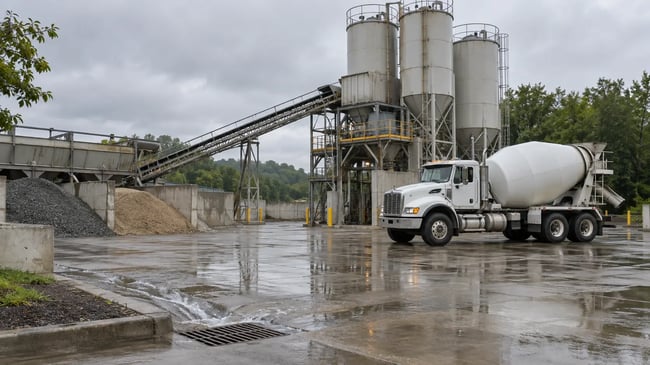
It comes down to the 5G2's exposure test. To use that permit, a facility has to get every industrial material and activity out of the rain, and it gets six months from authorization to finish. For a print shop, a brewery, or a warehouse, that can mean moving a few pallets inside and covering the dumpster. For a concrete plant, the materials and the activity are the business. Sand and stone sit in stockpiles or open bins, cement moves through silos and trucks, mixer trucks load and wash out, and finished block, pipe, or precast product cures in the yard. Even the lanes trucks use to haul raw materials and finished product count as industrial activity, so tarping one pile doesn't solve it.
NJDEP wrote the CPM for exactly this situation. Its permit information summary describes the CPM as the alternative for concrete facilities that can't eliminate all exposure and so don't qualify for the 5G2. It targets plants with the Standard Industrial Classification (SIC) codes NJDEP uses to sort facilities by industry: 3271 for concrete block and brick, 3272 for other concrete products, and 3273 for ready-mixed concrete. It isn't limited to those codes, since NJDEP also applies it to similar or related concrete work.
Two other paths sit on either side of the CPM. A no exposure certification is stricter than the 5G2, because the whole industrial area has to be under permanent cover, and in roughly 1,000 concrete plants we've been on, only one or two were entirely covered. An individual NJPDES permit is the fallback for facilities that fit no general permit, and it's a longer process. Our guides on what no exposure means, when you need an individual NJPDES permit, and the 5G2 basic permit go deeper on each.
When Does a Concrete Operation Inside a Larger Facility Change the Answer?
Plenty of New Jersey concrete operations aren't stand-alone plants. A ready-mix plant sits at the edge of a quarry, a precast shop shares a site with a larger manufacturer, or a block line runs next to a yard handling other materials. NJDEP writes its permits around a facility and its industrial activities, so when one site has several, the right permit depends on specifics no article can settle for you. We can lay out the questions that decide it.
What If Concrete Is One of Several Activities at the Same Site?
Start with the 5G2's test, because it's written around all exposure at the facility. A mostly indoor facility with one small outdoor batching or product-storage area doesn't pass unless that concrete activity gets covered or moved inside, so a small concrete corner can keep an entire site off the 5G2. From there, the right permit depends on whether concrete is the primary activity or one of several, whether the other activities have industry permits of their own (mining and quarrying, sand and gravel, hot mix asphalt, and scrap metal each do), whether the concrete area drains separately from the rest of the site, and what each permit's eligibility language says about mixed activity. We work with companies that run quarries and ready-mix plants side by side, and the answer comes from reading the permit text and tracing the drainage, not from a rule of thumb. Raise it with NJDEP before you file an RFA, not after.
Concrete as a sideline is a different edge case, like a contractor yard that batches small amounts for its own work. Whether that counts as manufacturing concrete products, and whether the site's main activity falls under a regulated SIC code at all, is a judgment to make with the permit text in hand. Some of these sites need no industrial stormwater permit, some belong under the CPM, and some fit the 5G2 once exposure is cleaned up.
What About Building or Expanding a Concrete Plant?
Building or expanding a plant brings construction-phase approvals: New Jersey's construction stormwater general permit (5G3), soil erosion and sediment control certification from your Soil Conservation District, and stormwater management design for major development under N.J.A.C. 7:8. RMA doesn't prepare any of those, and your engineer, contractor, or a soil erosion specialist is the right person for them. Temporary batch plants tied to a construction project are their own question, so ask NJDEP before assuming either permit applies. Once the plant is running, it needs its own operational authorization, which for most concrete plants means the CPM, along with a SWPPP, inspections, and often SPCC and Tier II reporting. That's where we help, and we're glad to talk through what construction will need and point you to the right people.
What Happens If Your Concrete Plant Is on the Wrong Stormwater Permit?
The most common wrong-permit situation is a concrete plant covered under the 5G2 when it belongs under the CPM. The causes are ordinary. "Basic" sounds like "standard," so a template, a previous owner, or a well-meaning advisor defaults to it. A plant changes hands and nobody reads the authorization that came with it. Or a facility that started mostly indoors adds outdoor stockpiles over the years and never revisits its permit.
When an inspector shows up, the gap is easy to see. A 5G2 authorization assumes exposure has been eliminated, and a concrete plant's aggregate piles, silos, and truck lanes say otherwise. In our experience a first finding like this often starts with a notice of violation and a deadline to correct, but NJDEP inspectors have discretion, and penalties get more likely when an application said something the site doesn't back up, when problems are widespread, or when the operator isn't cooperating.
There's a second problem that doesn't depend on an inspector. A plant can follow the 5G2 to the letter and still miss what its real operations call for, because the CPM is written with concrete plants in mind and can ask for things the 5G2 doesn't, such as monitoring or limits. Stormwater leaving an exposed plant under a permit it doesn't qualify for is, in effect, a discharge without the right authorization, which is what New Jersey's Water Pollution Control Act is aimed at.
What Penalties Can NJDEP Assess for a Stormwater Permit Violation?
Under NJDEP's penalty rules at N.J.A.C. 7:14-8, the department can assess a civil administrative penalty of up to $50,000 for each violation of the Water Pollution Control Act. Paying a penalty doesn't take other enforcement tools off the table, and federal Clean Water Act enforcement and private citizen suits are separate risks. In our experience top-of-range penalties are unusual, but no one can promise how a case will go. If you've received a notice of violation, or suspect the problem has gone on for years, call an environmental attorney before you start fixing things or talking with the agency.
Fixing a mismatch usually means confirming which authorization you hold, comparing your site to the permit you should be on, and filing an RFA for the right one. Update your SWPPP to match and train your team on it. NJDEP decides whether to authorize you, and we can't promise timing or outcome, so while an application is pending, run inspections and keep records as if the right permit already applies. Covering stockpiles or building new containment is contractor or engineering work, which RMA doesn't do.
How Do You Confirm Which NJPDES Permit Your Concrete Plant Is On?
You don't need a consultant to start. Most of this is paperwork you already have and a walk around your yard.
| What to check |
Where to look |
What it tells you |
| Your NJDEP authorization |
The authorization letter or permit documents |
Which permit you're covered under, such as the 5G2 or CPM |
| Your SIC code |
The application or RFA on file |
Whether you're classified under 3271, 3272, or 3273 |
| Your exposure |
A walk of the yard, seeing it the way rain does |
Stockpiles, silos, truck lanes, washout areas, product storage, or tanks outside mean the 5G2 test fails |
| Where your water goes |
Site drainage and sewer connections |
Whether runoff reaches surface water, groundwater, or a sewer |
| Permit status |
NJDEP's CPM and 5G2 pages |
Current documents and where each permit stands |
Process water deserves its own look. Truck washout, reclaimer water, and settling basin discharges aren't stormwater, and neither permit should be read as a free pass for them. NJDEP describes the CPM as covering industrial stormwater discharges, so where your process water goes, and what authorization it needs, is a separate question. Our guides on stormwater versus process water and concrete plant water management cover the differences. If any water goes to a municipal sewer, the local sewerage authority's rules may apply instead of, or alongside, an NJDEP permit, so ask them directly.
Still unsure? Our guides on which NPDES permit you need and what inspectors look for at a concrete plant show you your site the way a regulator sees it, and our producer's guide to concrete plant stormwater permits covers the wider picture beyond New Jersey.
How Can RMA Help With CPM and 5G2 Questions?
We've worked with concrete producers since 1992 and we're based in New Jersey, so NJDEP's permit categories and the way inspectors read a concrete plant are familiar ground. We can read your site against the CPM and 5G2 eligibility language, sort out which permit you're on and whether it fits, handle the RFA, write or update your SWPPP, and train your team. We also offer annual support after you're permitted: reminders, help interpreting results, SWPPP and annual reporting updates, and inspection prep. If your permit calls for sampling, your people collect the samples because they know the plant and the storm windows, and we train them to do it right.
We'll also be upfront about what we don't do. We don't prepare construction-phase permits, and we don't do engineering design or build treatment systems, so fixes that involve covering stockpiles or building structures go to a contractor or engineer. We're a small firm with senior people doing the work, we're not always the cheapest, and we can't always meet very tight timelines. If your authorization already matches your plant, your SWPPP is current, and your team knows what to do, you may not need us at all.
If you'd like to talk, call 888-RMA-0230, email info@rmagreen.com, or fill out the form on our website, and you're welcome to contact RMA whenever it suits you. There's no pressure and no obligation. For a ballpark first, try our NPDES permitting pricing calculator, and our online training library has courses for your team.