PAG-03, No Exposure, Trailer Wash Water, and Chesapeake Bay Nutrient Monitoring for Pennsylvania Meat and Poultry Processors
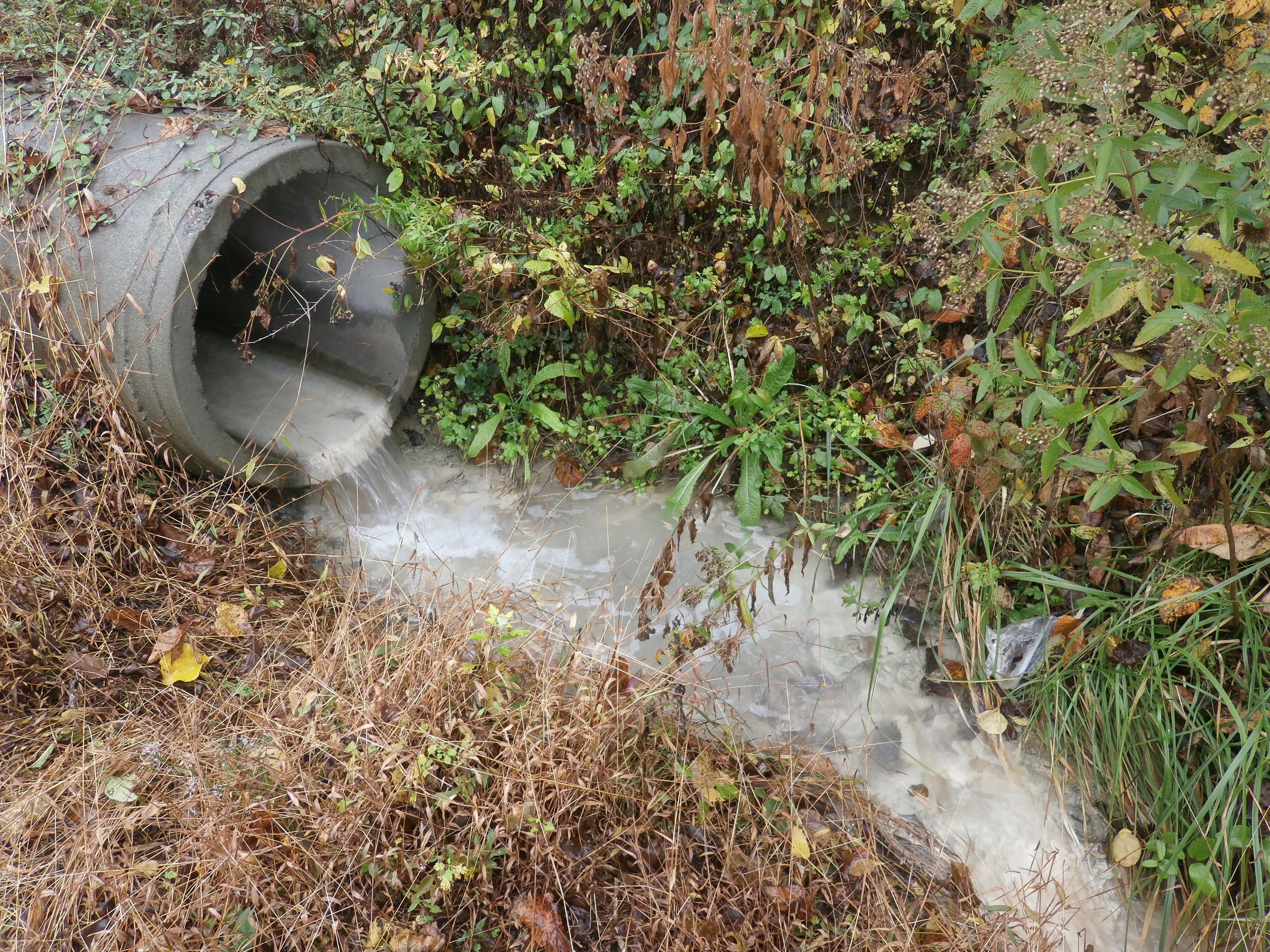
If you run a slaughterhouse, a poultry processing plant, or a sausage and prepared meats operation in Pennsylvania, you may have heard that food plants can need a stormwater permit and wondered whether that includes yours. In most cases it does. The Pennsylvania Department of Environmental Protection (DEP) expects meat and poultry processors to hold either coverage under a general permit called PAG-03 or a No Exposure Certification, and how your plant handles livestock, trailers, byproducts, and wash water decides which one fits.
Below, we cover how DEP decides whether your plant is regulated, what PAG-03 and a No Exposure Certification each involve, which parts of a meat or poultry plant cause stormwater trouble, why trailer wash water and blood can't go into a storm drain, and what the Chesapeake Bay watershed adds for plants in Lancaster and Lebanon counties. If you'd rather talk through your own plant, you can reach out to RMA and we'll give you a straight read on where you stand.
Table of Contents
TL;DR
Yes, in most cases. DEP treats meat packing, sausage and prepared meat, and poultry processing plants as regulated industrial sites, so a plant needs either PAG-03 stormwater permit coverage or a No Exposure Certification, and only an all-indoor plant with sealed byproducts and an indoor wash area can realistically use the certification. Trailer wash water, blood, and byproduct spills can't go to a storm drain, and the 2023 PAG-03 added nitrogen and phosphorus monitoring that puts nutrient results under a closer look for plants in the Chesapeake Bay watershed. Retail butcher shops are usually outside the program, and a sewer authority's rules can change the picture for plants tied into a municipal sewer.
Which Meat and Poultry Plants in Pennsylvania Need a Stormwater Permit?
Stormwater from industrial sites is regulated through NPDES permits. NPDES stands for National Pollutant Discharge Elimination System, the Clean Water Act program that controls what gets discharged into streams, and DEP runs it in Pennsylvania. DEP starts with your plant's primary SIC code. An SIC (Standard Industrial Classification) code is a four-digit number that describes what a business mainly does, and if yours is on DEP's list of regulated industrial activities, you have to obtain permit coverage or file a No Exposure Certification. Codes 2011 through 2015 are on that list, covering meat packing plants, sausage and prepared meat producers, and poultry slaughtering and processing.
Your primary code comes from whichever activity brings in the most revenue on site, so a plant that slaughters, cuts, and also runs a small retail counter is a meat processor for permitting purposes. If a listed code is only a secondary activity at your site, that alone doesn't trigger the requirement, though DEP can still require coverage when your runoff carries pollutants. A retail butcher shop that cuts and sells to the public typically falls outside the listed codes, but blood, fat, and manure are pollutants under any classification, and the Clean Streams Law lets DEP act on them regardless. Local sewer authorities and townships can have their own rules and fees too, so confirm your situation instead of assuming. Our guide on which Pennsylvania stormwater permit you need covers the general decision for any industry.
How Does PAG-03 Appendix I Apply to Meat and Poultry Processing?
PAG-03 is DEP's general permit for industrial stormwater, meaning a standard permit DEP writes once that facilities join by filing a Notice of Intent (NOI) describing their site, operations, outfalls (the points where stormwater leaves the property), and controls. The current version took effect March 24, 2023 and expires March 23, 2028. Parts A, B, and C apply to everyone, and Appendix I adds the requirements for food plants, including meat and poultry. New coverage means filing the NOI with the DEP regional office for your county at least 60 days before a new discharge begins, with a map of your drainage and outfalls, a list of leaks and spills from the past five years, and a Preparedness, Prevention, and Contingency (PPC) Plan. A PPC Plan is the written plan that identifies what on your site could pollute stormwater, how you prevent it, and what you do when something spills. Our comparison of SWPPPs and PPC Plans for PAG-03 explains the difference, and our article on how long PAG-03 coverage takes covers the timeline.
Once you're covered, you sample stormwater at least every six months after a storm that produces more than 0.1 inch of precipitation following 72 dry hours, with the grab sample taken in the first 30 minutes of discharge where possible. Results go to DEP through the eDMR (electronic Discharge Monitoring Report) system, and an annual report is due each March 23. We walk through the mechanics in our guides to PAG-03 stormwater sampling and Pennsylvania eDMR reporting. Your results are compared to benchmark values in Appendix I, which are targets and not legal limits, as we explain in our piece on benchmark values versus effluent limits. For meat and poultry plants, the parameters include oxygen-demanding organic material measured as BOD5, which the 2023 reissue added to Appendix I. Two exceedances in a row for the same pollutant at the same outfall trigger a Corrective Action Plan, due to DEP within 90 days of the end of that monitoring period, and continued exceedances can cost you general permit coverage and send you to an individual permit.
Can a Meat or Poultry Plant Qualify for a No Exposure Certification?
A No Exposure Certification (NEC) is DEP's alternative to PAG-03 for facilities that keep every industrial material and activity out of the weather. You file it with a PAG-03 NOI, DEP approves it, and it lasts five years. The fee is $500 every five years with no annual fee, and the renewal application is due at least 180 days before expiration. Existing facilities also submit sample results for the eight parameters on the NEC form, and DEP can inspect to confirm that conditions match what you certified. Our article on what happens during a PA DEP stormwater inspection shows what that visit looks like.
No exposure is all or nothing. DEP won't approve it for part of a site, so one livestock pen, outdoor byproduct bin, or open dock puts the whole plant on the PAG-03 path, and a plant that discharges to a High Quality or Exceptional Value stream under 25 Pa. Code Chapter 93 can't use NEC at all. Materials have to sit inside a storm-resistant shelter, meaning a fully roofed and walled building or a covered structure built so water can't flow through it. Tightly sealed barrels and tanks don't need one, and neither do dumpsters that are covered, in good condition, and not leaking. Tarps generally don't count on permanent installations, and any vehicle wash area has to be indoors. An all-indoor further processor that slices, cooks, packages, and ships from enclosed docks often qualifies. A plant with live animals, outdoor holding pens, or open bins of fat and bones almost never does. If conditions change after you're certified, you have to tell DEP right away and apply for permit coverage. Our explainer on what no exposure means under a stormwater permit covers the criteria in more detail.
Which Areas of a Meat or Poultry Plant Create Stormwater Exposure?
A typical food plant has dry ingredients and packaging to worry about. A meat or poultry plant has wet, organic material in places the weather can reach, which is why so many end up on PAG-03 instead of No Exposure. This table lists the usual trouble spots.
| Area |
What can reach stormwater |
What to do about it |
| Livestock ramps and holding pens |
Manure, urine, and bedding carrying nutrients, bacteria, and oxygen-demanding material |
Roof and curb the area where you can, and route pen runoff to wastewater handling your sewer authority or DEP has approved |
| Trailer parking and loading docks |
Blood, fat, and meltwater dripping from trailers, plus spilled product |
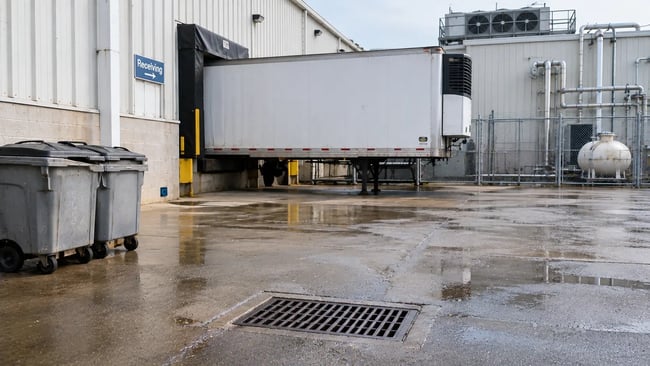
Use covered docks, drip pans, and spill kits, and clean up dry before anything gets hosed |
| Trailer and truck washing |
Detergent and organic residue in wash water, which isn't stormwater |
Wash indoors on a pad tied to the sanitary sewer, or capture and haul the water |
| Rendering and byproduct storage |
Blood, fat, offal, bones, and grease from open or leaking containers |
Use sealed, leak-proof containers under a roof, with spill materials close by |
| Dumpsters and organic waste bins |
Liquid draining through container ports or drains |
Keep lids closed, drain plugs sealed, and containers in good condition or under cover |
A container that leaks through a port or drain with no containment is a PAG-03 compliance problem, while a hauler who leaves a lid open once usually isn't. If your plant also runs a rendering operation, check its SIC code in Table 1 of the PAG-03 NOI instructions, since rendering has its own classification and DEP applies each appendix outfall by outfall when different activities share a site. Many of the fixes above are the same stormwater best management practices that go into a PPC Plan. Ammonia refrigeration brings its own requirements, including Tier II reporting and, for larger systems, EPA's Risk Management Program and OSHA's Process Safety Management standard, and we're not covering those here. For stormwater, an ammonia release shouldn't reach a storm drain, and the only refrigeration-related discharge PAG-03 allows is uncontaminated condensate from air conditioners, coolers, chillers, and compressors, treated through an oil/water separator.
Why Can't Trailer Wash Water, Blood, and Byproducts Go Into a Storm Drain?
A storm drain is built for rain, and whatever goes in travels to a stream, usually untreated. DEP is direct about trailer and truck wash water. Vehicle wash water isn't an authorized non-stormwater discharge under PAG-03, and a facility that wants to discharge it needs an individual permit. A plant can stay eligible for PAG-03 or NEC if the wash water is completely separated from stormwater and then reused, recycled, or sent to a sanitary sewer in line with industrial pretreatment requirements. The list of non-stormwater flows PAG-03 does allow is short: unplanned firefighting water, potable water line and hydrant flushing without measurable chlorine, irrigation drainage, landscape water without pesticides or fertilizer, uncontaminated groundwater, and the condensate mentioned above. Routine building washdown and pavement wash water qualify only when no detergents or hazardous cleaners are used and the water doesn't touch a pollutant source, so a dock apron hosed down after a trailer leaked blood doesn't pass.
Blood, fat, grease, and byproduct liquids are industrial waste under the Clean Streams Law, which prohibits putting industrial waste into state waters without a permit. DEP can assess civil penalties of up to $10,000 per day for each violation, and federal Clean Water Act penalties run higher and are adjusted for inflation each year. If you've had a discharge or received a notice of violation, an environmental attorney is the right person to talk to before you respond.
What works in practice is dry cleanup first, with squeegees, absorbent, and wet vacuums, and only then a rinse to a floor drain you've confirmed is connected to the sanitary sewer. That last part is where plants get caught, because older plants often find floor or yard drains tied to the storm system, and a dye or smoke test shows where each one goes. Mark your storm drains, cover the inlets near docks and wash pads while you clean, and keep spill kits at receiving, loading, and wash areas. Before you send wash water or pen runoff to the sanitary sewer, talk to your sewer authority, since pretreatment rules apply and many authorities set their own limits on fats, oils, and grease. Our article on the difference between stormwater and process water sorts out which of your flows is which, and our online environmental training library is a place to start for your dock and sanitation crews.
How Does the Chesapeake Bay Watershed Affect Lancaster and Lebanon County Plants?
Many of Pennsylvania's meat and poultry processors are in Lancaster and Lebanon counties, and both drain to the Susquehanna River and on to the Chesapeake Bay. Pennsylvania's Phase 3 Watershed Implementation Plan, its Bay cleanup plan, keeps nutrients in focus at DEP and EPA, and the 2023 PAG-03 reflects that by adding total nitrogen and total phosphorus monitoring to every appendix. Total nitrogen is calculated from nitrate-nitrite and total Kjeldahl nitrogen, so each sample now carries three more lab parameters. Meat and poultry plants handle exactly the kind of material that produces nitrogen, phosphorus, and oxygen demand, and loose housekeeping at the pens, docks, or byproduct bins tends to show up in those numbers first. You can sample more often than the permit requires, though DEP still expects the highest daily value for the period, and extra samples help you spot patterns. Our guide on what to do when stormwater results are high walks through the response.
Two more things come with the watershed. If your receiving stream is listed as impaired, your NOI has to include results for the pollutant causing the impairment, which our piece on TMDLs, 303(d) impaired waters, and stormwater permits explains. And your stream's designated use under Chapter 93 decides whether PAG-03 and NEC are available at all, since High Quality and Exceptional Value streams aren't eligible for either. Streams are classified one at a time, so check yours before you assume a path.
When Does a Meat or Poultry Plant Need an Individual Permit or Sewer Approval?
PAG-03 doesn't fit every plant. This table covers the situations we see most with meat and poultry processors.
| Your situation |
What it means for stormwater |
| The plant discharges treated process wastewater directly to a stream |
It has or needs an individual NPDES permit, and its stormwater can't use PAG-03 because the individual permit covers it |
| The plant sends process wastewater to a municipal sewer |
Pretreatment rules apply through your sewer authority, and PAG-03 or NEC can still work for stormwater if you're eligible |
| Stormwater goes to a High Quality or Exceptional Value stream |
PAG-03 and NEC aren't available, so you'd apply for an individual permit, which DEP says would carry limited or no stormwater monitoring |
| Stormwater flows to a sanitary or combined sewer that's part of a municipal treatment system |
DEP says PAG-03 or NEC isn't required, but pretreatment rules apply and local rules may differ |
| Stormwater flows to a municipal or private storm sewer |
You still need PAG-03 coverage or an NEC |
Process wastewater from slaughter and further processing is regulated separately from stormwater, under the federal effluent guidelines in 40 CFR Part 432. Some older boroughs and cities have combined sewers where the sewer authority may govern runoff instead of a DEP stormwater permit, so we never tell a plant in a specific city flatly that it does or doesn't need PAG-03. If you land on the individual permit path, the application fee for industrial stormwater is $3,000 under 25 Pa. Code Section 92a.26, with annual fees on top. If you're building or expanding, new pavement or outfalls mean an NOI amendment with a $500 fee. Construction-phase permits and approvals, including construction stormwater coverage, erosion and sediment control plans, and conservation district sign-off, are a separate track that your engineer or contractor handles, and RMA doesn't prepare those. We help with the permits and plans your plant needs once it's running, and we can point you toward the right people for the construction side.
What Does Stormwater Permit Coverage Cost for a Meat or Poultry Plant?
The agency fees are simple. PAG-03 has a $500 filing fee for new coverage, then a $500 annual fee due each March 23 after your first full year of coverage, and a No Exposure Certification costs $500 every five years with no annual fee. Consulting costs vary more, and for a meat or poultry plant they depend on how many outfalls you have, how complicated your drainage is, whether you already have a PPC Plan, how much exposure needs fixing before you file, and what your lab charges for the full parameter list. Our article on how much a PAG-03 permit costs in Pennsylvania breaks those factors down. If your plant is all indoors and an NEC is realistic, some facility managers handle it themselves, and we'll say so, as in our piece on getting a PAG-03 permit yourself. For a plant with pens, byproduct handling, and wash operations, the site work is where experience earns its fee. The pricing calculator below gives you an instant estimate for RMA's help with permitting, with no email and no sales call.
How Does RMA Help Pennsylvania Meat and Poultry Plants With Stormwater Permits?
We work with Pennsylvania facilities all the time, and meat and poultry plants are among the harder ones to get right because of the livestock, byproduct, and wash water questions above. We start by working out which path fits your plant: PAG-03, a No Exposure Certification, or an individual permit. Then we walk the site to see where water goes, build your PPC Plan and maps, prepare the NOI and coordinate sampling, and stay with the application through DEP review. After you're covered, we can help with sampling, eDMR reporting, annual reports, and corrective action plans. Senior staff do the actual work, and if your plant is indoors and an NEC is something you can handle yourself, we'll tell you.
If you'd like to talk through your plant, you can call us, email us, or fill out the form on our website. Tell us what's happening at your facility, and we'll tell you what applies and what it would take, with no pressure and no obligation. You can contact RMA whenever you're ready.