How Pennsylvania Treats Runoff From Mulch Piles, Compost Windrows, and Landscape Supply Yards, and Why the Answer Depends on What Happens on Your Site
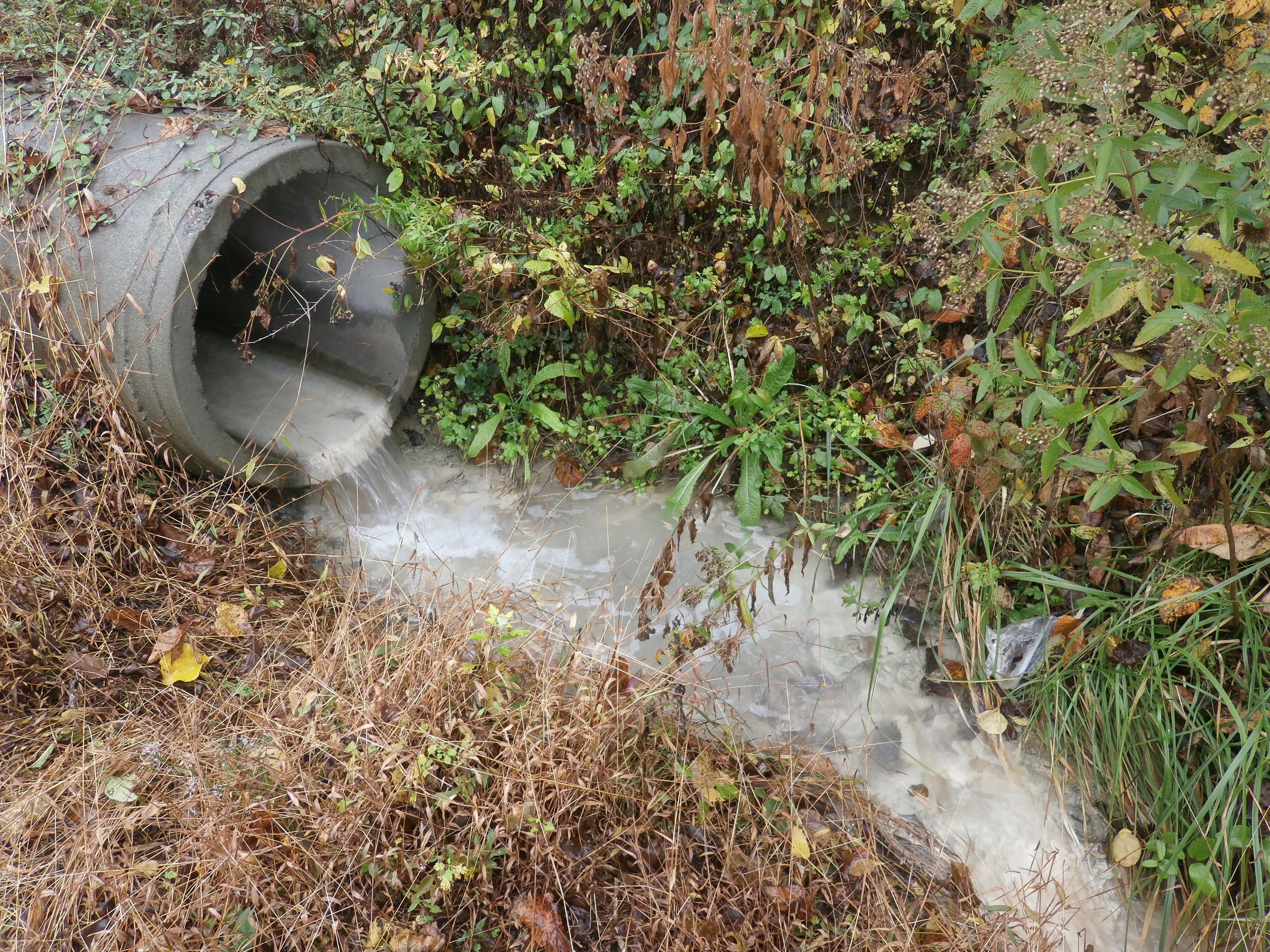
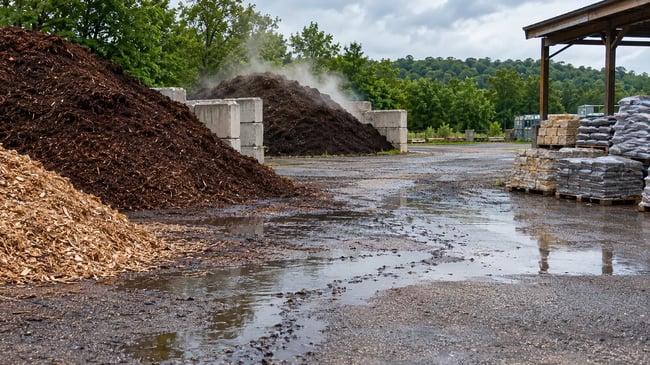
If you run a mulch yard, a compost site, or a landscape supply business in Pennsylvania, you've probably watched what happens when it rains. Water moves through and around your piles and leaves the site dark brown, sometimes foamy, and often smelling like a swamp. Neighbors notice it, township officials notice it, and eventually a DEP inspector might notice it too. The question most owners ask next is whether they need a stormwater permit, and the answer is a firm "it depends." Some yards need one, some don't, and some are regulated through a different part of DEP entirely.
A mulch manufacturing site, a composting facility, and a retail landscape yard can land in three different places under DEP's rules. Composters answer mostly to DEP's waste program, mulch producers are often treated as industrial stormwater dischargers, and a yard that only sells finished product may not need an industrial stormwater permit at all. Below we cover the runoff concerns behind those rules, how DEP's waste and water programs overlap, and how mushroom substrate composting in Chester County works as a distinctly Pennsylvania example. If you'd rather talk through your site with someone, you can reach out to RMA anytime.
Table of Contents
TL;DR
It depends on what you do on your site. Composting yards are regulated mostly through DEP's waste program, which handles leachate and runoff in the facility approval. Mulch manufacturing is often treated as industrial stormwater, covered by Pennsylvania's general industrial stormwater permit or by an individual permit when the stream gets extra protection. A yard that only sells finished product usually doesn't need an industrial stormwater permit, though local rules and state water pollution law still apply.
Why Do Mulch and Compost Piles Create Stormwater Runoff Problems?
Rain that lands on a mulch or compost pile doesn't come out clean. As it moves through the pile it picks up tannins and other organic compounds from bark and wood, dissolved nutrients like nitrogen and phosphorus from decomposing leaves, grass, and other feedstocks, and fine particles from the base of the pile and the haul roads around it. Dyed mulch adds color on top of that, and the result is the dark, tea-colored runoff most yard operators recognize.
In the waste program's vocabulary, water that has touched active composting or mulch material is called leachate, not ordinary stormwater, and that distinction drives a lot of the rules below. Leachate causes three problems for a stream. Microbes break down the organic matter in the water and use up the dissolved oxygen that fish and insects need, which shows up in lab results as high biochemical oxygen demand. The nutrients feed algae growth. And the sediment settles over the stream bottom.
DEP's permit documents reflect this. A draft fact sheet for one mulch operation notes that mulch pile leachate can carry high concentrations of phenols, and others describe leachate tanks and impoundments built to hold mulch and dyeing runoff.
Which Pennsylvania Programs Regulate Mulch and Compost Yard Runoff?
Two parts of DEP usually come into play, and they overlap. The waste program regulates the facility itself. Composting falls under 25 Pa. Code Chapter 281, and DEP offers a permit-by-rule for yard waste composting on sites under five acres, a general permit (WMGM030) for yard waste composting between five and 15 acres, a general permit (WMGM015) for processing wood, timber, leaf, and yard waste into mulch and compost, and another (WMGR025) for residual and municipal waste composting. Those approvals carry their own runoff and leachate conditions. WMGR025, for example, requires leachate to be stored in a tank, container, or impoundment built to DEP's standards and managed under the Clean Streams Law.
The water program regulates discharges to streams. The Clean Streams Law is Pennsylvania's main water pollution statute, and the National Pollutant Discharge Elimination System, or NPDES, is the permit system DEP uses for discharges. For industrial stormwater, the tools are PAG-03, a general permit that many similar facilities can sign onto, and individual NPDES permits written for a single site. A yard can hold a waste approval and still have questions to answer under the water program, so the two shouldn't be treated as either/or. If you want the basics of how general, individual, and No Exposure coverage differ, our guide to NPDES permit types covers them.
Here's a rough map of how different operations tend to line up. Treat it as a starting point for a conversation, not a determination for your site.
| Type of site |
Waste program role |
Stormwater permit question |
| Yard waste composting (leaves, grass, brush) |
Permit-by-rule under five acres, general permit from five to 15 acres |
Runoff and leachate conditions often sit in the waste approval. Whether a separate NPDES permit applies depends on classification and where the water goes. |
| Wood waste grinding and mulch manufacturing |
General permit WMGM015 or an individual approval |
Often handled as industrial stormwater (timber products), through PAG-03 or an individual NPDES permit. |
| Residual and municipal waste composting |
General permit WMGR025 or an individual permit |
Leachate must be stored and managed, and the permits needed to manage it come before operations start. |
| Mushroom substrate composting |
Depends on how the operation is classified |
Guidance, conservation district plans, and local rules all play a part (see the Chester County section below). |
| Landscape supply yard selling finished product only |
Generally none if nothing is processed on site |
Typically not an industrial stormwater category, but local rules and the Clean Streams Law still apply. |
When Does a Mulch Manufacturing Yard Need PAG-03 or an Individual NPDES Permit?
PAG-03 is Pennsylvania's general NPDES permit for stormwater associated with industrial activity. "General" means DEP wrote one set of terms that many similar facilities can sign onto by filing a Notice of Intent, instead of each getting a custom permit. Which facilities qualify depends on what the site does, tracked through industry classification codes, and the permit is organized into sector-specific appendices. Sawmills and planing mills (SIC code 2421) and related wood products fall under the Timber Products appendix, Appendix D. For a plain-English look at what DEP means by industrial activity, see our article on stormwater associated with industrial activity.
DEP's published permit documents treat mulch production as industrial stormwater. A draft fact sheet for a Pennsylvania site that grinds logs and makes mulch lists it under SIC code 2421 and says it would fall under the timber products appendix of PAG-03 if it qualified. Because the site discharges to a High Quality stream, a designation DEP uses to give a waterway extra protection, it needed an individual permit instead. Two mulch sites can end up in different places depending on their operations and the stream they drain to.
So for a mulch manufacturer, the practical questions are how DEP classifies your operation, where your water goes, and what you do with leachate. Water you collect in a tank or impoundment and then treat, reuse, or haul away is wastewater, which is a separate conversation from stormwater. Our article on the difference between stormwater and process water explains why that line matters to regulators.
The reissued PAG-03, effective March 24, 2023, added total nitrogen and total phosphorus monitoring in all of its appendices, which lines up with the nutrient concerns mulch sites raise. A No Exposure Certification requires industrial materials to be sheltered from rain and snow, so open mulch piles rarely fit it.
How Do Composting Facilities Differ From Mulch Yards on Stormwater?
Composting is where the waste program leads. A composter's approval is built around a site design that keeps water off active material, collects the water that does touch it, and controls where it goes. The WMGM030 application calls for a description of how leachate is generated, collected, and managed, and WMGR025 requires practices that divert stormwater run-on. That can mean grading, berms, covered processing, leachate tanks, and keeping clean upslope water separate from dirty water, the same controls we cover in our guide to stormwater BMPs.
Whether a composter also needs NPDES coverage for stormwater leaving the site is where we'd avoid a flat answer. PAG-03 is built around specific industrial categories, but DEP's own PAG-03 fact sheet says activities that are similar to an appendix, even if not listed in it, may be directed to follow that appendix. A composting site might end up under PAG-03, under an individual permit, or fully within the conditions of its waste approval, depending on how DEP classifies it, where its water discharges, and what the waste approval already says about runoff. Your DEP regional office makes that call.
Do Landscape Supply Yards That Only Sell Mulch and Compost Need a Stormwater Permit?
A yard that buys finished mulch, compost, topsoil, and stone, stores it in bins or piles, and loads it onto customers' trucks sits in a different spot. Selling finished product generally isn't one of the industrial categories that triggers PAG-03, so many of these yards don't need an industrial stormwater permit. When that's your situation, we'll tell you so, because you shouldn't pay a consultant for a permit you don't need. Our guide on whether you need a stormwater permit in Pennsylvania walks through how to tell.
Adding grinding, screening, blending, or dyeing starts to look like manufacturing, and that's where industrial classifications come into play. Equipment maintenance and fueling areas can raise their own questions too. And not needing an industrial permit doesn't mean a yard has no responsibility for what leaves it. DEP can still act on a discharge that pollutes a stream, and townships often have their own stormwater and grading rules, so check locally.
Why Is Chester County Mushroom Substrate Composting a Distinctly Pennsylvania Case?
Chester County is the center of Pennsylvania's mushroom industry. Growers there start with a substrate, a prepared compost the mushrooms grow in, made in stages DEP's guidance calls Phase I and Phase II. The substrate yards of southern Chester County sit in the Octoraro Creek, Little Elk Creek, Big Elk Creek, White Clay Creek, and Red Clay Creek watersheds. The runoff concerns are the ones described above, nutrients and organic material, at the scale of an entire industry.
In early 2026, the USDA Natural Resources Conservation Service published a watershed project plan, developed with the Chester County Conservation District and the county commissioners, to address water quality concerns from mushroom composting in those five watersheds. It distinguishes passive composting operations from active ones. DEP has also published environmental best practices for the mushroom farming community, written as policy guidance rather than regulation. Streams already listed as impaired can bring extra requirements, which we explain in our article on TMDLs, 303(d) impaired waters, and NPDES stormwater permits.
Mushroom substrate sits between agriculture and commercial composting, and where a given operation falls can change which rules apply. That line has been contested locally, including a Lancaster County township that pursued classifying a mushroom operation as commercial composting, which would mean more regulation and cost. For a substrate yard, the answer turns on classification, whether composting is active or passive, the watershed, and what the conservation district plans and DEP guidance expect. We wouldn't give a flat yes or no without reviewing the site.
How Can You Figure Out Which Stormwater Rules Apply to Your Yard?
Start with a plain description of what happens on your site. Do you grind, screen, dye, blend, or compost, or do you only store and sell finished product? What materials come in? Where does rain go once it leaves your piles: a stream, a storm sewer, a basin, a wetland? If it reaches a stream, is that stream designated High Quality or Exceptional Value? Then pull the approvals you already hold. A waste permit may already spell out how runoff and leachate have to be handled, and those conditions affect whether anything else is needed. Then confirm with your DEP regional office and your township, since local rules can differ.
If PAG-03 does apply, it relies on a Preparedness, Prevention and Contingency (PPC) Plan, Pennsylvania's version of the stormwater pollution prevention plan, or SWPPP, that other states use. Our article on SWPPPs versus PPC Plans covers the difference. Coverage also brings inspections, sampling, and eDMR reporting, DEP's electronic discharge monitoring report system. Here's what to expect when DEP comes out for a stormwater inspection. Many owners can handle a straightforward filing themselves, and we say so in our article on whether you can get a PAG-03 permit yourself. A mulch or compost site with leachate handling is often less straightforward.
If DEP has already sent a notice of violation or a consent order, or a neighbor has threatened a citizen suit, bring an environmental attorney in alongside your consultant. Legal exposure is a separate question from permit coverage, and an attorney is the right person for it.
What Drives the Cost of Stormwater Permitting for a Mulch or Compost Yard?
Agency fees are one piece of the cost. DEP charges PAG-03 Notice of Intent fees in $500 installments, with an annual installment due each March 23. Individual permits carry an application fee that covers DEP's review and the first year of coverage, with annual fees after that. DEP's NPDES fee page lists the current amounts. The work behind the application usually costs more, and for mulch and compost yards it depends on whether PAG-03 or an individual permit applies, the size of the site and the number of places water leaves it, how leachate is collected, what sampling is required, whether you already have a PPC Plan, and whether engineering is needed for something like a leachate impoundment. Our article on what a PAG-03 permit costs in Pennsylvania breaks the pieces down.
The pricing calculator below is RMA's free estimator for our help with NPDES permitting, so you can see a number for a facility like yours before you talk to anyone.
What Changes When You Build or Expand a Mulch or Compost Yard?
New yards and expansions bring a separate set of requirements. In Pennsylvania, earth disturbance above certain thresholds requires an erosion and sediment control plan and, at larger sizes, NPDES coverage for construction stormwater under 25 Pa. Code Chapter 102, usually reviewed by DEP or the county conservation district. Work near streams and wetlands can trigger Chapter 105, and townships have their own land development approvals. RMA doesn't prepare any of those construction-phase permits or approvals, and most owners work with their engineer, contractor, or a soil erosion specialist on them.
Once the yard is running, the operational side begins: PAG-03 coverage or an alternative, a PPC Plan, inspections, sampling, and whatever stormwater and leachate conditions your waste approval carries. That's where we help. We can also help you work out what the construction phase will need and point you toward the right professionals.
How Can RMA Help With Mulch and Compost Yard Stormwater Permits?
We work with Pennsylvania facilities all the time, and with mulch and compost yards the first job is usually working out which rules apply. We look at what you do on site, where your water goes, and what approvals you already hold, then tell you whether PAG-03, an individual NPDES permit, or no industrial stormwater permit looks like the right path. If you need coverage, we help with the site evaluation, PPC Plan, application, sampling, and ongoing reporting. Where part of your situation belongs with someone else, like engineering for a leachate impoundment, we'll say so.
There's no pressure and no obligation. You can call us, email us, or fill out the form on our website, and you can reach out to RMA to talk it through. If your yard doesn't need a permit, we'll tell you that too.