How Outdoor Drums, Tank Farms, and Loading Areas Decide Between a PAG-03 Permit and a No Exposure Certification
If you make paint, stains, sealants, or industrial coatings in Pennsylvania, your stormwater question usually comes down to one thing: can rain touch anything your plant makes, stores, or ships? Most coatings plants fall into a category the Pennsylvania Department of Environmental Protection (DEP) regulates for industrial stormwater, which means you either hold permit coverage or you formally certify to DEP that nothing at your site is exposed to the weather.
This article explains why coatings manufacturers are covered, which exposure points tend to decide the outcome, and when a plant can skip the general permit by qualifying for a No Exposure Certification. It finishes with a walk-through checklist of the spots we see most often in this industry. If you'd rather have someone look at your yard with you, you can reach out to RMA at any point.
Table of Contents
TL;DR
Usually, yes. Paint, varnish, lacquer, and enamel manufacturing is one of the industries DEP covers under its general stormwater permit for industrial sites, called PAG-03. A coatings plant has two main routes: sign onto PAG-03, or qualify for a No Exposure Certification by keeping materials, equipment, and waste indoors or under roof so rain never touches them. Outdoor drums and totes, tank farms, loading areas, and waste storage are what most often push a plant toward the permit. Your plant's industry code, where your runoff goes, and how well your exposure points are enclosed decide which route fits.
Do Paint and Coatings Manufacturers Need a Pennsylvania Industrial Stormwater Permit?
The federal Clean Water Act and Pennsylvania's Clean Streams Law both require a National Pollutant Discharge Elimination System (NPDES) permit for stormwater that picks up pollution from industrial activity before it leaves a site. In Pennsylvania, DEP handles most of these facilities through a general permit called PAG-03. A general permit is a pre-written permit that a facility signs onto by filing a Notice of Intent (NOI), instead of negotiating a custom permit from scratch. The current PAG-03 took effect on March 24, 2023, for a five-year term. If you want the broader background first, our guide to stormwater associated with industrial activity covers what DEP means by the phrase.
PAG-03 sorts industries into sector appendices using Standard Industrial Classification (SIC) codes, which are four-digit numbers that describe what a facility mainly makes. Paints, varnishes, lacquers, enamels, and allied products (SIC 2851) sit under the appendix for chemicals and allied products. DEP uses the code tied to whatever earns the site the most revenue. Sealants, adhesives, and specialty industrial coatings can carry a different code, and DEP can point a facility at an appendix when its activities are similar, so confirm your code before you assume anything about where you land.
Being in a covered category doesn't automatically mean you need the permit. A facility has three routes: PAG-03 coverage, an individual NPDES permit written for that one site, or a No Exposure Certification if nothing is exposed to stormwater. Our breakdown of general, individual, and no-exposure options compares them side by side, and our post on whether you need a stormwater permit in Pennsylvania walks through the decision more broadly. Two details can change the answer for a coatings plant. First, PAG-03 is built for stormwater leaving a site to surface waters, so if your runoff goes to a sanitary or combined sewer, the local sewer authority may set the rules instead, and those rules vary by municipality. Second, a plant that already holds or needs an individual NPDES permit for its own process wastewater can't use PAG-03, because the stormwater gets folded into that individual permit.
What Stormwater Exposures Do Paint and Coatings Plants Usually Have?
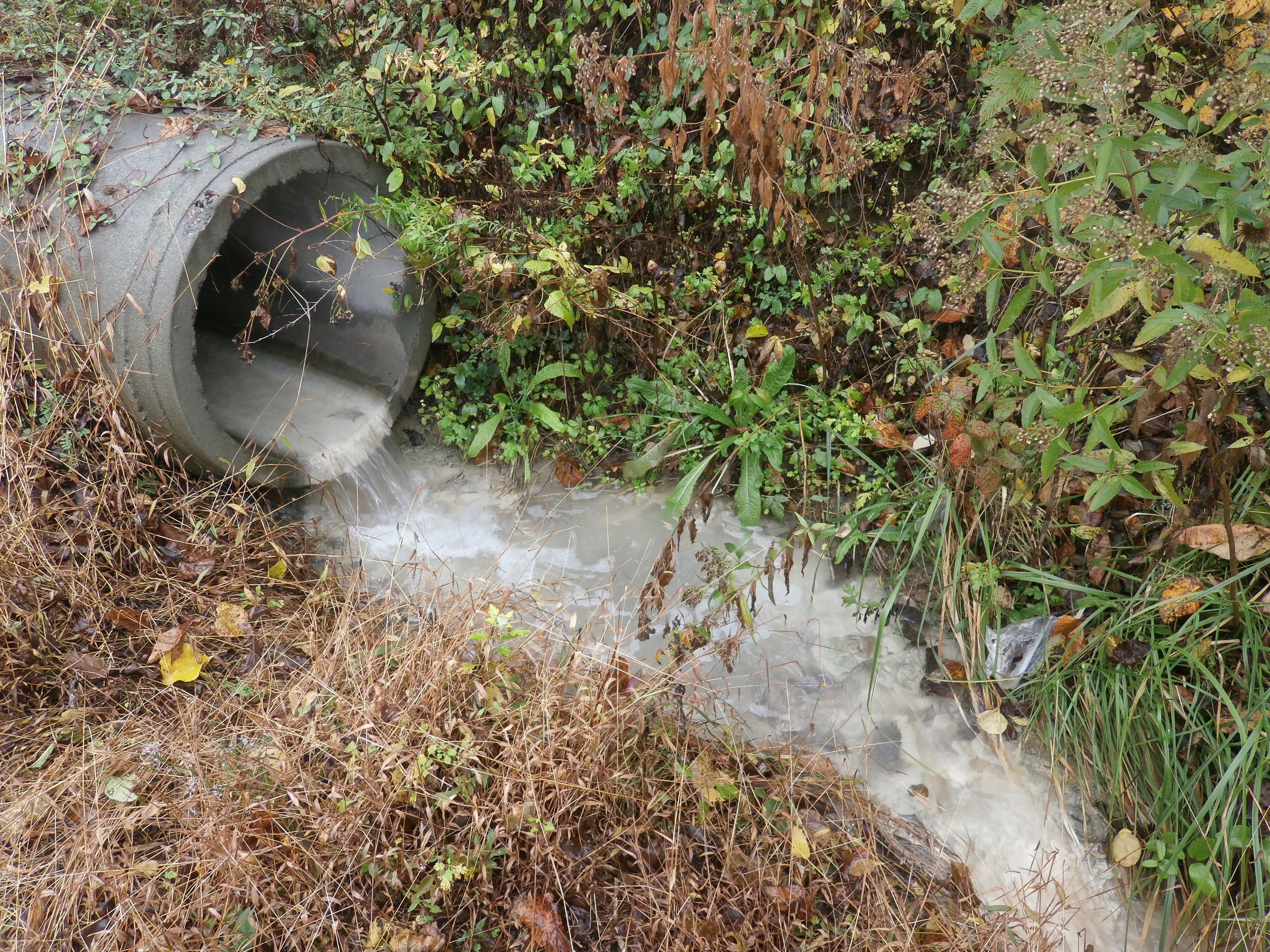
Stormwater turns into industrial stormwater when it touches materials, equipment, or residue from your operations. Coatings plants hold a lot of liquid product and raw material in containers, so the exposure usually comes from how those containers are stored, moved, and emptied. Rain that runs across a leaky fill point or a stained loading apron can carry solvents, resin, pigment solids, metals, oil and grease, and wash-off that swings the pH. DEP's current PAG-03 also added total nitrogen and total phosphorus monitoring to every sector appendix, so even sites with modest exposure have more to sample for than they used to.
| Exposure Point |
What It Looks Like at a Coatings Plant |
What Can Reach the Rain |
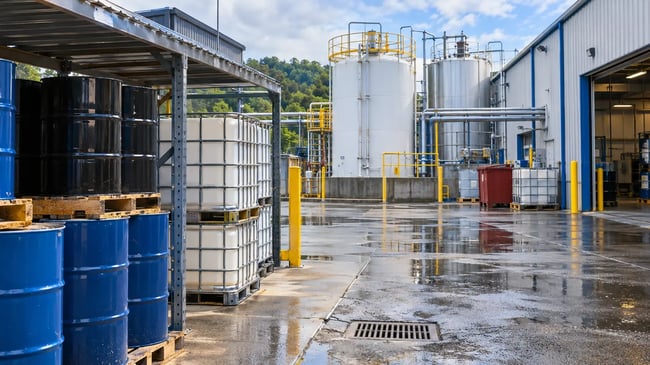
| Outdoor drum and tote storage |
Pallets of finished product, raw material drums, and IBC totes stacked in the yard |
Drips from bungs and valves, residue on rusted or damaged containers, product from punctures |
| Tank farms for solvents and resins |
Bulk tanks inside open dikes, with pumps, hoses, and valves nearby |
Leaks at fittings, spilled product on dike floors, rainwater that has collected inside containment |
| Loading and unloading |
Tanker and box trucks at a dock or open pad, hose connections, forklift traffic |
Hose-disconnect drips, spills on pavement, dried product tracked across the yard |
| Waste storage |
Spent solvent drums, off-spec batches, filters, sludge, and dumpsters with residue |
Leachate from open dumpsters, drips from waste containers, residue on the ground around them |
Why Do Drums, Totes, and Tank Farms Create Stormwater Exposure?
A sealed drum sitting in the weather is still sitting in the weather. Lids loosen, labels peel, containers rust at the seams, and a forklift tine through a drum wall can put product on the ground in seconds. Totes get a little product on the outside every time someone fills them, and empties that still hold residue often get stacked outside and forgotten. Tank farms add pumps, hoses, and valves that drip a little with normal use. Because most dikes have no roof, the containment area also fills with rain, and water that has sat on top of spilled product isn't clean stormwater. How you release it needs a plan, not a quick turn of a valve.
Why Do Loading Areas and Waste Storage Create Stormwater Exposure?
Loading and unloading is where product moves from one container to another, and that's where small spills happen. A few ounces from a disconnected hose dries on the pavement, and the next rain moves it toward a storm drain. Trucks and forklifts then carry residue across the rest of the yard. Waste storage works the same way: spent solvent, filters, and sludge are concentrated, and a dumpster with a loose lid or a drum with a weeping seam can leave a stain that every storm rinses. Wash water from cleaning equipment isn't stormwater at all, and mixing the two causes its own problems, which our post on the difference between stormwater and process water explains.
When Can a Coatings Manufacturer Use a No Exposure Certification Instead of PAG-03?
A No Exposure Certification is DEP's way of excusing a facility from permit coverage when its industrial materials and activities never touch stormwater. You file it with the PAG-03 NOI, and DEP can deny it if it decides your stormwater is likely to carry pollutants to surface waters. The certification lasts five years and then has to be renewed. DEP's general rule is that all industrial materials and activities have to be stored and conducted indoors or under roof, and the certification covers the entire facility, not just the part of the site you're proudest of. One open drum rack in a back corner can undo it. Our post on what no exposure means goes deeper on the eligibility rules.
For a paint and coatings plant, qualifying usually means production, mixing, filling, and storage all happen inside, bulk tanks are housed or roofed, loading takes place under cover, and waste containers sit indoors or under a roof with no drip path to the yard. Some plants are built that way, especially smaller blenders and fillers that buy finished intermediates and ship in cases. A plant with an open tank farm, a yard full of totes, or loading on an open pad generally won't qualify as it stands today. That isn't a failure. It just means PAG-03 is the honest route, or the plant needs to change the site before it can use the certification.
What Does PAG-03 Coverage Look Like for a Paint and Coatings Plant?
If a plant can't qualify for no exposure, it files the NOI, DEP issues coverage, and the facility follows the permit's general conditions plus the requirements in the appendix for its sector. In practice that means stormwater controls (often called best management practices, or BMPs; see our explainer on stormwater BMPs), a written plan, regular inspections, sampling of the runoff leaving the site, and electronic reporting to DEP. The specific sampling parameters and schedule depend on your appendix and your outfalls, so we don't want to hand you a one-size list here. Our guides to PAG-03 stormwater sampling and eDMR reporting cover what the routine looks like once you're covered.
The plan is usually a Preparedness, Prevention, and Contingency (PPC) Plan, DEP's site plan for preventing and responding to pollution from spills and exposed materials. Our comparison of SWPPPs and PPC plans for PAG-03 explains how the two differ. For coatings plants, the PPC Plan tends to be where the tank farm, loading procedures, and container storage all get written down. Expect DEP to ask about those details if an inspector visits, and our post on what happens during a PA DEP stormwater inspection lays out what that looks like.
PAG-03 isn't available to every site. DEP can require an individual permit when it decides one is needed to protect the receiving stream, and discharges to certain high-quality or exceptional-value waters can carry extra requirements. If that comes up for your plant, DEP has a separate individual NPDES application for industrial stormwater, and the process takes more work than signing onto the general permit.
Checklist: Common Stormwater Exposure Points at a Paint and Coatings Facility
Walk your site after a rain, or on a dry day with the weather in mind, and ask these questions at each location. Any "yes" in the right-hand column is an exposure point that either keeps you from a No Exposure Certification or belongs in your stormwater plan.
| Area |
Question to Ask on Your Walk |
| Drum and tote yard |
Are any full, partly full, or "empty" containers stored outside, even briefly, even with lids on? |
| Container condition |
Do any drums or totes show rust, dents, weeping seams, or residue on the outside? |
| Solvent and resin tank farm |
Are the tanks, pumps, and valves outdoors without a roof, and is there staining inside the dike? |
| Secondary containment |
Does rain collect inside the dike, and do you know how it's checked and released? |
| Truck loading and unloading |
Does the transfer happen on an open pad, and are there drip stains where hoses disconnect? |
| Fill points and hose connections |
Is there a drip pan or other catch at each outdoor connection? |
| Waste containers |
Are spent solvent, off-spec product, filters, or sludge kept outside in open or uncovered containers? |
| Dumpsters and roll-offs |
Do the lids close, and is there residue around the base? |
| Raw material piles and bags |
Are pigments, fillers, or powders stored or staged outdoors, or blowing around the yard? |
| Pavement and drains |
Are there stains, spill residue, or tracked product on the pavement, and which storm drains are nearby? |
| Vehicles and equipment |
Are forklifts, trucks, or used equipment with product residue parked or washed outside? |
| Building openings |
Do open doors, vents, or roof-top equipment let product, dust, or fumes settle outside? |
How Can a Coatings Plant Reduce Stormwater Exposure?
The most reliable fix is to take the exposure away, and the usual first moves are straightforward. Pull drums and totes indoors or under a roof, put drip pans under fill points, move waste into closed containers inside a covered area, and keep loading under cover with spill supplies close at hand. Housekeeping helps just as much as hardware: dry sweeping the yard, cleaning up drips right away, and repairing or replacing damaged containers before they leak. A site that clears out its exposure points may qualify for a No Exposure Certification. A site that can't still ends up with cleaner runoff and a better chance of staying under the sampling thresholds in its permit.
Some of these fixes are construction. Adding a roof, canopy, or enclosure, or paving and regrading a yard, can bring building approvals and sometimes earth disturbance rules from the township or county. RMA doesn't prepare construction-phase permits or approvals, so that piece typically goes to your engineer or contractor. What we can do is help you work out what the operational side needs once the change is built, and point you toward the right construction people to talk to.
How We Help Pennsylvania Paint and Coatings Manufacturers With Stormwater Permitting
We work with Pennsylvania facilities all the time, and the first question we ask a coatings plant is the one in this article: what's outside, and what could rain touch? From there we help you work out whether a No Exposure Certification is realistic, whether PAG-03 is the better fit, or whether something else applies. If you decide on PAG-03, we help with the NOI, the plan, and the sampling and reporting that follow. And if your site is fully indoors and you're comfortable filing the paperwork yourself, we'll tell you so; our post on getting a PAG-03 permit yourself lays out when that makes sense.
There's no obligation in asking. You can call us, email us, or fill out the form on our website, and we'll talk through your site and where you stand. When you're ready, you can contact RMA and we'll take it from there.