Pallet Yards, Wood Grinding, and PAG-03: Why Stacks of Lumber Outside Usually Mean Industrial Stormwater Rules
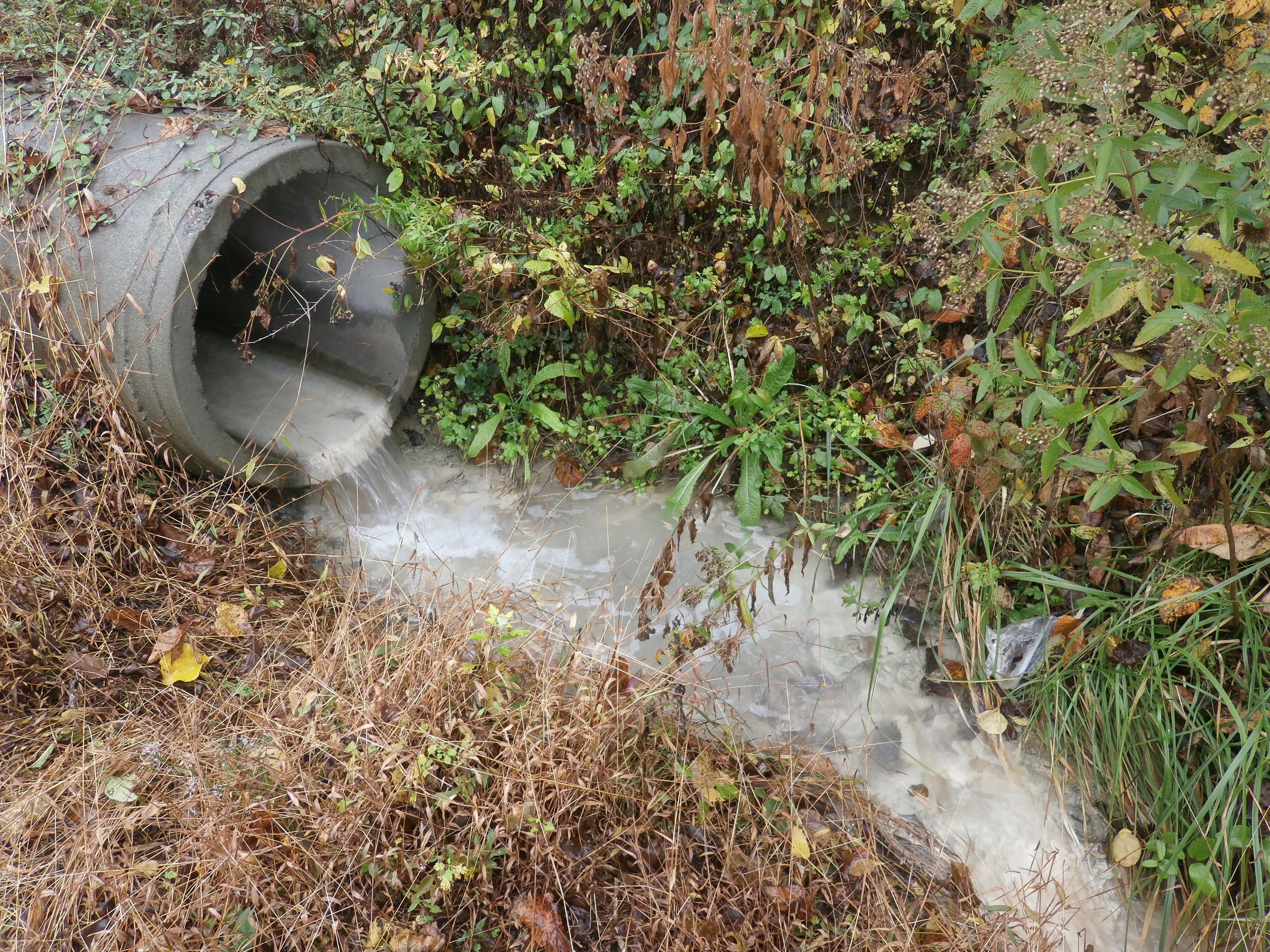
In most cases, yes. If you build, repair, or recycle wood pallets in Pennsylvania and anything sits outside in the rain, whether that's stacks of new pallets, piles of broken ones, loose lumber, or a pile of ground-up wood, your yard probably needs stormwater permit coverage from the Pennsylvania Department of Environmental Protection (DEP). Most pallet owners don't think of themselves as an industrial facility. You've got forklifts, trucks, and a lot of wood, and nobody's running a smokestack. DEP looks at it differently, because the rain that lands on a working pallet yard and runs off your property is regulated as industrial stormwater.
This article covers why pallet companies fall under the rules, what in your yard causes runoff problems, what the usual permit path (called PAG-03) looks like, and which practical controls keep your runoff clean. We also go through the cases where you might not need a permit and what coverage costs. If you'd rather talk through your own yard, you can reach out to RMA any time, and we'll tell you straight whether you need our help.
Table of Contents
TL;DR
Most Pennsylvania pallet manufacturers and recyclers need stormwater permit coverage, usually under DEP's PAG-03 general permit, because pallets, lumber, wood grinding, and equipment sit outside where rain reaches them. Coverage means a written plan, a Notice of Intent filed with DEP, and sampling about twice a year. A few facilities can avoid it by keeping everything indoors or under cover, and a few need an individual permit instead, so the answer depends on your site, your activities, and where your runoff goes.
Why Do Pallet Manufacturers and Recyclers Need a Stormwater Permit in Pennsylvania?
The federal Clean Water Act and Pennsylvania's Clean Streams Law both require a National Pollutant Discharge Elimination System (NPDES) permit for stormwater that runs off a site with industrial activity. NPDES is just the name of the permit program that covers anything leaving your property and reaching a creek, a river, or a storm drain that leads to one. DEP decides which businesses count using Standard Industrial Classification (SIC) codes, which are four-digit numbers that sort businesses by what they do. Wood pallets and skids fall under SIC 2448, and that code sits in the wood products group that DEP's general permit specifically covers. DEP permit records we reviewed also place pallet recycling operations under that same code, so recyclers can't assume they're in a different bucket. If you want the background on the term itself, our guide on stormwater associated with industrial activity walks through it.
PAG-03 is DEP's general permit for industrial stormwater. A general permit is a standard permit that many similar facilities can join by filing paperwork, instead of negotiating a custom permit one site at a time. Pallet companies fall under Appendix D of PAG-03, the timber products section, which sets the sampling and best management practices for wood operations. Whether you need coverage depends on your SIC code, whether industrial materials and activities are exposed to rain and snow, and where your runoff ends up, so we don't hand out blanket answers. But a pallet yard with outdoor storage is about as typical as it gets for this permit.
What Pallet Yard Activities Cause Stormwater Pollution?
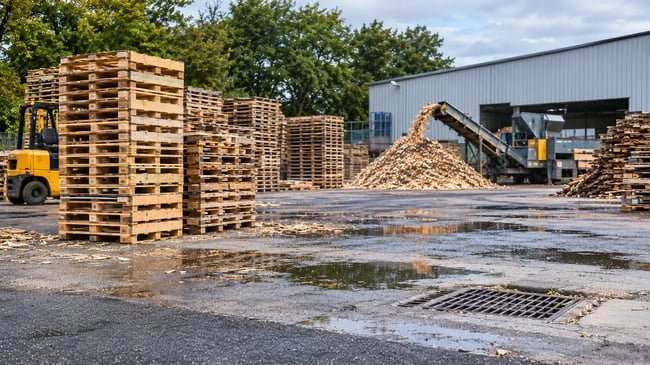
Rain doesn't carry much off a clean, paved, empty lot. A pallet yard is different because it's full of materials that rain can pick up and move. The table below covers the usual suspects and what they tend to show up as in a stormwater sample.
| Source in the Yard |
What Rain Can Pick Up |
Where It Shows Up |
| Stacks of new and used pallets, plus loose lumber |
Sawdust, bark, wood fragments, and organic compounds that leach out of wet wood |
Suspended solids and chemical oxygen demand (COD) |
| Wood grinding and mulch piles made from damaged pallets |
Fine chips and mulch that wash into drains, plus runoff from piles that break down |
Suspended solids, COD, and nutrients like nitrogen and phosphorus |
| Forklifts, trucks, grinders, and other equipment |
Oil, fuel, hydraulic fluid, and grease that drip onto the ground |
Sheen on the water, COD, and visible staining |
| Used pallets that carried something messy |
Residue left behind from whatever the pallet hauled |
Depends entirely on the material |
| Gravel and dirt travel lanes |
Soil and fines churned up by truck and forklift traffic |
Suspended solids |
The used pallet row is the one owners overlook. Pallets come back from warehouses, factories, farms, and distribution centers, and most arrive clean. Some arrive with oil stains, chemical residue, or dried product on them. A pallet that sits in a stack for three weeks while it waits for repair can leach whatever it picked up straight into your yard, and in your permit's eyes that runoff is yours. We can't tell you what your incoming pallets carry. That's the reason a walk through the yard, looking at what comes in and where it sits, matters so much when a plan gets written.
How Does PAG-03 Coverage Work for a Pallet Company?
Getting covered takes more than a short form. A facility generally has to map how water moves across the site, identify the places where runoff leaves the property (called outfalls), and list every industrial activity and pollutant source. That information goes into a Preparedness, Prevention, and Contingency (PPC) Plan, which is Pennsylvania's version of a stormwater pollution prevention plan. Then you submit a Notice of Intent (NOI) to DEP. DEP's fees are a $500 application fee and a $500 annual fee. Our guides on PPC Plans for PAG-03 and on doing PAG-03 yourself versus hiring a consultant go deeper on that part.
Once you're covered, the work continues. Appendix D requires sampling about twice a year for pH, COD, total suspended solids (TSS), total nitrogen, and total phosphorus. Pallet companies that treat wood with chemical preservatives have extra parameters to deal with, including some metals. The permit sets benchmark values of 9.0 for pH, 100 mg/L for TSS, and 120 mg/L for COD. Those benchmarks aren't effluent limits, so a single high result isn't a violation. But if your results exceed a benchmark for two or more monitoring periods in a row, the permit requires you to take corrective action, and DEP expects to see that you did. We explain the difference in benchmark values versus effluent limits, and our PAG-03 sampling guide covers how to collect the samples without ruining them. You report results through DEP's electronic Discharge Monitoring Report system, and our eDMR guide shows what that looks like. Coverage runs on the general permit's five-year term, and DEP can change requirements when it reissues the permit, so always check the current appendix.
When Does a Pallet Company Need an Individual Permit Instead of PAG-03?
Facilities that discharge to High Quality or Exceptional Value waters aren't eligible for PAG-03 and need an individual NPDES permit. DEP's own permit records show a pallet recycler that landed in exactly that spot because its runoff reached a High Quality stream. An individual permit is built around your specific site, so the application takes a closer look at your operations, drainage, pollutants, and receiving waters, and it usually takes longer and costs more. Our article on which Pennsylvania stormwater permit you need lays out how the three paths compare.
Which Stormwater Controls Work in a Pallet Yard?
Good controls in a pallet yard are mostly housekeeping and common sense, and they cost far less than fixing a failed sample. Stacks do best on pavement or well-compacted surfaces, kept back from storm drains and the edges of the property. Covering or roofing the pallets and lumber you store longest cuts down on what rain can touch. Grinders and mulch piles are better set back from drains and swales, with covers, berms, or wattles around them, and fines swept up regularly instead of washed down. Equipment that leaks needs drip pans, a spill kit within reach, and a quick cleanup habit. Sorting incoming used pallets and setting aside the stained or residue-covered ones keeps contamination from spreading through the yard. Inlet protection and sediment traps catch what still gets past all of that. These are the kinds of measures PAG-03 expects, and our explainer on stormwater best management practices breaks them down. Your PPC Plan should spell out which ones apply at your site, because a three-acre recycler with a grinder and a small assembly shop need different things.
Inspections tie it together. Walking the yard after storms and writing down what you see shows you where water pools, where wood is washing off, and which controls need fixing. A stormwater visual inspection done well also leaves a paper trail that matters if DEP visits, and our article on what happens during a PA DEP stormwater inspection shows what inspectors look for. The people running forklifts and grinders are the ones who spot a leak first, so it's worth training them on what to watch for. Our online environmental training library is one option for that.
Could a Pallet Company Avoid Stormwater Permit Coverage?
Sometimes. Pennsylvania lets a facility file a No Exposure Certification instead of getting PAG-03 coverage when all industrial materials and activities are stored or done indoors, or under shelter that keeps rain and snow off them. DEP has to approve the certification, it gets renewed every five years, and it isn't available for discharges to High Quality or Exceptional Value waters. For a pallet company that stacks pallets, lumber, or ground wood outdoors, that's a hard standard to meet, since the test is whether your materials can touch rain and snow, not whether the yard looks tidy. A tarp over one stack may not get you there. If your whole operation really does sit under a roof, it's worth looking at. We cover the details in our article on what no exposure means, and our post on NPDES permit types compares the options.
A company that only brokers pallets, meaning it buys and resells them from a warehouse and never builds, repairs, or stores wood outdoors, may not fall into a covered category at all. We'd want to look at what you actually do before saying so, because classification depends on your primary activity. Local rules can also add a layer. Cities, townships, and sewer authorities sometimes have their own stormwater rules and fees, and in some older cities with combined sewers, runoff that goes to a treatment plant may be handled by the sewer authority instead of a DEP stormwater permit. Confirm your situation instead of assuming either way.
If you're building or expanding a pallet yard, a separate set of construction-phase approvals comes into play, including construction stormwater coverage, erosion and sediment control plans, and county conservation district review. We don't prepare those, and your engineer or contractor usually handles them. Once the yard is running, though, it almost always needs PAG-03 coverage or a No Exposure Certification, and that's where we come in. We can also help you figure out what the construction phase needs and point you toward the right people for it.
How Much Does PAG-03 Coverage Cost for a Pallet Company?
DEP's fees are small next to the rest of the work: a $500 application fee and a $500 annual fee. The real cost is preparing everything the permit requires, including the site evaluation, mapping, PPC Plan, and application package. For a fairly straightforward facility, professional help with the full application typically runs about $5,000 to $10,000, and ongoing compliance support adds roughly $3,000 to $6,000 per year, depending on your site and how much help you want. A pallet yard with several outfalls, a grinder operation, or a discharge that pushes you toward an individual permit will land higher. Our article on PAG-03 permit costs breaks down what drives the number. If you'd like a quicker estimate for your own site, the NPDES pricing calculator is below, and it prices out RMA's help with your permit and plan. It's free, and you don't need to hand over an email address.
How Can RMA Help a Pallet Company With Stormwater Permitting?
We work with Pennsylvania facilities all the time, and pallet yards come with a familiar set of questions. We can walk your yard, tell you whether PAG-03, an individual permit, or a No Exposure Certification fits, and prepare the PPC Plan, maps, and application if you need coverage. Afterward we can help with sampling, eDMR reporting, plan updates, and inspections if you want that support. If you don't need us, we'll say so. Plenty of owners just want an honest read on where they stand. You can call, email, or fill out the form on our website, and there's no pressure or obligation. When you're ready, contact our team and tell us what's going on at your yard. You can also browse our NPDES and stormwater learning center or our Pennsylvania stormwater services page for more.