How Deicing, Fueling, and Aircraft Maintenance Can Put an Airport Under PAG-03 or an Individual NPDES Permit
Most people picture an airport as runways, terminals, and parking lots, not as an industrial facility. Pennsylvania DEP treats parts of it that way. When an airport maintains aircraft or ground vehicles, fuels them, washes equipment, or sprays deicing fluid, the rain and snowmelt that touch those areas can wash oil, fuel, and glycol into nearby streams. So the short answer to whether a Pennsylvania airport needs a stormwater permit is usually yes. A small airfield with no maintenance shop, no equipment cleaning, and no deicing may not, and which permit an airport needs, whether general permit coverage, an individual permit, or a No Exposure Certification, depends on what happens on site and where the runoff ends up.
This article covers which airport activities trigger coverage, how deicing fluid (glycol) runoff affects Pennsylvania streams, why fueling and maintenance areas matter, and how airports typically handle all of it under PAG-03, DEP's general permit for industrial stormwater, or under an individual permit. Both fall under NPDES, the National Pollutant Discharge Elimination System, which is the permit program for discharges to streams and which DEP runs in Pennsylvania. We'll also cover what fixed-base operators at regional airports need to think about. If you run an airport or lease space at one and aren't sure where you stand, you can reach out to RMA at any point.
Table of Contents
TL;DR
Most Pennsylvania airports that maintain aircraft or ground vehicles, fuel aircraft, wash equipment, or deice need stormwater permit coverage from DEP, usually under the PAG-03 general permit's air transportation appendix. Larger commercial airports may need an individual permit instead, especially when they collect and discharge spent deicing fluid. A small airfield with none of those activities may not need a permit at all, and fixed-base operators on the field have to work out whether they're covered under the airport's permit or need their own.
Which Airport Activities Trigger a Pennsylvania Stormwater Permit?
Federal stormwater rules, which Pennsylvania DEP carries out through its own permits, treat transportation facilities as industrial sites when they have vehicle maintenance shops, equipment cleaning operations, or airport deicing operations. The rule reaches only those parts of the facility, and it counts fueling and lubrication as vehicle maintenance. The terminal, the passenger parking lot, and most of the runway aren't the issue by themselves. The fuel farm, the maintenance hangar, the wash pad, and the deicing area are. Our article on stormwater associated with industrial activity explains the term for runoff that touches areas like these.
DEP's industrial stormwater FAQ is direct about airports. One with a vehicle maintenance shop or equipment cleaning operation needs either permit coverage or a No Exposure Certification, whether or not it deices. A No Exposure Certification is a filing in which a facility certifies that its industrial materials and activities are all indoors or under roof, so stormwater never touches them. Inside PAG-03, airports are sorted under Appendix G, the air transportation appendix, which covers industry classification (SIC) codes 4512 through 4581. Our guide on which NPDES permit you need compares general, individual, and no exposure.
Not every airport lands in the program. A small general aviation field with no maintenance shop, no equipment cleaning, and no deicing may have no covered activity, so there's nothing to permit. DEP can still require a permit from any facility discharging pollutants under the Pennsylvania Clean Streams Law, so the answer isn't automatic either way.
Where the water goes matters too. According to DEP's FAQ, discharges to a sanitary or combined sewer that's part of a municipal treatment plant system generally don't need a permit or a No Exposure Certification, though pretreatment rules can apply. Discharges to a municipal separate storm sewer system (MS4) or a private storm sewer still need one or the other. Cities, townships, and sewer authorities can add their own rules and fees, so confirm locally. For the wider picture, see our guide on whether you need a stormwater permit in Pennsylvania.
How Does Deicing Fluid (Glycol) Runoff Affect Pennsylvania Streams?
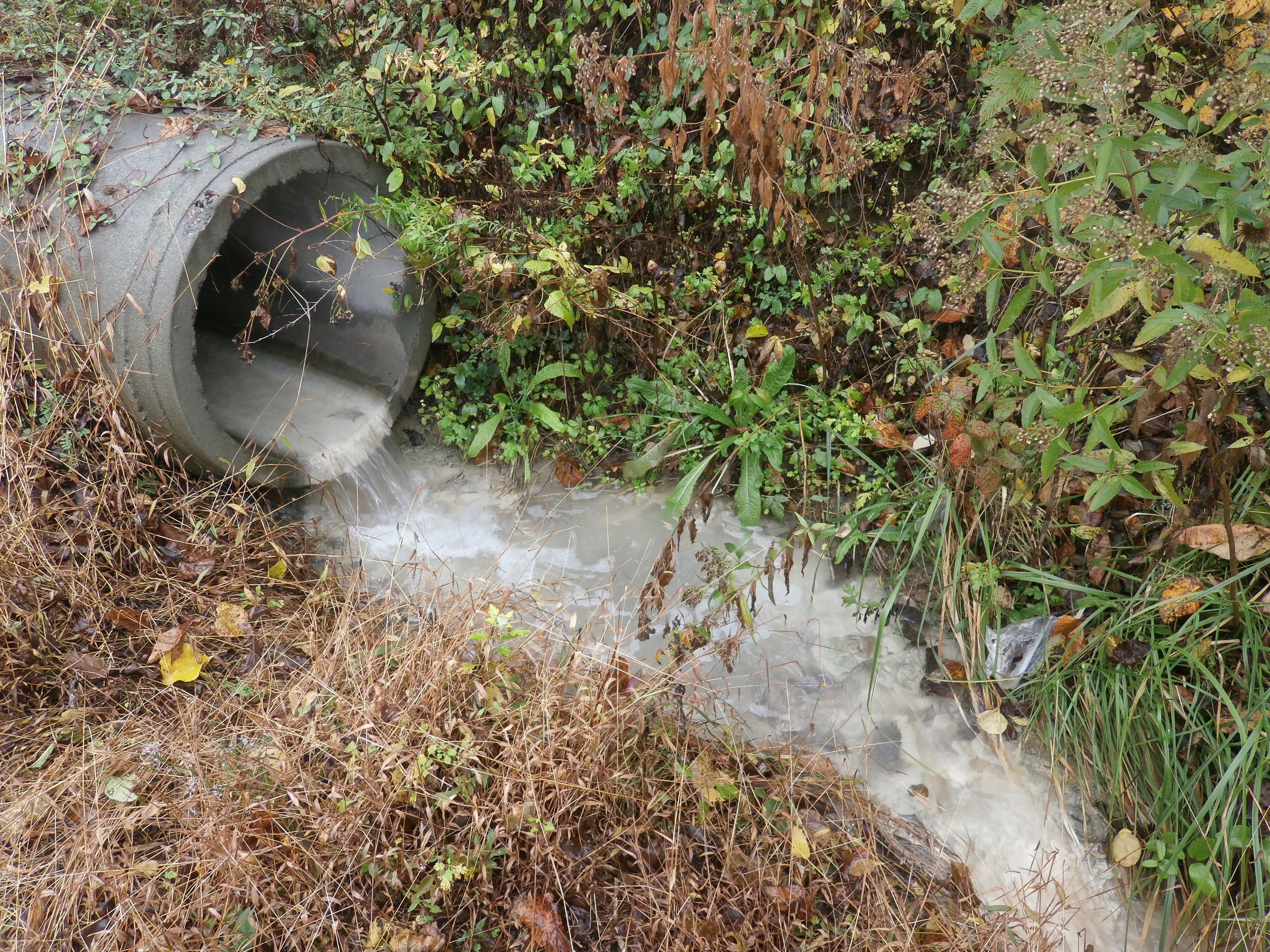
Aircraft deicing fluid is mostly glycol, and propylene glycol is the main ingredient in the United States. The main trouble isn't poison. Bacteria in the water feed on glycol and use up the dissolved oxygen that fish and insects need. The measure is biochemical oxygen demand, or BOD, the oxygen microbes consume while breaking down a pollutant. EPA's 2000 data summary on airport deicing recorded some airport discharges at 22,000 mg/L of BOD, against roughly 200 mg/L for typical household wastewater, and a slug of spent fluid reaching a small stream during a storm can drain the oxygen fast enough to kill fish.
Oxygen is only part of it. USGS research on airport runoff has found that glycol, acetate, and deicer additives can reach streams at levels that may harm aquatic life, and additives can stay a toxicity concern even when the glycol is treated. The problem also doesn't leave with the storm. Snow plowed into banks stores deicer, and the melt can carry it to a stream well after the weather has passed, which our article on snowmelt and stormwater samples covers for winter sampling. Researchers have documented the effect in Pennsylvania too, including a 1998 study in the Journal of Freshwater Ecology on how airport deicing runoff affected water quality and aquatic life in a Pennsylvania stream.
EPA's national Airport Deicing Effluent Guidelines (40 CFR Part 449, issued in 2012) apply mainly to pavement deicing at larger commercial airports, where those with 1,000 or more annual jet departures must use non-urea deicers or meet an ammonia limit. The rule sets no requirements for aircraft deicing discharges at existing airports, so that part generally comes down to each airport's permit.
Why Do Fueling and Maintenance Areas Matter for Airport Stormwater?
Deicing gets the attention because it's visible, but the oil-and-fuel side of the operation is what brings most airports into the permit program in the first place. The table below shows the main activities, what can end up in runoff, and the controls airports commonly use.
| Airport Activity |
What Can Reach Stormwater |
Controls Airports Commonly Use |
| Aircraft and ground vehicle maintenance |
Engine oil, hydraulic fluid, fuel |
Indoor work, drip pans, spill kits, dry cleanup |
| Aircraft fueling |
Spills and leaks during fuel transfer, overfills |
Spill response, covered fueling areas, trained fuelers |
| Aircraft and equipment washing |
Detergents, oil, grease, wash water |
Indoor wash areas, proper sewer approvals, no discharge to storm drains |
| Aircraft deicing |
Spent glycol (high BOD) |
Deicing pads, glycol recovery vehicles, storage tanks |
| Pavement deicing |
Glycol, acetates, formates, urea (BOD, nitrogen, ammonia) |
Application management, non-urea alternatives |
DEP's FAQ says vehicle wash water isn't an authorized non-stormwater discharge under PAG-03, and that wash areas have to be indoors for a facility to qualify for No Exposure. Rinsing equipment on the ramp and letting it run to a storm drain is one of the easier ways for an airport to end up with an unpermitted discharge.
If all maintenance and cleaning happens indoors, DEP's FAQ says roof runoff generally doesn't need coverage. Vehicles waiting outside, or a fueling station with no roof or canopy, rule No Exposure out, and DEP won't approve it for only part of a site. That makes it realistic for a small hangar-only operation and a poor fit for an airfield with outdoor fueling or deicing. Our article on stormwater best management practices covers the controls in the table in more detail.
How Do Airports Typically Manage Stormwater Under PAG-03 Appendix G?
PAG-03 is a general permit, which means DEP wrote one set of terms for a whole class of facilities and each facility gets coverage by filing a Notice of Intent (NOI) instead of negotiating its own permit. The current version took effect on March 24, 2023, for a five-year term. Parts A, B, and C apply to every covered facility, and sector-specific appendices add requirements on top. For airports that's Appendix G. If a site has several covered activities, each matching appendix applies, so an airport that also runs a salt storage area, for example, can end up with more than one.
Monitoring is the part facilities notice first. According to DEP's FAQ, everyone covered under PAG-03 samples stormwater twice a year, and small airports can reduce that under Appendix G based on how much glycol and urea they use annually. DEP's FAQ cites 100,000 gallons of pure glycol and 100 tons of urea as the reference points, and the permit itself spells out the exact conditions, so read Appendix G before assuming you qualify. Results go to DEP through eDMR, the electronic discharge monitoring report system, and our guide to Pennsylvania's eDMR reporting walks through it. Two other articles help when the lab report comes back: one on how to take PAG-03 stormwater samples, and one on benchmark values versus effluent limits.
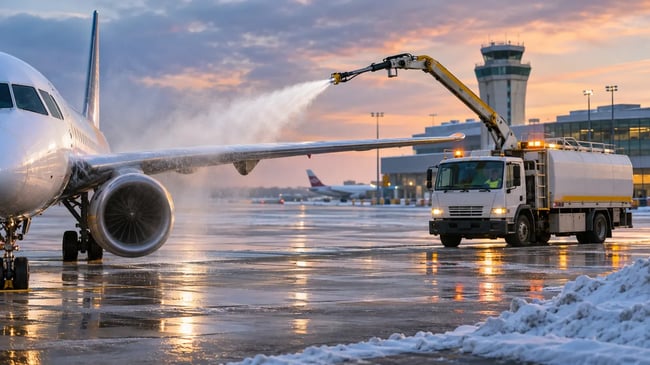
A written plan ties the program together. In Pennsylvania that usually means a PPC Plan, short for Preparedness, Prevention, and Contingency Plan, and we compare it with the SWPPP many other states use in our SWPPP versus PPC Plan comparison. At an airport, the plan is where the deicing and fueling controls get written down. Nationally, airport programs lean on three ideas. The first is using less, by applying only what flight safety calls for and by using forced-air, infrared, or enclosed-basket methods where they fit. The second is capturing what's used, with deicing pads, glycol recovery vehicles, and storage tanks. The third is recycling collected fluid where it's feasible. Flight safety always comes first, and the specific practices Appendix G expects are in the permit text.
When Does a Larger Pennsylvania Airport Need an Individual NPDES Permit?
PAG-03 isn't open to every facility. One that already has, or needs, an individual NPDES permit for non-stormwater discharges can't use PAG-03 for its stormwater, because the stormwater gets folded into the individual permit. A facility can also be ineligible because of where it sits, and DEP names a location in a High Quality or Exceptional Value watershed as a common reason. For airports, collected deicing fluid is the usual wrinkle. Spent fluid that's captured and sent to a stream is closer to process wastewater than to stormwater, and our article on stormwater versus process water explains why that distinction changes the permit. That's one reason larger commercial airports with collection and treatment systems often end up on individual permits, though it depends on the airport's setup and DEP's call.
An individual permit is written for the specific site, and DEP says coverage is generally for five years, with a renewal application due at least 180 days before expiration if the discharge continues. Facilities apply using DEP's Individual NPDES Permit Application for Industrial Stormwater, form 3800-PM-BCW0403. The comparison below shows how the routes line up for airports.
| Route |
Who It Tends to Fit |
Worth Knowing |
| PAG-03 coverage (Appendix G) |
Airports with maintenance, cleaning, fueling, or deicing and only stormwater discharges |
NOI filing, written plan, sampling, and annual reporting |
| Individual NPDES permit |
Airports with non-stormwater discharges PAG-03 doesn't authorize, or sites that aren't eligible for the general permit |
Site-specific terms, generally five years, renewal due 180 days ahead |
| No Exposure Certification |
Small operations with all materials and activities indoors or under roof |
All or nothing for the site, not available in High Quality or Exceptional Value watersheds, renewed every five years |
| Nothing |
Fields with no maintenance shop, equipment cleaning, or deicing, or runoff that goes to a municipal treatment plant sewer |
DEP can still require a permit if pollutants are discharged |
The large commercial airports, like Philadelphia (PHL), Pittsburgh (PIT), Lehigh Valley (ABE), and Harrisburg (MDT), run enough winter traffic that the general-versus-individual question is a real one for them. We won't guess at what any specific airport holds. DEP's eFACTS database is public, so anyone can look up what permits a given facility has on file.
What Stormwater Responsibilities Do FBOs at Regional Airports Have?
A fixed-base operator, or FBO, is the business on an airport that sells fuel, rents hangar space, services aircraft, and handles ground services for visiting planes. At a regional airport, the FBO often runs the fueling, maintenance, and washing activities that put the whole site in the permit program, even though the airport authority owns the land and sits on the permit. DEP's FAQ speaks to this setup. When different operators carry out different industrial activities at one location, each activity gets its own SIC code, FBO operations generally land in the same air transportation range as the airport, and tenants can either apply separately or come in as co-permittees. Appendices apply outfall by outfall, so an FBO's apron drains can sit under different requirements than the airport's deicing pad.
In practice, the first job is finding out how the airport's coverage is set up. Is the FBO named as a co-permittee? Does the airport's plan cover the FBO's fuel island and wash area? Who samples which outfall, and who signs the reports? Who answers for a discharge is a question for your lease, your permit, and DEP, and it's far better settled in writing before an inspector asks. If you want a sense of what that visit looks like, see our article on what happens during a PA DEP stormwater inspection. The airport manager and the DEP regional office that covers your county can both confirm how your site is structured.
How Does RMA Help Pennsylvania Airports and FBOs With Stormwater Permits?
We work with Pennsylvania facilities all the time on the operational side of stormwater, and airports and the businesses on them fit that work well. We can help you figure out whether PAG-03, an individual permit, a No Exposure Certification, or nothing at all is the right answer for your site, then help with the NOI, the PPC Plan, the sampling program, and eDMR reporting if you land in the permit program. We'll also tell you when you don't need us, such as when a tenant is already covered as a co-permittee under the airport's permit or a small field has no covered activities. What drives cost is the permit category, how much sampling is involved, the size and complexity of the site, and whether a plan already exists, so we'd rather look at your setup than guess at a number. If your deicing or fueling crews need a refresher, our online training library is there too.
There's no pressure and no obligation in a first conversation. You can call us, email us, or fill out the form on our website, and we'll talk through where your airport or FBO stands. When you're ready, contact RMA and we'll take it from there.