Milk Receiving Bays, Outdoor Tanks, and Cleaning Chemicals Put Most Dairy Processors Under PAG-03
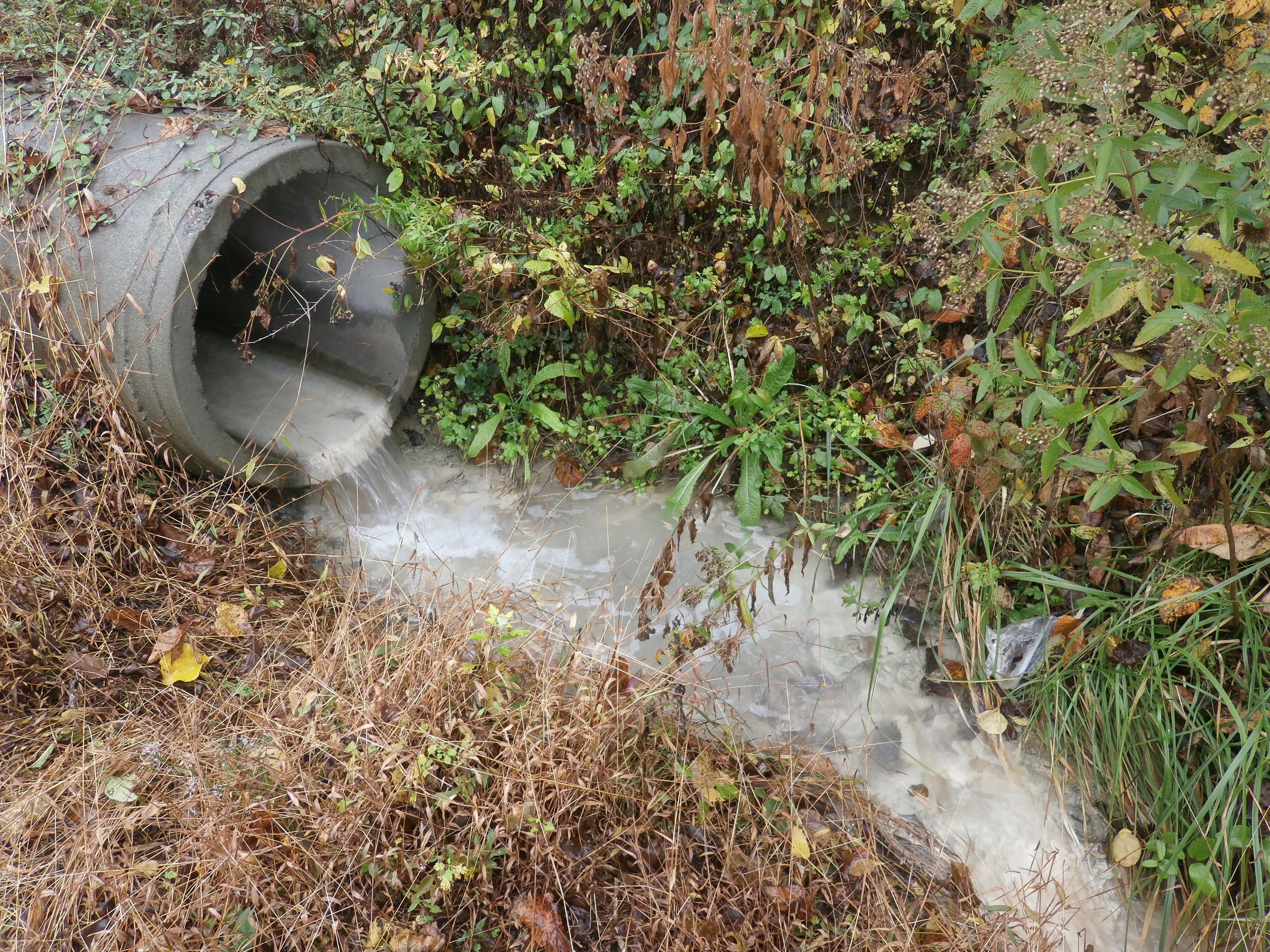
If you run a milk, cheese, butter, ice cream, or dry dairy plant in Pennsylvania, the rain that hits your tanker lot and loading docks is regulated by the state, whether or not anyone has told you so. Most dairy processors need either coverage under a general stormwater permit called PAG-03 or an approved No Exposure Certification, and a smaller group needs an individual permit written just for their plant. Which one applies comes down to what's outdoors on your site and where your runoff ends up.
Below, we walk through why dairy plants are a covered industry, where stormwater picks up milk and cleaning chemicals, how to choose between the three permit paths, and what practical steps keep a spill out of a storm drain. If you'd rather talk through your own plant, you can reach out to RMA and we'll tell you what applies to your site.
Table of Contents
TL;DR
Most Pennsylvania dairy plants need stormwater permit coverage, usually under DEP's PAG-03 general permit, because dairy processing is a covered industry and milk tanker bays, outdoor tanks, cleaning chemicals, and dumpsters expose runoff to pollution. A plant with everything indoors or under roof may qualify for a No Exposure Certification instead, and a plant that discharges to a high-quality stream or already holds an individual wastewater permit typically needs an individual NPDES permit. Containing spills at the receiving bay is the practical step that protects both your stormwater and your permit status.
Do Dairy Plants in Pennsylvania Need a Stormwater Permit?
Probably, yes. Pennsylvania treats dairy processing as a covered industrial activity, which means a plant that makes milk, cheese, butter, ice cream, or dry and condensed dairy products, and has any of that work exposed to rain or snowmelt, generally needs permit coverage for the runoff leaving the site. The permit most dairy plants use is PAG-03, the Pennsylvania Department of Environmental Protection's (DEP) general stormwater permit for industrial activity. A plant with everything fully indoors or under roof may qualify for a No Exposure Certification instead, and a plant that discharges to a high-quality stream or already holds an individual wastewater permit usually lands on an individual NPDES permit.
We say "probably" because coverage depends on your SIC code, what is exposed on your site, and where your water goes. A few operations sit outside this picture. Dairy farms that milk cows are generally handled under DEP's agricultural programs rather than industrial stormwater, and a site that only stores and ships finished product may be classified differently than a processing plant. If either describes you, you may not need a PAG-03 permit at all, and a quick conversation can confirm it. Our guide on whether you need a stormwater permit in Pennsylvania covers the decision for industrial facilities in general.
Why Are Dairy Processing Plants Covered by PAG-03?
NPDES stands for National Pollutant Discharge Elimination System, the federal Clean Water Act program that requires a permit before pollutants go into streams and other waters. In Pennsylvania, DEP runs it. Stormwater is part of the program because rain that washes across a work area and into a storm drain or ditch carries whatever it picked up along the way. When that work area belongs to an industrial activity, the runoff is called stormwater associated with industrial activity, and it needs a permit. We break the term down in our explainer on stormwater associated with industrial activity.
Which industries are covered is set by SIC codes, the Standard Industrial Classification numbers that describe what a facility makes. DEP's PAG-03 Notice of Intent instructions list the dairy product codes, 2021 through 2026, under Appendix I, Food and Kindred Products, alongside meat products. Each appendix is a sector-specific section of the permit with its own best management practices (BMPs, the physical and operational controls that keep pollution out of runoff) and sampling requirements. The current PAG-03 took effect March 24, 2023, for a five-year term, and DEP added total nitrogen and total phosphorus monitoring to every appendix, including the dairy one.
There's one catch that trips up dairy plants in particular. A facility that already has, or needs, an individual NPDES permit for its process wastewater can't use PAG-03 for its stormwater, because the stormwater gets built into that individual permit. DEP's public permit fact sheets show Pennsylvania dairy plants with direct discharges operating under individual permits that cover both wastewater and stormwater. Plants that send process wastewater to a municipal sewer are in a different spot, since the sewer authority sets the rules for that wastewater. Our piece on the difference between stormwater and process water explains why the two are permitted separately.
Where Does Dairy Plant Stormwater Pick Up Pollution?
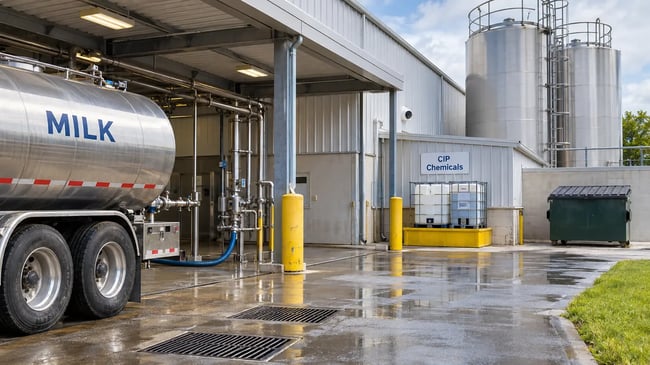
Walk a dairy plant the way a DEP inspector would and the same handful of spots keep coming up. Most involve liquids, and most involve moving something from one container to another outdoors.
| Area of the plant |
What can reach stormwater |
Typical control |
| Milk tanker receiving bays |
Drips from hoses and fittings, overfills, and rinse water from washing out tankers |
Curbed, sloped pad with a dedicated drain routed away from the storm system |
| Outdoor silos and tank areas |
Leaks from valves and gaskets, overflow during filling, and cleaning runoff |
Secondary containment, level controls, and routine valve checks |
| Cleaning chemical storage |
Caustic, acid, and sanitizer from leaking totes and drums, which can swing stormwater pH |
Storage under roof with containment and protected transfer areas |
| Dumpsters and waste areas |
Whey, spoiled product, and packaging residue leaking from open or overfilled containers |
Lids, drip pans, and regular pickup |
| Loading docks and truck areas |
Product spilled during loading, fluids from trucks, and tracked-out residue |
Housekeeping sweeps and spill kits at the docks |
Milk deserves its own paragraph because it behaves differently from most industrial pollutants. It's food, so bacteria in a stream feed on it quickly, and in doing so they pull dissolved oxygen out of the water that fish and aquatic insects need. Runoff carrying milk can stress a small stream out of proportion to the amount spilled. Cleaning chemicals add a second problem, since caustic and acid can push stormwater pH outside the range aquatic life tolerates. Both show up in sampling, because PAG-03 requires monitoring for pollutants tied to the sector, and results above benchmark values can trigger corrective action requirements.
Which Stormwater Path Fits a Dairy Plant: PAG-03, an Individual Permit, or No Exposure?
Pennsylvania gives industrial facilities three routes, and a dairy plant lands on one of them based on its site conditions rather than its preference.
| Path |
Usually fits a dairy plant that... |
What it involves |
| PAG-03 general permit |
Has outdoor receiving, tanks, chemical storage, or dumpsters and is eligible for the general permit |
A Notice of Intent (NOI) to DEP, a PPC Plan, BMPs, inspections, sampling, eDMR reporting, and DEP fees |
| Individual NPDES permit |
Discharges to High Quality or Exceptional Value waters, or already holds or needs an individual permit for process wastewater |
A facility-specific application to DEP, generally a five-year term, with renewal filed at least 180 days before expiration if discharges continue |
| No Exposure Certification |
Keeps all industrial materials and activities indoors or under roof |
A certification submitted to and approved by DEP, renewed every five years, with DEP able to inspect |
PAG-03 is the common answer. Getting covered takes more than a short form. The Notice of Intent is the application you file with DEP, and it comes with a PPC Plan, short for Preparedness, Prevention and Contingency Plan, which maps the pollution sources on your site and lays out how you prevent and respond to releases. After approval you inspect, sample, train your people, and report results through eDMR, DEP's electronic discharge monitoring report system. Coverage continues automatically when DEP reissues the permit unless DEP notifies you in writing that a new NOI is required. We go deeper on the plan in our comparison of SWPPPs and PPC Plans for PAG-03 and on sampling in our PAG-03 permit and sampling guide. The reporting side is covered in our eDMR walkthrough.
No Exposure is the path dairy plants ask about most, and it's a narrow one. Industrial materials and activities generally all have to sit indoors or under roof, the option isn't available to facilities in High Quality or Exceptional Value watersheds, and submitting the paperwork doesn't guarantee approval. Plants with outdoor tanker staging, outdoor silos, or open dumpsters rarely qualify. A plant that unloads inside an enclosed bay and keeps everything else under cover can. If operations change so something becomes exposed, you may need to move to PAG-03. Our explainer on what No Exposure means under an NPDES stormwater permit lays out the test.
Local rules can add to all of this. Cities, townships, and sewer authorities may have their own stormwater requirements and fees, and some older cities have combined sewers where runoff goes to a treatment plant. In that situation the sewer authority may govern your site's runoff instead of a DEP stormwater permit, so confirm your own situation before assuming either way. If you're building a new plant or expanding an existing one, the construction phase has its own permits, including construction stormwater coverage and erosion and sediment control approvals. RMA doesn't prepare those, and you'll usually work with your engineer or contractor on them. Once the plant is running, though, it almost always needs the operational pieces described here, and that's where we come in.
How Do Dairy Plants Contain Milk Spills at Tanker Receiving Bays?
The permit is paperwork. The spill is what reaches the creek, so the controls at your receiving bay do the real work of keeping you in good standing. Plants that hold PAG-03 coverage still get into trouble when a tanker hose lets go over an open storm drain.
Design the receiving bay so spills have somewhere safe to go
A curbed, sloped concrete pad under the tanker connection that drains to a collection point is the single best control, as long as that collection point goes to wastewater handling your approvals allow and not to the storm system. Which destination is allowed depends on your sewer or treatment arrangement, so confirm it before anyone plumbs anything. A roof over the bay keeps rain out of the containment so it doesn't fill with water and overflow. Drain covers or plugs on nearby storm inlets give operators a fast backup, and drip pans at hose connections catch the small losses that add up over a season of daily unloading.
Build day-to-day habits that match the plan
Most dairy spills happen during routine work, so habits matter as much as concrete. Sweep and dry-clean before hosing, and set a firm rule that nothing gets hosed toward a storm drain. Keep spill kits at the receiving bay and the docks, keep cleaning chemicals under roof with containment, and put lids on dumpsters. Inspect tank valves, gaskets, and dumpsters on a schedule and write the results down, since inspection records are part of what DEP expects to see. Operators also need to know what to do in the first few minutes of a spill, which is where environmental training for your team pays off. Our overview of stormwater BMPs goes through the controls that suit different parts of a site. If a spill does reach a storm drain or stream, reporting requirements can apply, so check with your DEP regional office on how they work for your situation.
What Does Dairy Plant Stormwater Permitting Cost in Pennsylvania?
DEP charges a $500 application fee and a $500 annual fee for PAG-03 coverage. Agency fees are the small part of the bill. The larger cost is preparing what the permit requires, which includes the site evaluation, drainage mapping, PPC Plan, sampling, and the application package. A dairy plant with several outfalls, a large tank farm, or a drainage layout nobody has mapped will cost more to get permitted than a compact site with one discharge point. Whether you already have a PPC Plan, whether you hold an individual wastewater permit, and how much of the ongoing sampling and reporting you want help with all move the number too. Our article on what a PAG-03 permit costs in Pennsylvania breaks down the pieces. If you want a ballpark for RMA's help with your plant, the pricing calculator below gives you an instant estimate with no email and no sales call.
How Does RMA Help Pennsylvania Dairy Plants With Stormwater Permits?
We work with Pennsylvania facilities all the time, and the first thing we do with a dairy plant is figure out which path applies: PAG-03, an individual permit, or No Exposure. From there we can walk your site, map your drainage and outfalls, prepare the PPC Plan and the NOI, handle the back-and-forth with DEP, and stay on for sampling, inspections, training, and eDMR reporting if you want that. If your plant is already covered and running a tight program, we'll tell you so. There's no pressure and no obligation, and you can call, email, or fill out the form on our website to tell us what's going on at your plant. When you're ready, contact RMA and we'll point you in the right direction.