Landfill Stormwater, Leachate, and DEP Permits in Pennsylvania: How They Fit Together
If you run a landfill in Pennsylvania, you already hold more DEP paperwork than most facilities ever see. A solid waste permit governs how the site is built and operated, there's often an air permit alongside it, and sometimes a long list of plans and approvals on top of that. So when someone mentions that you also need a stormwater permit, it's fair to wonder whether that's a brand new permit or whether your existing approvals already cover the water that runs off the site.
The short answer is that a solid waste permit doesn't replace NPDES stormwater coverage, but you may not need a standalone stormwater permit either. NPDES (the National Pollutant Discharge Elimination System) is the Clean Water Act permit program that DEP runs in Pennsylvania, and landfills that receive or have received industrial waste fall into an industrial stormwater category. DEP usually handles that through PAG-03, a general permit that many facilities can sign onto, or through an individual NPDES permit when the site already needs one for its leachate or other wastewater. Below we cover how leachate differs from stormwater, how active and closed areas are treated, and why the answer for your landfill depends on the permits you already hold and what DEP requires. If you'd like a second set of eyes on your site, you can reach out to RMA anytime.
Table of Contents
TL;DR
A Pennsylvania landfill's solid waste permit doesn't take the place of stormwater coverage under DEP's water program, but a landfill doesn't always need a standalone stormwater permit. Landfills that receive or have received industrial waste fall under DEP's industrial stormwater rules, usually through the general stormwater permit or, if the site needs an individual permit for discharging treated leachate, inside that individual permit. Leachate and stormwater are managed differently, and closing part of a landfill doesn't automatically end stormwater coverage. The right answer depends on the permits you already hold and what DEP requires for your site, so confirm it before you assume you're in or out.
Are Pennsylvania Landfills Covered by Industrial Stormwater Permitting?
Federal stormwater rules list landfills, land application sites, and open dumps that receive or have received industrial waste as one of the industrial categories that need NPDES stormwater coverage. EPA calls this category Sector L. Pennsylvania's version shows up in PAG-03 as Appendix C, Landfills and Land Application Sites, which lists SIC code 4953 (a standard industrial classification code, the four-digit number that labels what a business does) and others. DEP describes the category as all landfill and land application sites that receive or have received industrial wastes.
That last phrase, "have received," is the one that catches people. A landfill that took industrial or residual waste years ago and no longer does can still sit inside the category. Municipal-only landfills are less clear cut. EPA's fact sheet includes municipal solid waste landfills regulated under RCRA Subtitle D (the federal rules for non-hazardous solid waste landfills), while some other states' general permits carve them out. In Pennsylvania, DEP fact sheets show municipal solid waste landfills holding PAG-03 coverage or individual permits with stormwater outfalls, so you shouldn't assume the label on your waste permit decides the question. Your waste history, your SIC code, and what DEP has told you about your site all carry weight.
If you want the plain-language version of what makes stormwater "industrial" in the first place, our article on stormwater associated with industrial activity walks through it, and our guide on which Pennsylvania stormwater permit you need covers the broader options.
What Is the Difference Between Landfill Leachate and Stormwater?
Leachate is the liquid that forms when water moves down through waste and picks up whatever is in it. Stormwater is rain and snowmelt that runs across the surface of the site, over roads, cover soil, the shop yard, and the areas around leachate tanks. They come from different places, they carry different pollutants, and DEP treats them differently, which is why the permit question gets tangled when both exist on one property.
| |
Leachate |
Stormwater |
| What it is |
Liquid that has passed through waste |
Rain and snowmelt running off site surfaces |
| Where it forms |
Inside the waste mass and the collection system |
Haul roads, cover soil, shop and fueling areas, parking, basins |
| How it's typically managed |
Collected and stored in tanks, then hauled to a wastewater treatment plant, sent to a sewer, or treated on site and discharged |
Routed through ditches and basins to outfalls that discharge to a stream |
| Where DEP regulates it |
Waste permit conditions, plus an individual NPDES permit with effluent limits if treated leachate goes to surface water |
NPDES stormwater coverage, through PAG-03 or an individual NPDES permit |
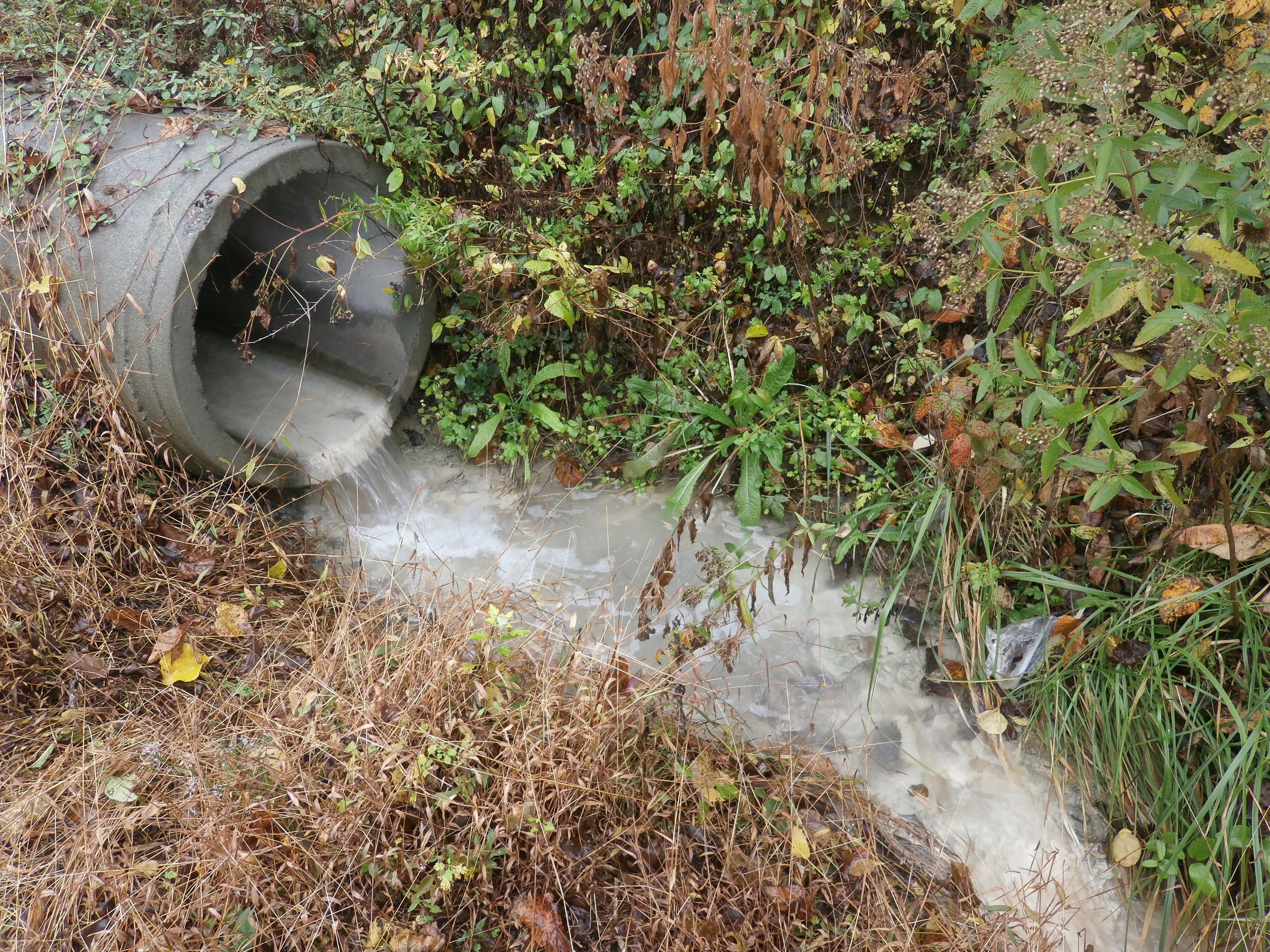
The two streams are also supposed to stay apart. In the DEP fact sheets we reviewed for landfill stormwater outfalls, samples are taken before the water mixes with any other wastewater, because blending leachate into stormwater muddies the results and the permit treatment. One Westmoreland County landfill's fact sheet shows the pattern well: leachate and condensate are trucked to a wastewater treatment plant today, the stormwater outfalls are covered separately, and DEP is weighing a treated leachate discharge that would come with its own limits. Our article on the difference between stormwater and process water explains how a permit writer draws that line.
How Do DEP Solid Waste Permits Relate to NPDES Stormwater Coverage?
They come from different DEP programs. The solid waste permit comes out of the waste program and covers how the landfill is designed, operated, and closed, including a leachate management plan. NPDES coverage comes out of the Clean Water program and covers what leaves the site through an outfall. Holding one doesn't satisfy the other, and a landfill typically carries both, often with an air quality permit next to them. DEP's fact sheets for Pennsylvania landfills routinely list the solid waste permit and the air permit right alongside the NPDES permit for exactly that reason.
How the two programs coordinate on a given site varies. A solid waste permit may describe the stormwater controls that were approved as part of the design, and the NPDES permit may then set monitoring and plan requirements on top of them. We'd read both documents side by side before telling anyone they're covered, because a gap between them is where facilities get surprised in an inspection. Our write-up of what happens during a PA DEP stormwater inspection shows what inspectors tend to ask for.
PAG-03 or an Individual NPDES Permit for Landfill Stormwater?
The reissued PAG-03 took effect March 24, 2023, for a five-year term. Under DEP's PAG-03 fact sheet, a facility that already has, or is required to obtain, an individual NPDES permit for its non-stormwater discharges can't use PAG-03, because its stormwater gets folded into that individual permit. That single rule drives most of the answer for landfills. A landfill that sends its leachate off site for treatment may be a candidate for PAG-03 Appendix C. A landfill that discharges treated leachate to a stream generally ends up with an individual permit that includes stormwater outfalls, and no separate stormwater permit at all.
Two real examples show how this plays out. A landfill in McKean County holds an individual industrial waste and industrial stormwater permit, and DEP's fact sheet says the monitoring for its stormwater outfalls is based on the Appendix C requirements from PAG-03. In Westmoreland County, one landfill's stormwater is covered by PAG-03 today, and DEP has drafted an individual permit that would replace that coverage and terminate the PAG-03 authorization. Same program, same type of facility, two different paths, which is why we won't tell you which one yours is without looking at your permits.
| Your situation |
What to expect |
| Leachate is hauled off site or goes to a sewer, and stormwater leaves the site |
PAG-03 Appendix C coverage is often the route, unless DEP tells you otherwise |
| Treated leachate is discharged to surface water |
An individual NPDES permit that likely includes your stormwater outfalls |
| You already hold an individual NPDES permit |
Stormwater is usually handled inside it, so check what it requires and when it renews |
| The site drains to a High Quality or Exceptional Value watershed |
PAG-03 may not be available, and DEP may require an individual permit application |
| Runoff goes to a combined sewer or sewer authority |
The sewer authority's rules may govern instead, so confirm locally |
Individual permits for industrial stormwater use DEP's application form 3800-PM-BCW0403, generally run five years, and need a renewal application at least 180 days before they expire. A No Exposure Certification, which is the PAG-03 alternative for facilities that keep everything indoors or under roof, generally isn't a realistic option for a landfill, since the waste and the operations are outdoors. Our guide on NPDES permit types breaks down how general, individual, and no-exposure coverage differ.
How Is Stormwater from Active and Closed Landfill Areas Handled?
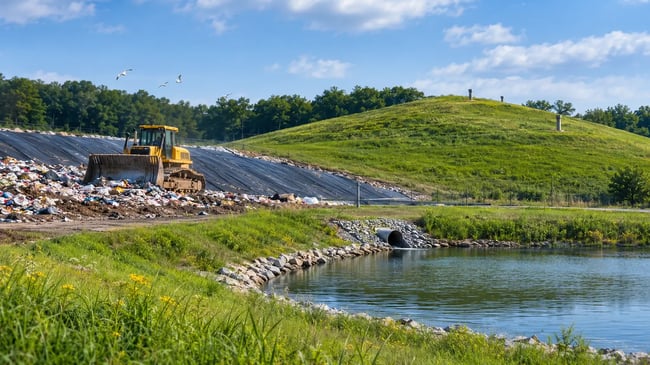
Active areas are where the pollutant risk is easiest to see: the working face, haul roads, the scale house, the maintenance shop, fueling, and the ground around leachate tanks. DEP's fact sheets tend to describe landfill outfalls by what drains to them rather than by whether an area is open or closed. One lists the office, leachate storage tanks, disposal area, truck scale, and hauling traffic in a single drainage area, and the maintenance shop and fueling area in another. That gives you a good sense of what a permit writer is looking at when they size up your site.
Closed and capped areas are less settled. Final cover with healthy vegetation generally sheds cleaner runoff, and that runoff often flows into the same basins and outfalls as the rest of the site. But because Appendix C reaches sites that have received industrial waste, closing a section doesn't automatically take its runoff out of your permit. Whether stormwater from a capped area stays in your monitoring depends on your permit, your drainage layout, and what DEP has said about post-closure. If you've closed part of a landfill and aren't sure what that did to your stormwater obligations, ask DEP directly and get the answer in writing.
What About Construction-Phase Work at a Landfill?
Building a new cell, expanding the footprint, or placing final cover all disturb soil, and that triggers a separate set of construction-phase stormwater requirements, such as PAG-02 coverage, a Chapter 102 erosion and sediment control plan, and county conservation district review. RMA doesn't prepare those. They're usually handled by your engineer, your contractor, or a soil erosion specialist, and we can point you toward the right people. Where we come in is the operational side, the stormwater coverage, plans, sampling, and reporting that a landfill needs once it's running, and we can also help you work out which construction-phase approvals your project is likely to need.
What Do Landfill Stormwater Monitoring, Plans, and Reporting Involve?
Coverage under PAG-03 comes with a written stormwater plan, which in Pennsylvania takes the form of a PPC Plan (Preparedness, Prevention, and Contingency Plan) or a stormwater pollution prevention plan, depending on the permit. Our comparison of SWPPPs and PPC Plans for PAG-03 explains the difference. Sampling requirements come from the appendix that applies to your sector or from your individual permit. In the landfill fact sheets we reviewed, stormwater outfalls call for grab samples about twice a year for parameters like pH, total suspended solids, chemical oxygen demand, and iron. Your own permit controls, so treat that as an example rather than your schedule.
Those results are reported electronically, and Pennsylvania's system is eDMR. If you haven't used it, our guide to Pennsylvania eDMR reporting covers the mechanics. One thing worth knowing before the first sample comes back is how DEP treats the numbers. Many stormwater values are benchmarks, which are triggers for a closer look at your controls, and effluent limits are hard caps that carry their own consequences. Our article on benchmark values versus effluent limits explains which is which.
How Does RMA Help with Pennsylvania Landfill Stormwater Permits?
We work with Pennsylvania facilities all the time, and landfills are one of the sites where it pays to slow down and read the paperwork before filing anything new. We can help you sort out which permits you hold and how your stormwater is currently covered, read your NPDES and waste permits together, and put the plan, sampling, and reporting pieces in order if they aren't. If your existing DEP permits already cover your stormwater, we'll tell you that and leave it there.
There's no pressure and no obligation. Call us, email us, or fill out the form on our website, and we'll talk through your site and your permits. If you're ready, you can contact RMA whenever it suits you.