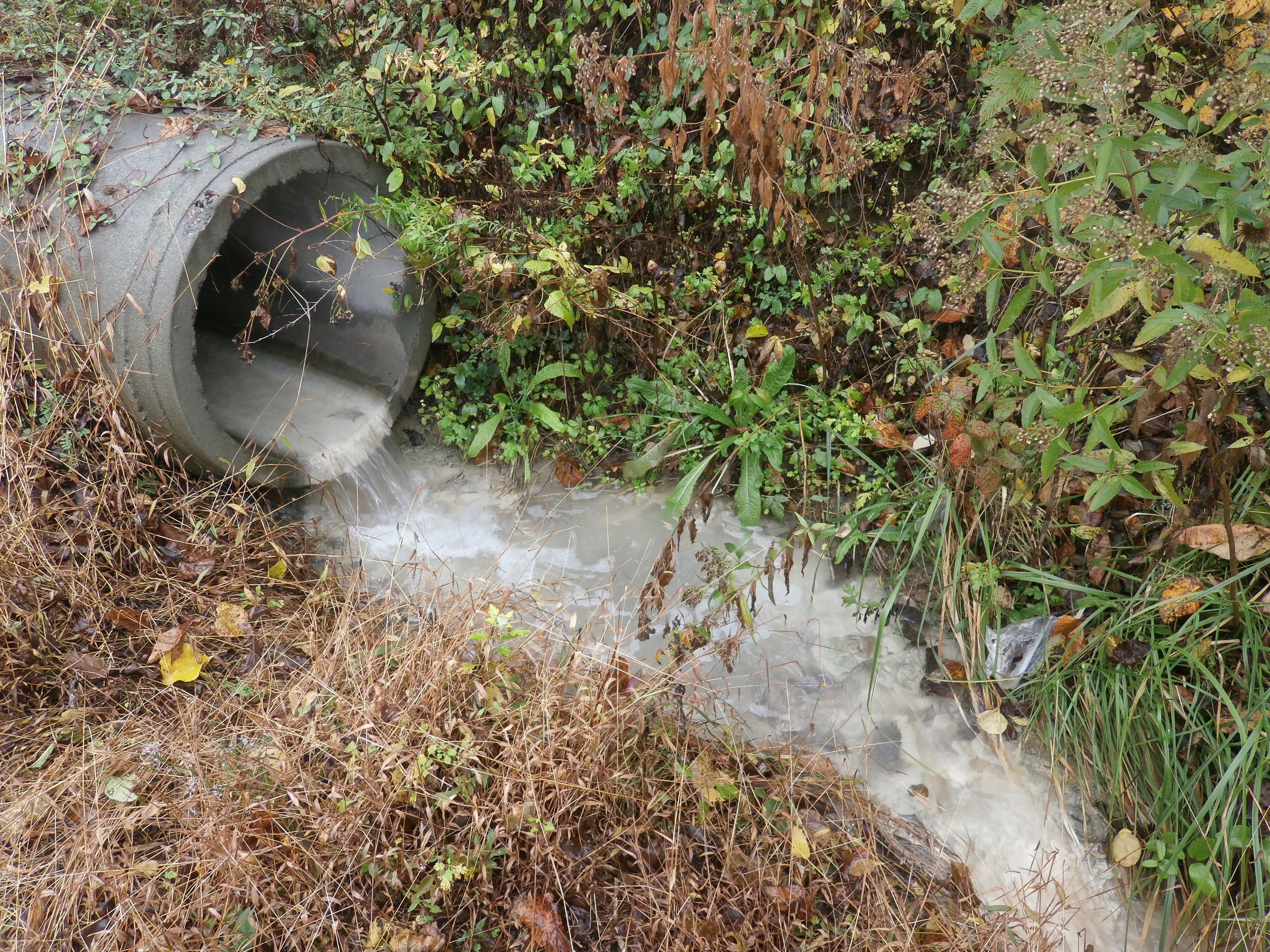
How Pennsylvania Pharma and Life Sciences Plants Decide Between PAG-03 Coverage and a No Exposure Certification
Walk through a pharmaceutical plant in Montgomery, Chester, or Bucks County and almost everything happens indoors: mixing, filling, packaging, testing. It's easy to assume stormwater rules are meant for quarries and scrap yards, not a clean production building. The rules don't care how tidy the inside is, though. They care about what rain and snowmelt can touch outside, so the answer for your plant depends on what's sitting out there.
Most pharmaceutical manufacturers end up in one of two places: a No Exposure Certification, or coverage under PAG-03, Pennsylvania's general stormwater permit for industrial sites. This article covers what creates exposure at a pharma facility, how to evaluate your site, and when PAG-03 becomes necessary. If you'd rather have someone look at your site with you, you can reach out to RMA at any point.
Table of Contents
TL;DR
Pharmaceutical manufacturing is a covered industrial category in Pennsylvania, so a plant generally needs either PAG-03 coverage or an approved No Exposure Certification. Many pharma plants can qualify for No Exposure because production happens indoors. Outdoor solvent or raw material tanks, loading areas, waste storage, and leaking or open equipment can break that, and when they do, PAG-03 coverage is the path. Plants that discharge directly to High Quality or Exceptional Value waters can't use either one and may need an individual permit.
Are Pharmaceutical Manufacturers Covered by Pennsylvania's Industrial Stormwater Rules?
PAG-03 is Pennsylvania DEP's general permit for stormwater associated with industrial activity. It falls under the NPDES program, short for National Pollutant Discharge Elimination System, which is the federal framework behind water discharge permits. DEP sorts facilities by primary SIC code, an older four-digit industry classification that the federal stormwater rules still use. Pharmaceutical preparations fall under SIC 2834, and the rest of the drug industry sits in the 2833 to 2836 range. DEP's PAG-03 materials place those codes in Appendix F, Chemicals and Allied Products. If your paperwork lists NAICS code 325412, keep in mind PAG-03 still looks at SIC codes, so confirm your primary SIC code before anything else.
Being in a covered category doesn't mean you automatically need PAG-03. It means that if industrial materials or activities at your site are exposed to rain or snowmelt, you need permit coverage. If they aren't, you can ask DEP for a No Exposure Certification instead. Pharmaceutical plants are often good candidates for that second route because so much of the work sits inside controlled buildings. For a broader look at how the options compare, our guide on which Pennsylvania stormwater permit you need walks through PAG-03, individual permits, and No Exposure side by side.
What Is a No Exposure Certification for a Pharmaceutical Plant?
DEP's general rule is that all industrial materials and activities must be stored and conducted indoors or under roof for a facility to qualify. You submit a No Exposure Certification application along with the PAG-03 Notice of Intent, certify that no stormwater contaminated by industrial exposure leaves the facility, and agree to let DEP inspect the site. The certification has to be renewed every five years, and if your operations change so materials end up outside, you'll need PAG-03 coverage instead.
Submitting the application doesn't guarantee approval. DEP can deny it if it decides your stormwater discharges are likely to contribute pollutants to surface waters. It also isn't available at all if the site discharges directly to High Quality or Exceptional Value waters, which are the streams Pennsylvania protects most heavily. Our article on what No Exposure means under an NPDES stormwater permit covers the concept in more detail.
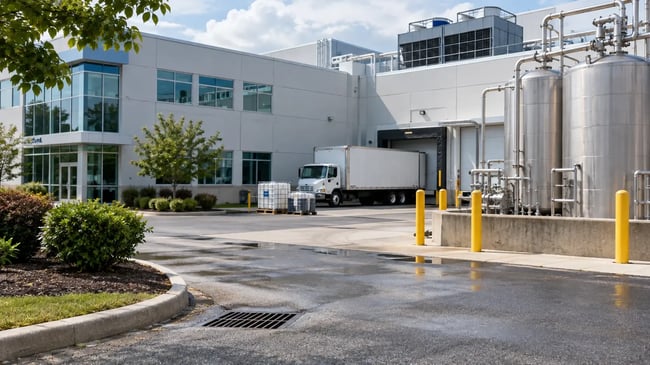
What Creates Stormwater Exposure at a Pharmaceutical Manufacturing Site?
The test is simple to state and harder to apply: can rain or snowmelt touch industrial material, waste, or equipment? At pharmaceutical sites the trouble usually isn't the production floor. It's the handful of outdoor spots where the plant connects to the outside world. Federal no exposure guidance treats loading, unloading, and storage of raw materials, products, and waste as material handling, and a few specific conditions are what separate a clean certification from a denied one.
| Area |
What tends to create exposure |
What usually holds up |
| Outdoor tank farms for solvents or raw materials |
Working valves, fill connections, drips at transfer points, or tanks in poor condition |
Containers that are tightly sealed, in good condition, and have no operational taps or valves |
| Loading and unloading areas |
Open-air transfers of materials, product, or waste between trucks and the building |
Docks and transfers fully under roof, with nothing spilled or tracked outside |
| Waste storage |
Open roll-offs, uncovered drums, or waste containers that can leak or overflow |
Lidded dumpsters where nothing can drain out and nothing is lost during pickup |
| Cooling towers and equipment yards |
Outdoor equipment that leaks, drips, or leaves residue or staining on pads and pavement |
Equipment kept clean, in good repair, and free of anything that rain could wash off |
One thing we see often is a plant that has been careful about the big items and missed the small ones: a pallet of drums staged outside for a day, an open dumpster door, a stained pad under a pump. DEP evaluates the whole facility, so a single exposed spot can undo the certification. If you want to understand how the rules define the underlying activity, our article on stormwater associated with industrial activity is a good place to start.
How Do You Evaluate a Pharmaceutical Site for PAG-03 or No Exposure?
Start by walking the property the way rain would, looking at every outdoor place where material, waste, or equipment sits or moves. Note each tank, dock, dumpster, drum staging area, and piece of outdoor equipment, then ask whether anything about it could let water pick up a pollutant. Look at roofs, door seals, lids, and the condition of containers, not just whether the area looks clean. Then trace where the water goes: a storm drain, a swale, a nearby stream, or a sewer. Southeast Pennsylvania has plenty of streams carrying High Quality or Exceptional Value designations, so check the classification of whatever your site drains to, because that can rule out both PAG-03 and No Exposure.
From there the decision usually falls into one of three buckets. If nothing is exposed, a No Exposure Certification is realistic. If something is exposed but fixable, such as moving drums inside, adding a roof over a transfer point, or replacing an open container with a lidded one, many plants choose to fix it and keep the simpler certification. If the exposure is built into how the plant operates, like an outdoor tank farm with active transfer operations, PAG-03 is the honest answer. PAG-03 coverage involves a Notice of Intent to DEP, a PPC Plan (Preparedness, Prevention and Contingency Plan) built around your site, stormwater sampling under the permit appendix that applies to your industry, inspections, and electronic reporting through DEP's eDMR system. Our comparison of SWPPPs and PPC Plans explains what that plan looks like.
Local rules can also change the picture. Some older Pennsylvania cities have combined sewers, and where site runoff goes to a treatment plant, the sewer authority may govern it instead of a DEP stormwater permit. Municipalities and sewer authorities can have their own requirements and fees too, so confirm your situation locally before you assume either way.
How Does RMA Help Pennsylvania Pharmaceutical Facilities With Stormwater Permits?
We work with Pennsylvania facilities all the time, and the first question we ask pharma clients is whether they need a permit at all. We'll walk your site, tell you honestly whether No Exposure looks realistic, and point out the specific spots that would hold it back. If a few fixes get you there, we'll say so. If PAG-03 is the right path, we can prepare the Notice of Intent, build your PPC Plan, and help with sampling, inspections, and eDMR reporting afterward. If you don't need either one, we'll tell you that too.
There's no obligation in a conversation. You can call us, email us, or fill out the form on our website, or simply contact RMA with a few details about your plant, and we'll help you figure out the right next step.