Resin Producers, Molders, and the Plastic Pellet Problem That Decides Between PAG-03 and No Exposure
In most cases, yes, unless everything at the plant stays indoors. Plastics products manufacturing is one of the industry categories covered by Pennsylvania's industrial stormwater rules, and a plant with resin, scrap, or equipment outside usually needs coverage under the Pennsylvania Department of Environmental Protection's (DEP) general permit, called PAG-03. If every industrial material and activity stays under a roof, a No Exposure Certification can take the place of that permit. Which one fits depends on something plastics plants deal with that most manufacturers don't: loose plastic pellets.
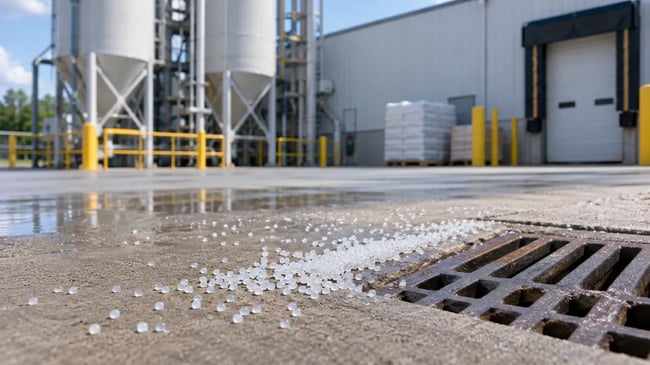
Plastic pellets are the small beads of resin that get melted and molded into everything from bottles to car parts. They're easy to spill and hard to get back. They bounce off dock plates, sift out of railcar hatches, and wash toward storm drains with the first good rain. Below we walk through how your SIC code sorts you into the right part of the permit, how pellets escape, what containment looks like, how pellet handling affects the choice between PAG-03 and No Exposure, and what has happened to Pennsylvania facilities that let pellets get away. If you'd rather talk through your own plant, you can reach out to RMA anytime.
Table of Contents
TL;DR
Most Pennsylvania plastics manufacturers need PAG-03 stormwater coverage, because molders and fabricators (SIC code 30) and resin producers are in covered categories. A No Exposure Certification is possible only when all resin, pellets, scrap, and equipment stay protected from rain and snow, which is hard to claim at a plant with outdoor silos, bulk unloading, or scrap bins. Pellet loss is the biggest stormwater risk at these plants, since pellets are visible, travel easily, and have already led to DEP enforcement and a citizen lawsuit in Pennsylvania. Containment at silos, unloading points, docks, and drains is the work that counts whichever path you end up on.
How Does Your Plastics SIC Code Determine Whether You Need a PAG-03 Stormwater Permit?
Stormwater permits are about runoff. When rain or snowmelt hits a site where industrial materials or activities are exposed and then flows to a stream or storm drain, that runoff is called stormwater associated with industrial activity. The federal program that regulates it is NPDES, the National Pollutant Discharge Elimination System, and DEP runs it in Pennsylvania. PAG-03 is the state's general permit for these discharges, which means DEP wrote one set of conditions that many similar facilities can sign onto by filing a Notice of Intent instead of negotiating a custom permit. If you want the full breakdown of your options, our guide to general, individual, and No Exposure permits covers them side by side.
Whether your plant is in a covered category depends on its primary Standard Industrial Classification (SIC) code, an older four-digit industry code that the stormwater rules still use even though most agencies have moved to NAICS. Plastics gets split in a way that trips people up. Molders, extruders, and fabricators that make plastic products usually fall under SIC 30, specifically codes 3081 through 3089, and PAG-03 puts them in Appendix S, the rubber, plastic products, and miscellaneous manufacturing section. Appendices are the sector-specific chapters of the permit that set the monitoring and best management practice details for each industry. Resin producers, the plants that make the pellets in the first place, are classified under SIC 2821 in the chemicals sector, and PAG-03 handles them under a different, chemicals-focused appendix with its own sampling requirements. Plenty of plants do both, and DEP can apply more than one appendix to a site depending on what happens in each outfall's drainage area.
Some plastics businesses sit outside those two groups. A plastics recycler may be classified under scrap and waste recycling, which has its own appendix. A distributor that only warehouses bagged resin is often classified as wholesale and may not be on the covered list at all. Even then, DEP can require coverage from a facility whose code isn't listed if its runoff is polluting a stream, so an unlisted code isn't an automatic pass. One more wrinkle: if all of your site's runoff goes to a sanitary or combined sewer rather than a stream, your sewer authority's rules may govern instead of a DEP stormwater permit, and local rules differ, so confirm your situation before assuming either way. Our guide to which Pennsylvania stormwater permit you need walks through the SIC code check step by step.
How Does Plastic Pellet Loss Get Into Stormwater at a Plastics Plant?
Pellets are only a few millimeters across, light enough to float, and spread by wind, boots, forklift tires, and water. Loss at a plastics plant is rarely one dramatic spill. It's a steady trickle from every place pellets change hands: a hose that drips at a railcar connection, a bag that splits on the dock, a vacuum line that blows a few pellets out of a vent. Each loss looks minor. Over a year, the amount that reaches a storm drain adds up, and the next heavy rain moves it off site.
Pellets also differ from most stormwater pollutants in one way that works against you. You can't see dissolved metals or a pH swing, but you can see a pile of white or clear beads along a curb line or around a catch basin. An inspector can photograph them, and so can a neighbor or a watchdog group. That visibility is a big part of why pellets draw attention from regulators and environmental groups, and why a good stormwater visual inspection at a plastics plant starts by looking for pellets on the ground. The table below shows where they usually escape.
| Where pellets move |
How they escape |
Typical controls |
| Railcar and bulk truck unloading |
Drips and overflow at hatches, hoses, and hoppers, plus wind |
Catch pans under connections, nearby drain protection, checking seals and hoses before and after unloading |
| Silo fill and conveying lines |
Loose fittings, overfilled receivers, pellets blown out of vents |
Tight connections, catch containers at fill points, routine checks of line ends and vents |
| Loading docks and bagged or boxed resin |
Torn bags, split boxes, pellets swept over the dock edge |
Puncture-resistant packaging, dock-edge catch areas, sweeping or vacuuming spills right away |
| Production floor and regrind areas |
Pellets tracked out doors on boots and tires |
Floor housekeeping, mats at doors, cleanup stations inside the building |
| Scrap and trash containers |
Open outdoor bins that wind or rain empties |
Lidded or covered containers, staging scrap indoors |
| Storm drains and outfalls |
The last stop for everything that got away upstream |
Drain screens or filters, regular inspection and cleanout |
What Does Plastic Pellet Containment Look Like Under PAG-03 Best Management Practices?
Best management practices, usually shortened to BMPs, are the physical controls and daily routines a stormwater permit expects you to use to keep pollutants out of runoff. For a refresher on the basics, we've explained what stormwater BMPs are in plain terms. For pellets, the best BMPs work in order. You stop pellets at the source first, you clean up what escapes immediately, and you put a last line of defense in front of every drain.
Stopping them at the source means closed or tightly sealed transfer systems, catch pans under connections, and packaging that doesn't tear. Cleanup means brooms, brushes, and vacuums, and never a hose. Washing spilled pellets toward a drain is the single most common way a small spill becomes a discharge. Drain protection means screens, filters, or inserts at catch basins close to pellet handling areas, checked and emptied often enough that they don't clog and overflow. Add trained employees, including the truck drivers and temporary workers who touch pellets but don't work there every day, and you have the core of a pellet program. We offer an online environmental training library for general employee awareness, and we can build site-specific training around your own pellet handling.
The plastics industry has a voluntary program for this called Operation Clean Sweep, built around a zero pellet loss goal, and EPA recommended the same approach in a 1993 report on plastic pellets in the aquatic environment. It's a reasonable checklist to start from. It's also a pledge, not a permit. Joining it doesn't satisfy PAG-03, and it doesn't protect you if pellets show up in a creek. Whatever your appendix says about pellets in particular, we'd treat solids leaving your site as a discharge problem, because DEP and Pennsylvania's Clean Streams Law do. Your PPC Plan, which is the stormwater plan PAG-03 requires (short for Preparedness, Prevention, and Contingency Plan), should map every place pellets are handled and name the control at each one. Our comparison of SWPPPs and PPC Plans for PAG-03 explains what goes in one.
How Do Pellet Handling Practices Affect the No Exposure Certification Versus PAG-03 Decision?
A No Exposure Certification lets a facility in a covered category skip PAG-03 coverage if all industrial materials and activities are stored or conducted indoors or under shelter, so nothing industrial touches rain or snow. It isn't a reward for a tidy-looking site, and it isn't available just because you rarely see dirty runoff. DEP has to approve it, it has to be renewed every five years, and it isn't available to facilities that discharge to High Quality or Exceptional Value waters. If your operations change so that materials become exposed, you may need permit coverage instead. We've covered the concept in more depth in what No Exposure means under an NPDES stormwater permit.
For plastics plants, pellets are what separate the plants that can qualify from the plants that can't. Resin is the industrial material, and how it arrives, where it sits, and how it moves decides whether it's ever exposed. A molder that receives boxed resin at an indoor dock door and keeps everything inside has a realistic shot. A plant with outdoor silos, bulk unloading from railcars or trucks, or outdoor scrap bins usually doesn't. Sealed silos are a gray area, and we'd look at the fill lines, the vents, and how pellets move between the silo and the building before giving an opinion. A history of pellets turning up near docks or drains is another red flag, because certifying that nothing is exposed won't hold up if an inspector finds pellets outside.
| Plant situation |
Likely stormwater path |
| Molder receives boxed or bagged resin at an indoor dock door, and processing, scrap, and finished goods all stay inside |
No Exposure may be realistic, subject to DEP approval |
| Outdoor silos or bulk unloading from railcars or trucks |
Usually PAG-03, with silos and unloading areas reviewed closely |
| Outdoor scrap, regrind, or off-spec bins, or outdoor equipment washing |
PAG-03 is the most likely fit |
| Pellets found outside near docks or drains |
Fix the source first, and expect PAG-03 unless exposure is truly eliminated |
| Discharge to High Quality or Exceptional Value waters |
Neither PAG-03 nor No Exposure is available, so an individual NPDES permit is likely |
If your plant can honestly qualify for No Exposure, it's usually the lighter path, and we'll say so. We don't push facilities into PAG-03 coverage they don't need.
What Does PAG-03 Coverage Involve for a Plastics Manufacturer?
Getting coverage starts with a Notice of Intent filed with DEP, backed by a site evaluation, a map of your drainage areas and outfalls, and a PPC Plan. DEP charges a $500 application fee and a $500 annual fee. The fees are the small part. The real work is the evaluation and plan, and for a plastics plant that's where pellet handling gets written down: where pellets are unloaded, stored, and moved, where runoff goes from each of those spots, and what controls sit in between. Our overview of the PAG-03 permit and how to take stormwater samples covers the application side in more detail.
Once you're covered, the work continues. PAG-03 permittees generally handle routine inspections, stormwater sampling, electronic Discharge Monitoring Reports through DEP's eDMR system, an annual report, employee training, and recordkeeping. Sampling requirements vary by appendix, and DEP added total nitrogen and total phosphorus monitoring across the appendices when it reissued PAG-03 in March 2023. If sample results exceed benchmark values, you may owe a corrective action plan. Our guide to Pennsylvania eDMR reporting shows how the reporting step works.
One thing about plastics deserves its own warning. A lab sample can't tell you whether pellets are leaving your site the way it can tell you about pH or metals. A bottle of runoff can pass every benchmark while pellets pile up around a catch basin fifty feet away. Pellet control depends on inspections, housekeeping, and training, not on lab results, so a clean sampling record shouldn't make a plant relax about pellets. When your pellet handling changes, such as a new silo, a new unloading point, or a new product line, it's also time to look at whether your plan needs revising, and we've explained when a PPC Plan needs updating. It also helps to know what happens during a PA DEP stormwater inspection, since walking the site and looking at the ground around your handling areas is exactly what an inspector will do.
What Happens When Plastic Pellets Leave a Pennsylvania Facility?
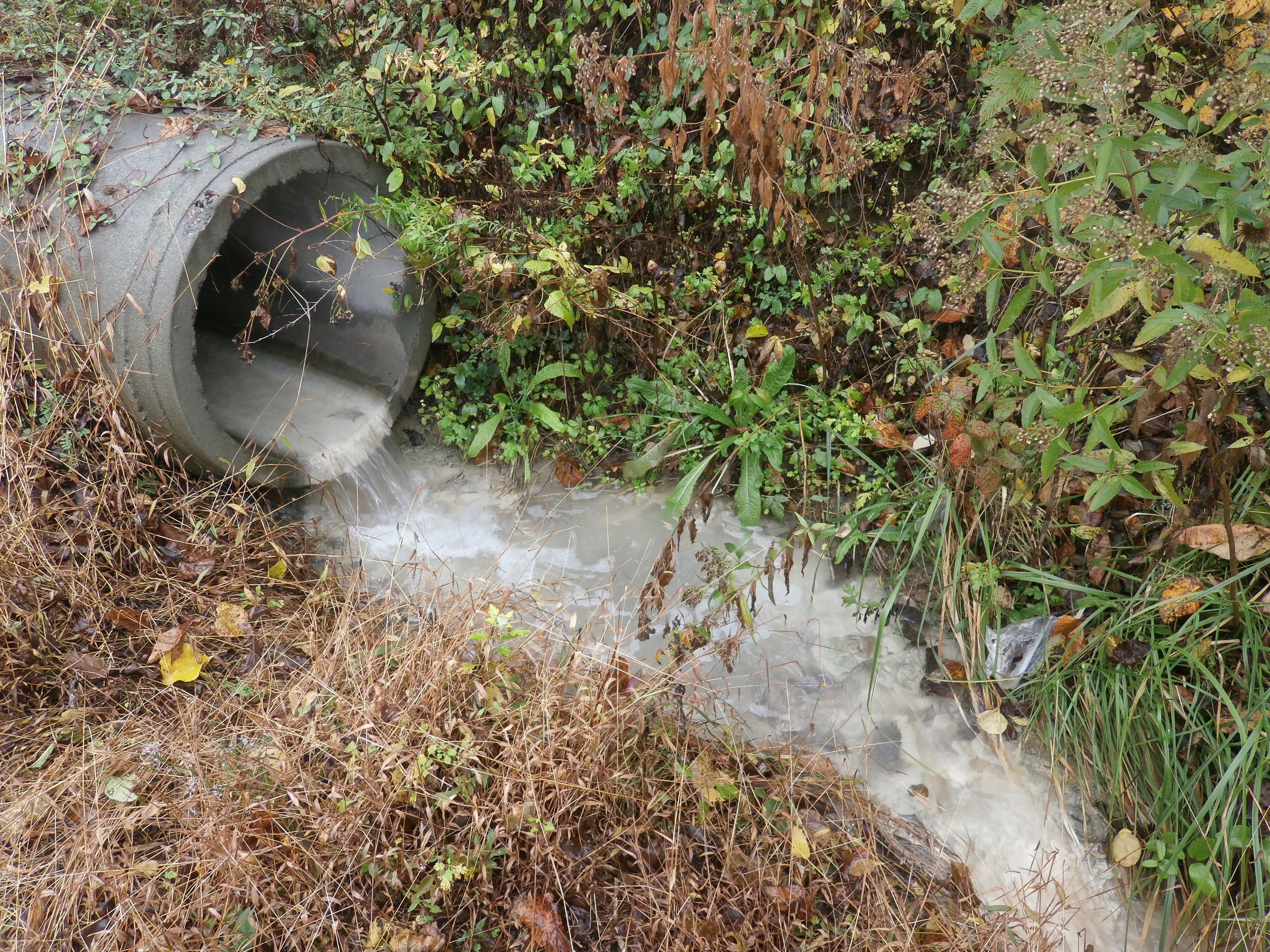
Pennsylvania has a recent case that shows how this plays out. In October 2022, DEP inspectors saw plastic pellets on the ground at the Styropek plant in Monaca, Beaver County, which made expandable polystyrene pellets. DEP issued a Notice of Violation that December for discharging pellets onto land and into Raccoon Creek. DEP found the pellets reached the water through the plant's wastewater treatment unit and from inadequate on-site containment that let pellets blow across the property and wash into stormwater outfalls. In September 2025, the state announced a proposed $2.6 million settlement, with $2 million of it going to clean up pellet pollution in the Raccoon Creek watershed. The case was brought under the Clean Streams Law, the Solid Waste Management Act, and the federal Clean Water Act, and the citizen groups PennEnvironment and Three Rivers Waterkeeper pursued it too. Reporting on the settlement says it also requires pellet monitoring technology at the plant's stormwater outfalls and a redesign of its stormwater system to capture pellets.
Styropek made pellets, and a molder's volumes are smaller, but the lesson carries over: pellets are visible, they're easy to trace to a source, and a citizen group with a camera and a canoe can build a case. The wider trend points the same way. Illinois enacted a law in August 2026 directing its environmental agency to build pellet control requirements into industrial stormwater permits for plastics facilities, and in states where EPA issues the stormwater permits directly, the federal permit requires pellet controls. Pennsylvania isn't one of those states, but regulators and advocacy groups watch each other. Permit coverage isn't a reason to assume pellet losses are acceptable.
If pellets have already left your site, or you've received a Notice of Violation or a notice of intent to sue, talk to an environmental attorney as well as your consultant. We can help with the stormwater side, including controls, plans, and permit paperwork, but legal exposure is a separate conversation.
How Can RMA Help Plastics Manufacturers With Pennsylvania Stormwater Permits?
We work with Pennsylvania facilities all the time, and plastics plants come with their own questions. We can sort out your SIC code and which PAG-03 appendix applies, walk your site by following the path pellets take from the truck or railcar to the finished product, and tell you straight whether No Exposure is realistic or whether PAG-03 is the better fit. If you need coverage, we can build the PPC Plan and maps, prepare the Notice of Intent, and help with sampling, inspections, eDMR reporting, and training afterward. If you'd like a sense of the cost first, we've published it in how much a PAG-03 permit costs in Pennsylvania, and if you're weighing doing it yourself, our post on getting a PAG-03 permit yourself lays out the tradeoffs honestly.
There's no pressure and no obligation. You can call us, email us, or fill out the form on our website, and we'll look at your situation and tell you what we think. If you're ready to talk, get in touch with RMA and we'll help you figure out the right next step.