How a Terminal's SIC Code, Maintenance and Fueling Areas, and Outdoor Bulk Cargo Decide Whether DEP's PAG-03 Stormwater Permit Applies on the Delaware River and Lake Erie
Port terminal managers often assume stormwater permits are a factory issue, since a wharf moves cargo and doesn't look like a manufacturing plant. Pennsylvania's Department of Environmental Protection (DEP) sees it differently once a terminal repairs trucks and cranes, fuels equipment, washes down machinery, or stacks loose material outdoors where rain can reach it. A terminal that only moves sealed containers across the apron may not need a permit at all, but a terminal with a maintenance shop, a fueling area, or open piles of cargo often does, and the rest of this article explains how to tell which one you are.
We'll cover how DEP decides, how SIC codes and on-site activities drive the call, what happens with bulk cargo like aggregates, salt, scrap, coal, and grain, and how the Delaware River ports and the Port of Erie fit in. If you'd rather have someone look at your terminal directly, you can reach out to RMA and we'll tell you plainly where you stand.
Table of Contents
TL;DR
A Pennsylvania port or marine terminal needs a DEP industrial stormwater permit, usually coverage under the PAG-03 general permit, when it runs a regulated activity such as vehicle and equipment maintenance, fueling, or equipment cleaning, or hosts another regulated operation like salt storage or scrap recycling. Coverage depends on the terminal's primary SIC code and what happens on site, so a terminal that handles only sealed containers may qualify for a No Exposure Certification or need nothing. Outdoor bulk piles don't automatically trigger a permit, but DEP can still require coverage when runoff carries pollutants.
What Is a Stormwater Permit and Why Would a Marine Terminal Need One?
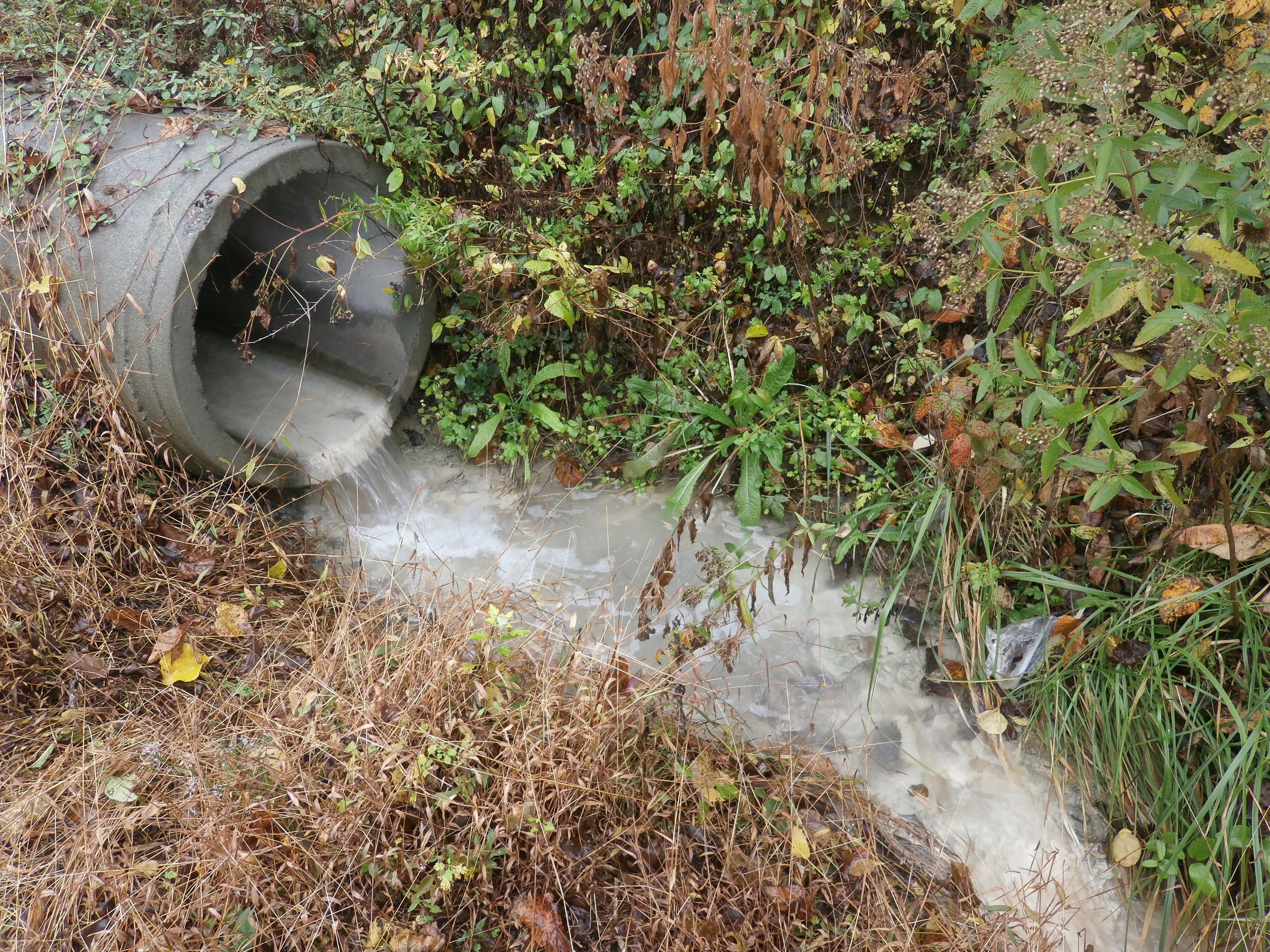
A stormwater permit is a National Pollutant Discharge Elimination System (NPDES) permit, the federal Clean Water Act program that DEP runs in Pennsylvania. The industrial version covers stormwater associated with industrial activity, which is a technical way of saying rain or snowmelt that touches industrial materials, equipment, or work areas before it drains to a creek, river, or storm sewer. A wharf makes the problem easy to picture. There's no soil or vegetation to slow anything down, and most of the apron drains straight to the water.
Most facilities don't get a permit written just for them. DEP uses a general permit called PAG-03, a standard permit with sector-specific rules that a facility joins by submitting a Notice of Intent (NOI). The current PAG-03 runs from March 24, 2023 to March 23, 2028. A facility has three paths: join PAG-03, file a No Exposure Certification if nothing is exposed to the weather, or apply for an individual NPDES permit when PAG-03 doesn't fit. Our guide to which Pennsylvania stormwater permit applies walks through those options, and our explainer on general, individual, and no-exposure permits covers the differences in more depth.
How Does a Terminal's SIC Code Decide Stormwater Permit Coverage?
Industrial permitting starts with the Standard Industrial Classification (SIC) code, a four-digit number that describes what a business does for a living. Water transportation sits in major group 44, which includes marine cargo handling (4491), towing and tugboat services (4492), and marinas (4493). The federal rule behind all of this, 40 CFR 122.26(b)(14)(viii), covers transportation facilities in SIC 44 and several other transportation groups, but only the parts of the facility that have vehicle maintenance shops, equipment cleaning operations, or airport deicing. Being a port doesn't make the whole site regulated.
Pennsylvania adds its own layer. DEP assigns coverage by a facility's primary SIC code, which is the activity that brings in the most revenue at the site. A secondary code generally doesn't trigger coverage by itself unless DEP decides otherwise. DEP's NOI instructions don't give water transportation its own appendix in PAG-03. They list SIC 44 as one example of facilities that may be covered under Appendix J, the appendix for facilities that don't fit another category, and they place petroleum bulk stations and terminals (SIC 5171) with land transportation. Sampling parameters and benchmarks follow whichever appendix DEP assigns.
Some terminals are owned by a port authority and leased to private operators. DEP treats each operator's activity separately, with its own SIC code, and tenants can share one permit or apply on their own, so settle who's responsible for which outfalls before anyone files.
Which Maintenance, Fueling, and Cleaning Activities Trigger Stormwater Coverage at a Port?
DEP's guidance says that only non-transient vehicle and equipment cleaning or maintenance shops, including fueling, fall under the transportation category. At a terminal that usually means the places where yard tractors, chassis, forklifts, reach stackers, cranes, and other cargo equipment get serviced, washed, or fueled, plus any vessel repair work done on the terminal's own property.
| Terminal Activity |
What Can Wash Off |
Effect on Permit Coverage |
| Maintenance shop for yard tractors, chassis, forklifts, and cranes |
Oil, grease, solvents, metals, and fluids from leaking equipment |
Generally brings the shop area into coverage |
| Fueling island or fuel truck loading |
Diesel and gasoline drips and overfill spills |
Counts as vehicle maintenance under DEP's guidance |
| Outdoor washing of equipment or containers |
Detergent, sediment, oil, and grit |
Counts as equipment cleaning; DEP expects wash areas to be indoors for a No Exposure Certification |
| Vessel repair, sanding, or painting on terminal property |
Paint chips, blasting grit, and metals |
Falls under maintenance, though ship repair can be classified differently |
Those areas pick up specific conditions in PAG-03. Cleaning and maintenance have to happen indoors, under cover, or in bermed areas that stop runoff and catch overspray. Oils and lubricants get stored indoors or under storm-resistant cover, and leaking equipment goes indoors or sits on drip pans. Fueling areas need controls like a cover, berms, spill and overflow protection, and oil and grease traps in nearby storm drains, unless the permittee shows a control isn't feasible and DEP authorizes that in writing.
If your terminal sends all of that work to an outside shop and fuel arrives by truck, the maintenance trigger may not apply, which is where a No Exposure Certification becomes an option.
Do Outdoor Bulk Cargo Piles of Aggregates, Salt, Scrap, Coal, and Grain Need a Stormwater Permit?
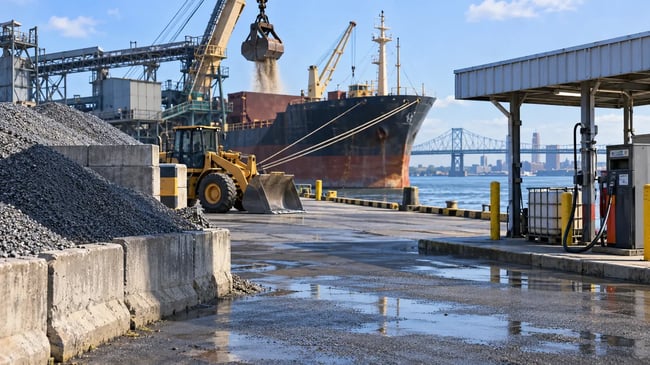
DEP's guidance has no single rule for bulk piles at a port. Whether a pile brings a permit depends on how the site is classified and what else happens on it. DEP can still require a permit under the Clean Streams Law for any facility discharging pollutants in stormwater, whether or not the facility sits in a listed category.
| Bulk Material |
Main Runoff Concern |
How Classification Plays Out |
| Aggregates (limestone, gravel, sand) |
Sediment, and high pH from limestone fines |
A stockpiling terminal isn't a quarry (mining program) or a concrete plant, unless it batches concrete on site |
| Road salt |
Chloride, which dissolves and travels with the water |
PAG-03 has a salt storage appendix, and covered salt with good housekeeping can avoid monitoring |
| Scrap metal |
Metals, oil, and sediment |
Scrap recycling has its own category (SIC 5093) when material is processed on site; a terminal that only loads finished bales is a classification question for DEP |
| Coal |
Black sediment fines, metals such as iron and aluminum, and sometimes acidic runoff |
Coal handling is called out for power plants; a terminal's coal yard is a classification question |
| Grain |
Dust and organic material, plus nitrogen and phosphorus |
Grain mills have their own category; a terminal that only stores and ships grain generally isn't a mill |
Salt is the one material with a clear Pennsylvania rule. Existing salt storage sites can stay under PAG-03. New piles designed for 3,000 tons or more need an individual permit unless the discharge goes to a covered municipal storm sewer, and smaller new piles don't need one if the salt appendix practices are followed. Covered or tarped salt with good housekeeping avoids that appendix's monitoring and may still allow a No Exposure Certification.
For everything else, look at the outfall, the pipe or edge where water leaves the site. PAG-03's general material storage rules call for keeping materials indoors or under storm-resistant cover where feasible, and for grading or berming so runoff doesn't carry material away. Uncovered piles that leave visible color or sediment in the water tend to draw a DEP inspector's attention, so settle the classification question with the DEP regional office or a consultant before an inspector raises it.
How Do Spills During Cargo Transfer Affect Port Stormwater Permits and Plans?
Transfers are where terminals lose control of material: a conveyor drops product, a loader tracks fines across the apron, a hose coupling weeps, or a tanker truck overfills, and in the rain most of it reaches a storm drain within minutes. At petroleum bulk terminals (SIC 5171), DEP counts fueling tanker trucks as vehicle maintenance, so that area must be covered. Moving product from a storage tank into a tanker truck isn't fueling under DEP's guidance and doesn't require a permit by itself. PAG-03 expects an inventory of materials, labeled containers, secondary containment, spill kits on site, dry cleanup with absorbents instead of large amounts of water, and spill response training for employees and contractors at least annually. Washing a spill off the apron with a hose sends it to the river and turns a cleanup into a discharge.
Those practices feed into a Preparedness, Prevention, and Contingency (PPC) Plan, the Pennsylvania plan that identifies pollutant sources, preventive measures, and spill response steps, and our comparison of PPC Plans versus SWPPPs explains how it relates to a SWPPP. A terminal with fuel storage may also need a federal Spill Prevention, Control, and Countermeasure plan, and we explain how an SPCC Plan differs from a stormwater plan. We also write SPCC Plans for Pennsylvania facilities.
Can a Port Terminal Qualify for a No Exposure Certification in Pennsylvania?
A No Exposure Certification (NEC) lets a facility that qualifies skip PAG-03 coverage by certifying that industrial materials and activities are protected from rain and snowmelt. DEP won't approve an NEC for part of a site, so the whole terminal has to qualify. Outdoor storage of equipment waiting for repair makes a site ineligible, a fueling island without a roof is ineligible, and vehicle wash areas have to be indoors. A site that discharges directly to High Quality or Exceptional Value waters can't get an NEC or PAG-03 coverage at all.
The exceptions help a container terminal. DEP's guidance allows tightly sealed containers, covered dumpsters in good condition, and adequately maintained material-handling vehicles to stay outside, so a terminal that handles sealed boxes and keeps maintenance indoors can be a candidate. The NEC costs $500 and is valid for five years, with no annual fee, and existing dischargers submit stormwater sample results for the parameters on the NEC form. Our explainer on what no exposure means under a stormwater permit covers the details.
How Do Delaware River and Lake Erie Locations Change the Stormwater Permit Picture?
Pennsylvania's commercial ports sit in two very different settings. The Delaware River terminals around Philadelphia and Chester handle container, breakbulk, automobile, petroleum, and dry bulk cargo. The Port of Erie, Pennsylvania's only Great Lakes port, handles bulk materials including limestone, gravel, road salt, and sand, and it's home to a large shipyard. DEP's Southeast Regional Office covers the Philadelphia area, and the Northwest Regional Office covers Erie.
Where the water goes also decides the answer. Discharges to a separate sanitary or combined sewer that's part of a publicly owned treatment plant don't need permit coverage or an NEC, though pretreatment rules still apply. Discharges to a storm sewer or directly to a river or bay do. Some older cities, Philadelphia included, have combined sewers, and a single terminal can drain partly to a sewer and partly to the river, so we never assume the answer for a whole site from its address. Local sewer authorities can add their own rules and fees, so confirm your situation before relying on a general answer.
What Stormwater Permits Apply When Building or Expanding a Marine Terminal?
New berths, laydown yards, and buildings bring a separate set of approvals that apply while the ground is being disturbed. Those usually include construction stormwater coverage and an erosion and sediment control plan under Chapter 102, county conservation district review, and Chapter 105 approvals for structures in or along waterways, with federal approvals possible too. RMA doesn't prepare or manage any of those construction-phase permits. Most terminals work with their engineer, contractor, or an erosion and sediment control specialist on that piece, and we're glad to help you figure out which approvals the construction phase needs and point you toward the right people.
The operational side starts once the terminal is running, and that's where we help: PAG-03 coverage or a No Exposure Certification, a PPC Plan, inspections, and sampling. DEP asks that a new-coverage NOI be administratively complete at least 60 days before a new discharge begins, so it belongs on the construction schedule early. Our guide to how long PAG-03 coverage takes covers the timeline.
What Does PAG-03 Coverage Require and Cost for a Port or Marine Terminal?
Once a terminal has coverage, the ongoing work is a PPC Plan developed under 25 Pa. Code 91.34 and reviewed at least annually, routine inspections twice a year, and stormwater sampling. Samples come from storms larger than 0.1 inch, collected in the first 30 minutes of discharge where possible, and the parameters and schedule depend on the appendix DEP assigns. Two consecutive benchmark exceedances trigger a corrective action plan, and results go to DEP through the electronic reporting system. Our guides cover taking PAG-03 stormwater samples, Pennsylvania's eDMR system, what happens during a DEP stormwater inspection, and when a PPC Plan needs updating. Our online training library covers staff training basics.
Agency fees are the easy part. New or amended PAG-03 coverage carries a $500 NOI fee, and a $500 installment is due every March 23 while coverage continues. Renewal NOIs carry no fee, and a transfer of coverage costs $50. Our fees depend on the appendix, the number of outfalls, site size and complexity, whether a PPC Plan already exists, and how much sampling and reporting is required. Our article on what a PAG-03 permit costs breaks those drivers down, and the pricing calculator below gives an estimate for your site.
How Does RMA Help Port and Marine Terminals With Stormwater Permits in Pennsylvania?
We work with Pennsylvania facilities all the time. We look at your primary SIC code, the activities that happen on the site, the tenants, and where each drain ends up, then tell you whether PAG-03, a No Exposure Certification, or something else fits. If you need coverage, we help with the NOI, the PPC Plan, sampling, inspections, and reporting. If your terminal only moves sealed containers and you don't need us, we'll say so.
There's no pressure and no obligation. You can call us, email us, or reach out to us through the contact page and describe your terminal, and one of our senior staff will get back to you with a straight answer.