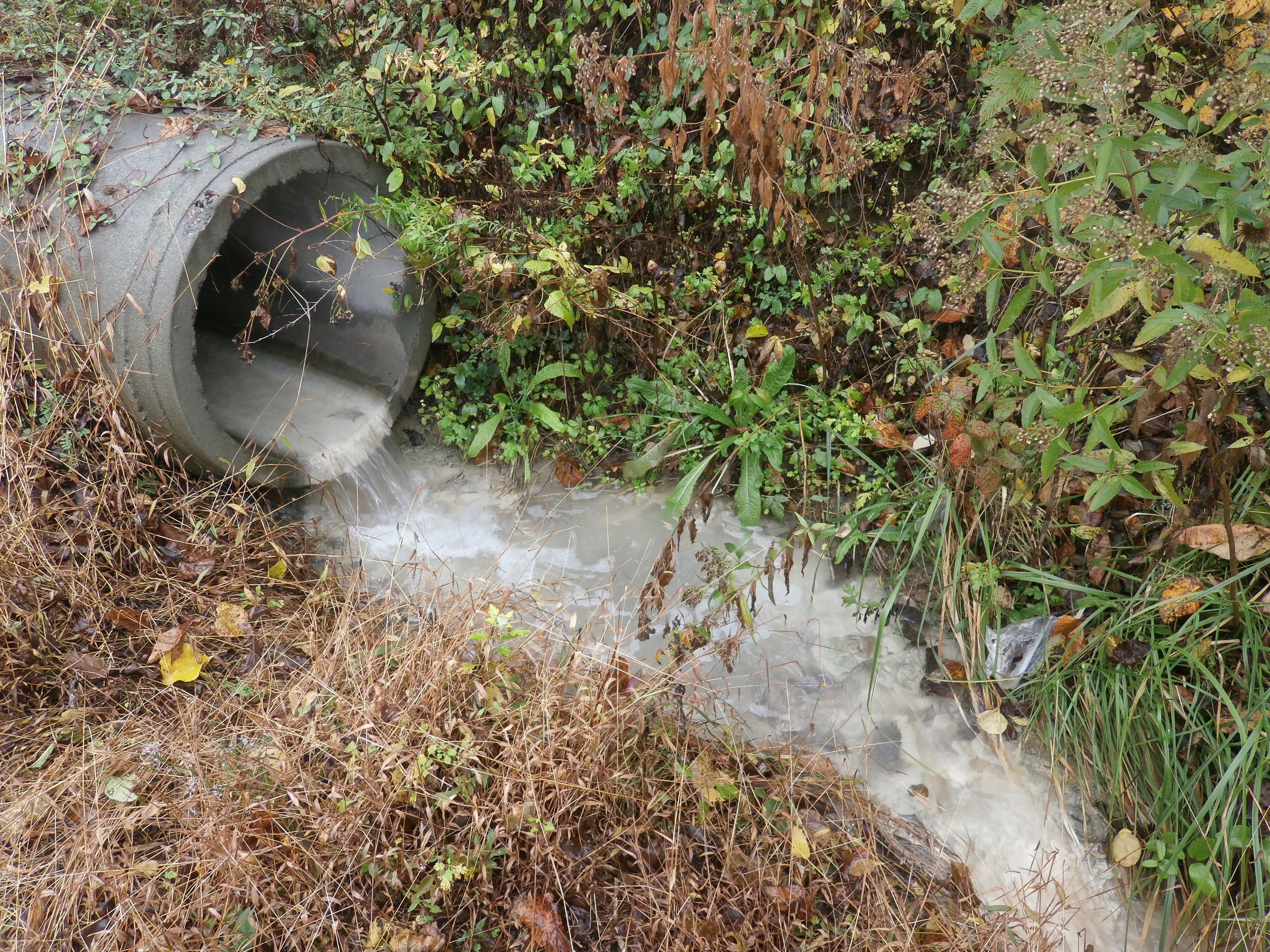
Which Rail Yard and Transload Areas Trigger PAG-03 Coverage in Pennsylvania, and Which Don't
A rail yard doesn't look like the factories most people picture when they think about industrial stormwater permits. There's no smokestack and no production line, just track, ballast, and equipment parked in rows. But locomotives need fuel, oil, and repairs, and anything spilled on the ground in a yard ends up wherever the rain sends it. That leaves yard managers, shortline railroads, and the companies running transload sites asking whether Pennsylvania's industrial stormwater permit applies to them.
The short answer is often yes, but only for certain parts of the site. Pennsylvania's industrial stormwater general permit, known as PAG-03, covers the areas of a rail facility where locomotives and equipment are maintained, fueled, and cleaned, not the miles of track in between. Transload sites, where material moves between rail cars and trucks, are less clear-cut and depend on what the site does and how it's classified. This article walks through what triggers coverage, what creates the pollution, how transload operations fit, and when a No Exposure Certification is an option. If you'd like a second set of eyes on your own site, you can reach out to RMA at any point.
Table of Contents
TL;DR
Rail yards in Pennsylvania usually need PAG-03 stormwater coverage, but only for the parts of the yard where equipment is maintained, fueled, or cleaned. Fueling or repairs out along the track generally don't count by themselves, and clean areas like open track and ballast away from the shops usually aren't the trigger. Transload sites depend on how they're classified and what material they handle, so there's no blanket yes or no. A No Exposure Certification is possible only when every industrial activity at the site is fully sheltered, which most active yards can't meet.
Does a Rail Yard Need a Stormwater Permit in Pennsylvania?
Usually, yes, though the permit attaches to specific activities and not to the whole property. A few terms first, since they come up constantly. NPDES stands for National Pollutant Discharge Elimination System, the federal program that controls what goes into streams and storm drains. In Pennsylvania, the Department of Environmental Protection (DEP) runs it. PAG-03 is DEP's general permit for stormwater from industrial sites, which means a standard permit DEP wrote once and that facilities join by filing a Notice of Intent (NOI), instead of writing a custom application. The current PAG-03 took effect March 24, 2023 and runs through March 23, 2028.
Whether a facility needs PAG-03 starts with its SIC code, a four-digit industry classification number. The code that matches the activity bringing in the most revenue at the site is its primary code. Railroads fall under SIC 4011 (line-haul railroads) and 4013 (switching and terminal operations), and both sit in PAG-03's Appendix L, the section covering land transportation. A rail facility with one of those primary codes needs permit coverage or a No Exposure Certification for the areas that count as industrial activity. Coverage isn't limited to discharges straight into a creek, since runoff into a municipal or private storm sewer counts too.
Where a yard drains matters. If stormwater goes into a sanitary or combined sewer that's part of a publicly owned treatment plant, DEP's guidance says a stormwater permit or certification isn't required, though the sewer authority may have its own rules and fees. Our guide on which Pennsylvania stormwater permit a facility needs covers the broader decision between PAG-03, an individual permit, and No Exposure.
Which Rail Yard Areas Trigger PAG-03 Coverage?
The federal rule behind PAG-03 limits transportation facilities to the portions of the site involved in vehicle maintenance (repairs, painting, fueling, and lubrication) and equipment cleaning. DEP's own industrial stormwater FAQ narrows that further for rail. It says only non-transient cleaning or maintenance shops, including fueling, fall under the transportation category, and that repairs or fueling along the track system aren't subject to permit requirements. A locomotive that gets fueled on a siding out in the yard isn't what the permit is aimed at. A fixed fueling pad, a locomotive shop, and a wash rack are.
DEP can go further if persistent pollutant problems keep showing up from an area outside those categories, and runoff from a clean area that mixes with runoff from a regulated area generally gets pulled into the same permit, so drainage matters as much as the activity. The table below sorts the common yard areas.
| Yard Area |
What Creates the Concern |
Typically Triggers Coverage? |
| Fixed locomotive fueling pad |
Diesel spills, overfilling, leaking tanks |
Yes |
| Locomotive or car repair shop |
Oil, grease, solvents, antifreeze, metals |
Yes |
| Wash rack, parts cleaning, tank car washout |
Wash water carrying oil, metals, and cleaning chemicals |
Yes |
| Painting or paint stripping |
Paint solids, overspray, solvents |
Yes, as part of maintenance |
| Locomotive sanding |
Traction sand washing off as sediment |
Yes, as part of maintenance |
| Outdoor storage of equipment waiting for repair |
Leaking hydraulic lines and drip collection systems |
Yes |
| Fueling or repairs along the running track |
Occasional drips and spills |
Not by itself, per DEP's FAQ |
| Open track and ballast away from the shops |
Little beyond normal track wear |
Generally no, unless the drainage mixes with a regulated area |
Two situations tend to surprise people. A rail shop that exists only to serve one non-transportation company is an auxiliary operation and doesn't need its own permit, though it has to be addressed in the plant's application if it's on the same site. And when a yard has tenants, DEP gives each tenant's activity its own SIC code, so the owner can apply once for everyone, the tenants can apply as co-permittees, or each can file separately.
What Creates Stormwater Pollution at a Pennsylvania Rail Yard?
The pattern is consistent from yard to yard and follows the activities that trigger the permit. Fueling is the biggest source, through spills during delivery, topping off a tank, runoff crossing the fuel area, or a leaking storage tank. The pollutants are diesel, oil, and the heavy metals that ride along. Locomotive and car shops add a second layer: fluid changes, parts cleaning, and steam cleaning release oil, solvents, acids, antifreeze, and metals. Equipment that sits outside waiting for repair keeps dripping hydraulic fluid and oil, and brake dust adds metals to the mix.
Sanding is easy to overlook. Locomotives carry sand for traction, and loading, storing, and spilling it creates a steady supply of sediment. Washouts add to it, since rinsing tank cars or transfer equipment sends whatever was inside toward the nearest drain, and EPA's guidance says wash water shouldn't reach storm drains.
Ballast comes up a lot. The crushed stone under the track isn't a permit trigger on its own, and EPA's transportation fact sheet doesn't list it as a pollutant source. The concern is what it sits next to. Stone around a fueling pad or shop track holds spilled oil, it's hard to clean once contaminated, and rain moving through it can carry that oil to the nearest ditch or inlet. Ballast in a regulated area is part of that area.
Covered and contained fueling pads, drip pans, check valves on hoses, dry cleanup with absorbents instead of hosing down, covered sand and material piles, and indoor or roofed parking for equipment under repair all cut exposure. Fuel and oil storage tanks also have their own rules. Our comparison of SPCC plans and stormwater plans explains how the two fit together at a site with bulk fuel.
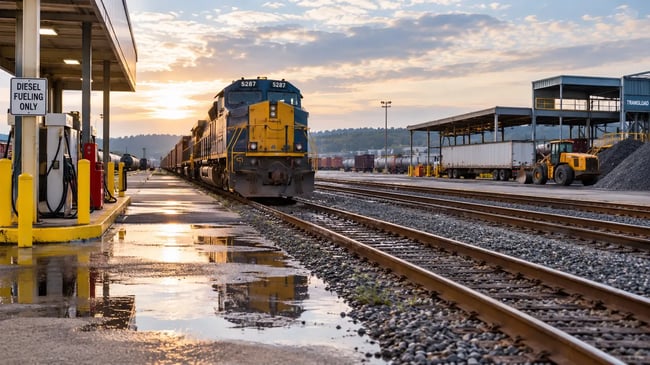
Do Transload Facilities Need a Stormwater Permit in Pennsylvania?
It depends, and DEP's industrial stormwater FAQ doesn't address transload operations directly, so the answer comes from how the site is classified and what it handles. A transload facility moves material between rail cars and trucks, and the permit question follows the same logic as any other site: what's the primary SIC code, and does any industrial activity fall into a covered category?
If a railroad runs the transload as part of its switching and terminal operations, the site falls under the rail category, and coverage attaches to the maintenance, fueling, and cleaning areas. A pure transfer pad with none of those activities may have no covered area under that category alone. In practice, most transload sites do some of them. Fueling loaders and yard trucks on site counts as vehicle maintenance activity, and rinsing hoses, hoppers, or tank equipment counts as equipment cleaning.
The material changes the picture. Petroleum terminals and bulk stations (SIC 5171) are in Appendix L alongside rail, and DEP's FAQ notes that moving product from a storage tank into a tanker truck isn't fueling, while fueling the tanker truck itself is routine maintenance. Scrap metal and salvage handling falls under a separate federal recycling category. Existing salt storage and distribution sites have their own appendix in PAG-03, tied to the Clean Streams Law. Other bulk commodities, such as sand, aggregate, coal, fertilizer, or plastic pellets, depend on how the operator is classified. Warehousing codes 4221, 4222, and 4225 are carved out of the federal transportation category, which is one reason a site that stores material for others can land differently than one that moves it.
Where the classification doesn't point to a permit, the exposure doesn't disappear. DEP can require permit coverage for any facility whose stormwater carries pollutants, under the Clean Streams Law. Bulk transfer creates its own list of problems: product spilled during loading, dust blowing off open hoppers, sediment from stockpiles, and wash-down water. Covered or enclosed transfer points, sweeping, tarped stockpiles, curbing, and inlet protection are the usual controls. Because transload sites sit in a gray zone, we'd rather look at the specific operation than guess.
Can a Rail Yard or Transload Site Get a No Exposure Certification?
A No Exposure Certification (NEC) is DEP's alternative to PAG-03 for facilities that keep all industrial materials and activities sheltered from rain, snow, and runoff. If a site qualifies, it files the certification and skips the sampling and reporting that come with the permit. The bar is high, though. Every industrial area on the site has to meet the requirements, because DEP won't approve an NEC for only part of a facility. A facility that discharges to High Quality or Exceptional Value waters isn't eligible either.
For rail operations, the fine print decides it. DEP's FAQ says wash areas must be indoors for NEC purposes, and an unroofed fueling station disqualifies a site. Aboveground tanks work only if their secondary containment is protected from rain and snow. Outdoor storage of vehicles waiting for maintenance rules a facility out, so a yard that parks locomotives outside for repair can't get there. A small shop where all maintenance, washing, and fueling happens inside or under a roof can. Most busy yards can't, which is why PAG-03 is the usual path. An NEC is generally valid for five years, renewal is due at least 180 days before it expires, and DEP expects immediate notice if conditions change and the site no longer qualifies. Our explainer on what No Exposure means goes through the criteria in more detail.
What Does PAG-03 Require From a Rail Yard Once It's Covered?
Joining PAG-03 starts with the NOI, which describes the site, its outfalls (the points where stormwater leaves), and its activities. From there, a covered facility works from a written plan. In Pennsylvania that's typically a Preparedness, Prevention, and Contingency (PPC) Plan, and we've laid out how it compares to a standard stormwater plan in our guide to SWPPPs and PPC Plans under PAG-03. The facility also carries out the best management practices (BMPs) that apply to its sector, inspects the site on a regular basis, keeps records, and collects stormwater samples.
Sampling requirements vary with the permit appendix and the receiving stream, and some permits require none for certain parameters. DEP's reissued PAG-03 added total nitrogen and total phosphorus monitoring to all appendices, and facilities discharging to a stream with an impairment have to sample for the pollutant causing it. Results go to DEP through the electronic reporting system, and our guide to Pennsylvania eDMR reporting walks through how that works. If you're curious what an inspection looks like, we've also covered what happens during a PA DEP stormwater inspection.
What About Building or Expanding a Rail Yard or Transload Site?
New or expanded sites have two separate sets of requirements, and they don't overlap much. The construction phase typically involves construction stormwater coverage (PAG-02), an erosion and sediment control plan under Chapter 102, review by the county conservation district, local land development stormwater approvals, and possibly a Chapter 105 permit if a spur or access road crosses a stream or wetland. RMA doesn't prepare or manage any of those. Readers usually work with their engineer, contractor, or an erosion and sediment control specialist on that piece, and we can help you work out what the construction phase is likely to need and point you toward the right people.
Once the site is running, a different set of requirements takes over. A new fueling pad, shop, or transload area usually means PAG-03 coverage or a No Exposure Certification, a plan, inspections, and sampling, and that's where RMA's help fits. DEP review takes time, so it pays to start the operational permit conversation while the design is still open. Layout choices like roofing the fueling pad or putting the wash rack indoors can decide whether a site qualifies for No Exposure later, and they cost far less before construction. Our article on how long PAG-03 coverage takes helps with timing.
How Does RMA Help Rail Yards and Transload Sites With Pennsylvania Stormwater?
We work with Pennsylvania facilities all the time, and rail and bulk-handling sites raise the same kinds of questions. We can look at how your site drains and which areas count as industrial activity, work out whether PAG-03, an individual permit, or a No Exposure Certification fits, and prepare the NOI and the plan. After that, we can help with inspections, sampling, and eDMR reporting. Senior staff do the work, and we'll tell you when you don't need us, for example if your maintenance is all indoors and a certification is the simpler route. What a project costs depends on the permit category, the sampling required, the size and complexity of the site, and whether a plan already exists. Our breakdown of PAG-03 permit costs in Pennsylvania covers the details.
There's no pressure and no obligation to hire anyone. You can call us, email, or fill out the form on our website, and we'll talk through your yard or transload site and what applies. When you're ready, contact RMA and tell us what you're working with.