How DEP Waste Permits, PAG-03 Industrial Stormwater Coverage, and Your Site's SIC Code Fit Together
If you run a waste transfer station in Pennsylvania, you already hold a permit from the Pennsylvania Department of Environmental Protection (DEP) just to operate. So when someone asks whether you also need a stormwater permit, the natural question is whether the first permit already covers it. Sometimes it addresses runoff in part. Sometimes the site also needs a separate industrial stormwater permit called PAG-03, which is DEP's general permit for stormwater leaving industrial facilities. And sometimes the honest answer is that it depends on how your facility is classified and what happens to the water after a storm.
This article walks through where stormwater problems come from at a transfer station, what your DEP waste permit does and doesn't say about runoff, how PAG-03 coverage gets decided, and whether a No Exposure Certification is realistic for a site like yours. We can't give a flat yes or no for every transfer station, because the answer turns on your permits and your operations, but we can show you exactly what to check. If you'd rather have someone look at your specific situation, you can reach out to RMA and we'll tell you plainly where you stand.
Table of Contents
TL;DR
Maybe. A transfer station's DEP waste permit sets the standard for protecting water and soil, but it isn't a stormwater discharge permit. Whether you also need PAG-03 or an individual stormwater permit depends on your primary activity and SIC code, whether you recycle or run a truck fleet on site, any NPDES permit you already hold, and what's in your runoff. Some sites qualify for a No Exposure Certification, but open tipping areas and outdoor containers make that hard. Your permits, your site layout, and your DEP regional office are where the real answer lives.
Why Does Stormwater Matter at a Pennsylvania Waste Transfer Station?
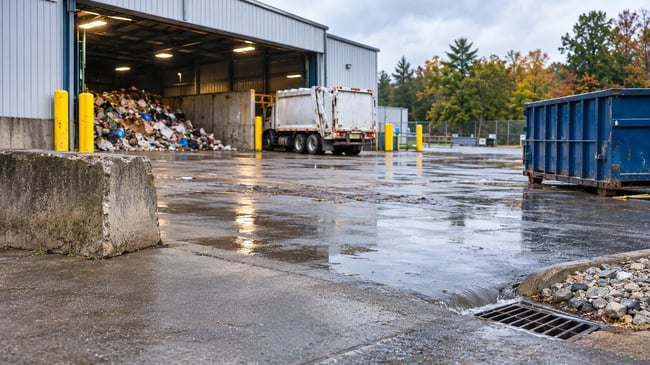
A transfer station is where collection trucks unload municipal waste, usually onto a concrete tipping floor, so it can be consolidated into larger trailers or containers for the trip to a landfill or processing facility. That means loaded trucks coming and going all day, open containers, and loose material, all in a place where rain and snowmelt show up whether you want them to or not. Pennsylvania has long been one of the largest importers of out-of-state waste, so heavy truck traffic and big volumes are a normal part of the picture for waste facilities here.
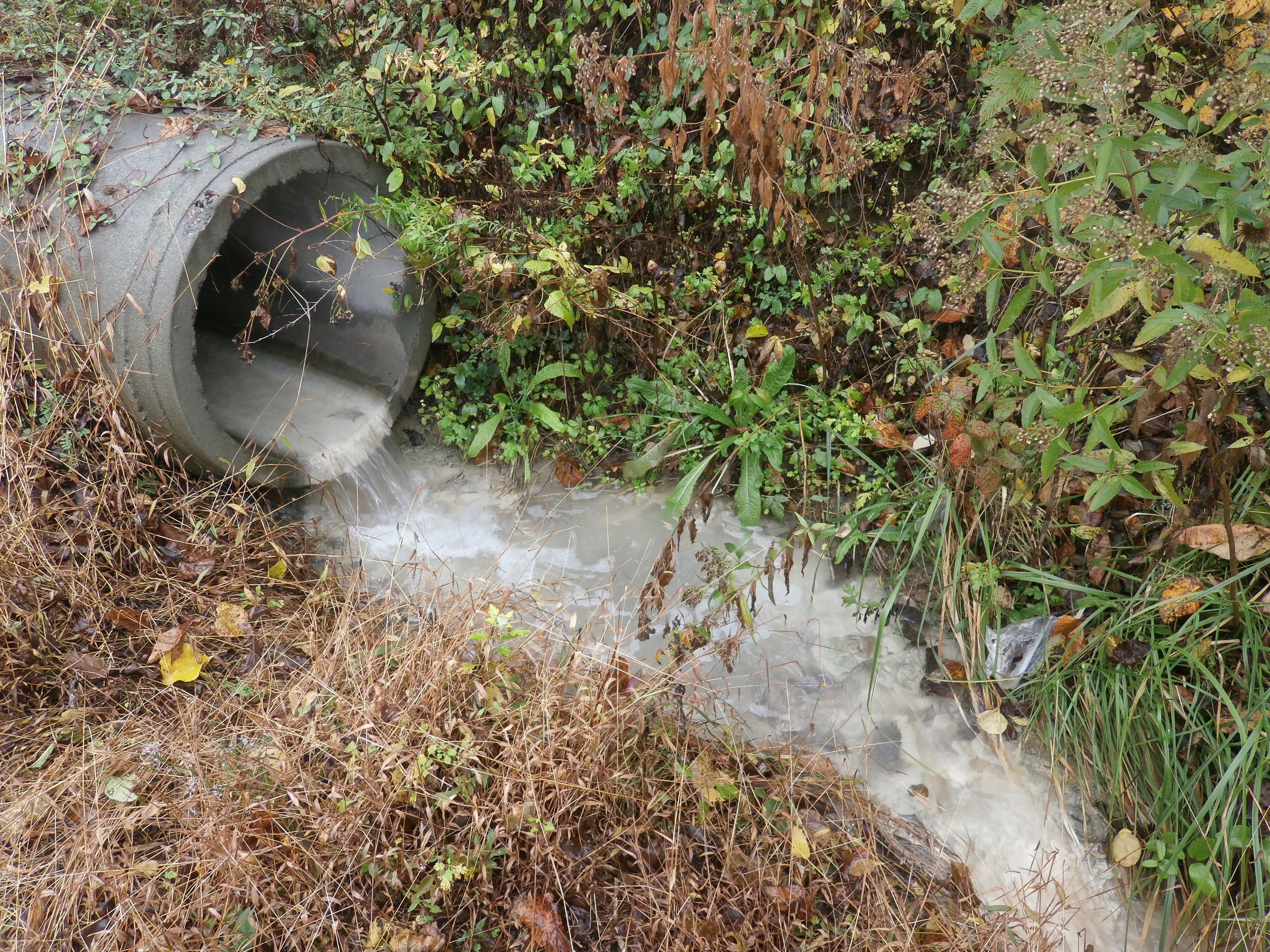
The stormwater concerns tend to cluster in four places. Tipping floors and loading areas are the first. When they're open to the weather, rain mixes with fresh waste and carries away whatever it touches, including food residue, oils, metals, and fine litter. Truck traffic is the second, because tires and trailers track material out into yards and driveways, and leaks of diesel, hydraulic fluid, and oil add to the mix. Leachate is the third. That's the liquid that drains out of waste as it sits, and at a transfer station it's often what's left pooled on the floor or in a low spot after a load is dumped. Outdoor container storage is the fourth, since roll-offs and compactor trailers left out in the weather can leak, and open-topped ones collect rain.
Stormwater and wastewater are different things, and permits treat them differently. Stormwater is rain and snowmelt running off the site. Leachate and floor washdown are wastewater. We cover that split in more detail in our article on the difference between stormwater and process water, but the short version for a transfer station is that a stormwater permit generally isn't a license to send leachate or washdown water to a storm drain or stream.
Does a DEP Waste Permit Cover Stormwater at a Transfer Station?
Pennsylvania transfer stations operate under DEP's municipal waste program, and the rules for them sit in 25 Pa. Code Chapter 279. Operators have to follow the plans and conditions in their permit, which means whatever your application and approved plans say about runoff controls becomes something DEP can hold you to.
The chapter also has a section on soil and water protection. In general terms, it says operators can't cause discharges to Pennsylvania surface waters that violate the Clean Streams Law, they have to run the facility to prevent and control water pollution, and they can't cause water or soil contamination on or off the site. It doesn't spell out an industrial stormwater permit program by name. So your waste permit sets the standard, which is don't pollute, while the specifics of how you manage runoff come from the plans attached to your permit.
That's the gap people run into. A waste permit isn't an NPDES permit. NPDES stands for National Pollutant Discharge Elimination System, the federal program that regulates discharges into streams and storm sewers, and in Pennsylvania DEP runs it. A transfer station with solid runoff controls written into its waste permit may still need NPDES coverage if its discharge falls under DEP's industrial stormwater rules. The reverse can also be true, where the waste permit is the main document governing the site and no separate stormwater permit applies. We can't tell which without seeing your permits, but the next section covers how that call gets made.
When Does a Transfer Station Need PAG-03 Industrial Stormwater Coverage?
PAG-03 is DEP's general NPDES permit for stormwater associated with industrial activity. DEP reissued it in March 2023 for a new five-year term. "General" means DEP wrote one set of rules for a group of similar facilities, and a facility gets covered by filing a Notice of Intent rather than having a custom permit written for it.
Who needs coverage comes from federal regulation, which lists categories of industrial activity, most of them defined by SIC code. A SIC code (Standard Industrial Classification code) is the four-digit number describing what a business mainly does. Transfer stations don't have a category of their own in that federal list. So coverage depends on where your facility's primary activity lands, and DEP treats the primary activity as the one that brings in the most revenue on the site.
The categories that tend to touch waste sites include landfills and land application sites that receive industrial waste, hazardous waste treatment, storage, and disposal facilities, scrap and waste recycling facilities, and land transportation facilities such as trucking operations, which are covered for areas like vehicle maintenance and equipment cleaning. A transfer station that also sorts and recycles material, or that operates mostly as a hauling yard, can end up in a different place than one that only consolidates trash. DEP also keeps a catch-all category, because the Clean Streams Law lets it require NPDES coverage from any facility that's discharging pollutants in stormwater, even when the SIC code doesn't fit neatly.
| What Changes the Answer |
How It Affects Coverage |
Where to Check |
| Primary activity and SIC code |
Decides whether the site sits in a covered category at all |
Your business records and the DEP permit application |
| Sorting or recycling on site |
May bring the site into a scrap and waste recycling category |
The PAG-03 sector list |
| Truck fleet with maintenance or cleaning areas |
Trucking operations can be covered for those specific areas |
Your site layout and primary SIC code |
| An existing individual NPDES permit |
A facility with an individual permit for non-stormwater discharges can't use PAG-03, and its stormwater is handled in that permit |
The permits already on file with DEP |
| Pollutants in your runoff |
DEP can require coverage when stormwater carries pollutants, whatever the SIC code |
Your DEP regional office |
If a facility isn't eligible for PAG-03, the next step is an individual NPDES permit, which DEP issues on a separate application for industrial stormwater. Our guide on which NPDES permit you need compares the options, and our article on whether you need a stormwater permit in Pennsylvania walks through the same decision for industrial sites generally.
How Do Mixed Activities and Shared Runoff Change the Answer?
Most transfer stations do more than one thing. There's a scale house, a tipping building, maybe a fueling area, a truck shop, and a spot where recyclables get pulled out. DEP's industrial stormwater guidance treats on-site maintenance shops and similar support operations as secondary activities. In general, a facility needs coverage based on its primary SIC code or activity, and a secondary activity on its own doesn't trigger coverage unless DEP decides it's needed because of pollutants in the discharge.
Drainage adds a wrinkle. The federal requirement applies to the industrial areas of a site, but DEP's guidance says that when runoff from a non-industrial area mixes with runoff from a regulated industrial area, the combined discharge and its drainage area need coverage. A site where the truck lot, the tipping apron, and the employee parking all drain to one outfall (the point where runoff leaves the property) is a different situation from one with separate drainage. In practice, how your site drains can count as much as what you do on it. Our article on stormwater associated with industrial activity explains which parts of a site typically count.
If you store diesel or oil in aboveground tanks for trucks and loaders, that brings in a separate plan altogether. Spill prevention is covered under SPCC requirements, and we explain how those apply in Pennsylvania on our Pennsylvania SPCC plan page.
Can a Pennsylvania Transfer Station Qualify for a No Exposure Certification?
A No Exposure Certification (NEC) is the route for a facility in a covered category whose industrial activities are all sheltered from rain and snowmelt. Instead of full PAG-03 coverage, the facility certifies to DEP that nothing industrial is exposed to stormwater. We cover the basics in our article on what no exposure means under an NPDES stormwater permit.
DEP's FAQ sets a high bar. An NEC is available only to facilities that fall in the regulated industrial categories to begin with, so a transfer station outside those categories wouldn't use it. Every industrial area on the site has to meet the no-exposure standard, and DEP won't approve an NEC for only part of a site. Materials generally need a storm-resistant shelter, and uncovered dumpsters don't qualify. Facilities discharging to High Quality or Exceptional Value waters, which are DEP's most protected stream designations, can't use an NEC at all. When one is approved, it's generally valid for five years.
For a transfer station, the picture that fits best is a fully enclosed building where trucks tip inside and containers get loaded indoors. Open-air tipping, roll-offs parked outside, and truck wash areas all make an NEC harder to support. A site with an enclosed tipping building but trailers that sit outside with open tops needs a close look before anyone files, because a certification that doesn't match conditions on the ground creates its own problems.
How Can a Transfer Station Operator Find Out Which Stormwater Rules Apply?
Start with your own paperwork. Pull your DEP waste permit and the plans approved with it, plus any NPDES or water quality management permit already on file for the site. Then write down what each part of the property does, what SIC code you operate under, and where water goes when it rains. Follow it from the tipping floor and truck lot to a storm drain, a ditch, a stream, or the sewer. Your DEP regional office is the place to confirm how DEP classifies your site, and a short conversation there can save months of guessing.
Leachate and washdown water deserve their own line on that list. Where they go is a separate question from stormwater, and the answer might involve a sewer authority approval, a holding tank, or off-site disposal depending on the facility. Local rules can also differ from DEP's. Cities, townships, and sewer authorities sometimes have their own requirements and fees, and in older cities with combined sewers, where runoff flows to a treatment plant, the sewer authority may govern site runoff instead of a DEP stormwater permit. That's one more reason to confirm your own situation instead of assuming it matches the transfer station down the road.
If PAG-03 does apply, coverage comes with a plan, monitoring, and reporting. Pennsylvania facilities often hear about SWPPPs and PPC Plans in the same breath, and we compare them in our guide to SWPPPs and PPC Plans for PAG-03. Monitoring requirements vary by industrial sector, and it helps to know what a DEP visit looks like before one happens, which we cover in what happens during a PA DEP stormwater inspection.
Cost depends on which permit category applies, how much sampling is involved, the size and complexity of the site, and whether a stormwater plan already exists. We break down the factors in how much a PAG-03 permit costs in Pennsylvania. If you're not sure what else a transfer station might owe DEP beyond stormwater, an environmental audit can surface other requirements that apply to the facility.
How Does RMA Help Pennsylvania Transfer Stations With Stormwater Permits?
We work with Pennsylvania facilities all the time, and transfer stations are one of the trickier cases because the waste permit and the stormwater rules overlap without lining up neatly. We can review your permits and site details and tell you plainly whether you're looking at PAG-03, an individual permit, a No Exposure Certification, or nothing beyond what your waste permit already requires. If you don't need us, we'll say so. If coverage does apply, we can help with the application and with the plans, monitoring, and reporting that come with it.
If you're building or expanding a transfer station, the construction-phase approvals are a separate set of requirements, and they aren't something we prepare. Your engineer or contractor handles that side. What we can do is help you work out what the operating side will need once the site is running. There's no pressure and no obligation in any of this. You can call us, email us, or fill out the form on our website, and you can start by contacting RMA with a quick description of your site.