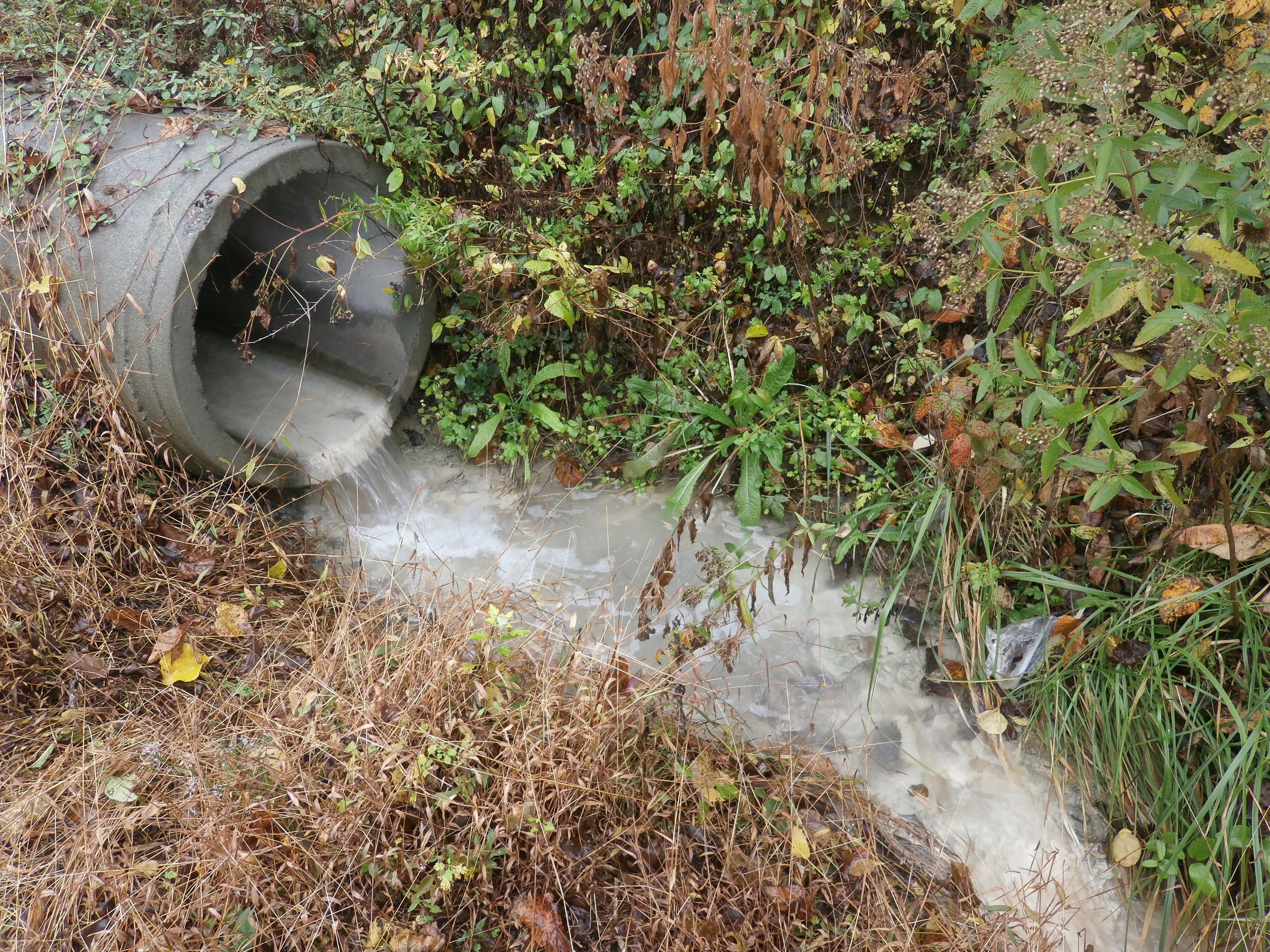
Most Print Shops Work Indoors, Which Makes No Exposure the Likely Route. Here's What Can Undo That and How to Check Your Site.
If you run a printing plant in Pennsylvania, you've probably heard that industrial facilities need stormwater permits, and you may be wondering whether a building full of presses and paper stock counts. Most print shops do their work indoors, so the short answer is that you probably don't need full stormwater permit coverage. You do generally still need to file paperwork with the Pennsylvania Department of Environmental Protection (DEP) showing that your site qualifies for what's called a No Exposure Certification.
In this article, we'll explain how Pennsylvania's industrial stormwater rules apply to printing plants, what tends to create outdoor exposure at a print facility, and how to check your own site before you file. If you'd like a second set of eyes on your facility, you're welcome to reach out to RMA, and we'll tell you honestly whether you need our help or can handle it yourself.
Table of Contents
TL;DR
Most printing plants work indoors, which makes them good candidates for a No Exposure Certification instead of coverage under Pennsylvania's PAG-03 general stormwater permit. That only holds if ink, solvents, waste, and equipment all stay indoors or under a roof. Even then, you generally file the certification with DEP and renew it every five years, so the answer is rarely "nothing to do."
Do Printing Plants Need PAG-03 Stormwater Permit Coverage in Pennsylvania?
NPDES stands for National Pollutant Discharge Elimination System, the federal program that regulates what leaves a site in water. DEP runs it in Pennsylvania, and its general permit for stormwater from industrial activity is called PAG-03. Under the federal stormwater rules, printing and publishing fall into the light manufacturing group, and facilities in that group are covered only when their industrial materials or activities are exposed to rain and snowmelt. That's the reason a print shop is a different situation from a scrap yard or a concrete plant.
So a printing plant that keeps everything inside typically isn't looking at PAG-03 coverage. It's looking at the No Exposure route. A plant with open drums of ink, uncovered dumpsters, or equipment sitting in the yard may need PAG-03 coverage, and a facility that isn't eligible for PAG-03 would need an individual NPDES permit. We cover how those three paths compare in our article on which Pennsylvania stormwater permit you need. One caution: townships and sewer authorities can have their own stormwater or discharge rules, so check your local situation as well.
What Is a No Exposure Certification for a Printing Plant?
A No Exposure Certification is a conditional exclusion from NPDES stormwater permitting. DEP's guidance says that, in general, all industrial materials and activities must be stored and conducted indoors or under roof for a facility to qualify. You certify that no stormwater at your site is contaminated by exposure to those materials and activities, and DEP reviews and approves the request. Our article on what No Exposure means under an NPDES stormwater permit goes deeper on the concept.
Two limits are worth knowing. Submitting the certification doesn't guarantee approval, and DEP can decline it if it finds that your discharges are likely to contribute pollutants to surface waters. Also, DEP can't approve a No Exposure Certification for a facility with a direct discharge to waters classified as High Quality or Exceptional Value. DEP's application form also asks about your PPC Plan (Preparedness, Prevention, and Contingency Plan), so it helps to have yours in good shape. We compare it with a standard stormwater plan in our guide to Pennsylvania SWPPPs versus PPC Plans.
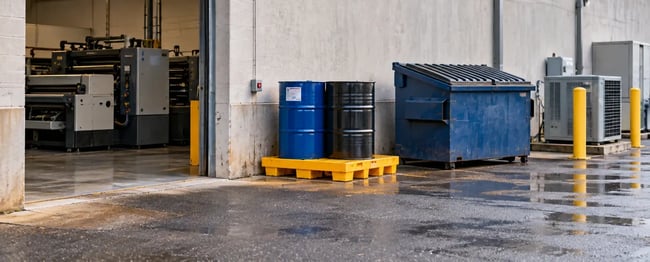
What Can Create Stormwater Exposure at a Printing Facility?
Most printing plants lose No Exposure eligibility the same few ways. The press room is rarely the problem. The trouble starts at the back door, the loading dock, and the corner of the lot where things get set down "just for now." Rain doesn't care that an item was only supposed to be outside for an hour.
| Common Source |
Why It Creates Exposure |
What Usually Fixes It |
| Drums or totes of ink, solvents, fountain solution, and press cleaners stored outside |
Leaks, spills, and rain on open or damaged containers |
Move them indoors or under a roof, and keep containers closed and in good shape |
| Waste such as used solvent, ink-soaked rags, and spent press chemistry |
Contaminated material sitting where rain can reach it |
Store waste in closed containers indoors or under cover until it's picked up |
| Uncovered dumpsters, compactors, and paper waste bins |
Rain contacts ink-stained waste, and open containers can leak |
Use lidded, leak-free containers, or relocate them under a roof |
| Outdoor equipment such as balers, tanks, generators, and compressors |
Fluids and residues can wash off with rain |
Enclose the equipment, or confirm nothing on it can contact stormwater |
| Loading docks and truck staging areas |
Drips and spills during transfers of inks and chemicals |
Do transfers indoors or under a roof, and clean up spills right away |
A closed, lidded dumpster that doesn't leak is a different situation from an open one, but we'd confirm the details against DEP's current No Exposure instructions before relying on it. Waste is also where we see the most surprises, because the dumpster is the item nobody thinks of as "industrial materials." Spent rags and ink residue in an open container are exactly what DEP is asking about.
How Do You Confirm No Exposure Eligibility Before Filing?
Before you sign a certification, walk the property with fresh eyes. It's best to do it after a rain, since stains, puddles, and drain paths show you things a dry day hides. This short checklist covers what to look for:
- Walk the whole site, including the yard, the docks, and the sides and back of the building, not just the areas your team uses every day.
- Confirm that every container of ink, solvent, and press chemical is indoors or under a roof, with nothing parked outside overnight.
- Check your waste: drums, rags, spent chemistry, and every dumpster or compactor.
- Look over outdoor equipment for drips, stains, and leaks.
- Look for stains or residue on pavement near doors and docks, and trace where nearby storm drains lead.
- Confirm where your stormwater goes, including whether it reaches a stream classified as High Quality or Exceptional Value, since No Exposure isn't available for a direct discharge there.
If every item checks out, you're likely a good candidate. If one doesn't, the usual choice is between fixing it (moving the drums inside, putting a lid on the dumpster) and moving toward permit coverage. Fixing it is almost always cheaper.
Do You Still Have to File a No Exposure Certification?
Generally, yes. No Exposure doesn't mean no paperwork. A facility in a covered category that stays indoors usually still submits the certification with DEP's PAG-03 Notice of Intent form and waits for DEP's approval, rather than doing nothing. DEP approves the certification for a period of no more than five years, and its approval letter sets the date by which you have to submit a renewal. If your operations change in a way that puts materials or activities outdoors, you may need permit coverage instead, so a new outdoor tank or a relocated waste area is worth a second look.
There's one honest exception to the "you need to file" rule. Whether a facility is covered at all depends on how its operations are classified, so a small copy center or retail print counter that isn't really manufacturing may not be regulated in the same way. If you're unsure which side of that line you're on, our Pennsylvania PAG-03 guide is a good starting point, and it's a quick question to put to us.
How RMA Helps Pennsylvania Printing Plants With Stormwater
We work with Pennsylvania facilities all the time, and print shops are some of the easier ones to sort out. We can walk your site, tell you plainly whether No Exposure looks realistic, point out the things that would hold it up, and prepare the certification paperwork if you qualify. If you'd rather handle it yourself, we'll tell you that too. When a facility does need permit coverage, we can help with that as well.
There's no pressure and no obligation. You can call us, email us, or fill out the form on our website, and you can reach out to RMA whenever you're ready to talk through your situation.