How PAG-03 Applies to Sawmills, Planing Mills, and Lumber Yards, and Why Retail Lumber Yards Often Fall Outside It
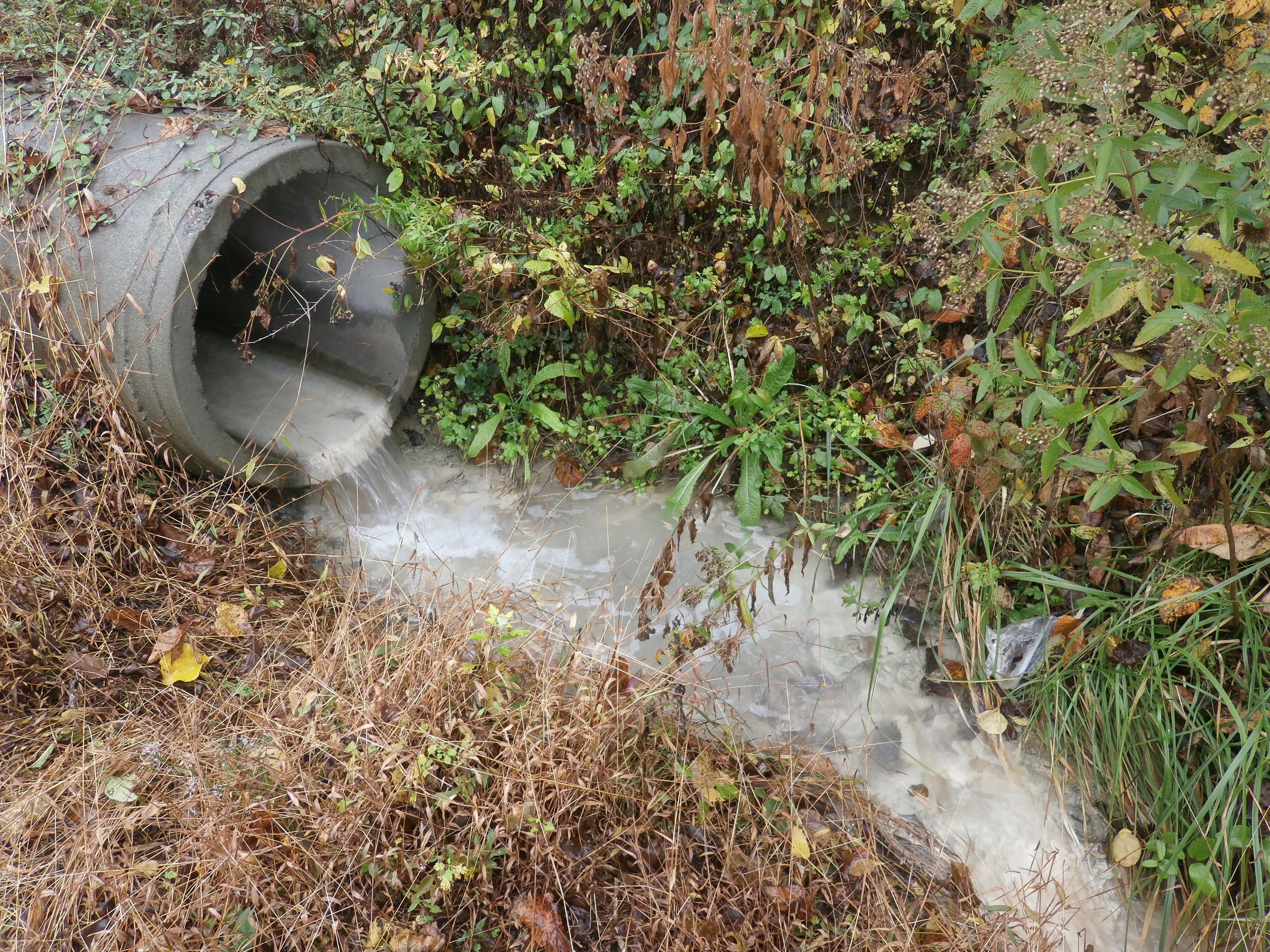
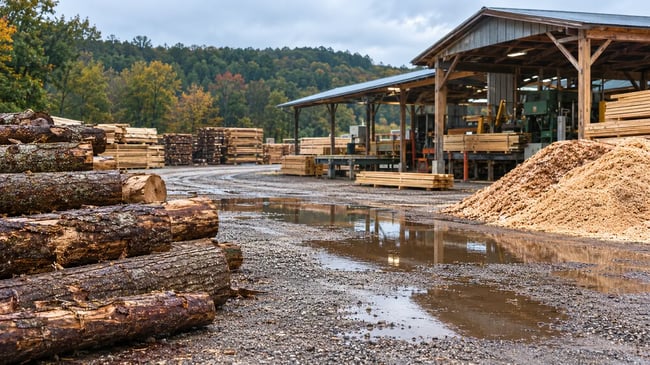
If you run a sawmill, planing mill, or lumber yard in Pennsylvania, you already know what rain does to your site. It runs off log decks and bark piles the color of strong tea, pushes sawdust and mud toward the nearest ditch, and picks up oil and hydraulic fluid from the loaders and skidders working the yard. Pennsylvania's Department of Environmental Protection (DEP) regulates that runoff under the National Pollutant Discharge Elimination System, or NPDES, the federal program that controls what goes into streams and rivers, and plenty of wood products facilities are expected to hold permit coverage for it.
The short answer is that most sawmills, planing mills, and other wood products manufacturers need coverage under PAG-03, DEP's general NPDES permit for stormwater from industrial sites, while a retail lumber yard that only sells finished building materials is usually classified differently and often isn't covered at all. Below we'll walk through which operations fall where, what your runoff carries, what the sampling looks like, which controls work, and what coverage costs. If you'd rather have someone look at your site and tell you where it lands, feel free to reach out to RMA.
Table of Contents
TL;DR
Most Pennsylvania sawmills, planing mills, and other wood products plants with outdoor log decks, bark piles, or lumber storage need stormwater coverage, usually under DEP's PAG-03 general permit and its Timber Products appendix. Coverage means sampling your runoff twice a year, keeping a PPC Plan, and reporting results to DEP. A retail lumber yard that only sells building materials is usually classified differently and often isn't covered, though DEP can still require a permit if your runoff is causing pollution. Your exact classification, how much of your site is exposed to rain, and where your runoff goes decide the answer.
Does a Sawmill or Lumber Yard Need a Stormwater Permit in Pennsylvania?
Most do. The federal stormwater rule at 40 CFR 122.26(b)(14) lists timber products manufacturing (SIC code 24, except wood kitchen cabinet makers) among the industries whose stormwater needs permit coverage, and Pennsylvania handles most of those facilities through PAG-03. A "general" permit is one standard permit that many facilities sign onto by submitting a Notice of Intent (NOI) to DEP, instead of getting a custom permit written for each site. PAG-03 has a section written for your industry, called Appendix D, Timber Products, which sets the sampling and the best management practices (BMPs) that wood products sites follow. BMPs are simply the practices, structures, and routines you use to keep pollutants out of runoff.
Whether your site needs coverage comes down to three questions. What is your primary SIC code? Are industrial materials or activities exposed to rain and snowmelt? And does your runoff leave the site to a stream, a storm drain, or somewhere else? SIC stands for Standard Industrial Classification, a four-digit code system the federal government uses to sort businesses by what they do. If a site does more than one thing, DEP treats the activity that brings in the most revenue as the primary one. A lumber yard that mostly sells to contractors but runs a small planer in the back is classified differently than a mill that sells most of what it saws.
A code alone doesn't settle it, either way. DEP keeps the authority under the Clean Streams Law to require a permit from any site that's putting pollutants into stormwater, and local ordinances can add requirements of their own. Our article on whether you need a stormwater permit in Pennsylvania and which one covers the general rules, and the sections below apply them to wood products.
Which Sawmills and Lumber Yards Fall Under PAG-03 and Which Don't?
The table below shows how we'd expect common wood products operations to be treated. Use it to get oriented, and check your exact four-digit code against the current Table 1 in DEP's PAG-03 Notice of Intent instructions before you file anything.
| Type of operation |
How it's usually classified |
Likely PAG-03 status |
| Hardwood or softwood sawmill, planing mill |
Timber products (SIC 24) |
Typically covered under Appendix D when materials or activities are exposed to stormwater |
| Pallet, flooring, millwork, and other wood product plants with outdoor storage |
Timber products (SIC 24) |
Typically covered if the exact code is listed and materials are exposed |
| Wood treating and preserving |
Timber products (SIC 24) |
Covered, with extra sampling and practices tied to the preservatives used, and some activities needing an individual permit |
| Wood kitchen cabinet manufacturing |
SIC 2434, carved out of the federal timber category |
Generally not required by the federal rule, though DEP can still require it |
| Retail lumber yard or building materials dealer |
Retail trade, not manufacturing |
Usually not on the federal list, so usually not covered |
| Lumber yard that also mills, planes, or cuts material |
Depends on which activity earns the most revenue |
Depends on your primary activity and what's happening outside |
The retail row is where most of the confusion is. A yard that buys finished lumber, plywood, and building supplies and resells them to contractors and homeowners isn't manufacturing anything, and retail and wholesale building materials businesses generally don't appear on the federal list of regulated industrial categories. That's why some lumber yard owners can be told they don't need PAG-03 coverage. The caveats are the ones above: if you also saw, plane, or treat wood and that's where most of your revenue comes from, you're a timber products facility, and DEP can still step in if your runoff is causing a problem. For more on what counts as regulated runoff in the first place, see our article on stormwater associated with industrial activity.
What Pollutants Does Sawmill and Lumber Yard Stormwater Runoff Carry?
Wood is the main one, and it's a pollutant in a way many mill owners don't expect. Rain moving through bark, sawdust, wood chips, and stored logs pulls out tannins and lignins, the natural compounds that give wood its color and rot resistance. That's the tea-colored runoff you see below a log deck. The color is the visible part. The same water carries dissolved organic material that stream bacteria break down, and that process uses up oxygen. In a small stream, a dose of that runoff can lower the dissolved oxygen that fish and aquatic insects depend on. Labs measure this load as chemical oxygen demand (COD), and it's one of the parameters Pennsylvania's permit asks timber products sites to sample.
Sediment is the second problem. Unpaved yards, haul roads, and log landings shed soil in every storm, and trucks and loaders track mud onto paved areas and out the driveway. Suspended solids cloud the water and settle onto stream bottoms, where they smother the gravel that insects and spawning fish need. Total suspended solids (TSS) is on the sampling list for that reason.
The third is oil. Heavy equipment leaks hydraulic fluid, diesel, and grease, and a sheen on the water downstream of a yard is something an inspector will notice from the road. PAG-03 prohibits discharges that leave floating solids, scum, or sheen in the receiving water, whatever your sample results say.
Pennsylvania's hardwood industry is concentrated in the north-central and northwest parts of the state, which means many mills sit along small headwater streams that don't have much water to dilute what comes off a yard. Those facilities send their permit paperwork to the DEP regional office for their county, and for mills in those areas that's typically the Northcentral or Northwest Regional Office. Some of those streams carry High Quality or Exceptional Value designations, which can change which permit a facility is eligible for. We'll get to that below.
What Does PAG-03 Sampling Look Like for Sawmills and Lumber Yards?
Once you have coverage, you sample the runoff from your representative outfalls, which are the pipes, ditches, or other points where your stormwater leaves the site. Appendix D sets which pollutants you test for. Pennsylvania's permit has listed the parameters below for timber products sites, so confirm them against the current permit before you set up a program.
| Parameter |
What it tells DEP |
Who samples for it |
| Chemical oxygen demand (COD) |
How much oxygen-consuming organic material is washing off wood and residue |
All covered timber products sites |
| Total suspended solids (TSS) |
How much sediment and fine wood debris is leaving the yard |
All covered timber products sites |
| pH |
Whether runoff is too acidic or too basic for the receiving stream |
All covered timber products sites |
| Total nitrogen and total phosphorus |
Nutrient loading to streams, which DEP tracks across all PAG-03 sectors |
All covered timber products sites |
| Preservative-related metals and chemicals |
Whether treating chemicals are reaching runoff |
Facilities that use certain wood preservative formulations |
The sampling rules are the same ones every PAG-03 permittee follows. You collect samples twice a year, once in each January through June and July through December period, from a storm that produces more than 0.1 inch of rain and comes at least 72 hours after the previous storm. Grab samples go into the bottle within the first 30 minutes of the discharge when you can manage it, a lab accredited by Pennsylvania has to run them, and you report the results through DEP's electronic discharge monitoring report system, called eDMR. Our guide to Pennsylvania's eDMR reporting walks through the submission side, and our article on PAG-03 and how to take stormwater samples covers the collection side.
Your results get compared against benchmark values in the appendix, such as 120 mg/L for COD and 9.0 standard units for pH. A benchmark isn't a permit limit, and going over it isn't a violation by itself. DEP uses benchmarks to judge whether your BMPs are working. If the same pollutant exceeds its benchmark at the same outfall for two monitoring periods in a row, you owe DEP a corrective action plan within 90 days of the end of the period. At four in a row, the plan has to come with DEP's Stormwater BMPs Checklist, and continued exceedances can lead DEP to require an individual permit. We break down the difference in our article on benchmark values versus effluent limits, and what to do next in what to do if your stormwater sampling results are high.
Sampling is one piece of the program. PAG-03 also expects a written Preparedness, Prevention, and Contingency (PPC) Plan, which is Pennsylvania's site-specific plan for preventing and responding to pollution, routine inspections of exposed areas and BMPs, an annual report, and employee training. Our article on PPC Plans versus SWPPPs for PAG-03 explains how that plan is built.
What Stormwater Controls Work for Sawmills, Log Decks, and Lumber Yards?
The best controls at a mill are cheap and boring. Most of them keep the material from reaching the water in the first place, which beats treating the water afterward.
For sediment, the biggest gains usually come from the surface itself. Stone or paved surfacing in the high-traffic parts of the yard, stabilized haul roads, graded and bermed areas that keep runoff from sheeting across bare soil, and sediment traps or vegetated buffers at the outfalls all cut TSS. Sweeping paved areas and the exit apron before a storm keeps tracked mud out of the drain. Our overview of stormwater BMPs goes through the common options.
For wood residue, location and cover do most of the work. Keep bark, sawdust, and chip piles away from ditches and drainage paths, berm or cover them where you can, and clean up spilled residue before the next rain moves it. Appendix D has pointed hardwood residue handlers to a DEP-approved manual of BMPs for hardwood residue storage sites, and a mill that follows it is well positioned for an inspection. Appendix D also calls for good housekeeping in storage, loading, and handling areas to limit wood debris, leachate from decaying wood, and dust. Where a mill treats or preserves wood, the appendix adds practices like holding dipped wood over a collection basin until it stops dripping and storing treated wood under cover or on an impervious surface until it dries.
For oil, the fixes are the same ones any equipment yard uses. Do maintenance indoors or on a bermed pad, use drip pans under parked equipment, keep spill kits where spills happen, clean up leaks with absorbents instead of a hose, and cover or berm the fueling area. Employee training ties it together, since PAG-03 expects training on pollution prevention and spill response at least once a year. Our online environmental training library is one way to cover it.
A caution on treatment products: the permit has required written permission from DEP before a facility uses polymers or other chemicals to treat stormwater, so don't add flocculants to a settling pond without checking first.
When Does a Sawmill Need an Individual Permit or Qualify for No Exposure?
PAG-03 isn't the only path, and it doesn't fit every wood products site. A few situations push a facility toward an individual NPDES permit, which is written for a single facility instead of being a standard form many sites share. A facility that discharges directly to a stream classified as High Quality or Exceptional Value can't use PAG-03. Stormwater that contacts the chemicals sprayed on timber for surface protection isn't covered by the general permit, and neither are discharges from intentionally spraying or wetting logs at wet deck storage areas, which fall under separate federal effluent guidelines. DEP can also require an individual permit after repeated benchmark exceedances. Our article on general, individual, and No Exposure permits compares the options.
Spraying down lumber storage yards is a different case. The permit has authorized spray-down of lumber and wood product storage yards as a non-stormwater discharge, as long as the water has no chemical additives, no chemicals are applied to the wood in storage, and no debris is in the discharge. If you wet down your yard, read that language before you rely on it.
The other path runs the opposite direction. A No Exposure Certification lets a qualifying facility skip PAG-03 coverage when all of its industrial materials and activities are protected from rain and snow, usually by being indoors or under a storm-resistant roof. DEP has to approve the certification, it has to be renewed every five years, and it isn't available to facilities that discharge to High Quality or Exceptional Value waters. A sawmill with logs, bark, and lumber stacked in the open won't qualify. An indoor-only millwork or cabinet shop might. Our article on what No Exposure means under a stormwater permit lays out the test.
What Does Sawmill Stormwater Permit Coverage Cost in Pennsylvania?
DEP charges a $500 application fee for PAG-03 coverage and a $500 annual fee after that. The larger cost is preparing what the permit requires: walking the site, mapping drainage and outfalls, writing the PPC Plan, arranging the first sampling, and assembling the application. For a relatively straightforward facility, professional help with the full application typically runs about $5,000 to $10,000, and ongoing support with sampling, reporting, and plan updates may run another $3,000 to $6,000 a year. Mills and treating plants can land higher in those ranges when they have several outfalls, a large or sloped yard, or preservative chemicals to account for.
What moves the price most is site size, the number of outfalls you'd have to sample, whether you already have a plan that's current, and how much of the sampling and reporting you'd rather handle in-house. Plenty of facilities can do part of this themselves, and our article on getting a PAG-03 permit yourself versus hiring a consultant explains which parts are realistic. For a closer look at agency fees and consultant pricing, see how much a PAG-03 permit costs in Pennsylvania, and for timing, how long it takes to get PAG-03 coverage. If you want a number for your own site, the pricing calculator below gives an instant estimate of what RMA's help would cost, with no email and no sales call.
How Can RMA Help Sawmills and Lumber Yards With Pennsylvania Stormwater Permits?
We work with Pennsylvania facilities all the time, and sawmills, mills, and lumber yards are a good fit for what we do. We start by looking at what your site does, where your revenue comes from, and where the water from each area ends up. From there we can confirm your classification and appendix, tell you whether PAG-03, an individual permit, or No Exposure fits, build your PPC Plan and sampling program, and help with eDMR reporting and corrective action plans after you're covered. If you're a retail yard that doesn't need a permit, we'll tell you that.
There's no pressure and no obligation. Give us a call, send us an email, or fill out the form on our website and tell us a little about your operation. If you're not sure whether your mill or yard needs coverage, contact RMA and we'll help you figure out the right next step.