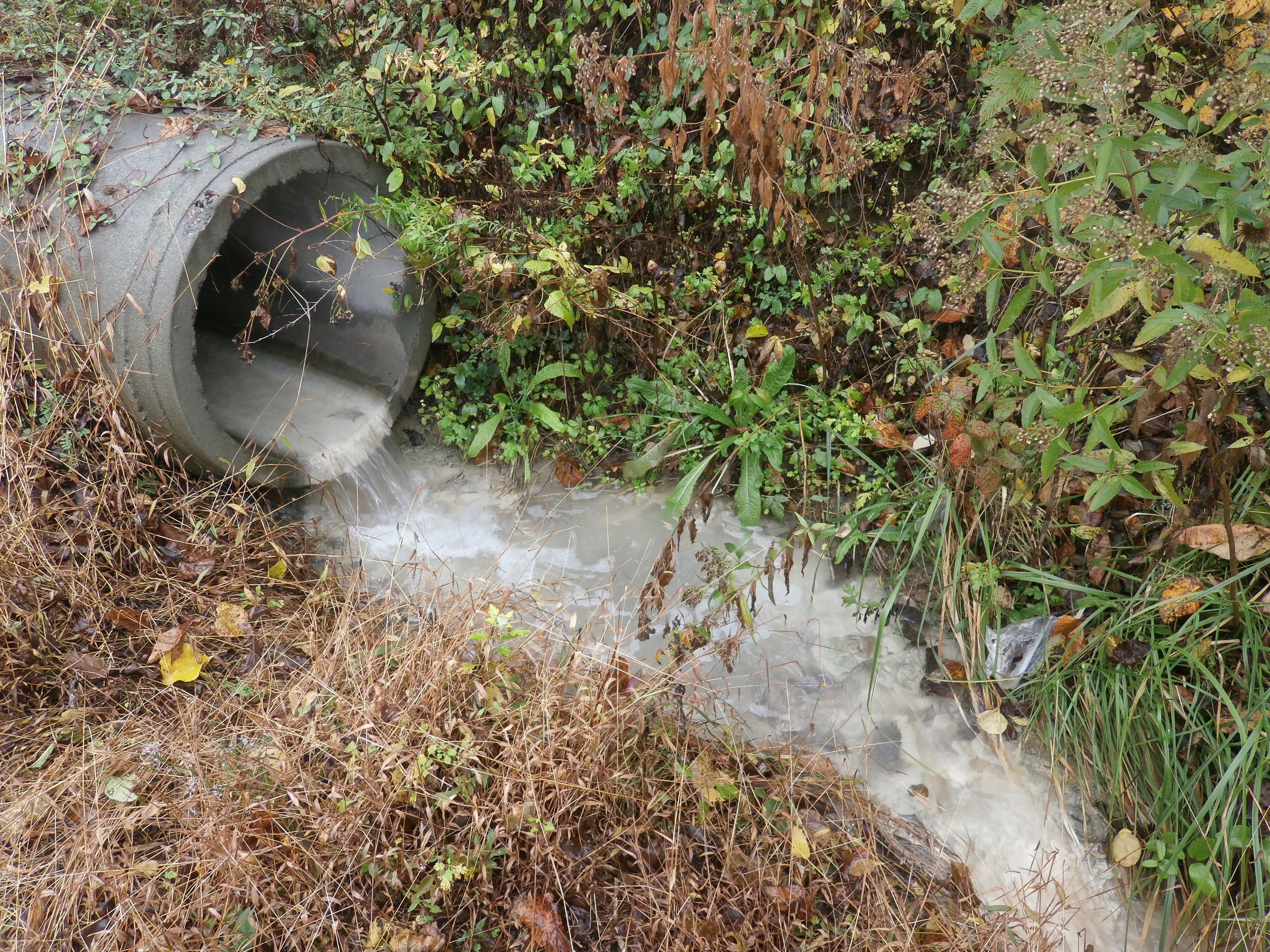
Many Pennsylvania Warehouses Don't Need PAG-03 Coverage, but Your SIC Code and What Sits Outdoors Decide It
Pennsylvania has added a lot of warehouse and distribution space in recent years, and operators keep running into the same question once the doors open: does DEP expect us to hold a stormwater permit? "Industrial stormwater" sounds like it belongs on a factory floor, not in a building full of pallets and trailers. Then someone mentions PAG-03, DEP's standard, pre-written permit for industrial stormwater, and nobody's sure whether it applies.
The short answer is that many warehouses and distribution centers don't need PAG-03 coverage, though some still have a form to file. A warehouse that keeps its materials and equipment indoors usually files a No Exposure Certification instead of holding a permit, and some distribution centers aren't on DEP's list at all. PAG-03 becomes likely once you add outdoor storage, outdoor fueling, vehicle maintenance, or truck washing. Below, we explain how your SIC code (the industry classification number for your business) changes the answer, which situations usually mean no permit, what triggers one, and who's responsible in a leased building. If you'd like to talk through your own site, you can reach out to RMA any time.
Table of Contents
TL;DR
Many Pennsylvania warehouses and distribution centers don't need PAG-03 stormwater permit coverage. A building that keeps its storage, equipment, and waste under cover usually files a No Exposure Certification instead, and distribution centers classified as wholesale, or as a secondary activity at a larger site, often aren't on DEP's list at all. PAG-03 becomes likely when materials, uncovered dumpsters, fueling, vehicle maintenance, or truck washing sit outdoors, and a stream classified as High Quality or Exceptional Value pushes a site toward an individual permit. In a leased building, the lease decides who pays and who keeps the paperwork, but DEP still looks at whoever runs the operation.
How Does Pennsylvania Decide Whether a Warehouse Needs a Stormwater Permit?
Stormwater permits come out of the federal Clean Water Act's National Pollutant Discharge Elimination System, or NPDES, which Pennsylvania DEP runs in the state. The rule doesn't ask whether you're a big facility. It lists categories of industrial activity, mostly by SIC code, and says runoff from those sites needs permit coverage. Warehousing and storage codes 4221 through 4225 are on that list, which is how a warehouse lands in the program even though nobody's making anything inside. Our guide on what counts as stormwater associated with industrial activity breaks down the term.
For a facility on the list, Pennsylvania offers three paths. PAG-03 is the general permit, with a Notice of Intent (the application), a Preparedness, Prevention, and Contingency Plan (a PPC Plan, DEP's version of a stormwater and spill plan), sampling, and annual paperwork. An individual NPDES permit is written for one specific facility that can't use PAG-03. A No Exposure Certification lets a qualifying facility file paperwork instead of holding a permit when its industrial materials and activities are all protected from rain and snow. We cover the three in our Pennsylvania guide to which stormwater permit you need. For a typical warehouse with everything under a roof, the answer is usually No Exposure. For a distribution center whose primary SIC code isn't on the list, it can be none of the above. For a site with outdoor storage, fueling, or vehicle maintenance, it's usually PAG-03 under Appendix L, the part of the permit that covers warehousing, trucking, and similar sites.
Which Pennsylvania Warehouses and Distribution Centers Usually Don't Need a PAG-03 Permit?
The table below is the quick version. Every row says "usually" because DEP decides based on your actual site, and local sewer authorities and municipalities can add requirements of their own.
| Your situation |
What it usually means |
What would change it |
| Warehouse with a listed warehousing SIC code (4221 to 4225), and everything industrial under cover |
A No Exposure Certification instead of PAG-03 |
Outdoor storage of materials or waste, uncovered dumpsters, outdoor fueling, vehicle maintenance, or washing |
| Distribution center run by a wholesaler (most SIC 50 and 51 codes) |
Usually not on DEP's list, so no PAG-03 and no No Exposure filing |
A listed primary activity such as scrap recycling, auto salvage, or petroleum bulk storage, or DEP finding pollutants in your runoff |
| Warehouse that supports another business on the same site, like a plant's or store's stockroom |
Treated as a secondary activity, so the site's primary SIC code decides |
A listed primary SIC code, which brings the warehouse areas in along with the rest of the site |
| Warehouse whose stormwater drains only to a sanitary or combined sewer that's part of a public treatment plant |
No stormwater permit or No Exposure filing, though the sewer authority's pretreatment rules still apply |
Any outfall to a storm sewer, ditch, or stream, or a sewer that isn't part of a public treatment plant |
| Trucking operation with maintenance, fueling, and washing indoors or off site |
A No Exposure Certification, or possibly nothing at all if there's no shop, fueling, or washing on site |
Outdoor fueling or repairs, or vehicles waiting for service in the yard |
| Warehouse with outdoor material storage, uncovered dumpsters, outdoor fueling, vehicle maintenance, or truck washing |
PAG-03 coverage, usually under Appendix L |
Moving the activity indoors or under a storm-resistant shelter can bring No Exposure back into reach |
| Warehouse that drains to a High Quality or Exceptional Value stream |
Not eligible for PAG-03 or No Exposure, so an individual permit |
The stream's classification, which DEP sets, so confirm it before choosing a path |
Compare the first and sixth rows. It's the same kind of building with a different answer, depending only on what's outside. DEP's FAQ says wooden pallets in good condition may still qualify for No Exposure, and de-icing agents on parking lots don't disqualify a site either.
Why Does the SIC Code Matter for Warehouses, Wholesale Distributors, and Trucking Companies?
A SIC code, short for Standard Industrial Classification, is a four-digit number that describes what a business does. DEP uses your primary SIC code, the activity that brings in the most revenue at the site, to decide whether you're on the list. Warehouse codes on it include general warehousing and storage (4225) and refrigerated warehousing (4222).
The wholesale side mostly isn't on the list. Distribution centers run by wholesalers typically carry codes in the 50 and 51 ranges, and the only codes there DEP treats as industrial are auto salvage yards (5015), scrap and waste recycling (5093), and petroleum bulk stations and terminals (5171). Trucking companies, with SIC codes starting with 421, are covered only for vehicle maintenance, fueling, lubrication, and equipment cleaning areas. Truck parking alone isn't one of those, and if all maintenance and cleaning happens indoors, DEP's FAQ says the facility should qualify for No Exposure.
The murky cases are third-party logistics operations, where the larger revenue source sets the code, and retailers' own distribution centers, which DEP's FAQ treats as auxiliary operations evaluated on their own. If you can't tell how your site classifies, settle that before skipping a filing, since DEP can also require a permit from any facility whose runoff carries pollutants.
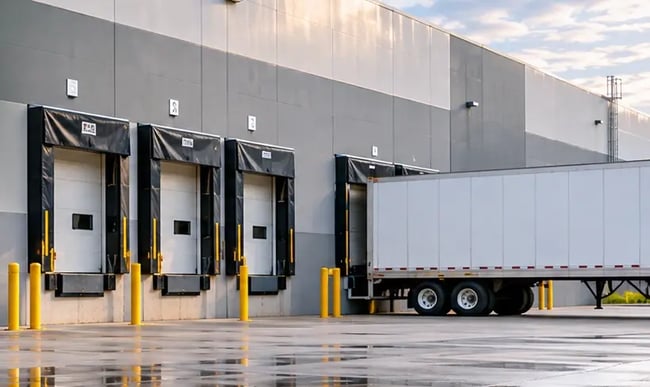
What Outdoor Activities Trigger PAG-03 Coverage at a Pennsylvania Warehouse?
For a warehouse on the list, the line between No Exposure and PAG-03 is whether industrial materials and activities are exposed to rain and snow. The usual culprits are outdoor storage of materials or waste, uncovered dumpsters, fueling without a canopy, outdoor vehicle maintenance, equipment waiting for repair in the yard, and washing vehicles on pavement. Any one can end No Exposure eligibility for the whole site, because DEP won't approve it for only part of a facility. Vehicle wash water is a separate problem, since PAG-03 doesn't authorize it and it has to be captured and recycled, reused, or sent to a sanitary sewer under pretreatment rules.
What Does PAG-03 Involve Once a Warehouse Has It?
The current PAG-03 runs from March 24, 2023 to March 23, 2028. A new applicant files a Notice of Intent with a PPC Plan and pays a $500 filing fee, then $500 a year. Coverage brings semiannual visual inspections and semiannual sampling. For Appendix L that means total suspended solids, oil and grease, total nitrogen, and total phosphorus, with benchmark values (targets, not legal limits) of 100 mg/L for total suspended solids and 30 mg/L for oil and grease. Two consecutive exceedances for the same pollutant at the same outfall trigger a corrective action plan, which we explain in our article on benchmark values versus effluent limits.
Results go to DEP through eDMR, its electronic reporting system, and an annual report is due each March 23. Our guides on PAG-03 and how to take stormwater samples, Pennsylvania eDMR reporting, and PPC Plans walk through each piece, and our online environmental training library helps whoever handles inspections and sampling know what to look for.
What Does a No Exposure Certification Involve for a Pennsylvania Warehouse?
A No Exposure Certification is a filing in place of a permit. You're telling DEP that all of your industrial materials and activities are protected from rain and snow, so your runoff isn't industrial stormwater. DEP defines protection as a storm-resistant shelter, either a fully roofed and walled building or a roofed structure that keeps water from flowing through. Tightly sealed drums and tanks, covered dumpsters in good condition, adequately maintained vehicles used to handle materials, and finished products that wouldn't wash away don't need one.
DEP asks for the No Exposure form and a PAG-03 Notice of Intent, a topographic map and site sketch, a PPC Plan where it applies, notice to the municipal storm sewer operator if you discharge to one, and, for an existing facility, lab results. A $500 fee is due with the filing and every five years, with no annual fee in between. Certification lasts up to five years, with renewal due at least 180 days before expiration.
No Exposure isn't automatic or permanent. DEP has to approve it, it isn't available for discharges to High Quality or Exceptional Value streams, and if something ends up outdoors you notify DEP right away and apply for permit coverage. Our article on what No Exposure means under an NPDES stormwater permit goes deeper.
Who's Responsible for Stormwater Permits at a Leased Warehouse, the Tenant or the Landlord?
The permit follows the industrial activity and the discharge, so the starting point is who runs the operation. In a building leased to one tenant that controls the dock, yard, trucks, and dumpsters, the tenant's activities are the ones DEP classifies, and the tenant usually files. A landlord who owns the pavement, drainage, and basins still has a stake. The lease decides who pays, but it doesn't change what DEP expects.
Multi-tenant buildings are where DEP has said more. Its FAQ explains that when several operators share a site, each operator's activity gets its own SIC code. If none of the tenants qualify for No Exposure, the owner can apply for one permit covering the site, or the tenants can be co-applicants and share responsibility as co-permittees. DEP prefers a single permit but accepts separate filings when that isn't workable. And since DEP won't approve No Exposure for part of a site, one outdoor activity can sink an operator's whole filing.
Lease topics worth raising include who files, who pays the fees and sampling, who maintains shared drainage, and whether the tenant can store anything outdoors. Coverage doesn't move on its own when a tenant changes, and a tenant with different activities is a reason to revisit the PPC Plan, which we cover in when to update your PPC Plan in Pennsylvania.
Do New Warehouse Construction Projects Need Different Stormwater Permits?
Yes, and they're a separate set of approvals. Earth disturbance for a new building generally falls under Chapter 102 of DEP's regulations. Depending on project size, that can mean an erosion and sediment control plan, an NPDES construction stormwater permit (often PAG-02 or an individual permit) once disturbance reaches roughly an acre, and a post-construction stormwater management plan. County conservation districts handle much of the review.
We don't prepare those construction-phase permits and approvals. Most owners work with their engineer, contractor, or an erosion and sediment control specialist, and we're glad to help you work out what the construction phase needs and point you to the right people. Whether the finished warehouse needs PAG-03, a No Exposure Certification, or neither is the piece we help with once the building is running.
How Much Does Warehouse Stormwater Permitting Cost in Pennsylvania?
DEP's fees are modest: $500 to file for PAG-03 and $500 a year after that, or $500 every five years for a No Exposure Certification. The bigger cost is the work behind the filing: site evaluation, drainage mapping, the PPC Plan, sampling, and the application package. For a relatively straightforward facility, professional help with the full PAG-03 application typically runs about $5,000 to $10,000, and ongoing support can add roughly $3,000 to $6,000 a year. Our article on what a PAG-03 permit costs in Pennsylvania goes through what moves those numbers.
No Exposure usually carries less ongoing work than PAG-03, but the site walk, maps, PPC Plan where it applies, and lab results are still required. Some facilities handle parts themselves, and we've covered what's realistic to do on your own versus hiring a consultant. The pricing calculator below estimates what RMA's help would cost for your site, with no email or sales call required.
How Can RMA Help With Pennsylvania Warehouse Stormwater Permits?
We work with Pennsylvania facilities all the time, and for warehouses the first job is usually the simplest one: working out which path applies. We look at your SIC code, what's stored and done outdoors, where the water goes, and whether you're headed for PAG-03, a No Exposure Certification, or neither. If it's PAG-03 or No Exposure, we can handle the site evaluation, maps, PPC Plan, sampling coordination, and filing, and keep up with eDMR reports, annual reports, and renewals afterward. If you don't need a permit or filing, we'll tell you that.
There's no pressure and no obligation. You can call, email, or fill out the form on our website, and we'll go over your situation and tell you whether we're the right fit. When you're ready, contact RMA, and if you're comparing consultants first, our guide on how to choose a PAG-03 consultant covers what to ask.