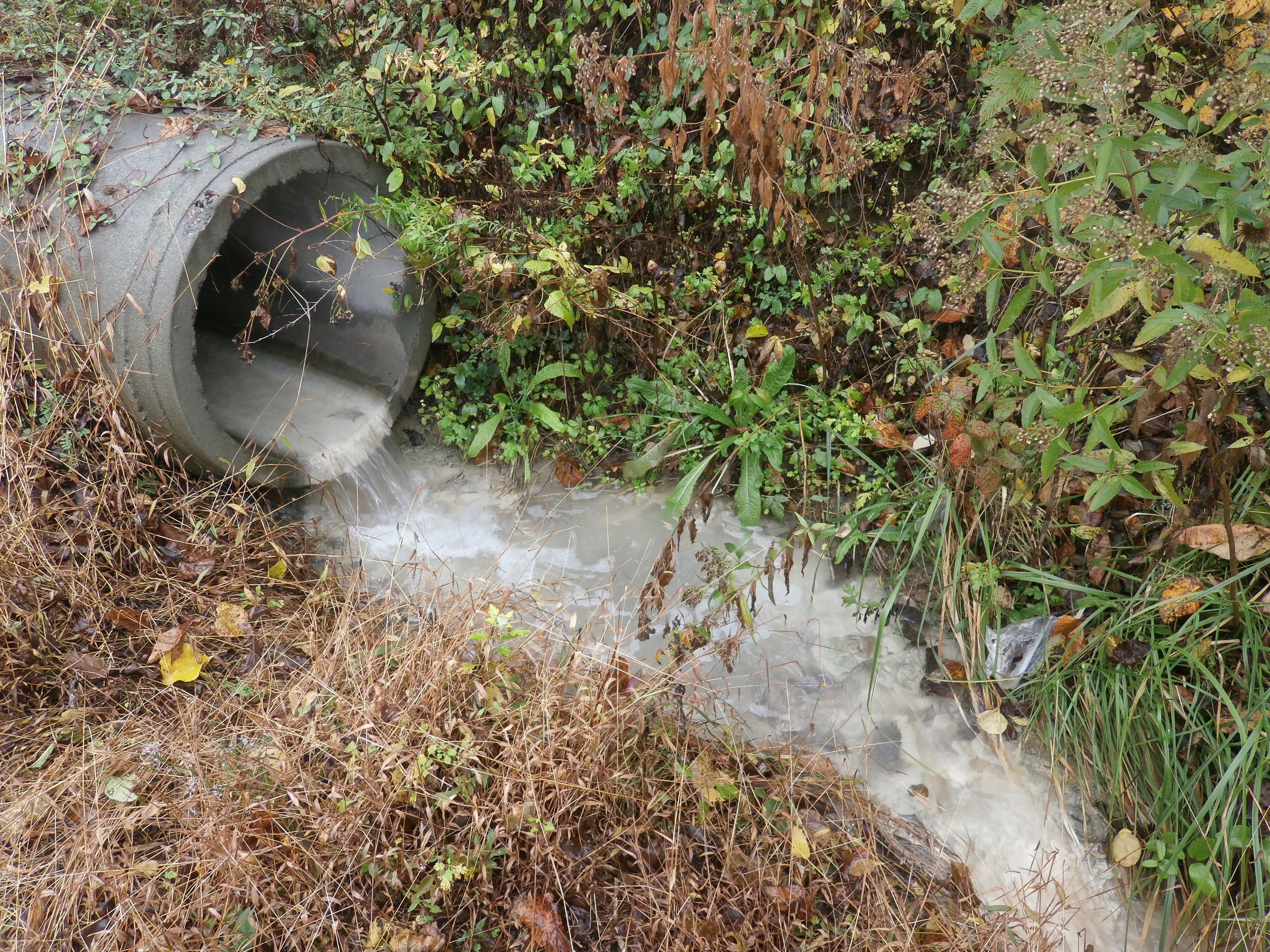
How to Check DEP's Impaired Waters and TMDL Maps, and What a Listing Can Mean for Your PAG-03 Stormwater Permit
If your facility sends stormwater to a Pennsylvania creek, the condition of that creek can shape which permit you're allowed to use. The Pennsylvania Department of Environmental Protection (DEP) keeps a list of streams that don't meet water quality standards, and some of those streams have a pollution budget attached to them. Most facility managers never look at that list until an application or a letter from DEP forces the question, and by then the answer can change both the timeline and the cost of getting permitted.
Here's the short answer. You can look up the stream your outfalls reach in DEP's Integrated Report Viewer or eMapPA, and the listing tells you whether the stream is impaired, for which pollutant, and whether a TMDL (a pollution budget for that stream) exists. Under PAG-03, DEP's general permit for industrial stormwater discharges, the result can affect whether your discharge is eligible for coverage at all. Below we walk through how to find your stream, how to read the listing, and what it can mean for your permit. If you'd rather have someone run through it with you, you can reach out to RMA at any point.
Table of Contents
TL;DR
You check by finding the stream each of your outfalls reaches and looking it up in DEP's Integrated Report Viewer or eMapPA, which show the listing, the cause of the impairment, and any TMDL. A listing doesn't automatically block PAG-03 coverage, but the permit doesn't authorize discharges to impaired waters that contain pollutants with the potential to cause or contribute to the impairment, or discharges subject to a wasteload allocation in a TMDL. Depending on the stream, the pollutant, and what your site handles, a listing can mean extra data requests, added monitoring or controls, or an individual permit. DEP makes the call on each application, so the best time to check is before you submit.
What Does an Impaired Stream Mean in Pennsylvania?
Pennsylvania protects its streams for specific uses, and DEP measures each stream segment against four of them: aquatic life, fish consumption, potable water supply (drinking water), and recreation. The standards behind those uses are set in Chapter 93 of DEP's rules (25 Pa. Code Chapter 93). When a segment fails to meet one or more of its uses, DEP labels it impaired.
DEP publishes those assessments in the Pennsylvania Integrated Water Quality Monitoring and Assessment Report, which most people just call the Integrated Report. It's updated every two years and combines two pieces of the federal Clean Water Act: the Section 305(b) report on the overall condition of the state's waters, and the Section 303(d) list of impaired waters that need a TMDL. When someone says a stream is "on the 303(d) list," they mean it's impaired and a TMDL is still required. EPA reviews and approves the 303(d) list portion of the report.
Every listing names the cause of the impairment, such as siltation (excess sediment), metals, pH, nutrients, or mercury, and usually the sources behind it. Those sources can be point sources like industrial or sewage discharges, but they also include nonpoint sources like abandoned mine lands and agricultural runoff. A stream can be impaired for reasons that have nothing to do with your facility, which is why the listed cause is the first detail to read.
What Is a TMDL and How Does It Apply to Industrial Stormwater?
A TMDL, short for total maximum daily load, is a pollution budget written for one stream and one pollutant. It estimates how much of that pollutant the stream can receive and still meet its standards, then divides the total among point sources (pipes, ditches, and other outfalls, including permitted industrial stormwater discharges), nonpoint sources (like farm fields or mine drainage), natural background, and a margin of safety. The slice assigned to point sources is called the wasteload allocation, or WLA. Pennsylvania defines both terms in 25 Pa. Code Chapter 96, and the PAG-03 permit repeats those definitions.
The Clean Water Act requires states to develop a TMDL for the pollutants keeping a stream from meeting standards, but TMDLs take years to write, so plenty of impaired streams are listed without one. DEP's categories track this. A stream that still needs a TMDL sits in Category 5, and once EPA approves a TMDL, DEP moves it to Category 4a. In practice you'll run into two different situations: an impaired stream with no TMDL yet, and an impaired stream with an approved TMDL that may assign allocations to dischargers like you. PAG-03 speaks to both, and we'll get to that below. The pollutants behind Pennsylvania TMDLs often include sediment, nutrients, and metals, which overlap with what many industrial sites store and handle.
Our general article on TMDLs, 303(d) impaired waters, and NPDES stormwater permits covers the national picture. This one focuses on how to check the situation for your own facility in Pennsylvania.
How Do You Find the Stream Your Facility's Stormwater Reaches?
Before you can look anything up, you need the name of the stream each of your outfalls reaches. An outfall is the point where runoff leaves your site, which might be a pipe, a ditch, a swale, or sheet flow off the edge of the property. On the PAG-03 Notice of Intent (NOI), the application form for general permit coverage, DEP asks for each outfall's location, the name of its receiving waters, the receiving water's Chapter 93 classification, and whether that water is impaired and has a TMDL. Your site drainage map, along with the site map the NOI calls for, is the best place to start.
Many facilities don't discharge to a named creek. The runoff goes to a ditch, an unnamed tributary, or a storm sewer, and you have to follow it downstream until it reaches a stream with a name. Tracing your water to the nearest named stream is the usual way to begin, and DEP can tell you how it treats a small unnamed tributary. Walking the route during or right after a rain is the most reliable way to see where water goes, and it can turn up surprises, like a culvert that carries part of the site's runoff somewhere you didn't expect.
If your runoff goes into a municipal storm sewer, follow the pipe to wherever it discharges to a stream, and keep in mind that the municipality may have its own rules and fees. Some older cities, including Philadelphia and Pittsburgh, have combined sewers that carry site runoff to a treatment plant instead of a stream. In those cases the sewer authority may govern the discharge rather than a DEP stormwater permit. Local situations differ, so confirm yours before assuming either way.
How Do You Check DEP's Integrated Report Viewer for Impaired Streams and TMDLs?
DEP offers two map tools for this check. The Integrated Report Viewer is the interactive map that goes with each Integrated Report. It shows impaired and attaining streams, lets you search by stream name or assessment ID, and displays the impairment causes and sources, the category, the date listed, and TMDL information for each segment. eMapPA is DEP's web-based GIS system, with additional water resource data layered in. DEP's PAG-03 instructions have pointed applicants to these tools for this exact check, and DEP's Integrated Water Quality Report page links to the most recent report and its viewer.
The viewer's layout changes from one report cycle to the next, so go by what's on your screen rather than a fixed click path. The steps are the same either way:
- Open DEP's Integrated Water Quality Report page and launch the viewer for the most recent report.
- Search for your stream by name, or zoom to your site and find the segment your outfall reaches.
- Open that segment's details and write down the impaired uses, the listed causes and sources, the category, and any TMDL information.
- Repeat for every outfall that reaches a different stream.
- Save a screenshot and note the report cycle, the segment, and the date you checked.
If your stream shows up as unassessed, that doesn't mean it's clean. It means DEP hasn't assessed it, so ask your DEP regional office how it would treat the stream for your application. And since DEP finalizes a new Integrated Report every two years, with the final version due to EPA by April 1 of even-numbered years, a stream that's clear today can show up as impaired in a future cycle.
The category on a listing tells you what kind of impairment you're dealing with. PAG-03 defines impaired waters as streams in Categories 4 and 5 of the Integrated Report, which is broader than the 303(d) list alone.
| Category |
What It Means |
Impaired Under PAG-03? |
| 5 and 5r |
On the 303(d) list. Impaired by a pollutant, and a TMDL is required (5r covers listed waters being addressed through a restoration plan alternative) |
Yes |
| 4a |
Impaired, and a TMDL has been completed |
Yes |
| 4b |
Impaired, but other required controls are expected to restore the stream in a reasonable time |
Yes |
| 4c |
Impaired by something other than a pollutant |
Yes |
| 1 through 3 |
Attaining its uses, partly attaining with limited data, or not enough data to say |
No |
A stream in Categories 1 through 3 isn't impaired under that definition, but the permit's other eligibility conditions still apply.

How Do You Know Whether Your Facility Contributes the Pollutant a Stream Is Listed For?
The permit language that does the work here is about pollutants, not just listings. PAG-03 doesn't authorize stormwater discharges to impaired waters when the discharges contain or are expected to contain pollutants at concentrations that have the potential to cause or contribute to the impairment. So once you know the listed cause, the next question is whether your site handles or generates that pollutant and whether any of it can reach your outfalls. These are common examples of how listed causes line up with industrial activities:
| Listed Cause |
Site Activities That May Contribute |
| Siltation or sediment |
Unpaved yards, stockpiles of sand, aggregate, or soil, truck track-out, eroding ditches |
| pH |
Concrete and cement handling, washout areas, some chemical processes |
| Metals |
Scrap handling, metal fabrication, exposed metal products, equipment and vehicle storage |
| Nutrients (nitrogen, phosphorus) |
Fertilizer or soil amendment storage, food and beverage operations, organic waste |
| Oil and grease |
Fueling areas, equipment maintenance, leaking vehicles, bulk oil storage |
A listing for a pollutant your site never touches is a very different conversation than a listing for one you handle every day. Your own data helps with this. Your sector's PAG-03 appendix typically requires sampling twice a year, and since DEP reissued the permit in 2023, every appendix includes total nitrogen and total phosphorus. If your results for the listed pollutant are consistently low, that supports your case. If they're high, you want to know before DEP asks. Remember too that the stream's impairment may come from sources upstream of you, like abandoned mine drainage or farm runoff, so your own contribution and the stream's overall condition are separate questions.
Whether a particular concentration has the potential to cause or contribute to an impairment is ultimately DEP's call, and it can depend on the stream, the pollutant, and the TMDL if one exists. Our articles on benchmark values versus effluent limits and what to do when your stormwater sampling results are high explain how to read your own numbers.
What Can an Impaired Stream Mean for Your PAG-03 Coverage?
A listing doesn't automatically disqualify a facility from PAG-03. What it does is prompt a closer look, and the outcome depends on the pollutant, the stream, and your site. Here's how the situations generally break out:
| Your Situation |
What It Can Mean for PAG-03 |
| The stream isn't impaired |
The usual PAG-03 route, as long as the other eligibility conditions are met. The NOI still asks you to report the stream's status. |
| Impaired for a pollutant your site doesn't handle or discharge |
Can come down mostly to documenting your reasoning. DEP may still ask for data or more detail. |
| Impaired, no TMDL yet, and your site may contribute the listed pollutant |
DEP may deny coverage or add monitoring or controls. An individual permit is a possibility. |
| Impaired, with a TMDL that gives your discharge a wasteload allocation |
The permit doesn't authorize discharges subject to a wasteload allocation, so an individual permit may be required. |
| Direct discharge to High Quality (HQ) or Exceptional Value (EV) waters |
A separate issue from impairment. DEP can't approve PAG-03 coverage for direct discharges to HQ or EV waters, and No Exposure isn't available either. |
The permit lists the discharges it doesn't authorize, and DEP may deny coverage when one of those conditions exists. Two of them involve impaired waters: discharges to impaired waters, with or without a TMDL, that contain or are expected to contain pollutants at concentrations with the potential to cause or contribute to the impairment, and discharges that are subject to a wasteload allocation in a TMDL. DEP can also deny coverage when it decides an individual permit is needed to protect water quality standards, whether or not the stream is listed. When coverage is denied, DEP asks for an individual NPDES permit application instead. An individual permit is written for your facility, so it can carry limits and conditions that PAG-03 doesn't, and the application generally takes a more detailed look at your discharges and the receiving water. Our article on general, individual, and No Exposure permits breaks down how the three paths compare.
The NOI also asks for more than a yes or no. DEP's fact sheet for the current permit describes a requirement to report analytical data for the pollutants considered the cause of impairment in the receiving waters, and DEP can require monitoring for additional pollutants or additional best management practices (BMPs, the physical and procedural controls that keep pollutants out of runoff) in its authorization letter.
Impairment can also come up after you have coverage. PAG-03 says that when a covered discharge later becomes ineligible, the permittee has to act promptly to restore eligibility, notify DEP in writing, and apply for an individual permit if eligibility can't be restored. DEP can also require an individual permit at any time by written notice. Benchmark values aren't effluent limits, but repeated exceedances are one of the ways a general permit situation can turn into an individual permit conversation. Two consecutive exceedances of a benchmark at the same outfall trigger a corrective action plan, and DEP may require an individual permit application if exceedances continue.
The current PAG-03 runs through March 23, 2028, and a reissued version can change these provisions, so check the language of whichever permit is in effect when you apply. Our Pennsylvania PAG-03 guide covers the permit itself and how sampling works.
What Should You Do If Your Receiving Stream Is Impaired?
Start by gathering facts rather than assuming the worst. Confirm which stream each outfall reaches, write down the listed causes, and find the TMDL if one exists. DEP publishes approved TMDLs, and the viewer's TMDL details are the starting point for locating the one that covers your stream. Read it for the pollutants it covers and whether it assigns allocations to stormwater or to industrial dischargers like you.
Next, compare the listing against your site. Look at the materials you store outdoors, the activities that happen in exposed areas, your Preparedness, Prevention, and Contingency (PPC) Plan, which is the site plan PAG-03 requires, and your sampling data for the listed pollutant. Put your reasoning in writing, whether it's "we don't handle this pollutant" or "we handle it, and here are the controls and results showing it isn't leaving the site," and keep that with your application materials. DEP reads the same listing you do, and an application that already answers the obvious question tends to go more smoothly. Our comparison of SWPPPs and PPC Plans for PAG-03 explains how the plan fits into the application.
Then talk to DEP early. The NOI goes to the DEP regional office that covers the county where your facility is located, and a conversation before you submit can save back-and-forth later. If there's a real chance you'll need an individual permit, build that into your schedule. Individual permits generally take longer than general permit coverage, and the PAG-03 NOI is due at least 60 days before a new discharge starts, so a facility that finds the problem late can end up with a gap between its planned start date and its permit. Finally, recheck the listing each time DEP issues a new Integrated Report, because new listings and new TMDLs can change the picture for a facility that was fine in the last cycle.
How Does RMA Help With Impaired Streams and PAG-03 in Pennsylvania?
The lookup itself is free and doesn't need a consultant. If you can name your stream and read DEP's map, you can do the first pass yourself, and we've written about whether you can handle PAG-03 on your own if you're weighing that decision. Our team is based in New Jersey and works with facilities across Pennsylvania, and our Pennsylvania NPDES and stormwater services page explains how we help with PAG-03, individual permits, No Exposure Certifications, and PPC Plans.
Where we tend to be useful is the part after the lookup. If your stream is listed, we can pull the listing, compare it against your operations and sampling data, and help you work out what it means for your application and how to approach DEP. There's no pressure and no obligation. You can fill out the form on our website, call, or email, and if it turns out you don't need us for this piece, we'll tell you. Whenever you're ready, contact RMA and we'll take a look at your situation with you.