What a Phase I Environmental Site Assessment Actually Looks Like and Whether RMA Is the Right Fit for Your Transaction
If you're researching a Phase I Environmental Site Assessment, there's a good chance you're doing so because a transaction requires it. Maybe you're purchasing a property, financing an acquisition, evaluating a redevelopment opportunity, or conducting due diligence as part of a larger deal. In most cases, the Phase I is not optional. It’s a required step to protect liability and understand the environmental risk associated with the asset.
But if you’ve started comparing providers, you’ve probably realized something important: not all Phase I reports are created equal. The way the work is performed, who actually conducts the investigation, and how environmental risks are evaluated can vary significantly between consulting firms.
At RMA, our Phase I Environmental Site Assessment work is built around careful risk evaluation and senior-level involvement from start to finish. That approach tends to look different from the high-volume model used by many consulting firms.
In this guide, we’ll walk through how Phase I assessments work, how our process is structured, and how to determine whether our approach is the right fit for your transaction. If you'd rather talk through your specific deal, you can start by reaching out to our team here.
Table of Contents
Why Phase I Environmental Site Assessments Are Needed During Transactions
When Environmental Liability Could Transfer With the Property
Most Phase I Environmental Site Assessments are performed during property transactions to evaluate whether environmental contamination could create liability for the buyer. Under U.S. environmental law, property owners can become responsible for contamination even if they did not cause it.
That means historical environmental conditions associated with a property can become inherited liabilities. The Phase I Environmental Site Assessment exists to address that risk. By conducting environmental due diligence prior to acquisition, buyers can qualify for important liability protections under federal environmental law.
In practical terms, the Phase I assessment examines the historical and current uses of a property to determine whether there is evidence of potential environmental contamination.
When Environmental Risk Could Affect the Financial Structure of a Deal
Environmental due diligence is not simply about checking a regulatory box. For many transaction teams, the findings of a Phase I Environmental Site Assessment directly influence how the deal is structured.
If environmental concerns are identified, they may lead to:
- Additional investigation through a Phase II Environmental Site Assessment
- Negotiation of indemnities or escrow provisions
- Adjustments to the purchase price
- Changes to the structure of the transaction
In some cases, the findings may even influence whether the acquisition moves forward at all.
In other words, a Phase I report is not just a document produced for closing. It becomes part of the broader risk management strategy surrounding the transaction.
When Lenders or Investors Require Environmental Due Diligence
In many real estate transactions, lenders require a Phase I Environmental Site Assessment before financing can be finalized. Banks, private equity groups, and institutional investors rely on these reports to confirm that environmental liabilities associated with the property have been evaluated before capital is deployed.
Because of that, the quality and defensibility of the assessment can matter significantly. A well-executed Phase I provides clarity about environmental risk exposure and ensures the findings will hold up if they are reviewed by legal teams, regulators, or future buyers.
How RMA’s Phase I Environmental Site Assessment Process Works
Step One: The Initial Conversation
Every Phase I engagement begins with a conversation. Sometimes that conversation happens through a few emails with someone managing the transaction. Other times, it takes place in a meeting with attorneys, internal transaction teams, lenders, or outside advisors.
Our goal is simple: understand the asset, the timeline, and the structure of the deal.
You can ask us questions about:
- Our Phase I process
- Our experience with similar properties
- Expected timelines
- General pricing expectations
This conversation is free. It’s not a paid consultation and it’s not a sales pitch. It’s simply a discussion about whether our approach is the right fit for your team and transaction.
Step Two: Defining Phase I Scope, Schedule, and Cost
If we all think it makes sense to move forward after our initial conversation, we prepare a proposal outlining:
- Scope of work
- Project schedule
- Cost for the Phase I Environmental Site Assessment
The proposal explains exactly what will be completed and confirms that the work will align with ASTM Phase I standards. Once the agreement is executed, the assigned consultant takes ownership of the project.
For a sneak-peek at your cost, try the Phase I pricing calculator below to get a ballpark estimate before talking to anyone!
Step Three: Senior-Level Environmental Due Diligence & Phase I Assessment
One of the defining characteristics of our Phase I practice is continuity of expertise.
The senior environmental professional assigned to the project conducts the:
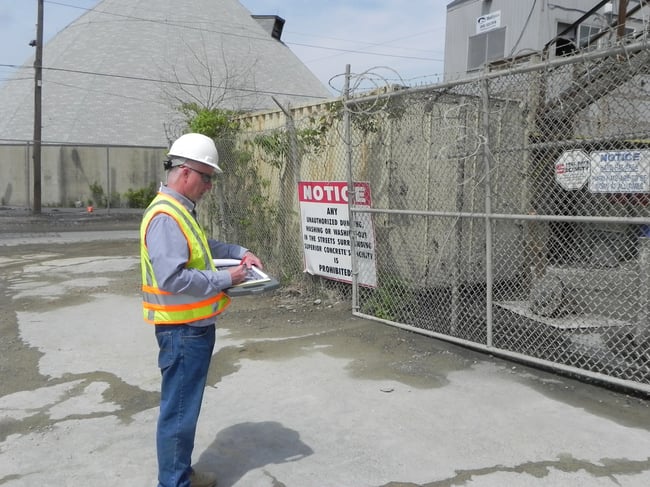
- Site reconnaissance
- Historical records research
- Regulatory database review
- Environmental file review
- Final report preparation
That means the same individual who observes the property is the person forming the professional conclusions.
This differs from many high-volume consulting models where site inspections, research, and report preparation are divided across multiple staff members.
Step Four: Optional Regulatory Compliance Review
For buyers acquiring active industrial or commercial facilities that will continue operating after closing, environmental due diligence sometimes needs to go beyond historical liability.
In those cases, we can incorporate a regulatory compliance review into the Phase I process.
This additional evaluation examines whether the facility appears to be operating in compliance with applicable environmental regulations, including areas such as:
- Fuel storage and spill prevention requirements
- Stormwater permitting and discharge controls
- Hazardous waste management practices
- Environmental reporting obligations
If potential compliance deficiencies are identified, we can also assist with corrective actions and program development to bring the facility into compliance.
This allows buyers to address regulatory exposure before it becomes their responsibility after closing.
How We Evaluate Recognized Environmental Conditions (RECs) in Phase I ESAs
One of the most important aspects of a Phase I Environmental Site Assessment is determining whether Recognized Environmental Conditions (RECs) are present.
RECs represent environmental conditions that may indicate the presence of contamination requiring additional investigation.
In many high-volume Phase I consulting environments, there can be a tendency to recommend Phase II testing whenever uncertainty exists. From a liability standpoint, that approach can feel like the safest option. But recommending a Phase II Environmental Site Assessment is not a minor step. It introduces:
- Additional cost
- Additional time
- Potential disruption to the transaction timeline
Because our assessments are led by senior environmental professionals with decades of site evaluation experience, we take a measured approach to these decisions. Our goal is to determine whether a condition materially changes the environmental risk profile of the property.
If additional investigation is truly warranted, we explain that clearly. If a condition does not represent a meaningful environmental liability risk, we explain that just as clearly in the report.
In other words, what clients receive is not just a document. They receive an informed environmental risk evaluation tied directly to the business decision being made.
Is RMA the Right Fit for Your Phase I Environmental Site Assessment?
This is one of the most important questions to answer when you're choosing a consulting firm, and it's something we try to be very transparent about.
Environmental consulting is not one-size-fits-all, and Phase I Environmental Site Assessments are no exception. Different consulting firms serve different parts of the market. Some firms focus on very high-volume, low-cost Phase I reports. Others focus on complex industrial transactions that require deeper evaluation and experience.
Neither approach is inherently right or wrong. They simply serve different needs. So the real question becomes: where does your transaction fall on that spectrum?
We’re a Strong Phase I Fit for Transaction Teams Managing Commercial or Industrial Assets
Most of our Phase I work supports organizations involved in commercial and industrial transactions where environmental risk is part of a much larger financial decision.
We commonly work with groups like:
- Mergers and acquisitions teams evaluating operating businesses
- Private equity groups acquiring or recapitalizing portfolio companies
- Developers purchasing or repositioning commercial and industrial properties
- Lenders requiring environmental due diligence before financing
- Legal teams advising on transaction risk and liability protections
- Corporate real estate departments managing property acquisitions or dispositions
These transactions often involve things like:
- Operating manufacturing or industrial facilities
- Redevelopment of older commercial or industrial sites
- Portfolio acquisitions involving multiple properties
- Companies expecting ongoing acquisition activity
In those situations, a Phase I assessment isn’t just a document needed to get through closing. It becomes part of the broader risk evaluation process surrounding the transaction.
That’s where our approach tends to fit best. Clients in these situations are typically looking for a consultant who can provide experienced analysis and thoughtful interpretation of environmental risk, not just a standardized report.
We May Not Be the Best Phase I Fit for Very Small Transactions
On the other end of the spectrum, there are plenty of situations where our approach probably isn't necessary.
For example, if you're purchasing a small rural property and primarily need a Phase I report to satisfy a lender requirement, there are many capable consulting firms positioned specifically for that type of assignment.
Those firms often operate what’s known as a high-volume Phase I model. Their systems are designed to complete reports quickly and efficiently, often at lower price points.
That approach works well when:
- The property has relatively simple land use history
- The transaction timeline is tight
- The primary goal is simply meeting a lender requirement
For those types of projects, speed and cost are usually the biggest priorities, and many firms are structured specifically to deliver that.
Where Our Phase I ESA Approach Works Best
Rather than operating as a high-volume report production model, our work is built around:
- Senior-level oversight
- Continuity between the site inspection and the report conclusions
- Careful evaluation of environmental risk
- Transaction awareness and business context
Because of that structure, we generally operate as a premium Phase I provider. Our pricing reflects the level of experience and involvement applied to each assessment. For clients managing transactions where environmental liability could affect pricing, negotiations, or long-term operational risk, that level of analysis tends to provide the most value.
In other words, if environmental due diligence is simply a checkbox, there are many firms that can handle that efficiently. But if the environmental evaluation is part of a larger financial or strategic decision, that's where our approach tends to be the strongest fit.
How to Get Started with a Phase I Environmental Site Assessment
If you're currently evaluating Phase I providers and want an approach built around senior-level involvement, continuity, and transaction-focused environmental analysis, the best place to start is with a conversation.
Reach out here and tell us a little about the property or transaction you're working on.
From there, we’ll talk through the basics: the asset, the timeline, the structure of the deal, and what type of due diligence makes sense for your situation.
Sometimes that conversation takes ten minutes. Sometimes it’s a longer discussion with the transaction team. Either way, the goal is simple: figure out whether we’re the right partner for the assignment.
If we are, we’ll walk you through next steps. If not, we’ll point you in the right direction.