PAG-02 vs. PAG-03: Pennsylvania's Construction and Industrial Stormwater Permits Explained
Pennsylvania has two stormwater general permits with names so similar that even experienced facility managers mix them up. Someone hears "you need a PAG permit" from a contractor, a township, or DEP, and it isn't obvious which one they mean, or whether they need one at all. Mixing them up is easy to do and annoying to fix, because the two permits cover different work, come from different reviewers, and follow different rules.
The short answer is that PAG-02 covers construction, meaning earth disturbance, while PAG-03 covers industrial activity at a facility that's up and running. A single site can need both at once, such as when an operating plant adds a building or a new storage yard. Below, we walk through when each permit applies, how they compare side by side, why they overlap, and which pieces we handle and which we don't. If you'd like to talk through your own site, you can reach out to RMA anytime.
Table of Contents
TL;DR
PAG-02 is Pennsylvania's construction stormwater permit. It applies to earth disturbance of one acre or more and is often handled through a county conservation district. PAG-03 is the industrial stormwater permit for operating facilities. DEP handles it, and it stays in place as long as the industrial activity does. A facility that builds an addition can need both at once, because one covers the construction and the other covers the ongoing operations. We help with PAG-03, No Exposure Certifications, and PPC Plans, but we don't prepare construction-phase permits.
What Is the Difference Between PAG-02 and PAG-03 Stormwater Permits?
Both permits are NPDES general permits. NPDES stands for National Pollutant Discharge Elimination System, the federal program that regulates what leaves a site with stormwater, and Pennsylvania's Department of Environmental Protection (DEP) runs it under the state's Clean Streams Law. A general permit is a standard set of rules that DEP writes once and lets many sites sign onto by filing a Notice of Intent, or NOI, instead of negotiating a permit from scratch. The PAG number is DEP's label for each one.
PAG-02 is the construction permit. It covers stormwater leaving a site while the ground is being disturbed, and it's tied to Pennsylvania's Chapter 102 erosion and sediment control rules. PAG-03 is the industrial permit. It covers stormwater from an operating facility where industrial materials or activities are exposed to rain and snowmelt, and it stays with the facility for as long as those operations continue. One is a permit for a project with a start and a finish. The other is a permit for how a facility runs day to day.
PAG-02 vs. PAG-03 Side-by-Side Comparison
This table puts the two permits next to each other. Details like fees and sampling depend on your site, your county, and the version of the permit in effect, so treat it as a map and confirm specifics with DEP or your conservation district.
| Question |
PAG-02 (Construction) |
PAG-03 (Industrial) |
| What it covers |
Stormwater from construction and earth disturbance |
Stormwater from industrial activity at an operating facility |
| What triggers it |
Earth disturbance of one acre or more, including part of a larger common plan of development |
Industrial activity exposed to rain or snowmelt, based on SIC code, site conditions, and where the water goes |
| Who reviews it |
DEP or an authorized county conservation district |
DEP |
| Main plans |
Erosion and sediment control plan, plus a post-construction stormwater management (PCSM) plan |
PPC Plan and site map |
| How long it lasts |
Life of the project. The current permit took effect December 8, 2024, and coverage under it expires December 7, 2029 |
Ongoing. The current permit took effect March 24, 2023, with a five-year term |
| Inspections and monitoring |
Site inspections, with qualified inspectors required under the 2024 permit |
Inspections and stormwater sampling set by the sector appendix that fits your facility |
| Reporting |
Annual report due by December 7 each year |
Annual report and electronic DMRs (eDMR) |
| How it ends |
Notice of Termination once the site is stabilized |
Continues while operations continue, unless the facility qualifies for No Exposure |
| Fees |
Vary by project size and reviewing agency |
NOI fee, collected in annual installments under the current permit |
| Does RMA prepare it? |
No |
Yes |
The biggest practical difference is who you deal with. A PAG-02 project often runs through a county conservation district, while PAG-03 coverage comes from DEP directly. The plans, deadlines, and reporting systems are all different, so the two permits don't share paperwork even when they cover the same property.
When Does a PAG-02 Construction Stormwater Permit Apply in Pennsylvania?
PAG-02 applies to construction activity with earth disturbance of one acre or more. DEP's rules also count a disturbance that's part of a larger common plan of development when the total reaches one acre. Agricultural plowing and tilling, animal heavy use areas, timber harvesting, and road maintenance are carved out. A project that can't qualify for PAG-02 can apply for an individual NPDES permit instead, and some activities, such as oil and gas work, follow separate paths under Chapter 102.
Smaller projects aren't automatically off the hook. Many conservation districts expect a written erosion and sediment control plan for earth disturbance of 5,000 square feet or more, even when the project falls below the one-acre NPDES threshold. Your district can tell you what it expects for a smaller job.
Who reviews a PAG-02 depends on the county. DEP delegates much of the Chapter 102 program to county conservation districts, and DEP's guidance says PAG-02 coverage is handled by DEP or the district that approved it. DEP also offers an electronic filing option for new PAG-02 NOIs through its GreenPort ePermit system. Municipalities play a role as well. Under 25 Pa. Code Section 102.43, a township or county can't issue a building or other permit for a project that needs a Chapter 102 permit until DEP or the district has approved coverage, with an exception for local stormwater approvals. That's why PAG-02 tends to surface first, usually when someone applies for a building permit. The current version, the 2024 PAG-02, took effect December 8, 2024.
When Does a Facility Need PAG-03 Industrial Stormwater Coverage?
PAG-03 covers stormwater associated with industrial activity, which is a federal category tied to your facility's SIC (Standard Industrial Classification) code and to what happens outdoors. Manufacturing plants and scrap yards are typical examples, and the permit has a sector appendix for each type of activity that sets the monitoring requirements. Whether you need coverage depends on three things: your SIC code, whether industrial materials or activities are exposed to stormwater, and where that water ends up. For a closer look at the federal definition, see our explanation of stormwater associated with industrial activity.
Plenty of facilities land on the "probably not" side. Warehouses, body shops, dealerships, quick-lubes, and most contractors usually don't need PAG-03. A facility in a covered category whose materials and activities are all indoors or under roof usually files a No Exposure Certification instead of operating with no paperwork. DEP approves that certification for up to five years, and it isn't available to facilities in High Quality or Exceptional Value watersheds. Those same watersheds are a common reason a facility can't use PAG-03 at all and needs an individual NPDES permit. Our guide to general, individual, and No Exposure permits walks through those three paths.
Local conditions can change the answer. Some older Pennsylvania cities have combined sewers, so runoff from a site may go to a treatment plant, and the sewer authority may govern it instead of a DEP stormwater permit. Townships and sewer authorities can also set their own rules and fees. Confirm your situation before assuming that a facility in a particular city or county does or doesn't need PAG-03. The current PAG-03 took effect March 24, 2023, and our Pennsylvania PAG-03 guide covers what coverage involves once you have it.
Can a Facility Need Both PAG-02 and PAG-03 at the Same Time?
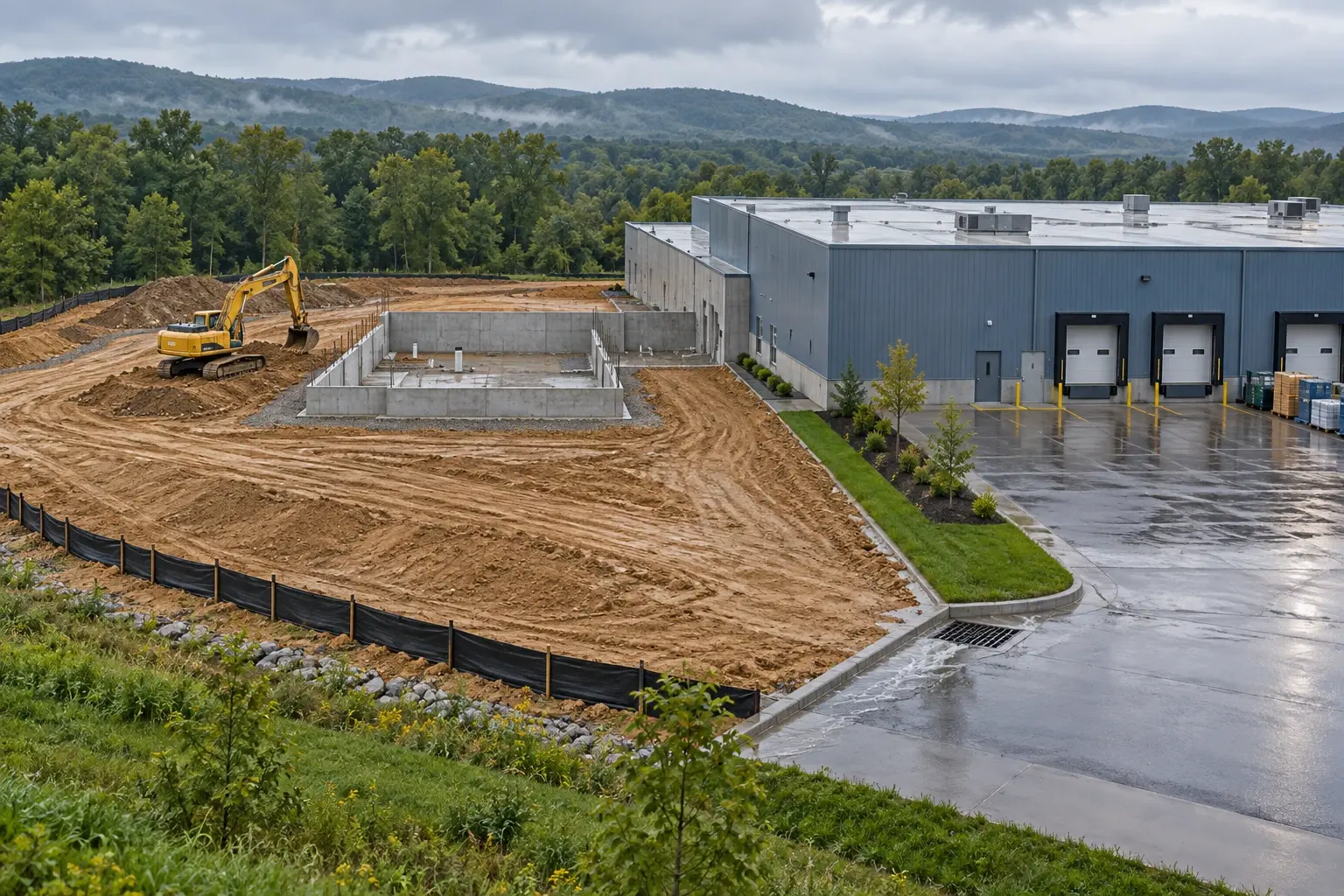
Yes. The two permits cover different things, so they can sit on the same property at the same time. Picture a manufacturer with PAG-03 coverage that decides to add a building and a new paved storage yard. Once the earth disturbance for the project reaches one acre, the construction needs PAG-02 coverage. The existing PAG-03 doesn't pause, because the original operations keep running and keep discharging stormwater. PAG-03 isn't written to cover construction earth disturbance, so neither permit can stand in for the other.
Sequence matters. Because a township can hold a building permit until the Chapter 102 approval is in place, the PAG-02 work usually comes first and sets the schedule for everything after it. Facility managers sometimes treat the construction permit as the only stormwater item on the list and forget that the operating permit still has to reflect what's built.
After construction, your drainage may look different. A new roof, new pavement, or a new outfall changes where water collects and leaves, and your PAG-03 documents should match what's on the ground. Depending on what changed, that can mean updating the PPC Plan and site map and, in some cases, amending the NOI with DEP. Before breaking ground, ask whether the new layout changes outfalls, drainage areas, or the activities exposed to rain, because those are the details PAG-03 documents. The same sequence applies to a brand-new facility: PAG-02 to build, then PAG-03 or a No Exposure Certification when operations start, if its industrial category requires one. If you're planning ahead, our article on how long PAG-03 coverage takes helps with timing.
How Do PAG-02 and PAG-03 Requirements Differ in Practice?
What PAG-02 Asks of a Construction Site
PAG-02 is built around controlling erosion and sediment while the site is open and managing stormwater after it's finished. That means installing and maintaining the controls in your approved erosion and sediment control plan, building the long-term controls in your PCSM plan, and inspecting the site regularly. The 2024 permit added a requirement for qualified site inspectors beginning December 8, 2025, and confirmation testing for infiltration-based stormwater control measures starting the same day. Permittees also file an annual report by December 7 each year, and coverage ends with a Notice of Termination once the site is stabilized.
What PAG-03 Asks of an Operating Facility
PAG-03 has no finish line, so its requirements are built around routine. Facilities generally prepare a PPC Plan and site map, put best management practices in place, inspect on a schedule, and sample stormwater according to the sector appendix that fits their operations. Monitoring results go to DEP through the eDMR system, and the permit also involves an annual report, employee training, and recordkeeping. Our comparison of SWPPPs and PPC Plans explains the plan itself, and our eDMR reporting guide covers the filing side. If you want to know what to expect when DEP shows up, read what happens during a PA DEP stormwater inspection.
Who Handles PAG-02 Construction Permits and Who Handles PAG-03?
We don't prepare construction-phase permits or approvals. That includes PAG-02 coverage, Chapter 102 erosion and sediment control plans, conservation district approvals, Chapter 105 permits, and township land development stormwater approvals. For that work, most facilities rely on their civil engineer, their contractor, or a soil erosion specialist, and the county conservation district is usually part of the conversation. We're happy to help you figure out what the construction phase is likely to need and point you toward the right people, but we won't claim to file or manage those permits.
Where we help is the operating side, once the building is up and running. A new or expanded facility almost always needs permits and plans for the way it operates, including PAG-03 coverage or a No Exposure Certification, a PPC Plan, inspections, and sampling. Many facilities also need an SPCC plan if they store oil, and our page on Pennsylvania SPCC plans covers that piece. If you're not sure you need any of it, we'll tell you. Plenty of Pennsylvania businesses don't need PAG-03, and we'd rather say so than sell you coverage you can't use.
What Do PAG-02 and PAG-03 Stormwater Permits Cost?
Each permit has agency fees, and each has the cost of the work behind it. PAG-02 fees depend on the project size and the reviewing agency, and the larger expense is usually the engineered plans, which sit with your engineer and your district's fee schedule rather than with us. For PAG-03, DEP charges an NOI fee that the current permit collects in annual installments, so confirm the exact amounts in DEP's current NOI instructions.
The bigger variable for PAG-03 is the work of preparing everything the permit requires. The main drivers are your permit category, how much sampling applies, the size and complexity of the site, and whether a PPC Plan or stormwater plan already exists. Our article on PAG-03 permit costs in Pennsylvania breaks those drivers down. For a number that fits your site, use the pricing calculator below, which estimates what it would cost for us to help with your stormwater permitting, not what you'd pay an agency.
How Does RMA Help With PAG-03 Stormwater Compliance in Pennsylvania?
If you're not sure which of these permits applies to your site, tell us what's happening. We can help you sort out which parts of your project are construction-phase items for your engineer or contractor, and which parts are operating-phase items we can take on, including whether your facility needs PAG-03, qualifies for a No Exposure Certification, or needs an individual permit. From there, we can walk the site, prepare your PPC Plan and maps, assemble the NOI, help with sampling and eDMR reporting, and keep the paperwork current as your facility changes. We're based in New Jersey and work with facilities across Pennsylvania.
There's no pressure and no obligation. You can call us, email us, or fill out the form on our website, and we'll let you know if we're the right fit or point you in a better direction if we're not. When you're ready, contact RMA and tell us about your site.