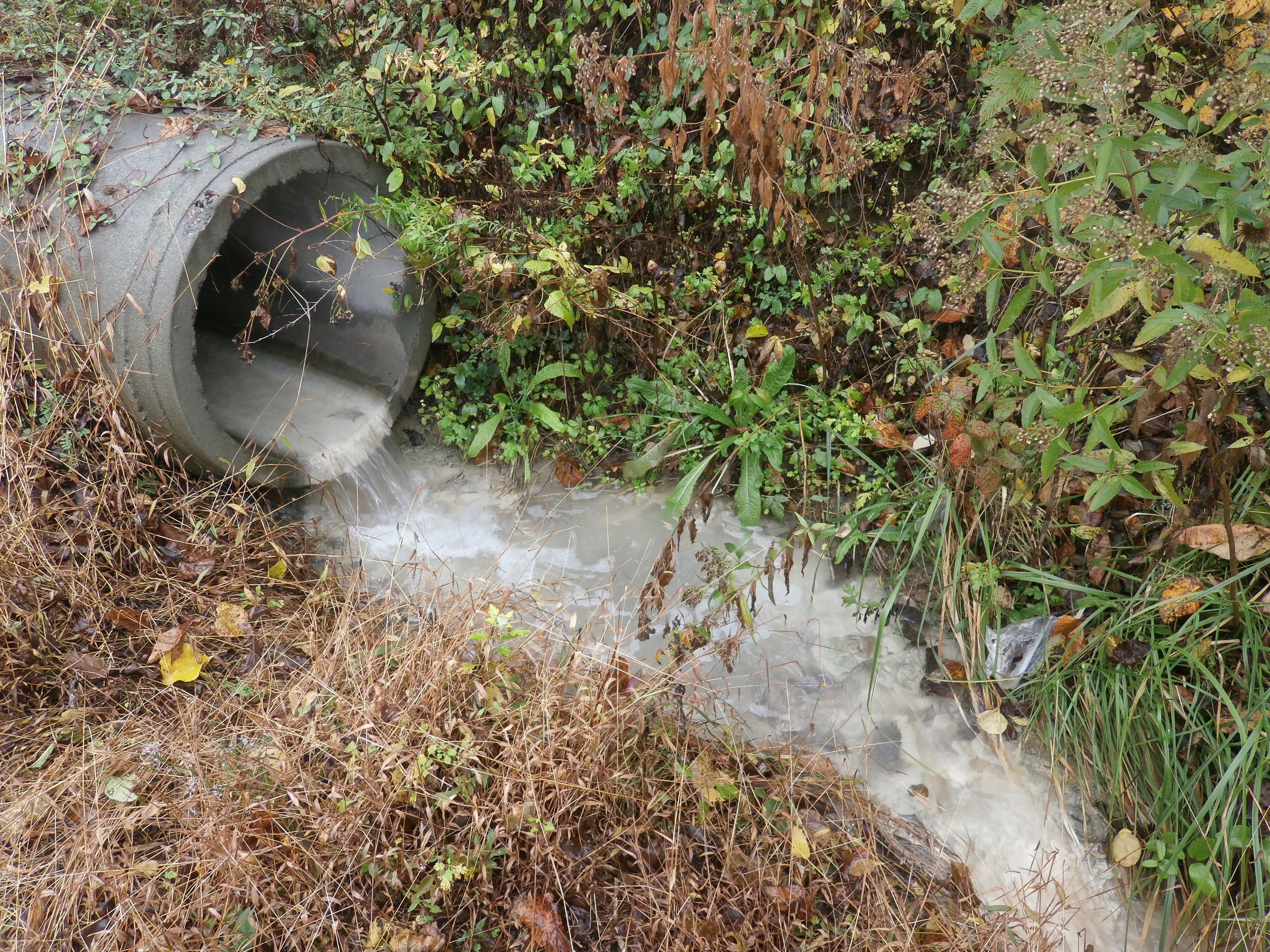
How Pennsylvania's PAG-03 permit applies to hot mix asphalt plants, from aggregate and RAP piles to liquid asphalt tanks and truck loading
If you run an asphalt plant in Pennsylvania, the short answer is that you almost certainly need stormwater permit coverage. Asphalt paving mixture plants are one of the industries written into PAG-03, the general permit Pennsylvania's Department of Environmental Protection (DEP) uses for industrial stormwater, and a typical plant has everything that makes runoff a problem: open aggregate piles, recycled asphalt stockpiles, liquid asphalt and fuel tanks, and trucks coming and going all day. For most plants, PAG-03 is the right path, though a few situations push a plant toward a different permit or a different regulator, and we'll cover those too.
This article walks through why asphalt plants fall under PAG-03, what ends up in their runoff, how tank areas connect to the PPC Plan and the SPCC Plan, what the permit asks of you once you're covered, and how the picture differs for plants that have run for decades versus plants just coming online. Every site's drainage and receiving stream are different, so if you'd rather talk through your plant, you can reach out to RMA and we'll tell you what we see, including when you already have what you need.
Table of Contents
TL;DR
Almost always. Pennsylvania's general industrial stormwater permit, PAG-03, has a section written for asphalt paving plants, and the open stone and recycled asphalt piles, liquid asphalt and fuel tanks, and truck traffic at a typical plant make that permit the usual path. A few situations point elsewhere, including asphalt emulsion runoff, discharges to the state's highest quality streams, and some combined sewer areas. Once you're covered, you sample twice a year, report electronically, run inspections, and keep a spill and pollution plan current, which ties into your federal oil spill plan wherever oil storage is significant.
Does an Asphalt Plant in Pennsylvania Need PAG-03 Stormwater Permit Coverage?
In most cases, yes. Stormwater is the rain and snowmelt that runs off your property, and when that runoff leaves an industrial site and heads toward a stream, river, or storm sewer, federal and state law treat it as a discharge that needs permit coverage. Our article on what stormwater associated with industrial activity means covers how the permit defines the runoff it regulates.
Pennsylvania handles most of these sites through PAG-03, the general National Pollutant Discharge Elimination System (NPDES) permit for industrial stormwater. DEP wrote one set of rules, and facilities in listed industries sign on by submitting a Notice of Intent (NOI) to their DEP regional office. The NOI includes a Preparedness, Prevention, and Contingency (PPC) Plan, which is DEP's name for the site plan that identifies pollutant sources, lays out the controls, and says what you'll do when something spills. Coverage is sorted into appendices by industry, and each appendix is tied to Standard Industrial Classification (SIC) codes, the four-digit codes that sort businesses by what they do.
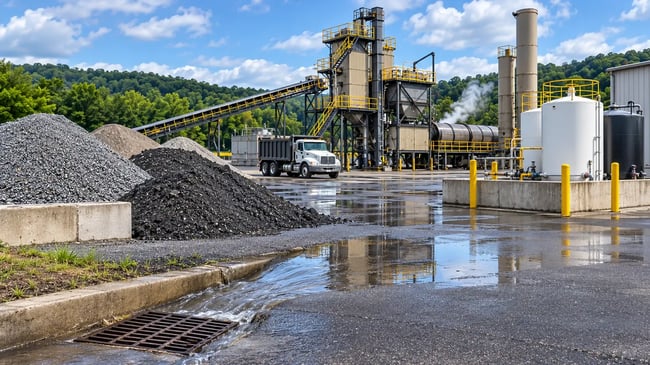
An asphalt plant is about as exposed as an industrial site gets. Hot mix asphalt is made by drying and heating stone and sand and coating it with liquid asphalt cement, and the mix often includes recycled asphalt pavement, known as RAP. The stone, sand, and RAP sit outside in piles, the asphalt and fuel sit in tanks, and loaded trucks cross the yard all day. A plant like that, with its own outfalls (the pipes, ditches, or channels where runoff leaves the property), can usually expect to need coverage. We say usually because the answer turns on where your runoff goes and whether anything disqualifies the site. Our overview of whether you need a stormwater permit in Pennsylvania explains the three routes DEP offers.
How Does PAG-03 Appendix M Apply to Asphalt Paving Plants?
Asphalt paving mixture plants, SIC code 2951, fall under Appendix M of PAG-03, titled Asphalt Paving, Roofing Materials and Lubricants. The appendix also covers asphalt felts and coatings (2952) and two miscellaneous petroleum and coal product codes (2992 and 2999). It sets the pollutants you'll sample for and the industry-specific best management practices (BMPs) you have to put in place, meaning the physical and operational controls that keep pollutants out of runoff. Our guide to stormwater BMPs explains how those work. DEP can also assign a facility to an appendix when its activities are similar, so a plant classified under another code isn't automatically outside Appendix M.
When Does an Asphalt Plant Fall Outside PAG-03?
A few situations send a plant toward a different permit. Appendix M doesn't cover runoff from asphalt emulsion facilities, which are subject to separate federal effluent limits under 40 CFR Part 443, or stormwater from petroleum refining facilities that make asphalt products. Both need an individual NPDES permit. A plant that already has, or is required to get, an individual permit for non-stormwater discharges such as process wastewater can't use PAG-03 either, because its stormwater gets folded into that permit. PAG-03 also doesn't authorize discharges directly to streams DEP classifies as High Quality or Exceptional Value, or discharges to impaired waters when your runoff contains pollutants that could add to the impairment. Our article on which NPDES permit you need compares general permits, individual permits, and No Exposure Certifications.
Where your runoff goes matters too. Some older cities have combined sewers, and when site runoff goes to a treatment plant instead of a stream, the local sewer authority may set the rules instead of a DEP stormwater permit. Cities, townships, and sewer authorities can also have their own requirements and fees, so confirm your situation locally. The No Exposure Certification, for facilities that keep all industrial materials under storm-resistant shelter, is almost certainly out of reach for a plant with open stockpiles.
What Stormwater Pollutants Do Asphalt Plants Create?
Appendix M shows what DEP is watching for. It has you sample for total suspended solids (TSS), oil and grease, pH, and nutrients, and its BMPs target the sources below.
| Source at the plant |
What it can put in runoff |
Typical controls |
| Aggregate and sand stockpiles |
Sediment, which shows up as TSS and cloudy water |
Divert run-on away from piles, shape piles to limit erosion, and use silt fences, rock filters, or sediment basins |
| RAP piles |
Sediment, and potentially some oil and grease |
The same pile controls used for aggregate, plus regular housekeeping around the edges |
| Liquid asphalt and fuel tanks |
Oil, grease, and petroleum products from leaks, overflows, and drips during filling and loading |
Secondary containment, leak detection, and high level overflow devices |
| Truck loading, washing, and yard traffic |
Oil and grease, tracked sediment, and release agent residue |
Dedicated washing areas with wash water collected separately from storm drainage, wheel washing when needed, and biodegradable release and washing materials |
| Dust and spilled material |
Fine particles that wash into drains and ditches |
Dust control agents, periodic cleanup, and vegetated ditches cleared of accumulated material at least once a year |
Sediment and oil and grease are the two problems we'd plan around first, since TSS and oil and grease are the parameters most likely to bring a benchmark exceedance at a plant like this. The permit also prohibits discharging oil and grease in amounts that cause a film or sheen on the water, whatever your sample results say. Truck wash water is a separate issue, because washing trucks isn't a stormwater discharge and PAG-03 doesn't authorize it, which is why Appendix M calls for washing areas that stay out of the storm drainage system.
How Do Asphalt Plant Tank Areas Tie Into the PPC Plan and SPCC Plan?
Liquid asphalt and fuel tanks are the part of a plant most likely to produce a petroleum release, so DEP treats the tank area as a stormwater issue as well as a spill issue. Appendix M requires secondary containment around asphalt and petroleum product tanks, along with leak detection and high level overflow devices. If your containment areas or retention basins are controlled by a valve, the permit says to look for a sheen or floating material before you release anything, remove what you find first, and collect your sample within the first five minutes of the discharge.
Tank areas go straight into your PPC Plan, which has to identify every potential pollutant source, describe preventive measures and spill response, flag erosion-prone areas, and include a training plan. DEP requires it under 25 Pa. Code § 91.34 and expects you to review it at least once a year and whenever operations change. Our comparison of SWPPPs and PPC Plans in Pennsylvania explains how it differs from the stormwater plans used in other states.
Where oil storage is significant, a federal Spill Prevention, Control, and Countermeasure (SPCC) Plan comes into play as a separate requirement. In general, it applies when a facility stores more than 1,320 gallons of oil in aboveground containers of 55 gallons or larger and a spill could reasonably reach navigable waters. Diesel, hydraulic oil, and lubricants count toward that total, and liquid asphalt tanks usually do as well, so plenty of plants end up over the line. PAG-03 lets an SPCC Plan satisfy the PPC Plan requirements when it covers the PPC minimums, but it usually doesn't address erosion controls or sampling, so it makes sense to keep the two plans lined up. Our article on the difference between an SPCC Plan and a SWPPP shows how they fit together, and our Pennsylvania SPCC Plan services page covers what we do on the SPCC side.
What Does PAG-03 Require From an Asphalt Plant After Coverage Starts?
Coverage isn't a one-time filing. Once DEP approves your NOI, the permit sets a recurring schedule.
| Requirement |
Schedule |
Details |
| Stormwater sampling |
Twice a year (January to June and July to December) |
Grab samples at representative outfalls during a storm over 0.1 inch that follows at least 72 hours after the last measurable storm, collected within the first 30 minutes of discharge and analyzed by an accredited lab |
| Discharge Monitoring Reports (DMRs) |
Within 28 days after each period ends |
Submitted electronically through DEP's eDMR system |
| Visual inspections |
Twice a year |
At least one each year during a qualifying storm event |
| Training and PPC Plan review |
At least once a year |
Employee training on pollution prevention and spill response, plus a plan review whenever operations change |
| Annual Report and annual fee |
May 1 |
Covers the previous calendar year, along with a $500 fee installment due whether or not DEP sends an invoice |
Appendix M has you sample for total nitrogen, total phosphorus, pH, oil and grease, and TSS every six months. Some of those carry a benchmark value and some are monitor and report only, so check your appendix for the numbers that apply. Benchmarks aren't effluent limits, and one high result isn't a violation. Our guide to benchmark values versus effluent limits explains the difference, and why you should take your own stormwater samples is worth reading before your first sampling window.
Repeated high results are where the permit gets involved. After two or more consecutive benchmark exceedances at the same outfall, you have to submit a corrective action plan to DEP within 90 days of the end of the monitoring period and carry it out. After four or more, you also have to implement the additional BMPs on DEP's Stormwater BMPs Checklist for your appendix, unless you can show a measure is infeasible or the exceedances come from natural background or run-on from off site. If they continue, DEP can require an individual permit application. Our article on what to do when your sampling results are high lays out a practical response. We also cover Pennsylvania's eDMR system, how to do a stormwater visual inspection, and what happens during a PA DEP stormwater inspection in separate guides, and our online training library can handle annual employee training.
How Do Older and Newer Asphalt Plants Approach PAG-03 Differently?
What Should Older Asphalt Plants Check First?
Many Pennsylvania asphalt plants have been producing for decades, and a lot of them supply PennDOT and municipal paving work year after year. A plant with that history usually lands in one of three spots. Some were set up before anyone thought of the yard as a stormwater source and may never have submitted an NOI. Others have coverage, but the plant has changed since the paperwork was written, with a new tank, a bigger RAP pile, or an added outfall. The rest are covered and current and just need the routines kept up.
The permit has triggers for the second group. You have to submit an NOI amendment when a new outfall is identified or proposed, or when a change in activity or SIC code would change your appendix, and you have to notify DEP at least 30 days before physical changes such as new impervious surfaces or new bulk materials stored where stormwater can reach them. DEP reissued PAG-03 in 2023 on a five-year term, so renewal comes up in 2028, and it's a good reason to confirm your coverage and plan match the permit version now in effect.
What Should New Asphalt Plants Plan For?
A new plant faces a timing question. The NOI has to be submitted at least 60 days before you plan to start discharging, and you can't discharge under PAG-03 until DEP sends back a signed copy authorizing coverage. Our article on how long PAG-03 coverage takes covers what affects the schedule.
Building the plant brings its own permits, and we don't handle them. Construction stormwater coverage (PAG-02), Chapter 102 erosion and sediment control plans, county conservation district approvals, Chapter 105 permits, and township land development stormwater approvals belong to your civil engineer, contractor, or a soil erosion specialist. We can help you work out what the construction phase will need and point you toward the right professionals. Once the plant is running, the operational side is where we come in: PAG-03 coverage, the PPC Plan, sampling, inspections, and the SPCC Plan if your oil storage calls for one.
What Does PAG-03 Coverage Cost for an Asphalt Plant?
DEP's side of the cost is fixed and small. The NOI carries a $500 fee, and the permit requires a $500 annual installment each May 1 for as long as you hold coverage. The larger cost is the work behind the application and the years that follow. Our article on what a PAG-03 permit costs in Pennsylvania breaks that down for Pennsylvania facilities in general.
For an asphalt plant, the number of outfalls and how complicated the drainage is drive most of it, followed by site size, whether you already have a current PPC Plan or SPCC Plan, and how much ongoing help you want with sampling and reporting. The calculator below estimates what RMA's help would cost, separate from DEP's fees.
How Can RMA Help With Asphalt Plant Stormwater Permitting?
We work with Pennsylvania facilities all the time, and asphalt plants fit well with what we do. We can work out whether PAG-03 is the right fit for your site or whether something else applies, such as an individual permit or a local sewer authority's rules. From there we can walk your plant, map the drainage and outfalls, prepare the PPC Plan and NOI, coordinate sampling, handle eDMR reporting and annual reports, and put together an SPCC Plan if your oil storage calls for one.
We'll also tell you when you don't need us. If your plant already has current coverage, a plan that matches the yard, and routines your team follows, you may be in good shape, and our article on getting PAG-03 coverage yourself explains when handling it yourself makes sense. If you're unsure, there's no pressure and no obligation to talk it through. You can call us at 888-RMA-0230, email us, or fill out the form on our contact page, and we'll tell you what we think your plant needs.