How to Choose Who Writes, Certifies, and Backs Up Your Oil Spill Plan When a Professional Engineer Is Involved
If you store oil at a Pennsylvania facility, federal rules may require an SPCC Plan, which is a written plan for preventing oil spills and keeping any spill out of nearby waterways. When that plan has to be certified by a licensed Professional Engineer (PE), the search for help gets confusing fast. Some firms are engineering firms with PEs on staff, some are environmental consultants, and a lot of them say they do SPCC. It's hard to tell which one you need, and a wrong pick costs you time and sometimes a plan that has to be redone.
We'll walk through whether your plan needs a PE at all, what the PE does, what each type of firm brings, and how an environmental consulting firm can deliver a PE-certified plan without a PE on its own payroll. If you'd rather talk through your own facility, you can reach out to RMA any time, and we'll tell you straight if you don't need us.
Table of Contents
TL;DR
Whether your SPCC Plan needs a PE depends on your oil storage volume and spill history, not on which kind of firm you hire. If you're over 10,000 gallons of aboveground oil storage or you've had a qualifying spill, a PE has to certify the plan. The PE or the PE's agent has to visit and examine the facility, and the PE reviews, signs, and seals the plan. Engineering firms bring containment design skills, while environmental consultants bring everyday SPCC volume and the surrounding compliance work. A consultant without a PE on staff can be a good choice when it acts as the PE's agent and the PE genuinely reviews its work.
Does Your Pennsylvania SPCC Plan Need a Professional Engineer?
Whether you need a PE comes down to your facility's size and spill history, not to which firm you pick. Federal SPCC rules let smaller facilities, called qualified facilities, certify their own plan. To qualify, your total aboveground oil storage capacity can't top 10,000 gallons, and you can't have a rough spill history: no single discharge over 1,000 gallons, and no two discharges over 42 gallons each within any twelve-month period, looking back over the three years before you certify. A qualified facility with no single container over 5,000 gallons is a Tier I facility and can use EPA's Tier I template. One with a container over 5,000 gallons is a Tier II facility, which needs a full-format plan that the owner can still self-certify.
A PE has to certify the plan if you're over 10,000 gallons or your spill history knocks you out of qualified status. A Tier II plan that deviates from certain rule requirements also needs a PE to certify those portions. Some owners who could self-certify choose a PE anyway for the added review, and EPA notes that some states limit who can certify a plan, so we'd check Pennsylvania's rules for your situation rather than assume. Our post on whether you can self-certify your SPCC Plan in Pennsylvania shows how to find out, and if you're creeping toward the line, the article on what happens when a facility crosses 10,000 gallons covers what changes.
If you don't have a plan and aren't sure your oil storage triggers one, start by working out whether your facility needs an SPCC Plan at all. If you already have one, the same size and spill-history questions decide whether its next update needs a PE.
What Does a PE Do When Certifying an SPCC Plan?
When a PE certifies a plan under 40 CFR 112.3(d), they're attesting to a specific list of things. They're familiar with the SPCC requirements. They or their agent have visited and examined the facility. The plan was prepared following good engineering practice, including applicable industry standards. Procedures for the required inspections and testing have been established. And the plan is adequate for the facility.
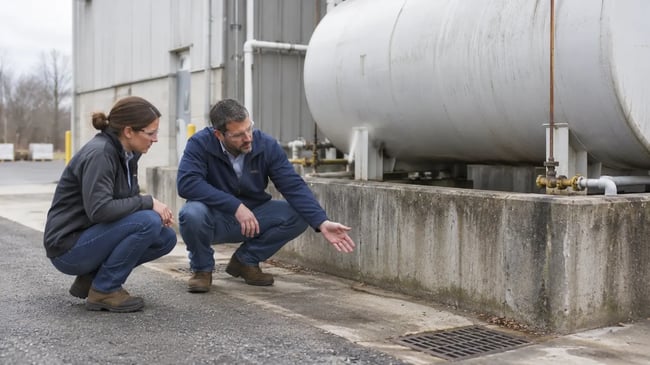
Two details in that list matter when you're choosing a firm. The first is the phrase "or their agent." The rule doesn't require the PE to personally walk your tank yard, as long as someone acting for the PE visits and examines the facility and the PE stays responsible for what the plan says. The second is that the PE is the one who reviews the plan, signs it, and applies their seal. That seal puts their license behind the document, which is why a PE who actually reads the plan is worth far more than one who stamps whatever lands on the desk.
Certification also doesn't take the job off your plate. The rule is clear that the owner or operator still has to prepare and fully carry out the plan, which means the monthly inspections, the training, the containment upkeep, and the recordkeeping. The PE's stamp says the plan is sound. It doesn't say your facility follows it. Our overview of professional engineers and SPCC plan requirements goes further into the federal triggers and the state-by-state wrinkles.
What Does an Engineering Firm Bring to SPCC Plan Work?
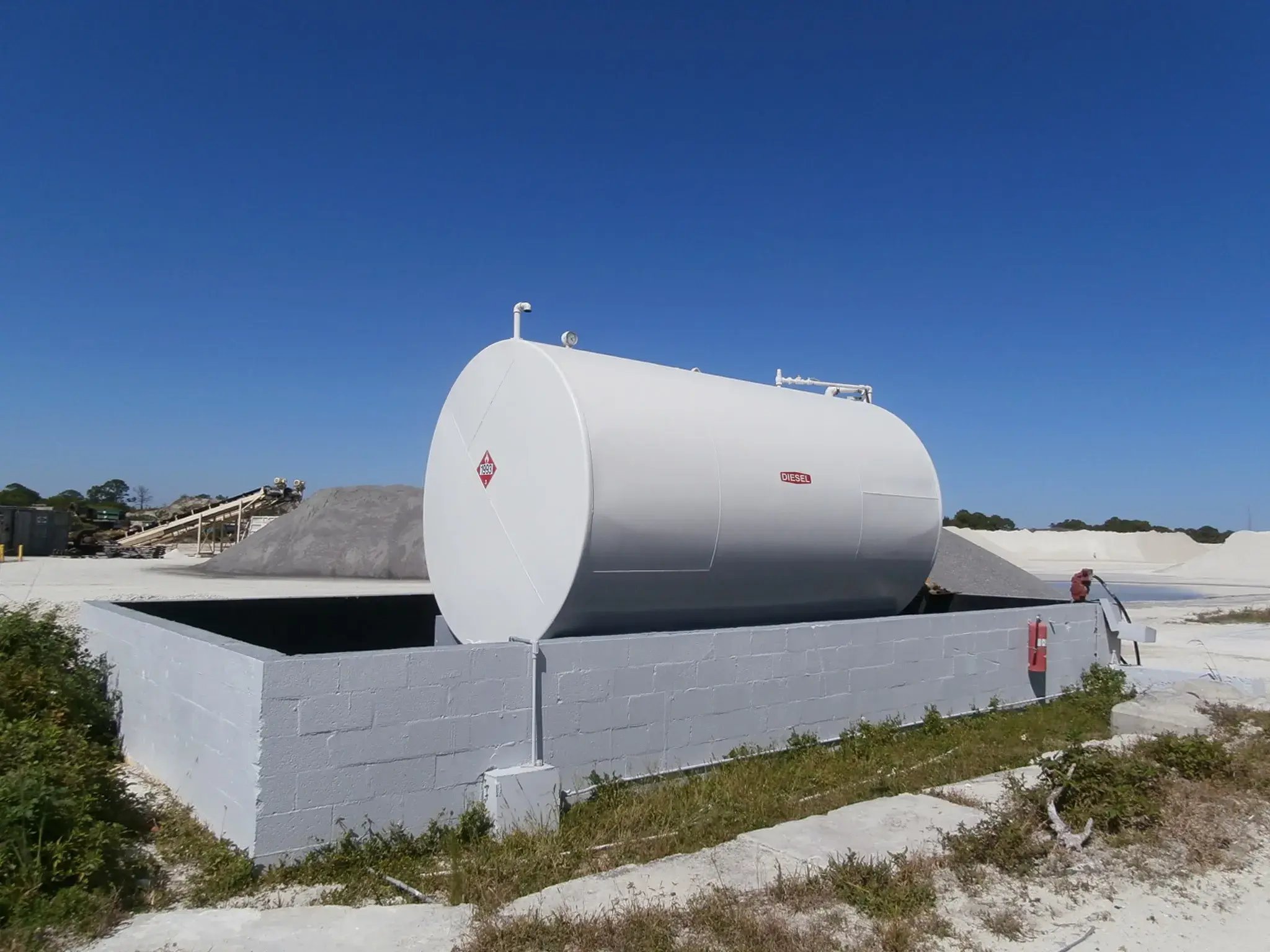
An engineering firm with PEs on staff can do everything under one roof: the site visit, the plan, the review, and the seal. Its biggest strength is design. If the plan work turns up a real containment problem, like a dike that's too small for your largest tank or a pad that drains the wrong direction, an engineering firm can design the fix, produce sealed drawings, and oversee the work. Engineers are also comfortable with the judgment calls that only a PE can certify, such as deciding that a particular containment approach is impracticable or environmentally equivalent to what the rule normally requires.
The trade-offs are worth knowing before you sign anything. SPCC is a narrow rule, and some engineering firms only write a handful of plans a year, often as an add-on to a larger project. A plan written by someone who doesn't do this regularly can miss the unglamorous pieces: the full container inventory, drums and totes, oil-filled equipment, inspection procedures, and employee training. Hourly time from a PE can also end up going to inventory and drawing work that doesn't need an engineer. None of that makes an engineering firm a bad choice. It means you should ask how often they do SPCC work and who actually writes the plan.
What Does an Environmental Consultant Bring to SPCC Plan Work?
A facility with oil tanks usually has other obligations stacked around the SPCC Plan: Pennsylvania DEP tank registration, a PPC Plan, stormwater requirements, Tier II reporting for diesel, and used oil or waste rules. An environmental consultant who handles these together catches the places where they don't line up, like containment described one way in your SPCC Plan and another way in your PPC Plan. We've written about whether you need both an SPCC Plan and a Pennsylvania PPC Plan, and about whether one document can cover SPCC, PPC, and SPRP requirements, because this overlap trips up a lot of facilities.
Consultants who focus on SPCC also write plans all the time, so the inventory, the facility diagram, the inspection procedures, and the training are routine for them. The limits are the mirror image of an engineering firm's strengths. Many environmental consultants don't employ PEs, so a PE-certified plan needs an engineer brought in. And they generally don't design containment. If your plan shows you need new containment, that's engineering design and contractor work, plus any building or construction-phase approvals your township requires. RMA doesn't handle that side. We can help you evaluate secondary containment against what the SPCC rule needs and point you toward the right construction professionals, and then we pick back up with the plan and the operational requirements once the work is done.
Can an Environmental Consultant Without a PE on Staff Prepare a PE-Certified SPCC Plan?
Yes, and it's a common setup. An environmental firm doesn't need a PE on its payroll as long as it works closely with a licensed PE, acts as that PE's agent, and the PE reviews its work. The federal rule's "PE or their agent" language is what makes this work. The PE or the PE's agent does the site visit and examination, and the PE is the one who signs off on the plan and certifies it.
In practice, the consultant's staff visit the facility, inventory the oil containers, measure the containment, and develop the plan. The PE then reviews that work against the rule and good engineering practice, asks questions, requires changes where something doesn't hold up, and seals the plan once it does. The PE is putting a license on the line, so a good one isn't a rubber stamp. That review is paid for separately and adds time to the project, which is a big reason PE-certified plans cost more and take longer than self-certified ones. We break that down in our post on why PE-certified SPCC plans cost more in Pennsylvania.
The model only works if the PE really reviews the plan, so ask directly. Find out who the PE is, whether they're licensed in the state where your facility sits, what they review, and what happens if they want changes. A firm that gets vague on those questions is telling you something. A firm that names the PE and explains the review process has probably done this many times.
How Do You Choose an SPCC Plan Firm in Pennsylvania?
Start with what you actually need, then match the firm to it. The table below lays out the common situations.
| Your situation |
Usually the better fit |
| Under 10,000 gallons, no container over 5,000 gallons, clean spill history, simple site |
Self-certifying with EPA's template, or an environmental consultant if you'd rather not do it yourself |
| Over 10,000 gallons, containment is adequate, and you also have tank registration, PPC, or Tier II work |
An environmental consultant working with a PE as the PE's agent, or an engineering firm that writes SPCC plans regularly |
| Containment is undersized, or you're replacing or adding tanks and need design work |
An engineering firm for the design, plus whoever writes and maintains the plan |
| You need to deviate from a rule requirement, such as impracticable or equivalent containment |
A PE involved from the start of the project |
| Several facilities with similar setups |
A firm that handles SPCC at volume and can keep the plans consistent |
Then ask every firm the same set of questions. How many SPCC plans did you complete last year? Who's the PE, are they licensed where my facility is, and what will they review? Who does the site visit, and will I talk to that person again? What does your price include, and what does it leave out? Who handles the five-year review and any technical amendments? Our post on what it's like to hire an SPCC plan consultant shows what a good engagement looks like from the client's side.
On price, SPCC plans from RMA run from about $1,500 to $15,000 overall, and a Tier I plan runs about $1,500 to $4,000. What pushes a plan toward the top is the number of containers, the size of the facility, and whether it needs PE certification and a containment evaluation. Be wary of a quote far below everyone else's. A very low price often means nobody with a license looked closely at the plan, and a plan that doesn't hold up in an inspection costs more to fix than it saved. And if your facility is simple enough to self-certify, you may not need to hire anyone. We'd rather tell you that than sell you a plan. For a deeper look at the types of plans themselves, see different types of SPCC plans explained.
How Does RMA Help With PE-Certified SPCC Plans in Pennsylvania?
We're a family-run environmental consulting firm, and we don't have a PE on staff. When a plan needs PE certification, we work with a licensed PE in the state where your facility is located. Our staff do the site visit and develop the plan, and the PE reviews our work, then stamps and seals it. We don't hand a PE an unfinished plan and ask for a stamp, and we tell you up front that the PE's review is a paid step that adds time. If an engineering firm is the better fit for you, for instance because you need containment designed, we'll say so and point you the right way. If you're a new client, initial SPCC training is free with your plan.
If you're not sure whether your plan needs a PE, or you're weighing firms and want a second opinion, you can call us, email us, or fill out the form on our website. There's no pressure and no obligation, and we're happy to talk it through. When you're ready, reach out to RMA and we'll start with your oil storage and your goals.