A Plain-English Map of Pennsylvania's Environmental Rules for Businesses, and Who Enforces Each One
Nobody mails a Pennsylvania business a list of the environmental rules that apply to it. Some of the rules come from PA DEP, some come from EPA, a few come from your county or township, and a couple of the big reporting requirements don't involve DEP at all. It's common for a facility to be squared away on stormwater and have no idea its fuel tanks need to be registered.
This article is a map. We'll walk through who regulates what in Pennsylvania, how DEP organizes its programs, and what the rules look like for waste, storage tanks, stormwater, air, and chemical reporting. We'll also cover penalties and what compliance costs, with real numbers. You don't need a consultant to understand any of it, but if you'd rather talk through your own facility, you're welcome to reach out to RMA and we'll tell you what applies and what doesn't.
Table of Contents
TL;DR
PA DEP is your main environmental regulator in Pennsylvania, and it runs separate programs for water, waste, storage tanks, and air under separate laws. EPA Region 3 sits above DEP and handles a few things directly, including SPCC plans and TRI reporting. Tier II chemical reporting goes through the Department of Labor & Industry instead of DEP, and your county and township add rules of their own. Most facilities only trigger some of these programs, and state penalties run up to $10,000 to $25,000 per day per violation, so it pays to know which ones are yours.
Who Regulates Environmental Compliance for Pennsylvania Businesses?
The Pennsylvania Department of Environmental Protection, or PA DEP, is the agency you'll deal with most. It writes the regulations in Title 25 of the Pennsylvania Code, issues the permits, takes the applications, and does the inspections. DEP works out of six regional offices, and the county your facility sits in decides which one is yours.
EPA sits above DEP. Pennsylvania is in EPA Region 3, along with Delaware, Maryland, Virginia, West Virginia, and DC. EPA has authorized Pennsylvania to run the Clean Water Act permit program, the hazardous waste program, and most of the air program, so DEP is the day-to-day regulator for those. EPA can still inspect your facility and bring its own enforcement case, and for a few programs, SPCC plans and TRI reporting among them, EPA is the regulator.
Then there's everyone else. County conservation districts review erosion and sediment control plans and many construction stormwater permits on DEP's behalf. Allegheny County and the City of Philadelphia run their own air quality programs, so an air permit in either place comes from the county or city instead of DEP. The Department of Labor & Industry collects Tier II chemical inventory reports. Your township sets zoning, land development, and stormwater ordinances, and your local sewer authority controls what you can send down the drain. One facility can easily answer to five or six of these offices without anyone ever drawing that up for them.
For the basics of what compliance covers, our guide on what environmental compliance is is a good start, and our online environmental assessment can point you toward the programs most likely to apply to you.
How Does PA DEP Organize Its Environmental Programs?
DEP doesn't have one environmental rulebook. It has several statutes, each with its own regulations, and each one sets up a different permit or registration system. The four most businesses run into are water, waste, storage tanks, and air.
Water falls under the Clean Streams Law, which dates to 1937 and is the backbone of Pennsylvania's stormwater and wastewater rules. Waste falls under the Solid Waste Management Act. Storage tanks fall under the Storage Tank and Spill Prevention Act, usually called Act 32. Air falls under the Air Pollution Control Act. DEP also runs the Land Recycling Program, known as Act 2, which sets cleanup standards for contaminated properties and comes up whenever you buy, sell, or redevelop a site.
That separation is why compliance feels scattered. A stormwater permit has nothing to do with a tank registration, and neither connects to an air permit. Different DEP staff review each one, on different forms and timelines, and no program will tell you that you're missing a requirement under another. A walk through your site with an environmental audit is the fastest way we know to find out which programs you're actually in, and our list of five key questions for determining your compliance needs gets you started on your own.
What Pennsylvania Waste and Hazardous Waste Rules Apply to Businesses?
Waste is the program a lot of facilities don't realize they're in. Pennsylvania runs its own hazardous waste program, authorized by EPA, so the federal RCRA generator categories apply here with DEP as the regulator. The categories depend on how much hazardous waste you produce in a month. Very small quantity generators make 100 kilograms or less, small quantity generators make more than 100 and under 1,000 kilograms, and large quantity generators make 1,000 kilograms or more. Your category decides how long you can hold waste on site (90 days for large generators, 180 days for small ones, or 270 if you ship more than 200 miles), what training you need, and what paperwork you keep.
Pennsylvania also regulates non-hazardous industrial waste, which it calls residual waste, under 25 Pa. Code Chapters 287 through 299. Residual waste isn't hazardous, but you still have to store, manage, and dispose of it under DEP rules, and recycling or reusing it often takes a general permit or other approval. Add used oil and universal waste like lamps and batteries, and a typical manufacturing or fleet site is juggling five or six waste streams under several sets of rules.
If you aren't sure which generator category you're in, our guide to hazardous waste generator status comes with a free estimator. The mistakes we see most are in common hazardous waste problems that result in violations, and what universal waste is covers the lighter-touch rules for lamps and batteries. For the full overview, start with everything you need to know about waste and hazardous waste management.
How Do Pennsylvania Storage Tank Rules Work?
Under Act 32, any aboveground storage tank over 250 gallons holding a regulated substance has to be registered with DEP, and so does any underground tank over 110 gallons. Registration renews every year with a fee. For aboveground tanks, the fee is $50 per tank for 5,000 gallons or less, $125 for tanks up to 50,000 gallons, and $300 above that. Running a regulated tank that isn't registered is a violation all by itself. Regulated substances include petroleum products and a long list of hazardous substances. Some tanks are exempt, such as certain small farm tanks, so check with DEP's storage tank program before assuming yours is one of them. DEP-certified companies and individuals also have to handle installing, modifying, and inspecting regulated tanks.
SPCC is the part people mix up. An SPCC plan is a federal EPA requirement under the Clean Water Act for facilities with more than 1,320 gallons of aboveground oil storage in total, counting only containers of 55 gallons or more. DEP's tank registration doesn't replace it, and your SPCC plan doesn't satisfy Act 32. One fuel tank can fall under both programs, with two different regulators.
Since SPCC is a federal rule, EPA enforces it, not DEP. To figure out whether you're covered, the four steps to figure out if you need an SPCC plan will get you most of the way, and who enforces SPCC plans explains who actually shows up when something goes wrong. Our SPCC plan service page covers how we build them.
What Are NPDES, PAG-03, and PPC Plans in Pennsylvania?
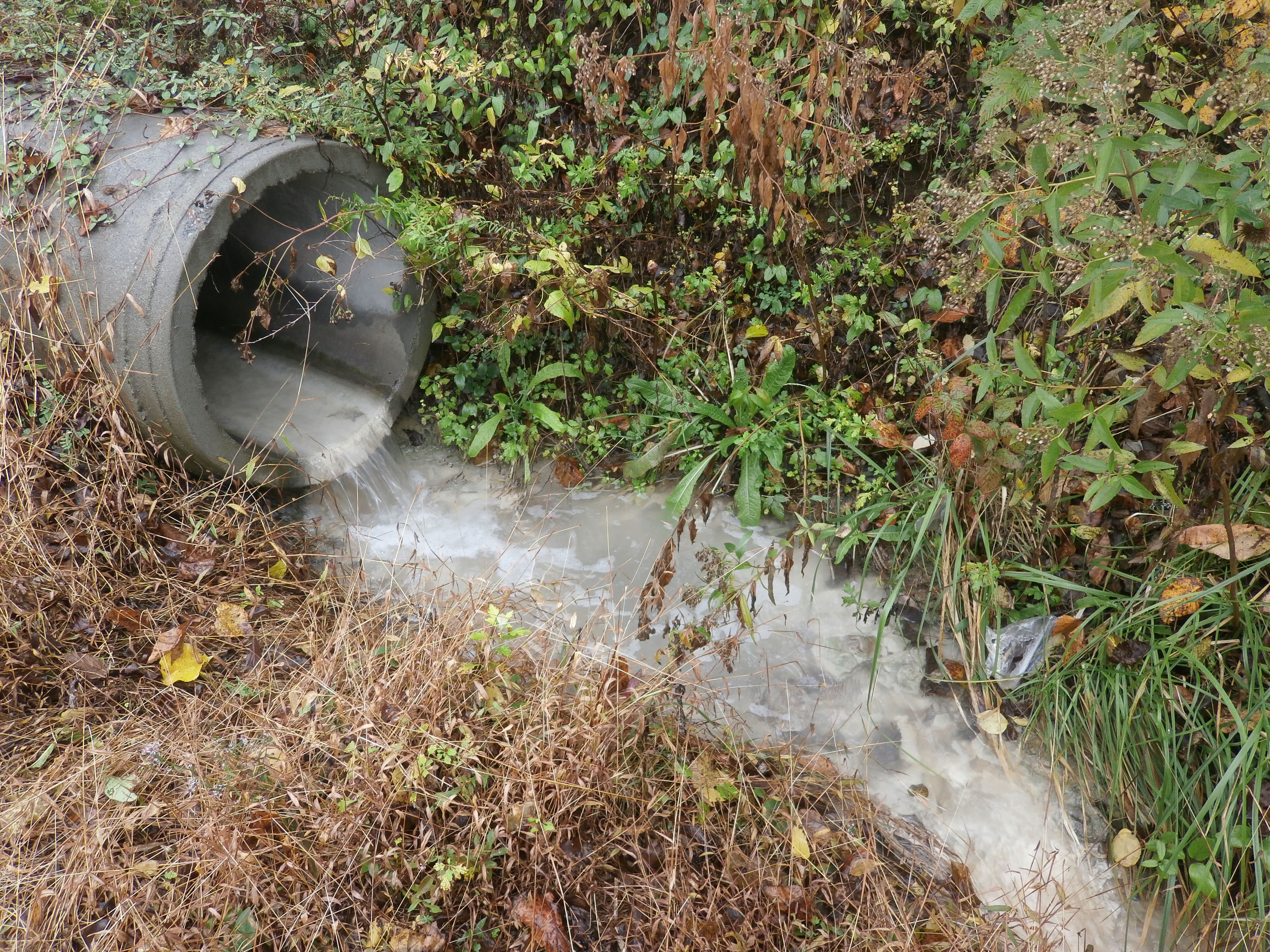
NPDES stands for National Pollutant Discharge Elimination System, the Clean Water Act permit program for anything discharged to a stream, storm sewer, or other water. DEP runs it in Pennsylvania. For most industrial facilities, it shows up as stormwater: if rain or snowmelt touches your industrial materials or activities outdoors and then leaves the site, you may need NPDES coverage. Our post on who needs a stormwater permit goes through the triggers.
PAG-03 is Pennsylvania's general NPDES permit for industrial stormwater. A general permit is a standardized permit that covers a whole class of facilities, so you apply by submitting a Notice of Intent to DEP instead of having a custom permit written for you. Facilities that discharge to High Quality or Exceptional Value waters can't use PAG-03 and need an individual NPDES permit. Facilities that keep everything sheltered from rain and snow may qualify for a No Exposure Certification, renewed every five years. We lay out the three options side by side in which NPDES permit you need.
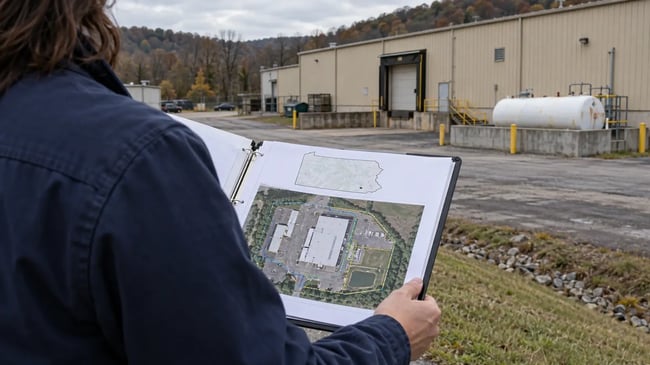
PPC stands for Preparedness, Prevention, and Contingency. A PPC Plan is the written plan Pennsylvania requires for PAG-03 coverage, and it does the job a SWPPP does in other states. It maps your drainage areas and outfalls, identifies pollutant sources, and lays out the controls you'll use. We compared the two in SWPPPs versus PPC Plans for PAG-03. Once you're covered, the work continues with stormwater sampling, inspections, employee training, and recordkeeping, and PAG-03 permittees report results through DEP's eDMR system. DEP can also show up unannounced, so it helps to know what happens during a PA DEP stormwater inspection.
Construction stormwater is a separate track under Chapter 102. If you disturb 5,000 square feet or more of earth, you need a written erosion and sediment control plan. At one acre or more, you also need an NPDES construction stormwater permit, which usually runs through the county conservation district. And if you have a spill or release that threatens a stream or storm drain, 25 Pa. Code 91.33 requires you to notify DEP right away by phone. DEP's guidance says to call when you're unsure, and our explainer on when you have to report an oil spill covers the common case.
When Does a Pennsylvania Business Need an Air Permit?
Air is the one program where the answer depends on what you're building, not just what you operate. In Pennsylvania, you generally need DEP approval, called a plan approval, before you construct or modify an air contamination source like a boiler, engine, generator, paint booth, or process line. After that you need an operating permit. DEP publishes a list of exemptions for smaller, lower-emitting sources, so a lot of equipment doesn't need a permit at all, but check the list instead of assuming. Larger facilities need a Title V operating permit, and many others get a state-only operating permit.
Two things catch people off guard. The first is timing. DEP's own guidance says it generally issues plan approvals within about 180 days, so buying equipment first and applying later can stall a project for months. The second is geography. If your facility is in Allegheny County or Philadelphia, the application goes to the Allegheny County Health Department or Philadelphia Air Management Services, not DEP. Emergency generators raise the question often, and we walked through the permit side in emergency backup generators and environmental permits.
What Do Tier II and TRI Chemical Reporting Require in Pennsylvania?
These two get lumped in with environmental permits, but they're reporting programs under EPCRA, and neither one goes through DEP. Tier II is an annual chemical inventory report due every March 1. In Pennsylvania, you file it online through the Pennsylvania Tier II System, called PATTS, run by the Department of Labor & Industry, and the information goes to the state, your county Local Emergency Planning Committee, and your local fire department. The federal thresholds are 10,000 pounds for most hazardous chemicals, and 500 pounds or the threshold planning quantity, whichever is lower, for extremely hazardous substances.
TRI, the Toxic Release Inventory, is a federal EPA program with a July 1 deadline. It applies only when three things are all true: your facility is in a covered NAICS code, it has 10 or more full-time-equivalent employees, and it manufactures, processes, or otherwise uses a listed chemical above its threshold. Plenty of small facilities owe Tier II and not TRI, so read Tier II versus TRI reporting before assuming you owe both. You can check which NAICS codes are subject to TRI in a couple of minutes.
Plenty of facilities file Tier II themselves, and we say so openly in our tips for doing your own Tier II reporting. For the full rundown, start with everything you need to know about Tier II reporting.
What Do Pennsylvania Environmental Violations and Compliance Cost?
Pennsylvania sets penalties program by program, and they're counted per day and per violation. The Clean Streams Law allows civil penalties of up to $10,000 per day for each violation. The Solid Waste Management Act and the Air Pollution Control Act each go up to $25,000 per day. On the federal side, the inflation-adjusted maximums under 40 CFR Part 19 are $68,445 per day for Clean Water Act violations and $124,426 per day for RCRA and Clean Air Act violations. Those are ceilings and real penalties usually land well below them, but a requirement missed for three months can be counted as ninety violations instead of one. Our violation cost calculator gives a rough picture for your situation, and the hidden costs of non-compliance covers the expenses that show up outside the fine itself.
For stormwater, DEP charges $500 for a PAG-03 application and $500 annually. Professional help with the full application usually runs about $5,000 to $10,000 for a straightforward site, with another $3,000 to $6,000 per year for ongoing support, and we break that down in how much a PAG-03 permit costs in Pennsylvania. For the other programs, here are the ranges RMA has published:
| Program |
Who Regulates It |
RMA's Published Price Range |
| PAG-03 stormwater application |
PA DEP |
$5,000 to $10,000, plus $3,000 to $6,000 per year |
| SPCC plan |
EPA |
$2,500 to $15,000 |
| Tier II reporting |
PA Labor & Industry |
$1,500 to $7,500 |
| TRI reporting |
EPA |
$2,500 to $8,500 |
An environmental audit, which is how a lot of facilities start, typically runs $3,000 to $7,500. SPCC pricing depends on tank count and site complexity, so our SPCC cost breakdown is worth a look before you request quotes.
We're not the cheapest option and we don't try to be. We've written about the risks of hiring the cheapest consultant because a rushed template plan usually gets expensive later.
How Can RMA Help With Pennsylvania Environmental Compliance?
RMA is a family-run firm that's been doing this since 1992. We're based in New Jersey and work with facilities across Pennsylvania and the rest of the country. Senior staff do the work themselves, and we don't use AI to produce client deliverables. For Pennsylvania facilities, that usually means working out which of the programs above apply, getting a PAG-03 or No Exposure Certification in place through our NPDES permitting service, writing a PPC Plan or SPCC plan, or handling your Tier II and TRI filings. Some clients hand us the whole thing through a full environmental program, and we offer an online training library for your team.
If you're not sure whether you need us, that's a perfectly good reason to get in touch. We'll tell you plainly if you don't, and plenty of the items in this article are things you can handle on your own. You can call, send an email, or fill out the form on our website, and there's no obligation either way. Whenever you're ready, contact RMA and tell us what's going on at your facility.