Where High Total Suspended Solids Come From at New Jersey Sites, and the Fixes to Try First, from Sweeping to Paving
You get your stormwater lab report back and the total suspended solids number is high again. TSS is basically sediment: dirt, sand, silt, and fine particles carried along in the water leaving your site. It's one of the most common stormwater problems we see at New Jersey facilities, and the good news is that it's usually one of the easier ones to bring down once you know where the dirt is coming from.
This article walks through the usual sources, including unpaved lots, bare soil, stockpiles, truck traffic, clogged drains, and construction areas, and then lays out fixes in rough order from cheapest to most expensive. We'll also explain why New Jersey's soils and spring weather make the problem harder here than it might be elsewhere. If you'd like help figuring out what's driving your numbers, you can reach out to RMA whenever you're ready.
Table of Contents
TL;DR
High TSS almost always means dirt is leaving your site with the rain. The usual sources are gravel and unpaved areas, bare soil and slopes, uncovered stockpiles, trucks tracking mud onto pavement, sediment sitting in drains and pipes, and any area where soil is being disturbed. Start with the cheap fixes, which are sweeping, stabilizing bare ground, and covering or containing stockpiles, then move to cleaning out catch basins, adding inserts or sediment traps, and finally paving or regrading if the problem is built into the layout of the site. New Jersey's fine, clay-rich soils and heavy rain make sediment easy to move and slow to settle, so a fix that works elsewhere may need to be more thorough here.
What Is TSS in Stormwater, and Why Does New Jersey Run High?
Total suspended solids is a lab measurement of the solid particles floating in a water sample. In stormwater, those particles are almost always soil and sediment, along with fine bits of whatever else your site leaves exposed, like aggregate dust, mulch, or ground-up pavement. Water that picks up a lot of sediment on the way to a storm drain shows up in the lab as a high TSS number, and that sediment can also carry other pollutants attached to the particles.
Two local factors push TSS up in New Jersey. The first is soil. USGS describes soils in the Piedmont, which covers much of the northern and central part of the state, as typically having less sand and more clay than Coastal Plain soils, with low infiltration rates, and the state's Coastal Plain is built on layers of clay, silt, sand, and gravel. Clay and silt particles are tiny, so once they're loose they stay suspended for a long time instead of settling out. The second factor is rain. New Jersey averages roughly 40 to 51 inches of precipitation a year depending on the region, and the state climatologist's monthly summaries show that a wet spring month can bring several storms of an inch or more. Spring also tends to be when ground that's been frozen or soaked all winter is bare, soft, and ready to wash. That combination of fine soil and hard rain is why sediment control takes more effort here than it does on sandier ground.
Where Does High TSS Come From at a New Jersey Facility?
Most TSS problems trace back to a handful of sources. If you walk your site during a rain, you'll usually see at least one of them in action, and the table below gives a quick way to spot each one.
| Source |
Why It Sheds Sediment |
What to Look For |
| Unpaved or gravel lots and yards |
Traffic grinds the surface into fines that wash away |
Muddy or tan water running off the lot, rutting, fine dust on dry days |
| Bare soil and eroding slopes |
No vegetation or cover holding the soil in place |
Rills and gullies, silt fans at the base of a slope |
| Material stockpiles |
Loose material sits in the rain with nothing around it |
Staining or spread of material downhill of the pile |
| Truck traffic tracking dirt |
Tires carry mud onto pavement, where rain moves it to drains |
Mud trails at the gate and along haul routes |
| Sediment in drains and pipes |
Old buildup gets stirred up and flushed out by new storms |
Catch basin sumps full of silt, sediment at pipe outlets |
| Construction or disturbed areas |
Soil is stripped, graded, or trenched and left exposed |
Fresh dirt, open trenches, or newly graded ground near drainage paths |
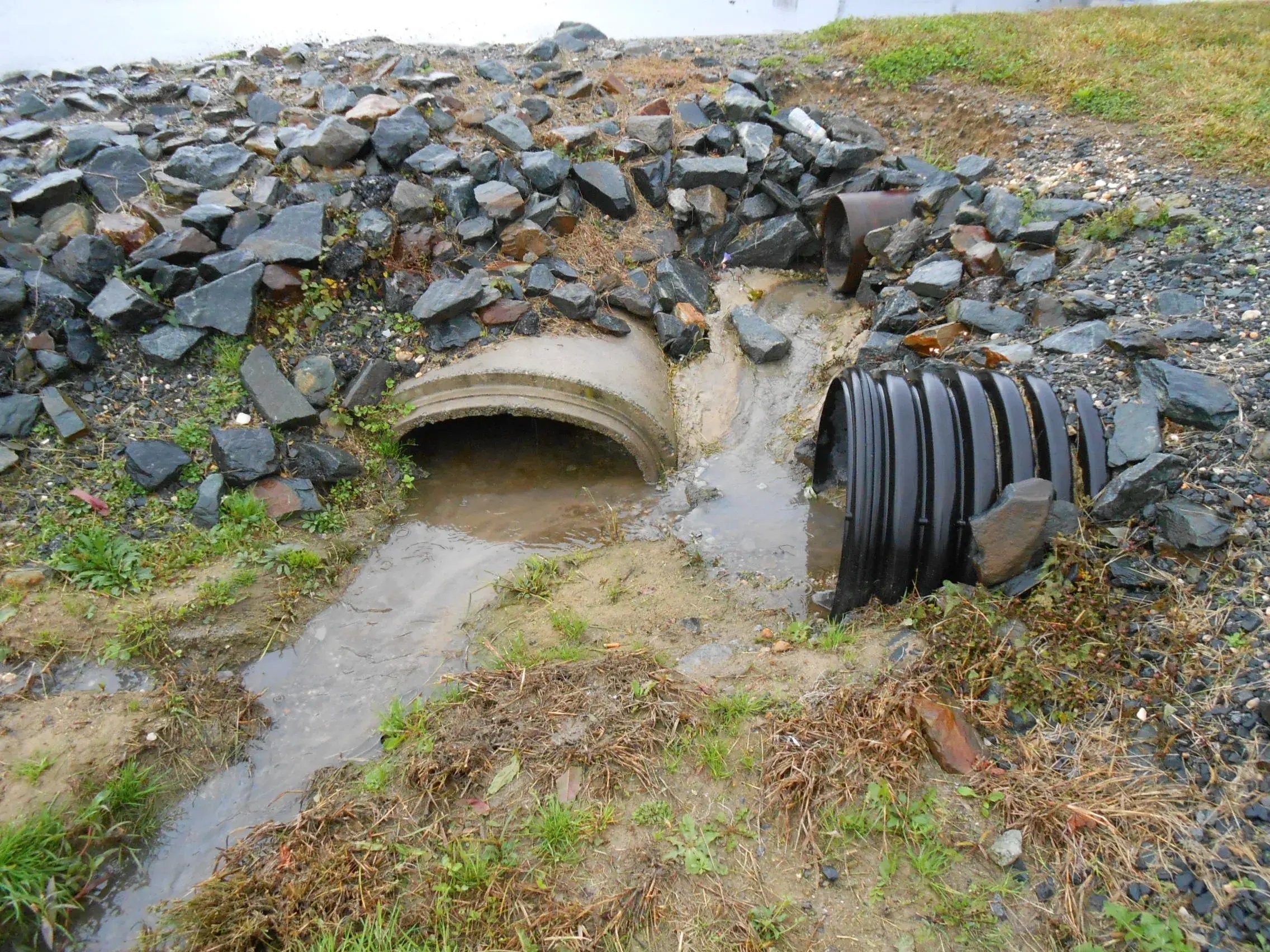
Gravel lots and unpaved yards deserve a particular mention because they look harmless. Gravel feels stable, but every truck pass crushes a little of it into powder, and that powder is the first thing rain carries off. Stockpiles work the same way. A pile of sand, soil, aggregate, or recycled material is a reservoir of loose particles, and a hard rain can pull sediment out of it faster than almost any other source on the site. Our post on RAP piles, aggregate, and tank areas under New Jersey's R4 permit shows how this plays out at an asphalt plant.
Drains and pipes are the source people overlook. Sediment settles in catch basin sumps and storm lines during small storms, and a big storm can lift that stored material and send it out in a single surge. If your TSS stays high even after you've cleaned up the surface, that built-up sediment is a likely culprit.
What About Construction Areas and TSS at an Operating Facility?
Building, expanding, or regrading part of a facility is one of the fastest ways to spike TSS, because soil gets stripped and left exposed. New Jersey handles that work under separate construction-phase requirements. Construction stormwater is covered by its own general permit, the 5G3, and soil erosion and sediment control plans are certified through the local Soil Conservation District. When the work involves major development, the state's stormwater management rules at N.J.A.C. 7:8 can apply as well. Your engineer, contractor, or a soil erosion specialist typically handles those pieces.
RMA doesn't prepare construction-phase permits or approvals, so we're not the right team for that part, though we can help you figure out what the construction phase needs and point you toward the right professionals. Where we do help is on the operational side. Once the facility is running, the plans, inspections, and sampling that your industrial permit calls for are our territory, and a project that disturbs soil near your drainage paths is a good reason to revisit your stormwater plan. That plan goes by several names. It's sometimes called an SPPP (NJDEP's term), an SP3, or just a stormwater plan, and we'll call it a SWPPP.
How Do You Find the Source of High TSS on Your Site?
Before you spend money, confirm the number is real. A sample scooped from the bottom of a puddle, taken with a stirred-up container, or collected where a truck just drove through can read much higher than what your site is really discharging. Our guides to taking good stormwater samples and the common reasons samples come back bad cover the technique side.
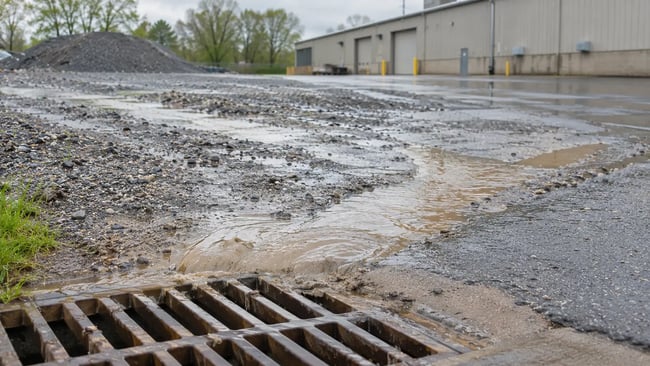
Once you trust the result, walk the site while it's raining, or right after. Follow the water from the roof or yard down to your discharge point and note every place it picks up color. Muddy water coming off a gravel yard, a brown trail from the gate, or a pile with a silt fan below it each point to a different fix. Our post on finding stormwater pollution sources for your SWPPP walks through the process, and our article on muddy or discolored water leaving your New Jersey lot helps you read what you're seeing.
The fixes below run from cheapest to most expensive. We're using relative cost here instead of dollar figures because the price depends so heavily on your acreage, access, and how much material is involved, and a quote from a local contractor is the only reliable number.
What Are the Lowest-Cost Ways to Reduce Stormwater TSS?
Sweeping is the first fix to try, and it's usually the cheapest. Industry guidance on TSS control consistently puts site sweeping and debris pickup among the most effective housekeeping practices, whether you use a push broom, a walk-behind sweeper, or a contracted vacuum sweeper. The goal is to pick sediment up before the rain moves it, so the routine matters more than the equipment. Sweep high-traffic paved areas, the gate, and anywhere trucks enter or leave, and do it ahead of forecast storms when you can.
Stabilizing bare areas comes next. Seed and mulch, a layer of stone, erosion control blankets, or a simple silt fence along a slope can keep a lot of soil in place for modest money. Stabilization is especially useful in New Jersey because of the clay-rich, fine soils described earlier, since those particles are the hardest to settle out once they're loose. Stabilizing early in the growing season also gives vegetation time to establish before the heaviest storms.
Managing stockpiles is the third low-cost step, and the principle is to keep material from meeting the rain at all. Cover piles with tarps or roofs where you can, keep them away from drains and slopes, place barriers such as berms or wattles around them, and keep the footprint as small as the operation allows. Industry guidance lists stockpile covers and mulch as common source controls because they stop particles before they ever become suspended solids.
| Fix |
Relative Cost |
Works Best For |
| Sweeping |
Lowest, mostly labor |
Paved areas, tracked dirt, light surface sediment |
| Stabilizing bare areas |
Low |
Bare soil, slopes, edges of yards |
| Managing stockpiles |
Low to moderate |
Sand, soil, aggregate, and recycled material piles |
| Cleaning catch basins and pipes |
Moderate, recurring |
Sites with years of buildup in the drainage system |
| Drain inserts and sediment traps |
Moderate to higher, with ongoing maintenance |
Known sediment pathways that can't be eliminated at the source |
| Paving or regrading |
Highest |
Yards and slopes that keep failing despite everything else |
When Do Catch Basin Cleaning, Drain Inserts, and Sediment Traps Make Sense?
If the surface looks clean and your TSS stays high, turn to the drainage system. Catch basin and storm line cleaning removes old sediment so it can't be flushed out in the next heavy storm, and it's one of the standard non-structural fixes for TSS problems. It's a recurring cost, since the basins refill, but a basin that's cleaned on a schedule does its job as a settling point instead of a source. Check how full the sumps are, and clean them before they reach the point where the next storm will wash material straight through.
Drain inserts and sediment traps are the next step up. Inserts sit in the catch basin and filter or capture solids before water moves on, and sediment traps or small settling areas slow the water enough for particles to drop out. Both only work if someone maintains them, and a full insert or trap does nothing. They make the most sense when you've found a specific pathway carrying sediment that you can't remove at the source, such as a drainage path that crosses a working yard. They also have limits with very fine clay particles, which are slow to settle, so we'd treat them as a backup to source controls instead of a replacement. If a treatment system or other engineered structure turns out to be the answer, that design belongs with an engineer.
When Do Paving and Regrading Fix a TSS Problem?
Paving and regrading are the most expensive options, and they make sense when the problem is built into the layout of the site. A gravel yard that sheds fines no matter how often you sweep, or a slope that erodes after every storm despite stabilization, may be telling you that the surface or the grade is wrong. Paving a heavily trafficked yard removes the source of crushed fines, though it also increases runoff volume and sends it somewhere, so the drainage downstream needs to work. Regrading can redirect flow away from bare areas or slow it enough to stop erosion.
Both of these involve earthwork, and earthwork can trigger the construction-phase requirements we described earlier, which RMA doesn't handle. We'd suggest trying the lower-cost fixes first, tracking your results over several storms, and moving to this step only when the numbers tell you it's needed. Our post on 5G2 best management practices and our general explainer on stormwater BMPs are good companions for choosing among the options.
How Does RMA Help With High TSS and Stormwater Sampling Results?
We help facilities work out why a TSS result is high, decide which fix fits the site, and make sure the stormwater plan and the permit paperwork reflect what's changed. We don't take your samples, because you know your site and storm timing makes it impractical for us to be there. Instead we train your team to sample correctly, then help you read the results, update your SWPPP, and keep up with annual requirements. Some clients want us hands-on and others just want a call when a number looks off. Whether a high TSS result is a problem at all depends on your permit. Our explainer on benchmark values and effluent limits covers that, and our post on what to do when sampling results are high covers the response in general.
We're not the right fit for major engineering design or treatment system construction, and if that's what your site needs, we'll tell you. If you're on the 5G2 and you're not sampling, there may be no TSS number to worry about. If you'd like to talk through your site or a result that has you wondering, you can call, email, or fill out the form on our website, and you can reach out to RMA with no obligation.