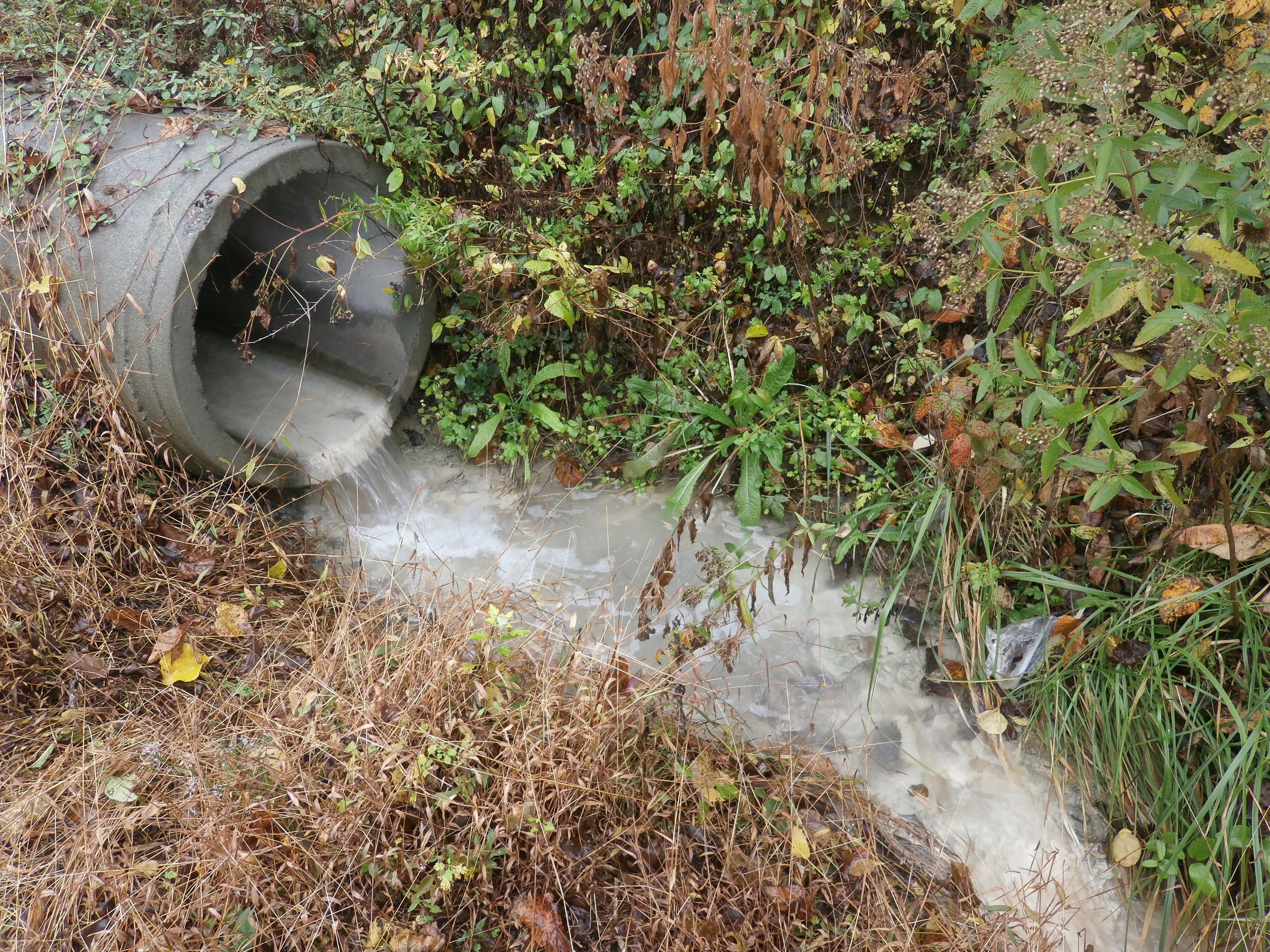
How PA DEP Treats Glass Plants, Raw Material Piles, and Industrial Stormwater Runoff
Pittsburgh was making glass before it was making steel. The first glasshouses opened along the rivers in the late 1790s, using coal, river sand, and nearby limestone, and by 1920 an estimated 80 percent of American glass came from Western Pennsylvania, eastern Ohio, and the West Virginia panhandle. Pennsylvania still makes glass, and those plants share a stormwater problem with their 19th century ancestors: loose, powdery raw material stored a few feet from a drain.
The short answer is that most glass manufacturers in Pennsylvania fall under DEP's industrial stormwater general permit, PAG-03, and the ones that keep everything indoors usually file a No Exposure Certification instead. Below we cover where the exposure comes from, the PAG-03 path, and how to keep batch materials out of your drains. If you'd like a second set of eyes on your site, you're welcome to reach out to RMA.
Table of Contents
TL;DR
Most glass plants in Pennsylvania need PAG-03 coverage because sand, soda ash, limestone, cullet, and dust sit outside where rain can reach them. A plant that keeps everything under cover can file a No Exposure Certification instead. Under PAG-03 you'll keep a PPC Plan, sample twice a year, and file annual reports.
Do Glass Manufacturers in Pennsylvania Need PAG-03 Stormwater Permit Coverage?
In most cases, yes. PAG-03 sorts facilities into sector appendices by SIC code, the four-digit industry code a facility is classified under, and glass manufacturing lands in Appendix N, Glass, Clay, Cement, Concrete and Gypsum Products. That covers flat glass (3211), glass containers (3221), pressed and blown glass (3229), and glass products made from purchased glass (3231).
A covered code doesn't settle it, though. Coverage turns on whether materials or activities are exposed to rain and snowmelt. A plant that keeps everything indoors or under roof can file a No Exposure Certification instead, which isn't available to facilities that discharge to High Quality or Exceptional Value waters. DEP doesn't allow partial certifications, so a fabricator working entirely inside a building could qualify, while a plant with outdoor sand bunkers and a cullet yard probably can't.
Two things can change the answer. A plant that needs an individual NPDES permit for non-stormwater discharges, such as process or cooling water sent to a stream, can't use PAG-03, and its stormwater is written into that permit. A plant whose runoff goes to a sewer may answer to the local sewer authority instead, which comes up in older cities with combined sewers, so confirm locally. Our guide on which Pennsylvania stormwater permit you need covers the decision.
Where Do Glass Plants Expose Raw Materials and Dust to Stormwater?
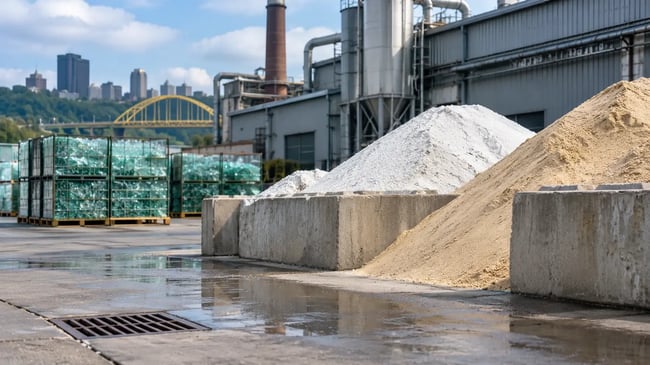
Glass starts as a dry batch of sand, soda ash, limestone, and cullet (crushed recycled glass), and every handoff from truck to furnace can leave some on the pavement.
| Area |
What can wash off |
Effect on runoff |
| Sand piles and bunkers |
Fine sand and silt |
Suspended solids |
| Soda ash and limestone storage |
Dissolved soda ash, limestone fines |
Alkalinity and solids |
| Cullet yard |
Glass fines, labels, caps, container residue |
Solids and debris that clog inlets |
| Batch house and conveyors |
Settled dust on roofs, trucks, and pavement |
One pulse of solids in the first hard rain |
| Fueling and equipment areas |
Diesel, hydraulic oil, and grease drips |
Oil and grease |
Soda ash dissolves in water, so unlike sand it doesn't settle out, and rain that touches an open pile carries alkaline water off the pad. Dust is the exposure that gets missed on site walks because it doesn't look like a spill. It builds for weeks, and the first heavy rain rinses it toward the nearest inlet at once. Ready-mix plants share Appendix N with glass and deal with similar dust and pH issues, as we explain in our post on ready-mix concrete plants.
What Does the PAG-03 Path Look Like for a Glass Manufacturer?
Coverage starts with a Notice of Intent (NOI) filed with the DEP regional office for your county, along with your PPC Plan, short for Preparedness, Prevention, and Contingency Plan. It's DEP's site plan for preventing spills and keeping pollutants out of stormwater. For a glass plant, that means marking every pile, silo, and cullet bunker on the site map, along with the inlets they drain toward. We compare it with other plans in our post on SWPPPs and PPC Plans under PAG-03.
Once you're covered, Appendix N sets the sector's best management practices (BMPs), which are the physical and housekeeping controls you run, along with your sampling. Sampling is generally semiannual, results go into DEP's electronic DMR system (see our guide to eDMR reporting), and every appendix now includes nitrogen and phosphorus monitoring. Parameters and benchmark values vary by appendix, so read Appendix N itself rather than borrowing numbers from another sector.
DEP charges $500 with the NOI, then $500 installments each March 23 starting after twelve months of coverage. A No Exposure Certification costs $500 every five years. The current PAG-03 runs through March 23, 2028. What a consultant adds depends on site size, outfalls, and whether a plan already exists, as we explain in what a PAG-03 permit costs in Pennsylvania.
How Do You Keep Glass Batch Materials and Dust Out of Storm Drains?
Cover first, contain second, clean third. Soda ash and limestone belong in silos, enclosed bins, or the batch house. A pile that has to stay outside goes on pavement under a roof or fitted cover, with a berm around the base so runoff can't leave the pad. Sand does better in three-sided bunkers than open heaps, and cullet is easiest to manage in lidded roll-offs.
Dust and tracked material need a schedule. Enclose conveyors and transfer points where you can, load and unload under cover, and sweep or vacuum truck routes on a set rhythm instead of hosing material toward a drain. Filter inserts at the inlets nearest your piles work as a backstop, and they need checking after each storm because they clog. After the first big rain, walk the yard and look for sand fans, sediment at the inlets, and staining downslope of the piles. Those marks show you where the cover isn't working.
Then write it into your PPC Plan, naming each pile, its cover, and who sweeps and how often, and train the people running the loaders. Our posts on stormwater BMPs and choosing BMPs for your PPC Plan go further. For your crew, our post on PAG-03 employee training covers what to teach, and our online training library has courses.
How Does RMA Help Pennsylvania Glass Manufacturers With Stormwater Permits?
We work with Pennsylvania facilities all the time. For a glass plant that usually starts with working out whether PAG-03, a No Exposure Certification, or something else fits, then preparing the NOI and PPC Plan and setting up sampling and eDMR reporting. If you'd rather file yourself, we've published a walkthrough on applying for PAG-03 on your own, and a simple site may not need us at all.
There's no obligation to talk it through. You can call, email, or fill out the form on our website, or contact RMA directly. For more reading, try our Pennsylvania NPDES resources, the broader NPDES library, and our Pennsylvania NPDES tag page.