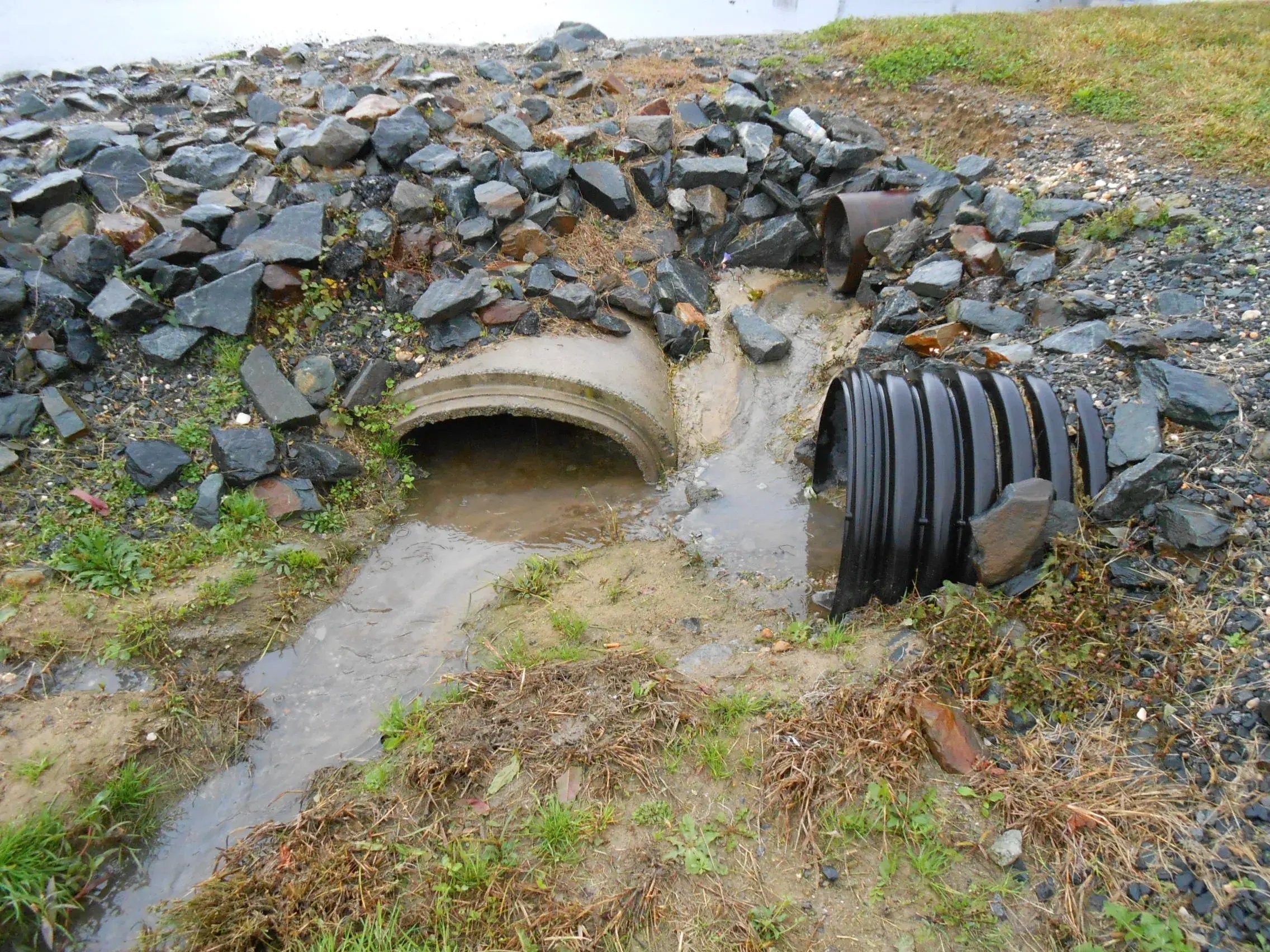
How NJDEP's Permanent No Exposure Certification Excludes Qualifying Industrial Facilities From Stormwater Permitting, What Qualifies, and What You File
If your whole operation happens under a roof, it's fair to wonder why the state would care about rainwater at your site. New Jersey regulates stormwater that runs off certain industrial facilities through NJPDES, the New Jersey Pollutant Discharge Elimination System, and the default expectation for a facility in a covered category is a permit from NJDEP, the New Jersey Department of Environmental Protection. There's a way out of that, though. A facility in a covered category can ask to be excluded by filing a Permanent No Exposure Certification, as long as every industrial material and activity at the site sits inside a permanent, fully roofed and walled building on a permanent foundation, with only a few narrow exceptions. It isn't a one-time fix, since you refile every five years and the exclusion ends the moment something industrial ends up outside.
This article walks through who can use the exclusion, what qualifies and what doesn't, how the certification works, how it compares with the Basic Industrial Stormwater General Permit (the 5G2), and what it takes to keep the exclusion once you have it. If you'd rather have a second set of eyes on your site before you sign anything, you can reach out to RMA, and we'll tell you straight whether you qualify.
Table of Contents
TL;DR
Yes. A New Jersey facility in a category NJDEP regulates can be excluded from industrial stormwater permitting by filing a Permanent No Exposure Certification, but only if all of its industrial materials and activities sit inside permanent, fully roofed and walled buildings on permanent foundations. A few items, like closed dumpsters, working vehicles, and sound pipe, can stay outside. You sign NJDEP's form and refile it every five years, and the exclusion doesn't transfer to a new operator or survive any change that puts materials back out in the rain. If part of your operation sits outside, you'll need a permit instead.
What Is Permanent No Exposure for Industrial Stormwater in New Jersey?
Start with the word "exposure." A material or activity is exposed when rain, snow, snowmelt, or runoff can touch it and then carry whatever it picks up to a storm drain, a stream, or into the ground. That's the reason industrial stormwater permits exist. NJDEP's concern isn't the rain itself, it's what the rain collects on its way off your property.
New Jersey's route out of the permit requirement is N.J.A.C. 7:14A-24.6, which uses the term Permanent No Exposure. Under that rule, an operating entity at an industrial facility doesn't need an NJPDES stormwater permit for discharges made up entirely of stormwater, provided all industrial materials are stored, and all industrial activities are performed, inside a permanent, fully roofed and walled building or structure on a permanent foundation. It's an exclusion rather than a permit, so NJDEP isn't authorizing anything. It's accepting that your site doesn't have the exposure the permit program is built to control.
New Jersey's standard is tighter than the federal version many people have heard of. EPA's conditional no exposure exclusion is built around a storm-resistant shelter, while New Jersey's wording asks for a permanent building on a permanent foundation. A tent, a tarp, or a roof over an open yard generally won't get you there. If you hold the exclusion, you aren't a permit holder, so permit duties like writing and following a stormwater pollution prevention plan, doing inspections, and sending in an annual certification don't apply to you. We call that plan a SWPPP, though NJDEP calls it an SPPP and you'll also hear SP3 or just "the stormwater plan." Our post on which NPDES permit you need lays out general, individual, and no-exposure options side by side.
Which New Jersey Facilities Can Claim Permanent No Exposure?
No exposure only comes up if you're in a category NJDEP regulates in the first place. New Jersey's industrial stormwater program covers facilities by the type of industrial activity they carry on. Manufacturing is the big one, along with many recycling and waste operations, mining and quarrying, and the maintenance, equipment cleaning, fueling, and deicing areas at transportation operations. Many warehouses, data centers, dealerships, and similar operations fall outside the covered categories, in which case there's nothing to exclude yourself from. Our post on how to determine whether your New Jersey facility needs an industrial stormwater permit walks through that first check. It's worth doing before anything else, because NJDEP can write to a facility it believes is regulated and ask it to apply for a permit, submit a no exposure certification, or explain why neither applies.
For a facility that is covered, the exclusion has limits written into the rule. It applies to the whole facility, not to one outfall or one drainage area, so you can't certify the warehouse side of a site and leave the yard out. Stormwater from construction activity isn't eligible. Municipal separate storm sewer system (MS4) operators, meaning the towns and agencies that run storm sewer networks, aren't excused from their own permit requirements by this section. And NJDEP can refuse the exclusion and require a permit application if it determines that a discharge causes, contributes to, or has a reasonable potential to cause a violation of surface water quality standards.
If you're building or expanding, keep construction and operations separate in your planning. The construction phase has its own requirements, including 5G3 construction stormwater coverage, Soil Conservation District soil erosion and sediment control certification, and stormwater management design for major development under N.J.A.C. 7:8. We don't prepare any of those, and they usually run through your engineer, contractor, or a soil erosion specialist. We can help you sort out what the construction phase needs and point you toward the right people. Once the building is up and running, the operational question takes over: a permit, or a Permanent No Exposure Certification if everything industrial will live indoors. That's the part we handle.
What Qualifies for Permanent No Exposure in New Jersey, and What Doesn't?
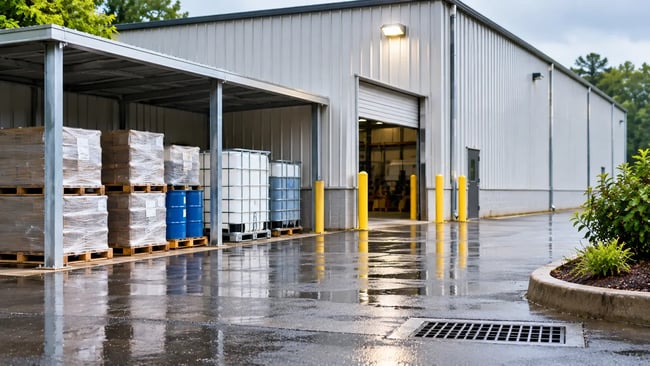
The test is simple to state and strict to meet. "Industrial materials and activities" covers a wide range, including equipment, machinery, raw and intermediate materials, by-products, finished products, and waste, along with handling activities like storage, loading, unloading, transport, and conveyance. All of it has to be inside a permanent, fully roofed and walled building or structure on a permanent foundation. A pallet of finished product stacked beside the dock counts. So does a piece of machinery parked in the yard for the winter.
The rule carves out three exceptions that can stay outside. The first is dumpsters and similar or larger rigid containers used only for routine collection and temporary storage of waste, as long as they're watertight, leakproof, covered, and free of visible residue on the outside. The second is vehicles in good, normal operating condition that are used for material handling. The third is pipe that conveys materials at or through the facility, as long as it isn't deteriorated or leaking. Pumps and inlet and outlet valves don't count as pipe, so those can't sit outside under this exception.
| What's on your site |
Likely result under the rule |
| Production, machining, and storage all inside a roofed and walled building on a foundation |
Meets the condition |
| Watertight, covered dumpster with a clean exterior |
Allowed outside under the exception |
| Forklift in good working order moving materials between buildings |
Allowed outside under the exception |
| Sound, non-leaking pipe carrying material around the site |
Allowed outside under the exception |
| A pump or valve sitting outdoors |
Doesn't fit the pipe exception |
| Pallets of product or raw material stacked outside, even if tarped |
Doesn't qualify |
| Open-sided canopy or roof with no walls |
Doesn't meet the roofed and walled test |
| Tent, trailer, or shipping container not anchored to a permanent foundation |
Generally doesn't meet the permanent structure test |
| Leaking or residue-covered dumpster, or a vehicle in poor condition |
Falls outside the exceptions |
Loading docks, trailers, and spots where work spills just outside a door cause the most debate, and the answer can turn on details of how material moves. NJDEP's form instructions list the kinds of situations that count as exposure, so read them line by line before you sign, and ask NJDEP's stormwater permitting staff about anything borderline. Our post on how to check your New Jersey facility for Permanent No Exposure goes through a site walk area by area.
How Does the Permanent No Exposure Certification Process Work in New Jersey?
Claiming the exclusion starts with the site, not the form. Confirm you're in a covered category, walk every building and the yard, and write down anything industrial that sits outside. Then complete NJDEP's Permanent No Exposure Certification Form, which the Division of Water Quality posts with instructions on its permit forms and checklists page under non-applicability of a stormwater permit. Form versions and filing routes change, so confirm the current form and how NJDEP wants it submitted with the stormwater permitting staff before you file anything.
The certification has to be on NJDEP's form, and the rule spells out what it contains. Most facilities move through the same sequence:
- Walk the site and confirm the condition exists today. The form certifies what's true when you sign, not what you plan to build next year.
- Fill in the operator's name, mailing address, and phone number, along with the facility's name, address, and location.
- Sign the certification the way N.J.A.C. 7:14A-4.9 requires. That rule governs who can sign certifications for a company, so check it before you pick a signer.
- Submit the form to NJDEP, and if your site discharges through an MS4, give that operator a copy when it asks.
By signing, you state that you've read and understand the eligibility requirements, that you've achieved Permanent No Exposure, that you understand your continuing obligations, and that you'll apply for a permit before any industrial stormwater discharge. That last promise has teeth, which we'll come back to below.
How the exclusion takes effect depends on where you start. A facility with no permit gets the exclusion as of the date NJDEP receives the certification, as long as the conditions are met. Filing isn't the end of review, though. NJDEP can inspect to verify your claim, inspection reports are available to the public on request, and if an inspector finds a condition unmet, NJDEP denies the exclusion and requires a permit application or a Request for Authorization (RFA). A certification signed on optimism instead of a site walk is a bad bet.
What if you already hold a permit, like the 5G2?
Facilities that already hold a permit follow a slower path. NJDEP has to inspect and confirm the conditions are met before it modifies or revokes your permit or authorization. If they are, the change takes effect as of the date NJDEP received your certification. Until NJDEP reaches a final decision, your permit stays fully in effect, including monitoring and reporting, so don't stop doing anything your permit requires just because you've submitted the form. If NJDEP finds the conditions unmet, it responds in writing with its reasons, and the permit stays in force. Our post on leaving the 5G2 when changes move you to a different New Jersey permit covers that switch in more detail.
NJDEP also keeps a Non-Applicability Form that facilities use to document why they don't need stormwater permit coverage, and it asks for the Permanent No Exposure Certification Form when no exposure is the reason. Ask NJDEP's stormwater permitting staff which form fits your situation before you file.
How Do You Keep a Permanent No Exposure Exclusion Valid in New Jersey?
The certification is a five-year commitment, not a lifetime pass. The rule requires the signed certification to go to NJDEP once every five years, so put the date on a calendar the day you file and leave yourself time to walk the site again before it comes due. The exclusion also doesn't transfer. A new operating entity has to file its own certification and meet the same conditions, which comes up when you buy a business, sell one, or bring in a new tenant.
The bigger risk is drift. Exposure creeps back through ordinary operations: a seasonal overflow of pallets in the yard, a new machine parked outside, a repair job that moves into the lot, a dumpster that starts to leak. If any industrial material or activity becomes exposed, other than the three exceptions, the exclusion no longer applies, a permit is required, and the discharge can be enforced as an unpermitted discharge until you obtain one. The rule tells operators who expect a change to apply for permit authorization before it happens, so loop in whoever approves expansion plans before anything gets moved outside. A short briefing for yard, shipping, and maintenance staff on what has to stay indoors helps, and our online environmental training library is one place to start.
Keep a copy of the signed certification as filed, along with anything NJDEP sends back. Landlords and customers sometimes ask for proof of your stormwater status, and our post on why a landlord might ask for your stormwater permit explains what to hand over.
Permanent No Exposure or a 5G2 Permit: Which Fits Your New Jersey Facility?
The exclusion trades lighter paperwork for a stricter standard. You skip the permit routine, but you accept zero tolerance for industrial materials and activities outdoors. The other options give you more room to work outside and ask for more in return.
| Option |
Fits when |
What it asks of you |
| Permanent No Exposure Certification |
Everything industrial is inside permanent, fully roofed and walled buildings on foundations, apart from the three exceptions |
A signed form every five years, no exposure at any time, and possible NJDEP inspection |
| Basic Industrial Stormwater General Permit (5G2) |
You've eliminated exposure, or can within six months of authorization, by covering materials or moving them inside |
An RFA, a SWPPP, best management practices, training, inspections, and an annual certification |
| Industry-specific general permit |
Your activity has its own NJDEP permit, such as concrete products, hot mix asphalt, mining and quarrying, sand and gravel, scrap metal, vehicle recycling, or wood waste and leaf composting |
Requirements vary by permit, so check the current permit document |
| Individual NJPDES permit |
You can't eliminate exposure and no general permit fits |
NJDEP tells you what it needs for your site |
If your site is nearly there, with a rack or two of material outside that you could move indoors, the exclusion can be worth closing the gap. If outdoor storage is a permanent part of how you work, or you expect to grow into the yard, the 5G2 or an industry-specific permit is the sturdier choice. Our posts on what the 5G2 is, who qualifies for it and who gets pushed to an industry-specific permit, and what 5G2 coverage costs to get and maintain go deeper on that side. Cost on either route depends on the permit category, the size and complexity of the site, and whether a stormwater plan already exists.
One more variable is where your drains go. If your site drains to a sewer instead of the street, a sewerage authority's rules may apply instead of, or alongside, an NJPDES stormwater permit, so confirm where your runoff ends up before you decide. Our post on businesses that drain to the sewer explains how that changes the picture.
How Can RMA Help With a New Jersey Permanent No Exposure Certification?
Plenty of facilities with a clearly indoor operation can complete the certification themselves, and we'll say so if that's you. Where we help is the judgment calls. We can walk the site with you, check each building and yard area against the rule, and tell you whether you qualify before you put a signature on anything. If you don't, we'll help you figure out which permit fits instead and what it would take to get there. For facilities that do qualify, we can help you fill out the form, keep the five-year date from sneaking up on you, and flag operational changes that could undo the exclusion. We're a New Jersey firm that works with NJDEP's permit categories every day, and the senior people who talk to you are the ones who do the work.
There's no pressure and no obligation. You can call us, send an email, or fill out the form on our website, and we'll start with a conversation about what's going on at your site. If you'd like to talk it through, contact RMA whenever it suits you.