Most Pennsylvania Electronics Plants Qualify for a No Exposure Certification, but You Still Have to File One
If you make circuit boards, cable assemblies, sensors, or other electronic components in Pennsylvania, you've probably wondered whether DEP's industrial stormwater rules apply to a clean, indoor operation. In most cases the answer is that you don't need the full stormwater permit, but you do need to deal with DEP. Electronics manufacturing is light manufacturing that happens almost entirely inside a building, which makes these plants strong candidates for a No Exposure Certification instead of permit coverage, as long as nothing industrial ends up outside where rain can reach it.
This article covers what "exposure" means, which things at an electronics plant can create it (outdoor chemical and solvent storage, waste containers, and outdoor equipment like cooling systems), why even a fully indoor plant generally still has to file, and what the filing involves. If you'd rather have someone walk your site with you, you can reach out to RMA anytime.
Table of Contents
TL;DR
Most Pennsylvania electronics manufacturers that keep everything indoors or under a real roof can file a No Exposure Certification with DEP instead of getting PAG-03 stormwater permit coverage. The certification is generally still required, even for a fully indoor plant. Outdoor chemical or solvent storage, open waste containers, and outdoor equipment that leaks can knock a plant out of eligibility. Filing costs a $500 DEP fee every five years, and existing plants also submit lab results for eight parameters.
Does an Electronics Manufacturer in Pennsylvania Need PAG-03 or a No Exposure Certification?
A few terms first. NPDES is the federal permitting system for discharges to waterways, and Pennsylvania DEP runs it here. PAG-03 is DEP's general permit for stormwater from industrial activity. A No Exposure Certification (NEC) is the alternative for covered facilities that keep all industrial materials and activities indoors or under roof, which is how DEP describes it on its industrial stormwater page.
Whether your plant is in the covered group depends on its primary SIC code, the Standard Industrial Classification number that describes what you make. Electronics manufacturing falls in the manufacturing codes, and DEP's PAG-03 notice of intent instructions list which codes and activities are subject to the permit, so check yours against that list. For a plant that's covered, there are two realistic paths: PAG-03 coverage, with its sampling, inspections, and a PPC Plan (the Preparedness, Prevention and Contingency Plan DEP expects), or the NEC. If your work really does happen indoors, the NEC is almost always the lighter route. We go through the full decision in our guide on which Pennsylvania stormwater permit you need, and our explanation of stormwater associated with industrial activity covers why DEP cares about this at all.
What Does No Exposure Mean for an Electronics Manufacturing Plant?
No exposure means rain and snowmelt never touch industrial materials or activities. Assembly, soldering, testing, and packaging all happen inside, so on paper an electronics plant is about as good a fit as you'll find. A clean roof over an indoor operation isn't the issue. What matters is everything else on the property.
DEP applies the test to the whole site. It won't approve no exposure for only part of a facility, so one drum of solvent by the back door counts against the entire plant. Things that are sealed and in good shape, like intact drums and tanks, don't need a shelter. Covered dumpsters that don't leak or drain are treated the same way. Tarps thrown over a permanent installation generally don't count as a shelter, and any washing has to happen indoors.
What Outdoor Conditions Can Disqualify an Electronics Plant From No Exposure?
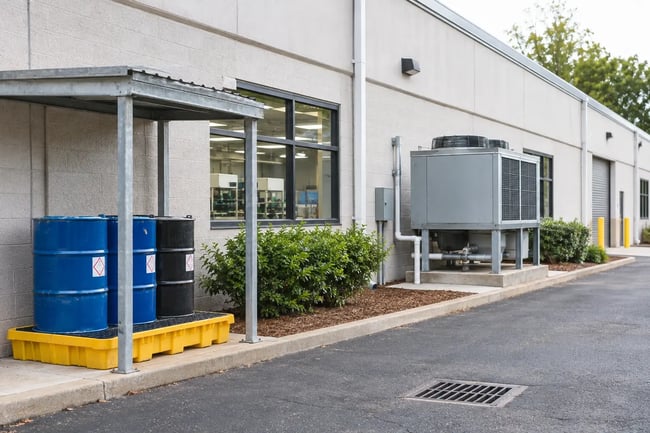
Electronics plants rarely have the big outdoor stockpiles you see at a foundry or a lumber yard. The problems tend to be smaller and easier to overlook, and they usually show up in three places.
| What's Outside |
Why It Can Create Exposure |
How Plants Stay Eligible |
| Chemical and solvent storage |
Drums or totes of cleaning solvents, flux, alcohols, coolants, or process chemicals kept outdoors. Containers that are open, damaged, or leaking aren't covered by the sealed-container allowance. |
Store them inside or under a permanent roof. If anything stays outside, keep it sealed and in good condition. |
| Waste storage |
Used solvent drums, production scrap, and spent chemicals. Dumpsters and roll-off boxes without lids don't qualify unless they're under a storm-resistant shelter. |
Use lidded containers in good shape that don't leak or drain, or move waste staging under a roof. |
| Outdoor equipment such as cooling towers, chillers, and compressors |
Equipment isn't its own line item in DEP's guidance, so the question is whether it can put anything into runoff: leaking oil, glycol, or treatment chemicals, or chemicals stored next to it. |
Keep equipment maintained, keep treatment chemicals and spare drums inside, and have someone look at it before you certify. |
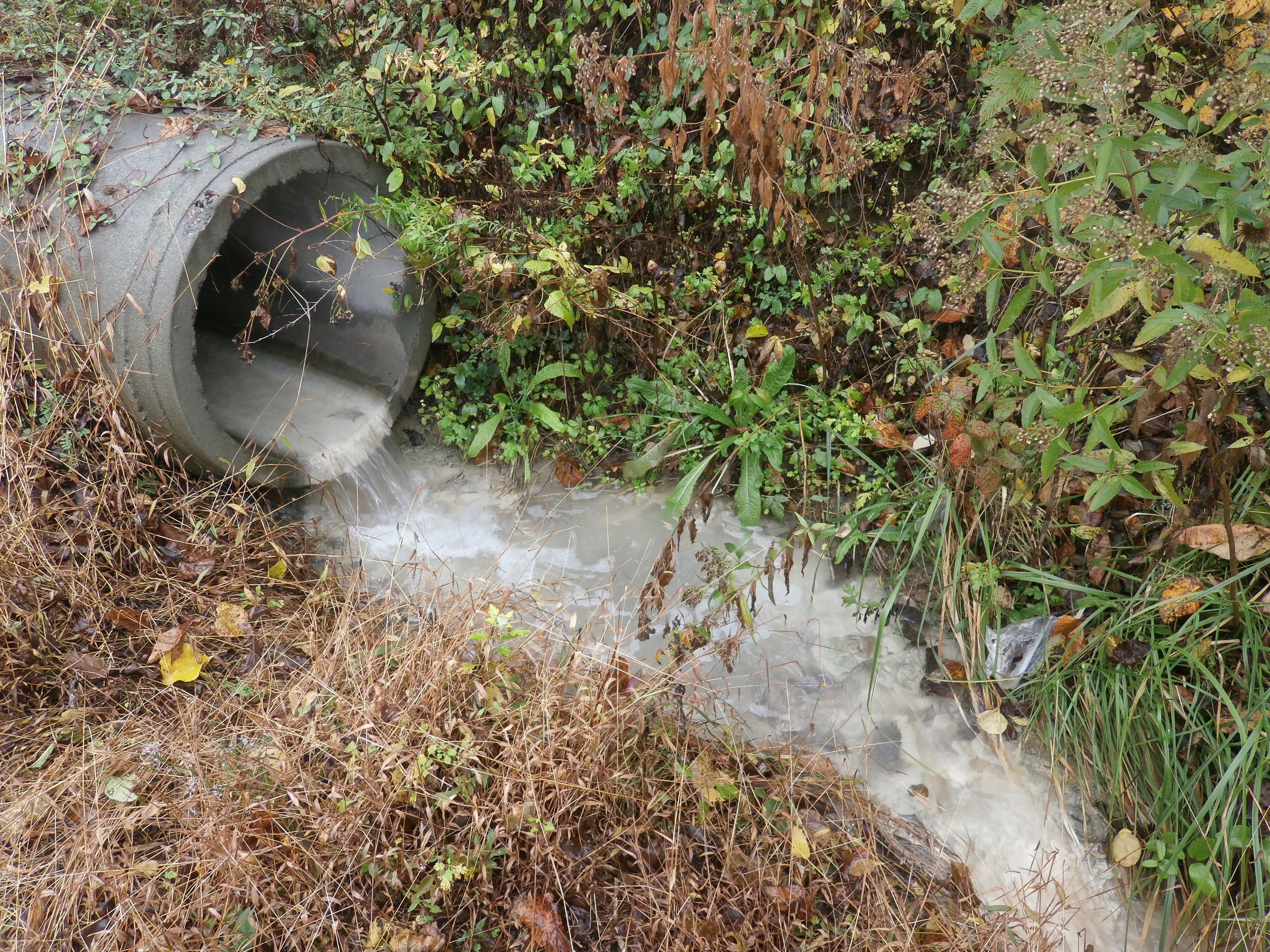
Any one of these can move a plant from a $500 certification to full PAG-03 coverage with sampling, inspections, and a PPC Plan. The easiest way to find them is to walk the property after a rain and look at what water touches on its way to a storm drain. Our walkthrough on identifying stormwater pollutant sources shows how to do that step by step. For a comparison with other indoor trades, see how the same questions play out for machine shops and pharmaceutical plants, which handle chemicals much the way electronics plants do.
Why Do Indoor-Only Electronics Manufacturers Still File a No Exposure Certification?
Because being indoors doesn't remove a covered facility from DEP's system. DEP's industrial stormwater FAQ gives listed facilities two options: get permit coverage, or get a No Exposure Certification approved. Nothing in it says an indoor-only plant can skip the filing. The NEC is the exclusion, but you have to apply for it, and DEP reviews the application and issues the certification.
That surprises a lot of facility managers, since a plant with no outdoor activity feels like it has nothing to report. It still has to show DEP that. A covered plant with no certification and no permit is simply unpermitted, even if every drop of rain that hits the property is clean. Indoor furniture and cabinet makers face the same filing.
Two caveats. If your SIC code isn't in the covered group, you may not need either one, so confirm that first. And local rules can differ. Where runoff goes to a combined sewer, for example, the sewer authority may govern it instead of a DEP stormwater permit, so check your own situation.
What Does Filing a Pennsylvania No Exposure Certification Involve?
You submit DEP's No Exposure Certification form (3800-PM-BCW0083e) together with the PAG-03 Notice of Intent (3800-PM-BCW0083b). New NEC applications also include DEP's General Information Form (0210-PM-PIO0001). Someone at the company signs the certification, so everything in it has to be true for the entire facility.
The fee is $500 every five years, with no annual NEC fee. A certification is generally valid for five years, and the renewal application is due at least 180 days before it expires. A PPC Plan is needed only if it applies to your site. Existing operating plants also have to submit sampling data, with lab results for the eight parameters listed in the NEC instructions, so it helps to collect your own samples before you file. Our guide to taking stormwater samples in Pennsylvania covers the mechanics.
Two situations stop the NEC cold. If your plant discharges directly to a High Quality or Exceptional Value stream, DEP can't approve a certification, and the plant has to go the individual permit route. And if your conditions change later so that something sits outside again, you have to tell DEP right away and file for permit coverage. To check eligibility before you start, use our article on determining whether your facility needs a PAG-03 permit.
How Does RMA Help Pennsylvania Electronics Manufacturers With Stormwater Permits?
We work with Pennsylvania facilities all the time, and electronics plants are usually one of the easier ones. We can walk your site with you, check your SIC code and eligibility, line up the sampling, and put the No Exposure Certification package together. If something outdoors rules the NEC out, we can help with PAG-03 coverage and the PPC Plan instead. If you're confident everything is indoors and you're comfortable with the forms, you can also file the certification yourself, and we're happy to tell you that up front.
There's no pressure and no obligation. You can call, email, or fill out the form on our website, and we'll give you a straight answer on what your plant needs. When you're ready, contact RMA.