How Federal Oil Spill Rules Apply to Landfill Fuel Tanks, Used Oil, Equipment Fueling, and Containment
A landfill is built to hold waste, so most of the regulatory attention goes to liners, leachate, and gas. The oil on the property gets far less thought: the diesel tank that feeds the compactors and dozers, the drums of hydraulic oil in the maintenance shed, the used oil waiting for pickup. Federal rules treat that oil the same way they treat it at any other industrial site, which means a New Jersey landfill can need an oil spill plan even though the waste it accepts has nothing to do with the requirement.
The short answer is that it depends on how much oil you store, not on what's in the cells. This article walks through how the federal oil spill rule, known as SPCC (Spill Prevention, Control, and Countermeasure), counts a landfill's oil, how it treats fueling of mobile equipment, what containment looks like, and where New Jersey adds its own layer. If you'd like a second set of eyes on your site at any point, you can reach out to RMA.
Table of Contents
TL;DR
A New Jersey landfill needs an SPCC oil spill plan when it stores more than 1,320 gallons of oil aboveground in containers of 55 gallons or more and a spill could reasonably reach a waterway. The rule counts the diesel tank, fuel trucks, hydraulic and used oil drums, and oil-filled equipment. It doesn't count the waste, leachate, or the fuel tanks built into your dozers and compactors, but it does cover how you fill them. New Jersey adds its own spill reporting and, for larger sites, discharge prevention plans.
Does a New Jersey Landfill Need an SPCC Oil Spill Plan?
A landfill needs a plan when it stores more than 1,320 gallons of oil aboveground, counting only containers of 55 gallons or more, and when a spill could reasonably be expected to reach navigable waters or adjoining shorelines. EPA Region 2 enforces the rule in New Jersey. The count is based on the capacity of each container, not what's in it today, so a 2,000-gallon diesel tank that's usually half full still counts as 2,000 gallons.
The rule looks only at oil. It doesn't regulate the waste you accept, so tonnage and waste type don't change the answer. A landfill with one bulk diesel tank, a fuel truck, and a handful of drums often crosses the line without anyone adding it up. The second test, the reasonable expectation of a discharge, looks at geography and ignores man-made features like berms. Many New Jersey landfills sit near streams, wetlands, or drainage ditches, and our post on the reasonable expectation of discharge explains why saying you're not near water rarely settles the question.
What Oil at a Landfill Counts Toward the SPCC Threshold?
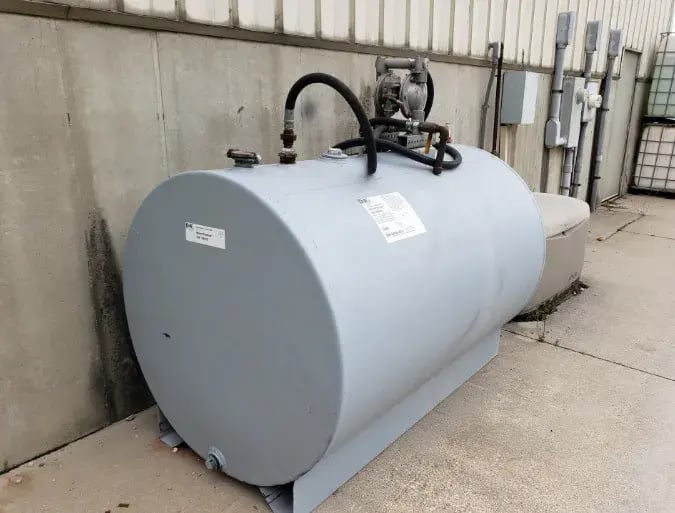
Add up every container of 55 gallons or more on the property, including the scale house, the maintenance garage, the gas system, and any standby generators. Used oil counts the same as new oil, and so do mineral, synthetic, and vegetable oils. Our guide on inventorying oil tanks, drums, and equipment is a good way to start, and the table below shows how the common landfill items sort out.
| Item at the landfill |
Counts toward 1,320 gallons? |
Why |
| Bulk diesel tank and dispenser |
Yes |
Aboveground container of 55 gallons or more |
| Fuel truck or skid tank (mobile refueler) |
Yes |
It's bulk storage, not a motive power container |
| Drums and totes of hydraulic, engine, or gear oil |
Yes |
55 gallons or more each |
| Used oil tanks and drums |
Yes |
Used oil is still oil |
| Transformers, compressors, and other oil-filled equipment |
Yes |
Oil capacity of the equipment adds in |
| Fuel tank built into a dozer, compactor, or haul truck |
No |
Motive power container exemption |
| Containers under 55 gallons |
No |
Below the container size that counts |
| Waste and leachate |
No, unless it's oil |
SPCC covers oil, and leachate falls under the landfill's own permits |
If your site collects used oil from residents or haulers, that storage can add up quickly. We cover the details in our post on whether used oil counts toward federal spill rules.
How Does SPCC Apply to Fueling Mobile Equipment at a Landfill?
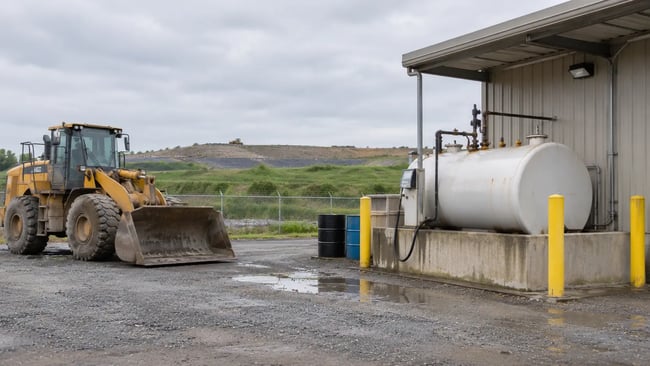
The fuel tank on a dozer or compactor is exempt from the capacity count, but the exemption stops at the machine. Filling that tank at a regulated facility is still covered, so the bulk tank, hose, dispenser, and fueling area all belong in the plan. The same goes for the tank truck that delivers diesel to your site, and our post on fuel delivery areas covers what inspectors look for there.
Many landfills fuel equipment at the working face with a fuel truck or skid tank instead of driving machines back to a tank. That mobile refueler counts toward your total capacity. It's exempt from the sized secondary containment that applies to stationary tanks, because it moves, but integrity testing and general containment measures still apply. In practice, the plan describes where the refueler parks, how operators prevent overfills and drive-offs, where spill kits are kept, and which drains, ditches, or stormwater features sit nearby. Our fleet post on fueling areas at fleet yards covers similar ground.
What Secondary Containment Does a Landfill Need, and What About Leachate?
A stationary bulk tank needs secondary containment that can hold the full capacity of the largest container, plus extra room for rainfall. The dike or basin has to be impervious enough to hold oil until someone can recover it. Drums and totes of hydraulic and used oil need the same thinking, usually spill pallets, a containment locker, or a covered berm for anything stored outdoors. Our guide to evaluating secondary containment shows how the sizing works.
Leachate is a separate question. Leachate tanks, sumps, and ponds hold liquid from the waste, not oil, so SPCC doesn't treat them as oil storage and they stay under the landfill's own permits. The overlap comes from the equipment around them. Leachate pump stations, gas collection compressors, and electrical gear can hold substantial oil, and that oil counts like any other. Our post on oil-filled equipment and the contingency plan option explains the options and why they aren't a shortcut.
How Do New Jersey Spill Rules Add to SPCC at a Landfill?
New Jersey's Spill Compensation and Control Act, known as the Spill Act, requires a discharge of oil or another hazardous substance to be reported to NJDEP, and the hotline is 1-877-WARNDEP (1-877-927-6337). The Spill Act also carries strict liability for cleanup, which is why a small diesel spill near a ditch deserves a fast response. Because this touches enforcement and liability, an environmental attorney can be the right call after a significant release.
Larger sites may also fall under N.J.A.C. 7:1E, which requires discharge prevention (DPCC) and cleanup (DCR) plans for "major facilities." Whether a landfill counts depends on its total storage capacity and what it stores, so check the rule against your own inventory. Our post on needing both an SPCC plan and a DPCC plan compares the two. On the federal side, a site at or under 10,000 gallons with a clean spill history may be able to self-certify, while larger sites generally need a Professional Engineer to review and certify the plan. Everyone who handles oil also needs annual training, and our online training library is one way to cover it.
How Can RMA Help With a Landfill SPCC Plan?
If you're not sure whether your landfill crosses the 1,320-gallon line, start by adding up your tanks, trucks, and drums. If the number is close or over, we can help you confirm it, write the plan, and set up the inspections, containment, and training that go with it. We're based in New Jersey and work with facilities across the state on SPCC and the New Jersey rules that sit on top of it. If you'd rather hear that you don't need a plan, we'll tell you that too.
There's no pressure and no obligation. You can call us, email us, or fill out the form on our website, and you can always reach out to RMA with a quick question first.