Scrap Yard Oil Spill Plans in New Jersey: Hydraulic Oil, Diesel, Used Oil, and Drained Fluids
A scrap yard doesn't look like a place that stores oil the way a fuel depot does, but walk the yard with a clipboard and the oil adds up fast. Balers, shears, and shredders run on hydraulic systems that hold hundreds of gallons. A diesel tank feeds the loaders and material handlers. Somewhere near the shop there's a used oil tank, plus drums of hydraulic fluid and motor oil, plus whatever comes out of the vehicles and machinery you drain. Add it all up and most New Jersey yards land over the line where federal rules require a written oil spill plan.
In short, if your yard can hold more than 1,320 gallons of oil in containers of 55 gallons or more, and a spill could reasonably reach a storm drain, ditch, or waterway, you need an SPCC plan. Below we cover how to count your oil, how to contain drained fluids, and how a spill turns into a stormwater problem. If you'd like to talk it through with someone, you can reach out to RMA at any point.
Table of Contents
TL;DR
Most New Jersey scrap yards need an SPCC plan. Hydraulic reservoirs on stationary balers and shears, diesel tanks, used oil tanks, and drums of 55 gallons or more all count toward a 1,320-gallon threshold, measured by container size and not by how full each one is. Drained fluids need containment, and a spill that reaches a storm drain is also a stormwater permit problem and a Spill Act reporting duty. A yard below the threshold may not need a plan, but it still has to prevent and report spills.
Do New Jersey Scrap and Recycling Yards Need an SPCC Plan?
For most yards, yes. The federal oil spill rule, 40 CFR Part 112, applies to a facility when two things are true. First, the facility can hold more than 1,320 gallons of oil in aboveground containers of 55 gallons or more. Second, a spill could reasonably be expected to reach a navigable water or its shoreline. In New Jersey that rule is enforced by EPA Region 2, and the document it requires is called an SPCC plan, short for Spill Prevention, Control, and Countermeasure plan. It's a written plan, specific to your yard, that shows where your oil is, how it's contained, how you inspect it, and what your people do when something leaks.
Scrap yards cross the first line more easily than their owners expect, because the oil sits in places nobody thinks of as storage. A baler's hydraulic reservoir, a shear's power unit, and a shredder's lube system all count. So do the diesel tank by the scale house and the used oil tank behind the shop. Most yards we talk to have never added these up in one place, and the total is usually a surprise.
The plan itself comes in a few forms. A smaller yard under 10,000 gallons of total oil storage with a clean spill history may be able to self-certify as a qualified facility. Larger or more complicated yards need a Professional Engineer to review and certify the plan. New Jersey adds its own layer on top, because the Spill Act requires immediate reporting of discharges whether or not you have a federal plan, and larger "major facilities" must also prepare DPCC and DCR plans for NJDEP. Most scrap yards sit below the major facility level, but that depends on your total storage of petroleum and other hazardous substances, so check N.J.A.C. 7:1E against your own inventory. For the wider picture, see how SPCC works in New Jersey.
What Oil Counts Toward the 1,320-Gallon Rule at a Scrap Yard?
The rule counts capacity, not contents. A 500-gallon diesel tank holding 40 gallons counts as 500, and an empty 275-gallon tank still counts. Only containers of 55 gallons or more go into the total, so five-gallon pails and small cans don't. "Oil" also covers more than fuel. Under the rule it includes hydraulic oil, lube oil, transmission fluid, synthetic oils, and used oil, which is why the 1,320-gallon rule deserves a careful read before you do the math.
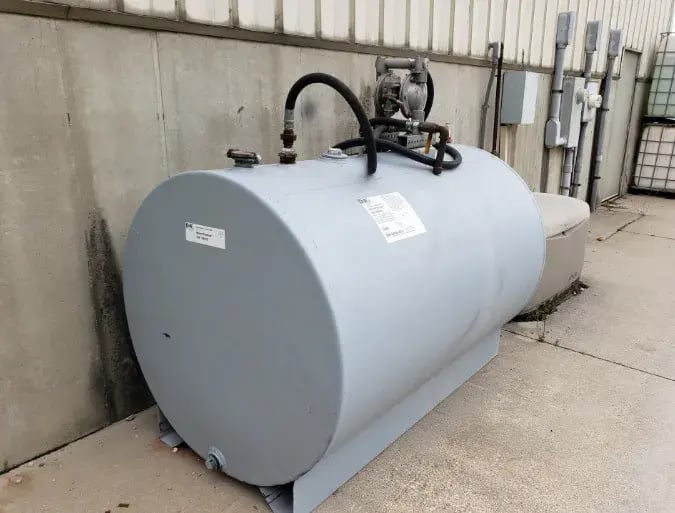
Stationary hydraulic equipment is where scrap yards differ from a typical shop. The reservoirs on balers, shears, shredders, and similar processing machines count toward your total. EPA calls these oil-filled operational equipment, a category separate from storage tanks, and the rule handles their containment differently (more on that below). If the equipment is mobile, the picture changes. Fuel tanks and onboard hydraulic systems on loaders, excavators, and trucks fall under the "motive power container" exemption and don't count. The catch is that fuel you pour into those machines from a yard tank isn't exempt, so the fueling area is still covered. Mobile refuelers and fuel trailers parked in the yard do count.
Vehicles and machinery waiting to be processed add another wrinkle. Oil still inside a vehicle isn't counted, but once you drain it into a drum or tank, that container counts at full capacity. The same goes for any used oil counts toward the threshold. The table below shows how an example yard might add up. The numbers are illustrative, but the pattern is common: a few large hydraulic systems, one bulk fuel tank, and a used oil tank get you most of the way there.
| Container |
Example capacity |
Counts toward 1,320 gallons? |
| Baler hydraulic reservoir (stationary) |
150 gallons |
Yes |
| Shear hydraulic power unit (stationary) |
200 gallons |
Yes |
| Aboveground diesel tank |
1,000 gallons |
Yes, at full capacity |
| Used oil tank |
275 gallons |
Yes |
| Two 55-gallon drums of hydraulic oil |
110 gallons |
Yes |
| Five-gallon pails of motor oil |
Under 55 gallons each |
No |
| Fuel tank on a wheel loader |
Varies |
No, motive power container |
| Total counted |
1,735 gallons |
Over the threshold |
Your own total will differ, and a few close calls (a towed fuel trailer, a standalone hydraulic power unit) are worth a second look. A written oil inventory listing each container, its oil type, its shell capacity, and its location is the starting point for the plan and for any later amendment when equipment changes.
Why Does Distance From Water Rarely Exempt a Scrap Yard From SPCC?
Facilities sometimes assume the second SPCC condition, the reasonable expectation of a discharge reaching navigable waters, doesn't apply to them because the river or creek is a few blocks away. The rule doesn't work that way. Under 40 CFR 112.1, that call is made only from geography, meaning your distance to water, the lay of the land, and how your site drains. Dikes, berms, curbs, and other manmade features can't be counted in your favor.
Scrap yards tend to fail that test. They're large open sites, often partly paved and partly not, with storm drains, swales, and ditches built to move water off the property quickly. Many New Jersey yards sit along tidal creeks, industrial channels, and rivers, and a storm drain that leaves your property usually leads to one of them. Oil that reaches a drain doesn't need to be near the water to end up in it. Our post on the "we're not near water" argument rarely works covers how EPA looks at this and why it works against most industrial sites.
How Should a Scrap Yard Contain Drained Fluids and Used Oil?
Bulk oil containers, meaning tanks and larger drums and totes, need secondary containment sized to hold the largest single container plus an allowance for rain when the area is uncovered. That's the baseline. For a tank, containment usually means a dike or a double-walled design with the right details, and our guide to sized secondary containment walks through how the sizing works. For drums and totes, spill pallets, containment lockers, and berms can all do the job when they're sized correctly.
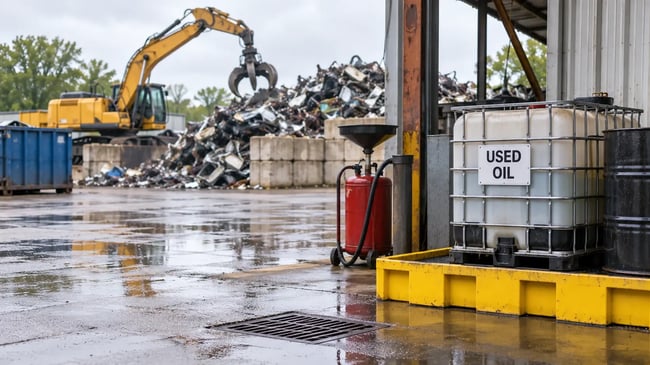
The harder spots at a scrap yard are the places where oil moves, not the places where it sits. Fluid draining is the clearest example. Draining vehicles or machinery means hoses, pans, and funnels, and a full pan on uneven ground is one bump away from a spill. A sound drain station sits on an impervious surface, ideally under cover, with drip pans that get emptied into closed, labeled containers at the end of every shift. Used oil should be kept in containers marked "Used Oil" under New Jersey's used oil rules and not mixed with other fluids. Antifreeze, brake fluid, and battery acid stay in their own containers, and keep in mind that the Spill Act covers hazardous substances beyond oil, so a leak from one of those carries its own reporting question.
Hydraulic equipment has a separate path. Instead of building containment around a baler or shear, a qualifying facility can use the contingency plan option under 40 CFR 112.7(k), which replaces the physical barrier with documented inspections, trained staff, and a written spill response commitment with stocked materials. It's not a shortcut. The three-year spill history for that equipment decides eligibility, and a yard with leaky hose fittings may not qualify. Either way, the plan should cover the spots where trucks unload fuel or pick up used oil, plus properly stocked spill kits near the places spills are most likely to happen.
Training and inspection keep all of this working. Employees who handle oil should understand the plan, know where the kits and drain covers are, and know who to call, and the yard should hold an annual discharge prevention briefing and keep records of it. Our online training library has courses that cover the training side.
How Does a Scrap Yard Oil Spill Become a Stormwater Problem?
Scrap yards are among the facilities with specific industrial stormwater requirements. In New Jersey, scrap metal operations typically hold coverage under the NJPDES Scrap Metal general permit (SM2), and vehicle recycling operations under the Vehicle Recycling general permit (RVR). NJDEP put these operators on notice in an October 2025 compliance advisory about having the right stormwater permit in place. EPA's fact sheet for scrap recycling facilities lists leaks from hydraulic reservoirs, fuel tanks, and hose fittings among the common sources of stormwater pollution at yards like these, so the oil you're counting for SPCC is the same oil your stormwater permit is concerned about.
One spill can therefore trigger three separate sets of duties. The SPCC plan covers how oil is stored, contained, and cleaned up. The stormwater permit covers what leaves the site with runoff, including the best management practices, inspections, and housekeeping you've committed to. The Spill Act covers reporting and liability. These are different documents with different regulators, which is why many yards end up with an oil spill plan and a stormwater plan that don't agree with each other. Our comparison of an SPCC plan and a SWPPP explains where they overlap and where they don't.
In practice, the fixes are mostly shared. Keep oil-bearing equipment away from storm drains or protect the drains with covers and absorbent barriers. Clean up drips as they happen instead of letting them wash off in the next rain. Cover stockpiles and drain stations where you can. And have the same person look at both plans whenever equipment moves or a new container goes in. If you want to know how a yard's stormwater permitting obligations fit alongside oil spill planning, that's a good place to start.
What Does a Scrap Yard Do When an Oil Spill Happens in New Jersey?
Safety comes first. If there's a fire, an injury, or a release too large to handle, call 911 before anything else. If it's safe to do so, stop the source, contain the spill, and protect the nearest storm drain with covers or absorbents from your kit.
Then comes reporting. The Spill Act requires the person responsible for a discharge of petroleum or another hazardous substance to notify NJDEP immediately through its hotline, 1-877-WARNDEP (1-877-927-6337). Federal reporting runs separately. If oil reaches or threatens a navigable water, including a sheen on the surface, it has to be reported to the National Response Center, and certain larger or repeated spills also require a written report to EPA Region 2. Our posts on the sheen rule and on the written report to EPA Region 2 explain what triggers each one and what to submit.
Spill Act liability is broad. Without getting into legal conclusions, it can reach the person who caused a discharge and the owner or operator of the property, and cleanup costs can climb quickly when oil gets into soil or groundwater. A significant discharge often calls for a Licensed Site Remediation Professional (LSRP) to direct the cleanup, and it's reasonable to involve an environmental attorney when a discharge is large or when enforcement is possible.
How Does RMA Help Scrap and Recycling Yards With Oil Spill Plans?
We start by walking your yard, or going through your equipment list if you'd rather do it remotely, and counting what's there. If you're under the threshold, we'll tell you so, and you may not need a plan at all. If you're over, we build the plan around your actual layout, with your drain stations, fueling points, and hydraulic equipment shown where they really are, and we arrange for a Professional Engineer to review and certify it when your yard requires that. We can also help line up your plan with your stormwater permit so the two documents tell the same story.
Costs depend on your total storage capacity, how many containers and pieces of equipment you have, whether the plan needs PE certification, and whether your containment needs evaluation. SPCC plans from RMA typically range from $2,500 to $15,000, and our SPCC pricing calculator gives you a closer number for your situation. If you have questions, you can call us, email us, or contact us through the website. There's no obligation, and we're happy to talk through where your yard stands before you decide anything.