Why Most Dealerships Don't Fall Under PAG-03, and the Used Oil, Wash Water, and Tank Rules That Still Apply to Your Service Department
If you run a car dealership in Pennsylvania, you've probably heard that businesses with industrial activity need a stormwater permit from DEP, the Pennsylvania Department of Environmental Protection, and wondered whether a lot full of cars and a busy service department puts you in that group. For most dealerships, the answer is no. A dealership is a retail business, and PAG-03, DEP's general permit for industrial stormwater, is written for industrial categories that don't include selling cars.
That doesn't mean your service department is off the hook. Used oil, parts cleaners, wash bays, and oil or fuel tanks each come with their own rules, and those are the areas where dealerships tend to run into trouble. Below we explain why PAG-03 usually doesn't apply, what could change that, and what to watch in each of those areas. If you'd like a second opinion on your own site, you can reach out to RMA, and we'll tell you plainly whether you need anything from us.
Table of Contents
TL;DR
Most Pennsylvania car dealerships don't need a PAG-03 stormwater permit, because selling and servicing cars isn't one of the industrial categories the permit covers. A salvage or used-parts operation, or a separate covered business on the same property, can change that. Either way, service departments still have to manage used oil, solvents, wash water, and any larger oil or fuel tanks correctly, and wash water should never go down a storm drain.
Does a Pennsylvania Car Dealership Need a Stormwater Permit?
PAG-03 is the general permit DEP uses for stormwater associated with industrial activity. Which facilities need it comes from a federal rule, 40 CFR 122.26(b)(14), that lists industrial categories, mostly by SIC code. A SIC code is a four-digit number that classifies what a business does. New and used car dealers fall under SIC 5511, which is retail trade, and retail car sales isn't a covered category. A typical dealership that sells and services vehicles therefore has no PAG-03 requirement. It also doesn't file a No Exposure Certification, because that certification is for facilities that would otherwise need permit coverage and can show their industrial materials stay out of the rain.
The service department is the part that makes people nervous. Vehicle maintenance does count as industrial activity under one federal category, but only for transportation facilities in SIC codes 40 through 45, such as trucking companies, bus garages, and airports. A dealership's service bays don't sit in that group. If you want to see how that category plays out for businesses that are in it, our articles on trucking companies and school bus garages show the contrast. For the broader question of how DEP sorts facilities between PAG-03, an individual permit, and No Exposure, start with our guide on which Pennsylvania stormwater permit you need.
Building a new dealership or expanding a lot is a separate question. Earth disturbance of one acre or more generally needs construction stormwater coverage under DEP's Chapter 102 rules, and smaller projects can still need an erosion and sediment control plan. We don't prepare those construction-phase approvals, and your engineer or site contractor usually handles them. We can help you work out what the construction phase needs and point you to the right people. Where we help is the operational side once the showroom is open, which is what the rest of this article covers.
What Could Change the Dealership Stormwater Permit Answer?
A few situations move a dealership out of the usual "no permit" answer, and it makes sense to check each one against your own property. The deciding factors are the SIC code of the activity and what's happening outdoors where rain can reach it.
| Situation |
Why It Can Change the Answer |
| Salvage, dismantling, or used parts sales on site |
Salvage yards and automobile junkyards, including SIC 5015, are a covered category under the federal rule. Our article on Pennsylvania salvage yards covers what DEP expects. |
| A separate business on the same property |
A fleet with its own maintenance garage or an upfitting or manufacturing shop is judged by its own activity, not by the dealership next to it. |
| Polluted runoff leaving the site |
DEP has authority to require permit coverage for a site it finds is contributing pollution, even when the site isn't in a listed category. |
| Local stormwater rules |
Townships, boroughs, and cities can have their own stormwater ordinances, fees, and approvals. Confirm what applies in your municipality. |
Not needing a permit also doesn't mean runoff is unregulated. Pennsylvania's Clean Streams Law prohibits pollution of state waters whether or not you hold a permit, so a fluid leak that washes off your lot is still your problem. Our NPDES permitting resources library has plain-English articles on how DEP and EPA define industrial stormwater, and our article on warehouses and distribution centers walks through the same SIC code logic for another business that's often not covered.
How Should a Dealership Handle Wash Bay and Vehicle Wash Water?
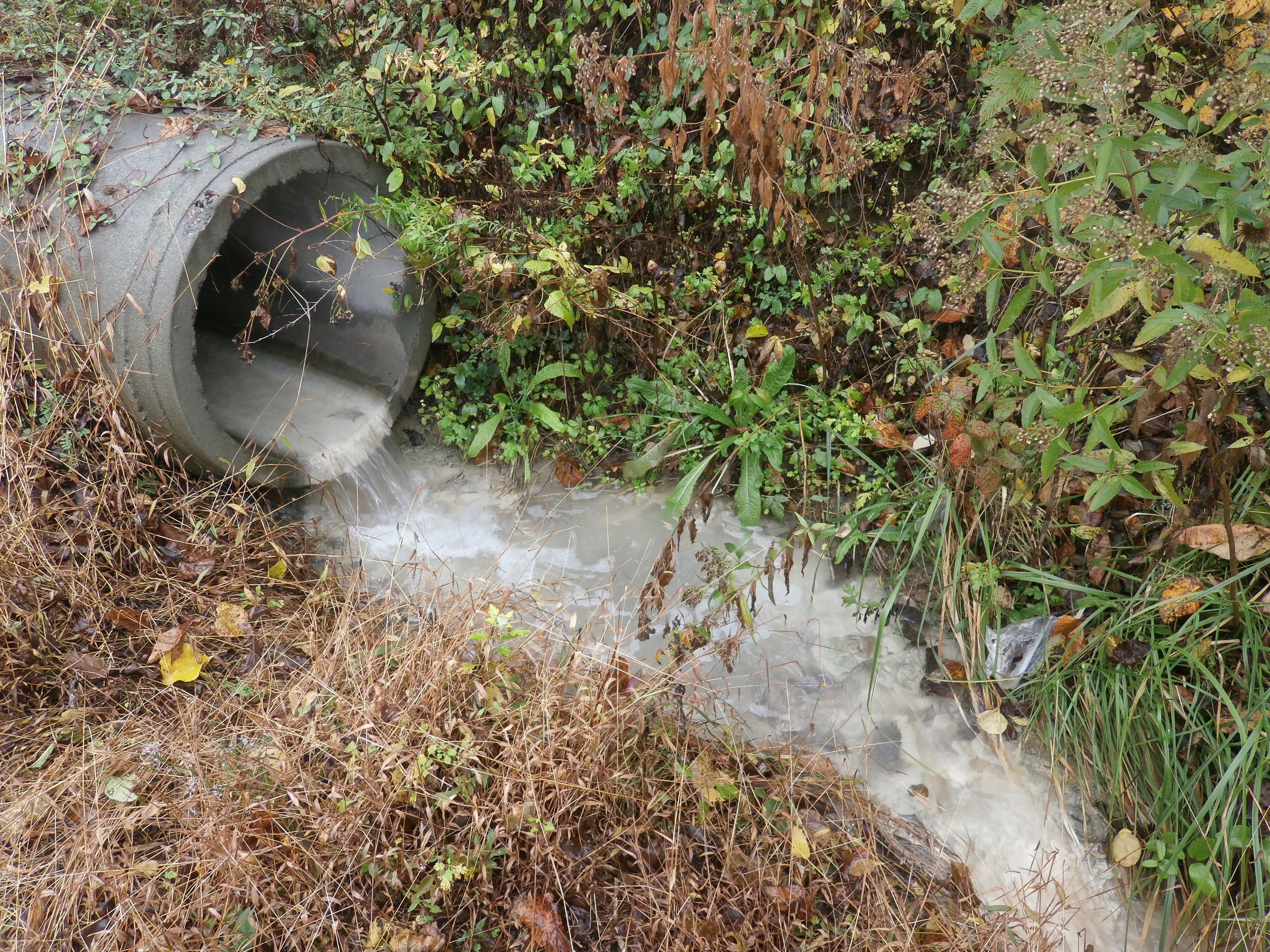
Wash water is wastewater, not stormwater, and DEP treats the two very differently. Soap, degreasers, road film, oil, and grease rinsed off vehicles can pollute a stream, and a storm drain usually leads straight to one with no treatment on the way. DEP's fact sheet on vehicle and car wash wastewater says discharges to storm sewers should generally be avoided. Its preferred approach is to collect the water and reuse or recycle it, which typically doesn't need a permit. Its next-best option is sending it to a public sewer, though the sewer owner's approval may be required first. Our article on the difference between stormwater and process water explains why that distinction drives so many compliance problems.
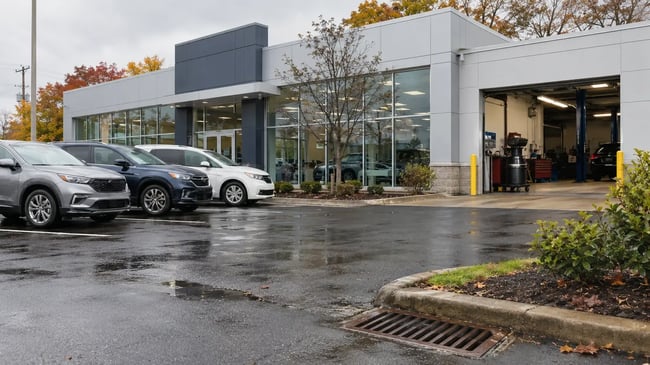
For a dealership, the practical trouble spots are a detail bay or wash pad that drains toward an inlet, a hose-down of the lot after the service department has had a busy day, and floor drains in the shop. Many Pennsylvania municipal stormwater ordinances prohibit wash water and connections from indoor drains to the storm system outright, so you can run into a local violation even when DEP never gets involved. If you're not sure where a floor drain or wash pad ends up, trace it before an inspector does. DEP's fact sheet notes that if wastewater management causes pollution, civil penalties under the Clean Streams Law can reach $10,000 per day.
What Do Service Departments Need to Know About Used Oil and Parts Cleaners?
Every oil change leaves used oil behind, and in Pennsylvania the rules for businesses that generate it sit in 25 Pa. Code Chapter 298, Subchapter C. DEP publishes generator fact sheets on what to do with used motor oil, on halogens in waste oil, and on the certification waste oil generators may need. Mixing materials is a common way to create a problem. Chlorinated solvents or brake cleaner poured into a used oil drum can make the whole drum subject to hazardous waste rules, which changes how it has to be handled and disposed of. Keep used oil in labeled, closed, sound containers, keep it separate from solvents and other fluids, and set up your recycler or hauler arrangement so the paper trail is there when someone asks for it.
Parts cleaners deserve the same attention. Solvent-based parts washers produce spent solvent, and whether it's hazardous waste, and what kind of generator that makes you, depends on how much your shop produces. Pennsylvania's generator category rules are in 25 Pa. Code Chapter 262a. The same shop also tends to produce used antifreeze, solvent-soaked rags, aerosol cans, batteries, and filters, each with its own handling expectations.
Do Dealership Oil and Fuel Tanks Need Registration or an SPCC Plan?
Tanks are where a dealership can pick up obligations without noticing. Under 25 Pa. Code Chapter 245, aboveground storage tanks holding more than 250 gallons of a regulated substance generally have to be registered with DEP, with exemptions for things like heating oil used on the premises and small tanks of motor fuel for noncommercial use. That can reach a bulk new oil tank, a used oil tank, or a fuel tank for a shuttle or loaner fleet. Underground tanks have their own requirements, and Chapter 298 specifically ties waste oil stored in underground tanks to the Chapter 245 standards. If you inherited a buried tank when you bought the property, find out what's in the ground and whether it's registered.
There's also a federal angle. An SPCC (Spill Prevention, Control, and Countermeasure) plan is required when a facility's total aboveground oil storage is more than 1,320 gallons, counting only containers of 55 gallons or more, and a spill could reasonably reach a waterway. Drums of new oil, a used oil tank, and a generator's fuel tank all count toward that total, so add them up before assuming you're under the line. Our article on SPCC and PPC plans in Pennsylvania explains how the plans differ, and our page on Pennsylvania SPCC plans covers how we help.
How Does RMA Help Pennsylvania Dealerships With Stormwater and Fluids?
We work with Pennsylvania facilities all the time, and for dealerships the first job is usually a simple one: confirming you don't need stormwater permit coverage, then checking that your wash water, used oil, solvents, and tanks are handled the way DEP expects. If you do have a salvage operation or a covered business on the property, we can help you sort out the right permit path. And if it turns out you don't need us, we'll say so. You can browse more of what we've covered for Pennsylvania facilities in our Pennsylvania NPDES and stormwater guide and our library of Pennsylvania NPDES articles.
If you'd like to talk through your dealership, there's no pressure and no obligation. You can call us, send an email, or fill out the form on our website, and you can contact RMA whenever it's convenient.