Most Pennsylvania Body Shops and Garages Don't Need PAG-03, but Fluids, Paint Waste, and Spray Booths Still Come With Rules
If you run a body shop or repair garage in Pennsylvania, you may have heard that industrial facilities need a stormwater permit from PA DEP, and wondered whether a place full of oil, solvents, and wrecked cars counts. For most shops, the answer is no. Auto body shops and general repair garages usually aren't on the list of industries that need an industrial stormwater permit, so the permit most people have in mind, DEP's PAG-03 general permit, doesn't apply to them.
That doesn't mean a shop gets a pass on environmental rules. Oil, antifreeze, wash water, and paint waste still can't reach a storm drain, and most shops have hazardous waste, used oil, and spray booth obligations that are easier to miss than a permit. Below, we cover why most shops don't need stormwater coverage, the few situations where one might, and the other programs worth checking. If you'd like a second set of eyes on your own shop, you can reach out to RMA anytime.
Table of Contents
TL;DR
Most auto body shops and repair garages in Pennsylvania don't need a stormwater permit, because general auto repair and body work aren't among the industrial categories PAG-03 covers. The exceptions are garages that are part of a covered operation, like a trucking terminal, bus yard, or salvage yard, and the occasional site DEP decides to regulate. Not needing a permit doesn't switch off the rules against letting fluids and wash water reach storm drains, and most shops should also check hazardous waste, used oil, spray booth air rules, and oil storage.
Why Don't Most Pennsylvania Auto Body Shops and Repair Garages Need a Stormwater Permit?
NPDES is the federal Clean Water Act program that regulates discharges to streams and other surface waters, and PA DEP runs it in Pennsylvania. For industrial stormwater, DEP's general permit is PAG-03. Who needs it follows federal rules at 40 CFR 122.26, which list the classes of industrial facilities that must have permit coverage. DEP places a facility using its SIC code, a four-digit industry code, along with what it does on site. Body shops and garages fall in the automotive repair group of SIC codes, such as 7532 for top, body, and paint shops and 7538 for general automotive repair, and that group isn't on the covered list. Dealerships, quick-lubes, tire shops, and most contractors land in the same place.
| Type of site |
Stormwater permit? |
Why |
| Independent body shop or collision center |
Usually no |
Automotive repair codes aren't on the covered list |
| General repair garage, quick-lube, or tire shop |
Usually no |
Same reason |
| Dealership with a service department |
Usually no |
Dealer codes aren't on the covered list |
| Maintenance garage at a trucking, bus, or fleet yard |
Possibly |
Transportation facilities are covered for their vehicle maintenance areas |
| Auto salvage yard or junkyard |
Often yes |
Salvage yards are a covered category |
| A shop DEP singles out |
Possibly |
DEP can require a permit for sites that discharge pollutants to state waters |
If you'd like to walk through the full decision for your own site, we lay out the steps in how to determine whether your Pennsylvania facility needs a PAG-03 permit, and our broader guide on which Pennsylvania stormwater permit you need covers the three paths DEP offers.
When Could an Auto Repair Garage Still Need PAG-03 or a No Exposure Certification?
The most common exception is a repair garage that belongs to a bigger operation. Trucking, bus, rail, and similar transportation facilities are covered for the parts of the site used for vehicle maintenance, which includes mechanical repairs, painting, fueling, lubrication, and equipment cleaning. A shop that services a company's own trucks or buses is in that territory even though a public garage doing the same work isn't. We cover how that plays out in our posts on Pennsylvania trucking companies and school bus garages. The second exception is a shop that stores wrecked or dismantled vehicles in volume, which starts to look like a salvage yard, and salvage yards are a covered category. The third is DEP itself deciding a particular site needs a permit because of what's leaving it.
For a covered site, there's one alternative to PAG-03 coverage. If every industrial material and activity is stored and carried out indoors or under a roof, the facility may qualify for a No Exposure Certification, which DEP treats as a conditional exclusion from permit coverage. DEP doesn't offer it to facilities in High Quality or Exceptional Value watersheds, and the certification has to be renewed every five years. A fleet garage that does every oil change, repair, and wash indoors is the typical candidate. Sites that mix several activities can be hard to classify, and that's a question to put to DEP or to us before you assume the answer. Our Pennsylvania NPDES and stormwater resources library collects everything we've written on these permits.
What Stormwater and Runoff Rules Still Apply to Auto Shops Without a Permit?
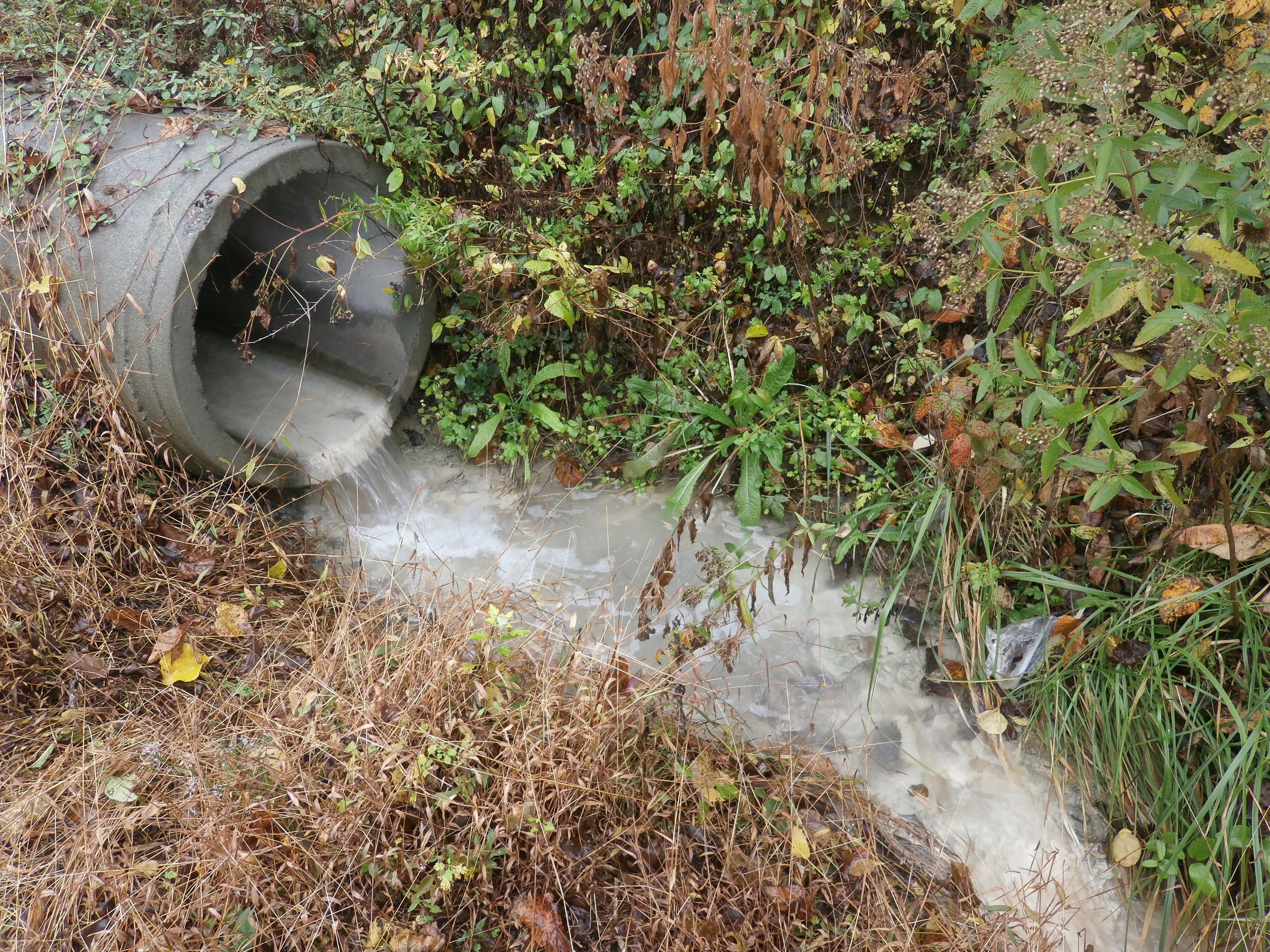
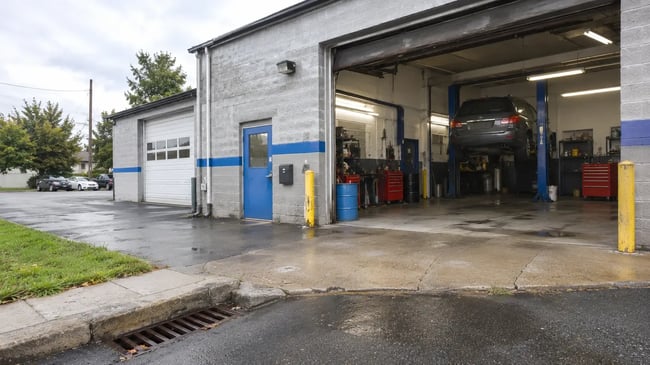
Skipping the permit doesn't make runoff unregulated. DEP can take action under Pennsylvania's Clean Streams Law when oil, antifreeze, solvents, or wash water reach a storm drain, ditch, or stream, whether or not the shop holds a permit. Storm drains usually carry water to a stream or a municipal storm sewer with no treatment, so whatever goes in comes out the other end. Body shops tend to run into trouble with the same handful of things: leaking vehicles waiting outside, open drums or parts bins, pressure washing on the lot, and floor drains nobody has traced.
Keeping fluids, parts, and leaking vehicles indoors or under cover handles most of the risk, along with drip pans, absorbents, and spill kits near the bays. Wash water needs a destination other than the storm drain, usually the sanitary sewer with the sewer authority's approval or a system that captures and recycles it. Where a floor drain goes matters too. A connection to the sanitary sewer comes with the sewer authority's rules, while a drain that leads to a storm sewer, a ditch, or the ground is the kind that gets shops into trouble.
Townships, cities, and sewer authorities can add their own rules, fees, and pretreatment requirements, and some older cities have combined sewers that send runoff to a treatment plant, which changes who governs it. Confirm your own situation locally. Two of our posts help sort out the overlap: discharging to a municipal storm sewer in Pennsylvania and how your township's MS4 program overlaps with industrial permits.
What Hazardous Waste and Used Oil Rules Apply to Pennsylvania Auto Body Shops?
This is where most shops carry real obligations. DEP lists car repair shops among the typical generators of hazardous waste. In a body shop, the usual suspects are waste solvents, leftover paint and thinner, gun cleaner, and rags, filters, and other debris soaked with them. Whether a particular waste is hazardous depends on what's in it, so the first job is knowing your waste streams. After that comes your generator category, which depends on how much hazardous waste you produce in a month. DEP's fact sheet puts conditionally exempt small quantity generators at 220 pounds or less per month, small quantity generators above 220 and below 2,200 pounds, and anything over that in the large category, with more requirements at each step up. Our post on hazardous waste generator status includes a free estimator if you want a quick read on yours.
Used oil has its own track. Pennsylvania regulates it as waste oil under 25 Pa. Code Chapter 298, and the basics are keeping it in labeled, closed containers, away from drains, and handing it to a proper hauler or collection point. Don't mix it with solvents or other hazardous waste, because mixing can change how the whole container is regulated and what it costs to get rid of. If the terminology trips you up, we explain the difference between used oil and waste oil in plain terms.
Do Spray Booths and Auto Refinishing Trigger Air Rules in Pennsylvania?
If your shop sprays paint, yes. Pennsylvania's 25 Pa. Code Section 129.75 covers mobile equipment repair and refinishing. It limits the VOC content of the coatings you apply, sets rules for application equipment and work practices such as cleaning spray guns in enclosed containers, and calls for training for the people doing the spraying. VOCs are the solvent vapors that give off fumes and contribute to ground-level ozone.
There's a federal layer too. EPA's rule at 40 CFR Part 63, Subpart HHHHHH, often called the 6H rule, applies to spray application of coatings to motor vehicles, and a person who sprays more than two vehicles a year falls under its requirements. It addresses spray booths, spray guns, and painter training. Depending on booth size, coating volume, and location, a shop may also need a state air permit or qualify for an exemption, and some areas, including Philadelphia and Allegheny County, run their own air agencies. Air permitting is a separate world from stormwater, so check with DEP or the local agency before you install or change a booth.
Do Oil Storage and Used Oil Tanks Bring SPCC Rules to a Repair Garage?
They can. A federal SPCC plan, short for Spill Prevention, Control, and Countermeasure, is required when a facility stores more than 1,320 gallons of oil in aboveground containers of 55 gallons or larger and could reasonably be expected to discharge to a waterway. You add up everything, including drums of new oil, used oil tanks, and bulk lubricant tanks, so a busy shop with several of each can reach the total faster than it expects. Our guides on figuring out whether you need an SPCC plan and how 55-gallon drums count toward the threshold walk through the math. Underground tanks holding fuel or waste oil are regulated separately, and they factor into the SPCC picture as well, so list them when you take inventory.
How Does RMA Help Pennsylvania Auto Body Shops and Repair Garages?
We work with Pennsylvania facilities all the time, and if a stormwater permit was your only question, the honest answer is that you probably don't need us for it. We'd rather tell you that than sell you something. Where shops tend to want help is the rest of the list: working out hazardous waste generator status, deciding whether oil storage triggers an SPCC plan, and getting a clear picture of which programs apply in the first place. An environmental audit is a good way to do that, and our service fit guide is upfront about when it makes sense to hire us and when it doesn't. If your shop is part of a fleet or a covered site, we can also help with PAG-03 coverage or a No Exposure Certification, and our NPDES resources go deeper on those paths.
There's no obligation in asking. You can call us, send an email, or fill out the form on our website, and we'll tell you what we see. If you're ready, contact RMA and we'll start with your questions.