A Printable NJPDES Stormwater Permit Inspection Checklist for Industrial Facilities, Organized by Area, With What Good Looks Like
If you hold a New Jersey stormwater permit, inspections are how you prove your plan works, and the written record is what NJDEP looks at when it visits. Under the 5G2, the basic industrial stormwater permit, that means regular walks of the areas exposed to rain plus one comprehensive inspection a year. Under the scrap metal and vehicle recycling permits, NJDEP expects inspections at least quarterly. This article is the checklist itself, a printable form you can use under any of them, organized by area of your facility, with what to check, what good looks like, and space to record problems and corrective actions.
We start with how often inspections are required, then how to use the checklist, then nine area-by-area tables you can print and carry on a clipboard. If you'd rather have someone review your inspection program or your SWPPP, reach out to RMA and we'll tell you what we see, even if the answer is that you're in good shape.
Table of Contents
TL;DR
Your permit and SWPPP set how often you inspect, so confirm the interval in your current documents. The 5G2 calls for regular inspections of areas exposed to rain, which we set up as monthly walks, plus a comprehensive annual inspection and an annual certification to NJDEP. Scrap metal and vehicle recycling permit holders are expected to inspect at least quarterly and keep a detailed log. This checklist covers nine areas of a facility, with what to check, what good looks like, and space to record each problem, the fix, and the date.
How Often Do New Jersey Stormwater Permits Require Inspections?
Your permit and your plan set how often you inspect, so start there. We call the plan a SWPPP (NJDEP calls it an SPPP, and people also say SP3 or just the stormwater plan). Under the 5G2, the permit calls for regular inspections to confirm your best management practices (BMPs) are in place and working, plus one comprehensive self-inspection each year that checks whether the plan is current, being followed, and still keeping materials away from rain. We set 5G2 facilities up on monthly walks of the areas exposed to rain and snowmelt, and confirming the interval in your current permit and plan is the first step. After the annual inspection, the facility certifies to NJDEP on the 5G2 certification form. Our annual certification guide covers that piece.
| Permit |
Routine inspections |
Annual inspection and paperwork |
| 5G2 Basic Industrial Stormwater General Permit |
Regular inspections of areas exposed to rain and snowmelt. We set facilities up on monthly walks. Confirm the interval in your permit and SWPPP |
Comprehensive annual self-inspection, annual training, and annual certification to NJDEP on its form |
| SM2 (scrap metal) and RVR (vehicle recycling) |
At least quarterly, with a detailed inspection log, according to NJDEP's October 2025 compliance advisory |
SM2 also calls for quarterly stormwater sampling. NJDEP's RVR page lists an annual inspection, annual report, and annual certification |
| CPM, R4, R13, RSG, WRC |
Set by your permit and SWPPP. Confirm in your authorization |
Annual items vary by permit. NJDEP lists an annual report form for the WRC and a certification form for the R4 |
| Individual NJPDES stormwater permit |
Set in your permit |
Set in your permit |
| No exposure exclusion |
No inspection schedule of your own in the rule, but you have to keep no exposure in place and allow NJDEP inspections |
Resubmit the certification every five years |
Whatever your minimum is, we suggest an extra walk after major storms and any time something changes, like new storage, a new tenant, or a repaired roof. That's our recommendation, not a permit requirement. Have someone trained on your stormwater plan do the walk, because they'll know what normal looks like. Our 5G2 training guide and our online training library can help you train the person who'll do it.
How Do You Use This NJPDES Stormwater Inspection Checklist?
Walk the site with the site map from your SWPPP in your hand, one area at a time, in the same order every time. Check the box when an item passes. When it doesn't, write what you found in the right-hand column, even if you fix it on the spot, because the record is what shows NJDEP your plan works. The "what good looks like" column is a practical target. If your SWPPP or permit is stricter, follow that. If your SWPPP lists a BMP this form doesn't, add it at the bottom of the matching area. Our site map guide helps if yours is out of date, and this SWPPP explainer covers the plan itself.
| Inspection record |
|
| Facility and NJPDES permit number |
|
| Date and time |
|
| Inspector name |
|
| Type of inspection (monthly, quarterly, annual, after storm) |
|
| Weather today and date of last rain or snowmelt |
|
| SWPPP version and date |
|
Print the page from your browser, or print only the pages you need. Make a fresh copy for every inspection and keep the completed ones with your SWPPP.
New Jersey Stormwater Inspection Checklist: Outdoor Storage Areas
Anything stored outside is exposed to rain unless something keeps it dry. Walk every pile, rack, pallet, and container your SWPPP lists, and look for anything that isn't on the list.
| OK |
What to check |
What good looks like |
Problem found and corrective action (date, who, fix) |
| ☐ |
Materials stored outdoors that your SWPPP says should be inside or covered |
Nothing outside that shouldn't be. Materials are under a permanent roof or enclosure, or in sealed containers |
|
| ☐ |
Covers, tarps, and lids |
Intact, secured, and not holding pooled water. Confirm your permit accepts temporary covers where you use them |
|
| ☐ |
Bulk piles such as aggregate, soil, salt, and scrap |
Contained and stabilized or covered, with no material migrating toward a drain |
|
| ☐ |
Pallets, drums, and totes |
Closed, labeled, and on containment or under cover, with no leaks or residue |
|
| ☐ |
Staining on pavement or soil near storage |
No fresh or old staining leading toward a drain, ditch, or the property line |
|
New Jersey Stormwater Inspection Checklist: Loading and Unloading Areas
Docks and transfer areas are where product ends up on pavement. Inspect them during or right after activity if you can, since spillage is easiest to spot then.
| OK |
What to check |
What good looks like |
Problem found and corrective action (date, who, fix) |
| ☐ |
Where loading and unloading happens |
Indoors or under cover, as your SWPPP describes. Doors, canopies, and dock seals are in working order |
|
| ☐ |
Spillage and residue on the dock, pad, or apron |
Clean and dry. Spills are swept or absorbed immediately, not left for the next rain |
|
| ☐ |
Storm drains near the dock |
Covered or protected as the plan describes, with no residue or sediment around them |
|
| ☐ |
Trucks, trailers, and forklifts |
No visible leaks. Drip pans are used where the plan calls for them |
|
| ☐ |
Spill kit at the dock |
Stocked, easy to reach, and staff know where it is |
|
New Jersey Stormwater Inspection Checklist: Fueling Areas
Small drips at a fuel island add up. Check the dispensing equipment, the surface under it, and everything that drains away from it. Fuel and oil tanks themselves belong in the containment section below.
| OK |
What to check |
What good looks like |
Problem found and corrective action (date, who, fix) |
| ☐ |
Fueling surface |
Impervious, clean, and free of staining or sheen. Cracks or gaps are sealed |
|
| ☐ |
Nozzles, hoses, and connections |
No drips or leaks. Automatic shutoffs work and hoses are stored off the ground |
|
| ☐ |
Drip pans and spill kit |
Drip pans are in place under connections and emptied properly. The spill kit is stocked and close by |
|
| ☐ |
Fueling procedure and training |
Written procedure is posted and employees who fuel have been trained on it |
|
| ☐ |
Drains and cover over the fueling area |
Nearby drains are covered or protected. Any roof or canopy the plan relies on is intact |
|
New Jersey Stormwater Inspection Checklist: Vehicle and Equipment Maintenance Areas
Repairs, parts, and washing are common sources of oily runoff. Our posts on washing trucks and equipment outside and hosing down a loading dock explain why wash water needs its own plan.
| OK |
What to check |
What good looks like |
Problem found and corrective action (date, who, fix) |
| ☐ |
Where repairs and fluid changes happen |
Indoors or under cover on an impervious surface, as the SWPPP describes |
|
| ☐ |
Used oil, coolant, and other waste fluids |
In closed, labeled containers on containment, with nothing overflowing or dripping |
|
| ☐ |
Parts and equipment with oily residue, batteries, and tires |
Stored under cover on an impervious surface, with no residue running off |
|
| ☐ |
Washing of vehicles and equipment |
No outdoor washing that reaches a storm drain. Wash water is captured, hauled, or sent somewhere your permits allow |
|
| ☐ |
Parked or stored equipment |
No visible leaks. Drip pans are under anything that drips |
|
New Jersey Stormwater Inspection Checklist: Waste and Dumpster Areas
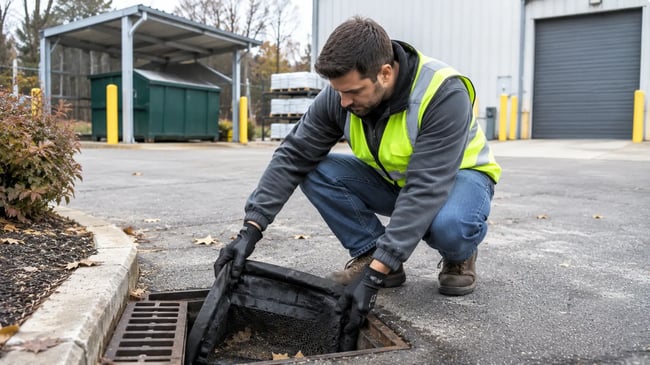
Open or overflowing containers send trash and liquids straight into the drainage system. Check every dumpster, roll-off, and waste storage spot, including ones that were added after your plan was written.
| OK |
What to check |
What good looks like |
Problem found and corrective action (date, who, fix) |
| ☐ |
Dumpster and roll-off lids and doors |
Closed when not in use, with no overflow or trash on the ground around them |
|
| ☐ |
Condition of dumpsters and bins |
No holes, rust-through, or liquid pooling at the base |
|
| ☐ |
Pad and area around the containers |
Swept and free of litter, with no staining running toward a drain |
|
| ☐ |
Waste oil, hazardous waste, and universal waste storage |
Closed, labeled, and stored indoors or on containment. Lids are tight |
|
| ☐ |
Scrap and recycling bins |
Contents match what the plan allows. Covered where the plan says so, and not leaking |
|
New Jersey Stormwater Inspection Checklist: Containment and Spill Response
Containment is your last line of defense between a leak and a storm drain. If you find an active spill during your walk, safety comes first. Stop the source only if it's safe to do so, keep people away, call 911 for a fire, injury, or immediate hazard, and then report the release as the rules require. Our post on the sheen rule covers reporting, and this comparison of SPCC plans and SWPPPs shows how the two plans fit together.
| OK |
What to check |
What good looks like |
Problem found and corrective action (date, who, fix) |
| ☐ |
Secondary containment around tanks and drums |
Intact, with no cracks or gaps. Drain valves are closed and no liquid has built up inside |
|
| ☐ |
Tanks, drums, and totes |
Closed, labeled, and showing no weeping, rust, or staining at seams and fittings |
|
| ☐ |
Drip pans under equipment and connections |
In place, empty or emptied on schedule, and not overflowing |
|
| ☐ |
Spill kits |
Stocked, in the locations your plan lists, and easy to reach. Used absorbent has been disposed of properly |
|
| ☐ |
Spill response and related plans |
Spill procedures are posted and employees know them. Your SPCC plan, if you have one, is current |
|
New Jersey Stormwater Inspection Checklist: BMPs and Drain Inserts
A BMP only helps if it's in place and working on the day it rains. Use the BMP list in your SWPPP as your guide, and check each one against what you see. Our BMP explainer and our 5G2 BMP guide describe what NJDEP expects to see.
| OK |
What to check |
What good looks like |
Problem found and corrective action (date, who, fix) |
| ☐ |
Every BMP listed in the SWPPP |
Present, in the location the plan shows, and working the way the plan describes |
|
| ☐ |
Drain inserts, filters, socks, and mats |
Seated correctly and not torn, clogged, or saturated. Replaced or cleaned on the schedule in the plan or manufacturer's directions |
|
| ☐ |
Berms, curbing, swales, and grading |
Intact, with no erosion, gaps, or low spots where water gets around them |
|
| ☐ |
Roofs, covers, and enclosures that keep materials dry |
No holes, missing panels, or open sides that let rain reach materials |
|
| ☐ |
Site map against the real site |
Drains, outfalls, storage, and activities match the map. Anything that changed is marked for a SWPPP update |
|
New Jersey Stormwater Inspection Checklist: Outfalls and Discharge Points
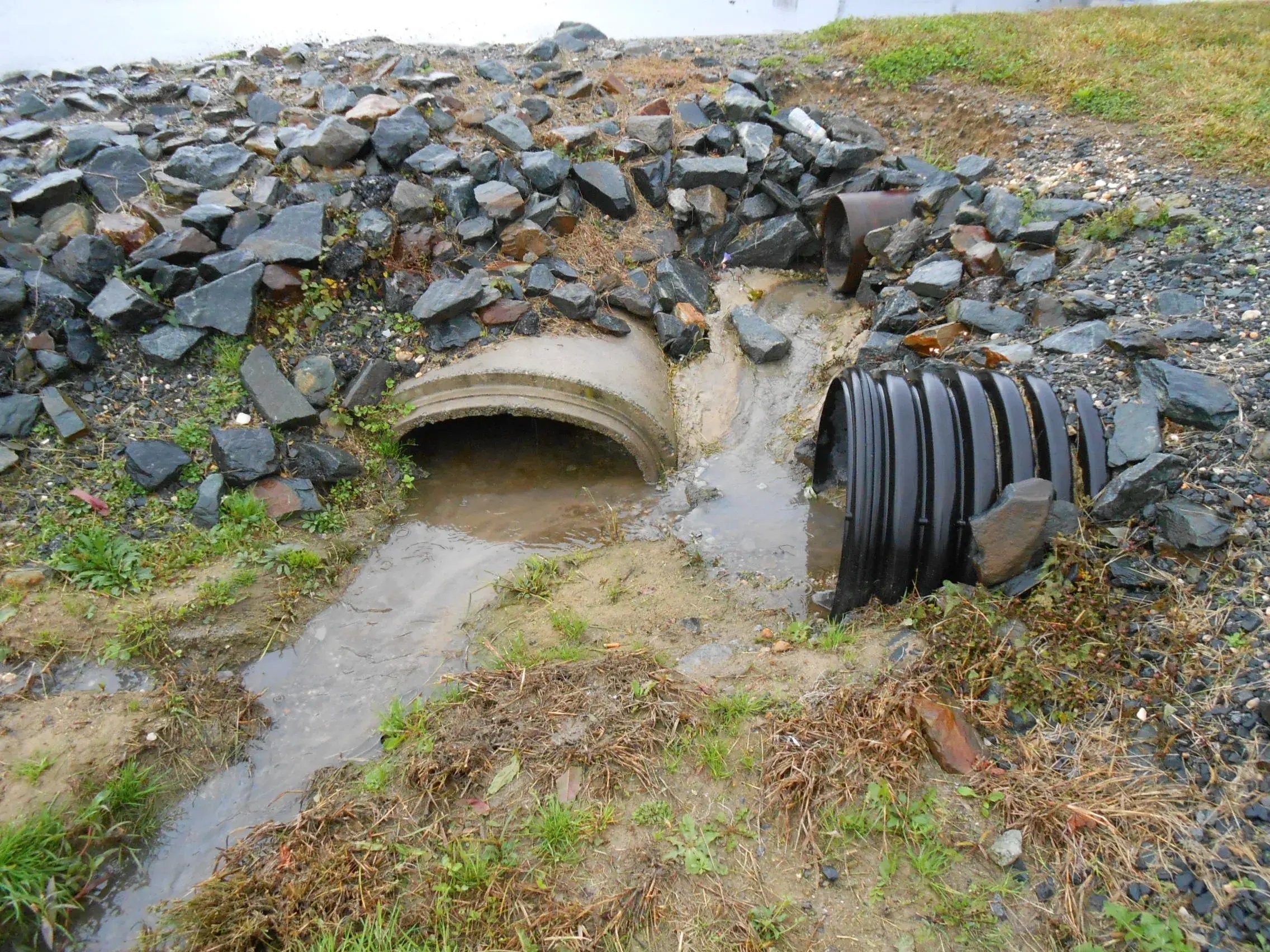
Outfalls and discharge points are where your site's water leaves. Visit each one on your site map, and look at the path leading to it. If the water leaving your lot looks off, this guide to muddy, oily, or discolored runoff explains what it can mean.
| OK |
What to check |
What good looks like |
Problem found and corrective action (date, who, fix) |
| ☐ |
Access to every outfall and discharge point on the site map |
Reachable, identified, and matching the map. Nothing blocks the opening |
|
| ☐ |
Appearance of any water leaving the site |
Clear, with no sheen, odor, unusual color, foam, or floating debris |
|
| ☐ |
Flow during dry weather |
None. Flow when it hasn't rained suggests a non-stormwater discharge and needs to be traced |
|
| ☐ |
Erosion, sediment, and staining at and below the outfall |
No scouring, sediment deposits, or staining on pavement, soil, or the receiving ditch or stream |
|
| ☐ |
Where the water goes after it leaves your drains |
Matches your SWPPP, whether that's a storm drain, a sewer, a swale, or the ground |
|
New Jersey Stormwater Inspection Checklist: Housekeeping and Site Perimeter
Housekeeping covers everything the other areas don't: pavement, roofs, building exteriors, and the edges of your property. It's also where small problems show up before they turn into violations.
| OK |
What to check |
What good looks like |
Problem found and corrective action (date, who, fix) |
| ☐ |
Parking areas, driveways, and access roads |
Swept on the schedule in your plan, with no tracked-out sediment or debris on pavement or leaving the site |
|
| ☐ |
Roofs, gutters, downspouts, and rooftop equipment |
Free of debris, and rooftop equipment isn't dripping fluids onto surfaces that drain to the ground |
|
| ☐ |
Building exteriors and loading doors |
No items stored against the building that your plan says should be inside. No staining below vents or exhaust |
|
| ☐ |
Salt and snow management in winter |
Salt is covered or stored indoors, and snow isn't piled where melt runs through materials or toward drains |
|
| ☐ |
Litter and general condition of the property |
No loose trash, packaging, or debris that wind or rain can carry to a drain |
|
How Do You Document Problems and Corrective Actions Under a NJPDES Permit?
Every problem gets three things: a note of what you found, a fix, and a recheck that confirms the fix worked. NJDEP's 5G2 has long expected facilities to document what they're doing to correct a problem and how they'll keep it from happening again, and earlier versions of the permit used an Incident of Noncompliance Form for problems found at the annual inspection. Check your current permit to see whether it still does. Use the log below to track each item to completion.
| Date found |
Area |
Problem |
Corrective action |
Who is responsible |
Date fixed |
Rechecked (initials) |
| |
|
|
|
|
|
|
| |
|
|
|
|
|
|
| |
|
|
|
|
|
|
| |
|
|
|
|
|
|
| |
|
|
|
|
|
|
| |
|
|
|
|
|
|
At the annual inspection, add a desk review. Read through the year's inspection logs, confirm every problem was fixed and recorded, check that training was documented, and compare your SWPPP to what's really on the site. Fix what you find before the person who signs your certification signs it. Keep completed checklists and logs with your SWPPP, and confirm the retention period in your permit. If you're curious what happens when records are missing or problems go unfixed, our post on ignoring stormwater rules lays out the consequences.
| Sign-off |
|
| Inspector signature and date |
|
| Reviewed by and date |
|
| All problems above entered in the corrective action log? |
☐ Yes ☐ No |
How Can RMA Help With Your New Jersey Stormwater Inspections?
We help New Jersey facilities build inspection routines that match their SWPPP, review inspection logs and the annual certification before anyone signs, and train staff to run their own inspections and take their own samples. After you're permitted, we offer ongoing support, from reminders to annual updates, and you can have us hands-on or in the background. If your program is already solid and this checklist is all you need, we're glad to hear it.
There's no pressure and no obligation. You can call, email, or fill out the form on our website, and you can contact RMA to talk through your inspections with someone on our senior team.