Stormwater Rules for Mulch Yards, Wood Recyclers, and Leaf Composting Sites, Including Many Town-Run Ones
If you chip branches into mulch, grind brush, or run a leaf composting yard in New Jersey, rain is part of your operation whether you plan for it or not. Water runs through and off those piles, picks up whatever's in them, and ends up in a ditch, a stream, or the ground. NJDEP (the New Jersey Department of Environmental Protection) handles that with the WRC permit, a stormwater general permit written specifically for wood waste recycling and leaf composting. If your site handles clean wood waste or composts leaves, grass clippings, and wood chips, WRC is most likely the permit that applies to you, whether you're a private mulch yard or a town-run leaf site.
Below, we walk through what the WRC permit is, who it covers, why runoff from these piles gets so much attention, what the permit asks of your site, how it differs from your recycling approval, and how coverage works. We've also written separate posts on where mulch and wood yards should start and on municipal leaf sites, so this one sticks to the plain-terms picture. If you'd rather talk through your own yard, you're welcome to reach out to RMA at any point.
Table of Contents
TL;DR
WRC is NJDEP's stormwater general permit for wood waste recycling and leaf composting sites, and most mulch yards, wood recyclers, and town leaf yards in New Jersey that process clean material fall under it. It exists because rain on decomposing piles produces leachate, nutrients, and brown-stained runoff that can reach streams and groundwater. The permit asks for a stormwater plan with a drainage control plan, controls on the piles, regular inspections, monitoring where required, and an annual report and certification. It covers stormwater only, so your recycling approval and any construction-phase approvals are separate.
What Is the WRC General Permit in New Jersey?
NJDEP regulates discharges to water through NJPDES, the New Jersey Pollutant Discharge Elimination System. Rain that runs across an industrial-type site and leaves it counts as a discharge, which is why a pile of wood chips can need a water permit even though nobody's pumping anything out of a pipe. Our post on what counts as a discharge in New Jersey covers that idea in more depth.
NJDEP offers two kinds of permits for this. An individual permit is written for one facility. A general permit is a standard set of rules NJDEP writes once for a whole category of sites, and facilities in that category sign on to it instead of getting a custom permit. WRC is a general permit, with the NJPDES number NJ0324183, and it handles stormwater only. NJDEP renewed it with an effective date of January 1, 2026, and the current version runs through the end of 2030. It replaced the first WRC permit, which took effect January 1, 2023. If you want the bigger picture of how these permit types compare, our guide to general, individual, and no-exposure permits is a good starting point.
New Jersey sorts industrial sites into several categories, and WRC is the one built for this industry. Facilities in other lines of work usually land on the Basic Industrial Stormwater General Permit (5G2) or another industry-specific permit, and our post on who qualifies for the 5G2 and who gets pushed to an industry-specific permit explains how that sorting works.
Who Does the WRC Wood Waste and Leaf Composting Permit Cover?
WRC covers stormwater from two activities. The first is wood waste recycling, which means receiving, storing, processing, and transferring tree branches, limbs, trunks, and brush. Processing here means chipping, grinding, screening, and size reduction. The second is composting grass clippings, leaves, and wood chips. In both cases the material has to be clean. Wood that's chemically treated, glued, dyed, or painted falls outside what the permit is written for. NJDEP issued the permit for both public and commercial operators, so a family-run mulch business and a township public works yard can sit under the same permit.
Coverage follows what happens on the site, not what you call yourself. A landscaper who grinds brush into mulch and a town that windrows leaves are both doing something the permit describes. The table below shows how some common situations usually shake out, though NJDEP has the final say on edge cases.
| Your situation |
What usually applies |
| Private yard that chips, grinds, or screens clean wood waste into mulch |
The WRC general permit |
| Town-run site that receives and composts leaves, grass clippings, and wood chips |
The WRC general permit |
| Site that handles treated, painted, glued, or dyed wood |
Outside the clean material WRC describes, so talk to NJDEP about what fits |
| Site that only stores or stages material without processing it |
Depends on the activities, so confirm with NJDEP before assuming either way |
| Yard in the Pinelands |
WRC, with separate provisions for Pinelands sites |
Towns come up often. Many municipal leaf yards need WRC coverage even though they're run by public works rather than a business, and our post on whether municipal leaf compost sites need a stormwater permit goes through the details. NJDEP ran a grant round to help public facilities pay for their stormwater plans, but it closed on August 15, 2025, so check NJDEP's grants page for anything newer. Sites in the Pinelands, Highlands, or Meadowlands should also read our overview of why location matters for stormwater in New Jersey.
Why Does Runoff From Wood Waste and Leaf Piles Matter?
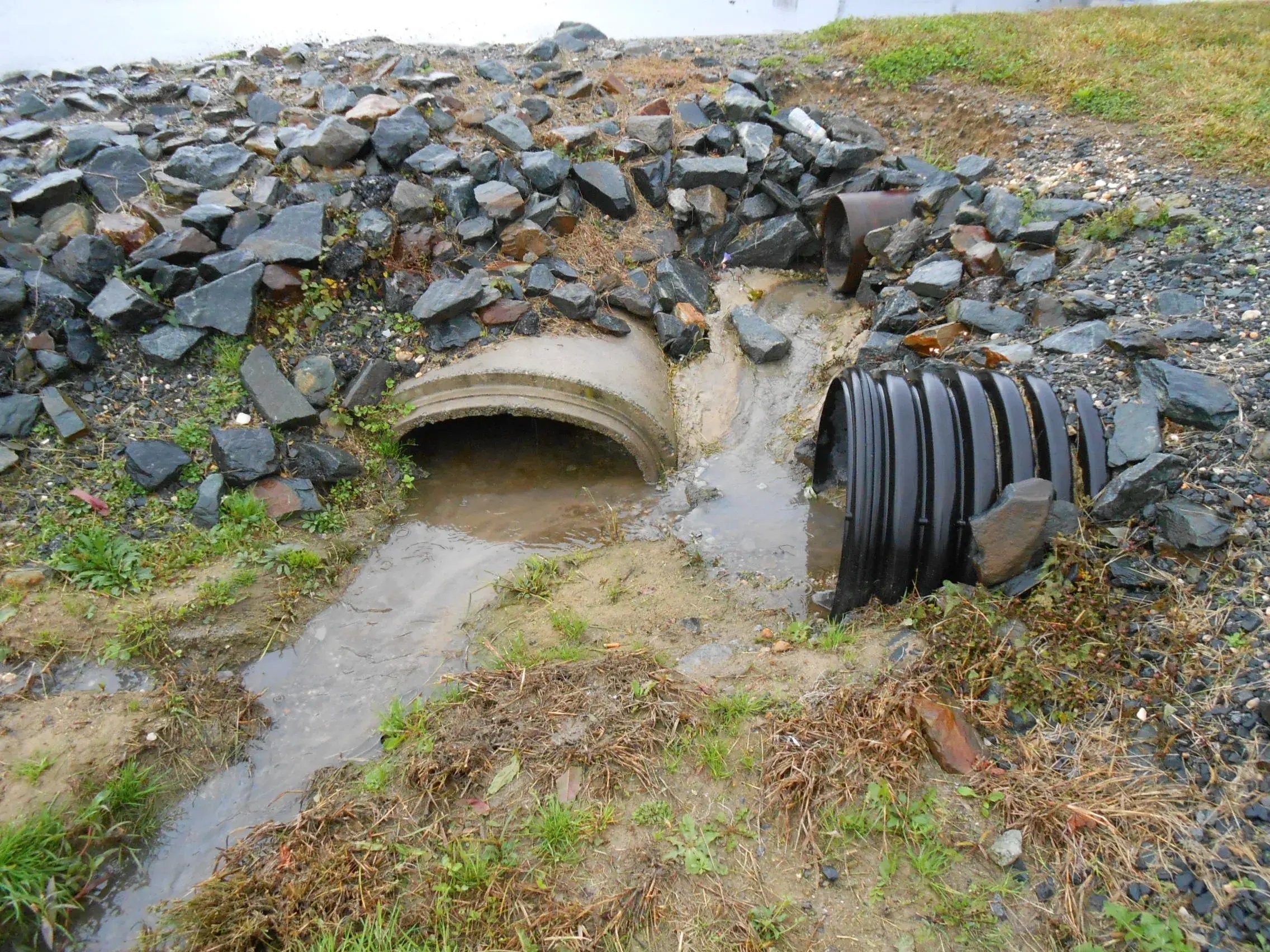
A pile of leaves or wood chips looks harmless, and in a dry week it mostly is. The trouble starts when rain soaks through it. Decomposing plant material releases a dark liquid called leachate, and storm after storm pushes it out the bottom of the pile. Leachate is loaded with dissolved organic matter and nutrients, which is about as far from clean rainwater as runoff gets.
The nutrients are the first concern. Nitrogen and phosphorus feed algae in streams, ponds, and bays, and New Jersey has plenty of waterways that don't need more of either. The organic matter is the second. As it breaks down in the water, it uses up oxygen that fish and insects need. Then there's color. Leachate stains water a tea-brown that shows up downstream, gets noticed by neighbors, and tends to get noticed by inspectors too. Our post on muddy, oily, or discolored water leaving a New Jersey lot explains how that kind of visible runoff gets attention.
Sediment adds to it. Chips, fines, and soil wash off piles and haul roads and settle in storm drains and streambeds. Loaders and grinders add their own risk through hydraulic leaks and fueling spills. And where water soaks in instead of running off, leachate can reach groundwater. That's why the WRC permit deals with discharges to both surface water and groundwater, not just the water that leaves your site in a ditch.
None of this means a leaf or mulch operation is doing something wrong. It means the material does what organic material does when it gets wet, and the permit is NJDEP's way of making sure someone has thought about where that water goes.
What Does the WRC Permit Require From Your Site?
In broad strokes, the permit asks for a written plan, physical controls on your piles and drainage, regular inspections, monitoring where it applies to your site, and an annual report. The exact monitoring parameters, limits, and frequencies live in the permit's tables and depend on your authorization, so we're not going to list numbers here. Read them in the current permit before you build a sampling routine.
What Do the Stormwater Plan and Drainage Control Plan Cover?
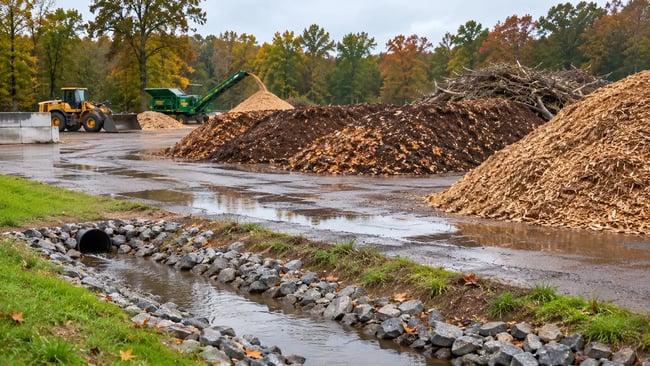
The core document is a stormwater pollution prevention plan, or SWPPP. NJDEP's rules sometimes call it an SPPP, and you'll also hear SP3 or just "the stormwater plan." For WRC sites, the plan includes a drainage control plan (DCP) with a map. The map shows your drainage areas, where water leaves the site, where your discharge monitoring points sit, and where piles, windrows, and equipment are stored. The DCP also drives where monitoring happens, because the surface water and groundwater monitoring locations are tied to it.
The plan describes the controls you use to keep runoff under control. Common ones for these sites include berms, swales, covered storage, vegetated buffers, and infiltration areas, and our post on stormwater best management practices explains how those controls work. The permit also expects the people who work at the site to be trained on the plan and the controls. Many sites check incoming loads too, since treated or painted wood isn't something this permit covers. If you're new to the plan itself, our explainer on New Jersey's stormwater pollution prevention plan lays out the basics in plain language.
One caution on the DCP. Depending on your site, drawing up drainage areas and elevations can involve a licensed engineer or surveyor. That's engineering and survey work, not something we do, and we'll tell you so up front if your site needs it.
What Are the Inspection, Monitoring, and Annual Report Requirements?
You'll inspect the site on a regular schedule and fix what you find. Each year you file an annual report form and a certification, which a responsible official signs, such as an elected official, an executive officer, or a duly authorized representative. Where the permit requires monitoring, samples go to a New Jersey certified laboratory and results are reported to NJDEP electronically. Sites that do all of their wood waste and composting work on an impervious surface are treated differently for monitoring, so check that provision in the permit if it describes your yard.
Your own staff can usually handle the sampling and the inspections with good training, and we think that's the better setup. Our posts on why you should take your own stormwater samples and how to do a stormwater visual inspection show what that looks like in practice.
How Does the WRC Permit Differ From Your Recycling Approval and Other Permits?
This is where yard operators and town managers get tangled up. WRC doesn't give you the right to run a recycling yard. It covers the rain runoff from one. Several other approvals can sit alongside it, and they're separate.
| Permit or approval |
What it governs |
| WRC general permit (NJPDES) |
Rain runoff from the wood waste and leaf composting yard to surface water and groundwater |
| Recycling center approval (NJDEP solid waste program) |
Your right to receive and process the material, typically a Class B approval for wood and a Class C approval for composting yard trimmings |
| Municipal stormwater permit (Tier A or Tier B) |
A town's storm sewer system, not the leaf yard's own runoff |
| Construction-phase approvals |
Building, expanding, or regrading a yard |
WRC doesn't cover process wastewater either, so if you wash equipment or generate any water that isn't stormwater, that needs separate treatment. Our post on the difference between stormwater and process water explains where the line sits. Some yards may also need an air permit, depending on what they do. For the recycling approval side, our New Jersey recycling approvals resources page is where to start.
If you're building a new yard or regrading an existing one, construction brings its own requirements. They typically include construction stormwater coverage under the 5G3 general permit, soil erosion and sediment control certification through your county Soil Conservation District, and stormwater design rules under N.J.A.C. 7:8 for major development. We don't prepare any of those. Most operators work with their engineer, contractor, or a soil erosion specialist on that phase. Once the yard is running, WRC is the piece we help with, and we're happy to point you toward the right construction people if you're not sure who to call.
How Do You Get Coverage Under the WRC Permit?
Coverage starts with a request for authorization, which is NJDEP's term for the application you submit to join a general permit. Before you file, work out which of your activities and materials the permit covers, then pull the current permit documents and forms from NJDEP's WRC permit page. Next comes the SWPPP and DCP, since NJDEP's process expects them. After that you submit the request with the information NJDEP asks for and pay the fee NJDEP sets, which can change, so check the current schedule before you budget.
Once you're authorized, the work becomes routine: inspections, training, monitoring where it applies, and the annual report. If you already hold WRC authorization, the renewed permit took effect in January 2026, so ask NJDEP what, if anything, you need to do to carry your authorization forward. Timing for new coverage varies, and our post on how long it takes to get a New Jersey stormwater permit gives a realistic picture.
You don't necessarily need a consultant for any of this. A town with a capable public works team and an engineer already on call can often handle the paperwork itself, and our post on whether you can write your own SWPPP in New Jersey shows what's involved. Operators who'd rather not learn it from scratch, or who've been handed a permit they don't understand, are who we usually hear from.
How Can RMA Help With WRC Stormwater Compliance in New Jersey?
We're based in New Jersey and know how NJDEP sorts its permit categories, and WRC is a category we work with. We can help you work out whether WRC fits your site, build or review your SWPPP, and walk through the permit's requirements so your crew knows what's expected. We don't take your samples for you. Instead we train your staff to do it correctly, because they know the site and can sample when the storm hits. After you're permitted, we also offer annual support, such as reminders, help reading your results, annual report and SWPPP updates, and inspection prep, either hands-on or hands-off depending on what you want. If you need training for your team, our online training library is available too.
There's no pressure and no obligation. You can call or email us, or fill out the form on our website and tell us what your yard does. Whether it ends with us helping or just with you knowing where you stand, you're welcome to contact RMA whenever you're ready.