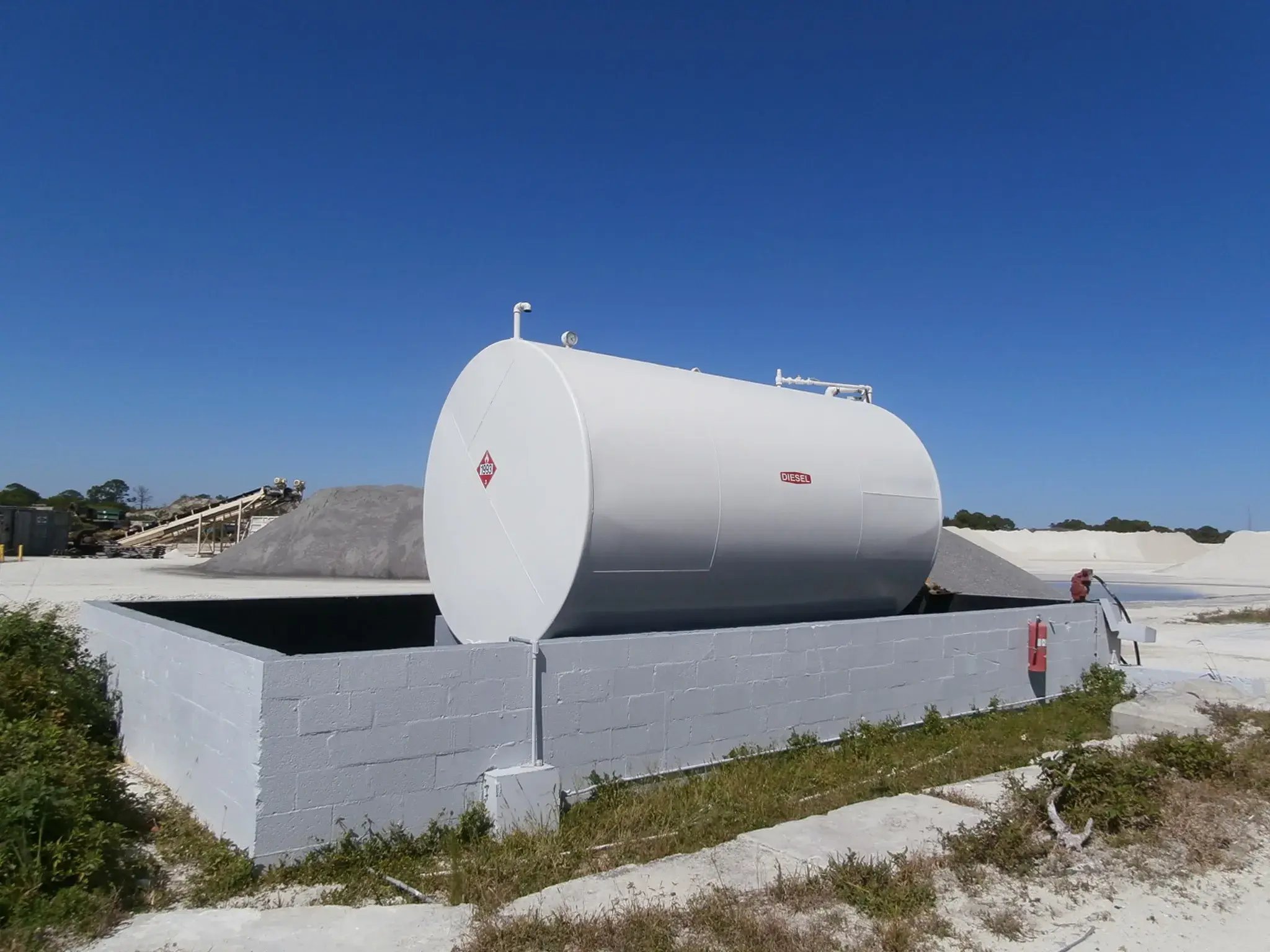
Lehigh Valley Distribution Centers, Generators, Fire Pump Diesel, and Truck Fueling: When Fuel Tanks Trigger Federal Spill Rules, DEP Tank Registration, and Who Answers for Them in a Lease
A distribution center in the Lehigh Valley rarely starts out as an oil storage site. Then the building gets a backup generator so the coolers and conveyors keep running, the fire protection system gets a diesel fire pump, and the tenant decides it's cheaper to fuel its own trucks on site than to send them to a truck stop. Each addition is reasonable. Together, they can add up to enough oil to trigger a federal oil spill plan, which EPA calls an SPCC Plan (Spill Prevention, Control, and Countermeasure Plan), along with tank rules from Pennsylvania DEP that most warehouse managers have never been told about.
If your facility crosses the line, you'll need an SPCC Plan. If you already have one, it needs an update whenever tanks are added or removed. This article walks through how generator, fire pump, and fleet fuel tanks add up toward the federal threshold, which of them have to be registered with DEP, and who's responsible when the building has a landlord and a tenant. If you'd like to talk through your own building, you can reach out to RMA at any point.
Table of Contents
TL;DR
A warehouse needs a federal oil spill plan (SPCC Plan) when its total aboveground oil capacity tops 1,320 gallons, counting only containers of 55 gallons or more. Generator tanks, fire pump diesel tanks, and fleet fueling tanks all count, and it's their size that matters, not how full they are. Separately, DEP generally requires registration for stationary tanks over 250 gallons, with an exemption for small noncommercial motor fuel tanks of 1,100 gallons or less. In a leased building, the federal duty falls on whoever owns or operates the facility, DEP looks at the tank owner and operator, and the lease should spell out who does what.
Why Do Lehigh Valley Warehouses Keep Adding Fuel Tanks?
The Lehigh Valley is one of the busiest warehouse markets in the Northeast, and the buildings along the I-78 and Route 33 corridors tend to share the same needs. Tenants run refrigerated or climate-controlled space that can't lose power, so a diesel generator goes in. Sprinkler systems in large buildings often rely on a diesel-driven fire pump, which comes with its own fuel tank. And logistics tenants with their own trucks sometimes install a fueling station to control costs. No single tank looks like a big oil storage operation, which is how a site ends up over a threshold unnoticed.
Two separate sets of rules are in play. The federal one is the SPCC rule, enforced by EPA Region 3 in Pennsylvania (our post on who enforces SPCC plans explains how inspections work). The state one is DEP's storage tank program under the Storage Tank and Spill Prevention Act and 25 Pa. Code Chapter 245. They use different thresholds and different counting rules, so a tank can matter to one and not the other. If you're new to the terminology, our plain-English explanation of an oil spill plan is a good starting point.
How Do Generator, Fire Pump, and Fleet Fuel Tanks Add Up Toward the SPCC Threshold?
The federal threshold is total aboveground oil capacity over 1,320 gallons, counting only containers of 55 gallons or more. Capacity is what counts, not how full a tank happens to be, so an empty generator tank counts at its full shell size. Diesel, gasoline, hydraulic oil, and lubricating oil are all oil under the rule, and oil-filled equipment such as a transformer counts too. Fuel in a vehicle's own tank doesn't count, but a fuel trailer or skid tank does. The table shows how a typical warehouse stacks up.
| Warehouse item |
Counts toward 1,320 gallons? |
Example capacity |
| Generator sub-base (belly) tank |
Yes, full capacity |
500 gallons |
| Diesel fire pump fuel tank |
Yes, if it's 55 gallons or more |
300 gallons |
| Aboveground diesel tank for fleet fueling |
Yes, full capacity |
1,000 gallons |
| Oil drums, totes, and hydraulic reservoirs |
Yes, each container of 55 gallons or more |
Varies |
| Fuel in a truck's own tank |
No |
Not counted |
In that example, a 500-gallon generator tank, a 300-gallon fire pump tank, and a 1,000-gallon fleet tank total 1,800 gallons. That's over the line, even though no single tank looks like much. Whether the site lands in the Tier I self-certified category, which generally covers facilities with 10,000 gallons or less of aboveground storage and a clean spill history, or needs a more involved plan depends on total capacity and the largest container. Our posts on adding a backup generator and qualified facility status go deeper on both. The plan also has to account for where a spill would go. At a Lehigh Valley warehouse that usually means the storm drains in the truck court and the stormwater path toward the nearest creek or the Lehigh River, and that's part of why containment and fueling-area details matter so much.
Which Warehouse Fuel Tanks Need DEP Tank Registration?
DEP's threshold is lower than EPA's in one way and has more exemptions in another. DEP generally regulates stationary aboveground tanks with a capacity over 250 gallons that hold a regulated substance such as diesel, and each compartment of a multi-compartment tank is registered separately. Registration renews every year, and it's illegal to use an unregistered regulated tank, so a fuel supplier can refuse to fill one. Annual fees are $50 per tank of 5,000 gallons or less and $125 per tank from 5,001 to 50,000 gallons. New tanks have to be reported within 30 days of installation.
| Tank |
DEP registration |
| Fleet fueling tank holding motor fuel for your own trucks, 1,100 gallons or less |
Exempt, because it's noncommercial motor fuel (fuel not for resale) |
| Fleet fueling tank over 1,100 gallons |
Generally required |
| Generator tank over 1,100 gallons |
Generally required. DEP has said belly tanks connected to emergency generators aren't exempt unless they're 1,100 gallons or less. |
| Generator tank between 250 and 1,100 gallons |
Depends on the tank and how DEP treats it, so confirm with DEP's storage tank program before assuming it's exempt |
| Fire pump diesel tank |
Depends on size against the 250-gallon line. Confirm any exemption with DEP rather than assuming one applies. |
| Tank of 250 gallons or less |
Exempt |
| Nonstationary tank moved to a different service location at least once every 12 months |
Exempt |
The point most warehouse teams miss is that a tank can be exempt from DEP registration and still count toward your SPCC total. A 1,000-gallon fleet fueling tank is a good example. DEP doesn't require registration for it, but it still pushes you toward the federal threshold. Going the other direction, work on a registered tank, such as installing, modifying, removing, or inspecting it, has to be done by DEP-certified installers and inspectors. Our post on Pennsylvania aboveground tank registration covers the exemptions and certification rules in detail. If a tank sits near the line, check it with DEP or a certified company before you decide.
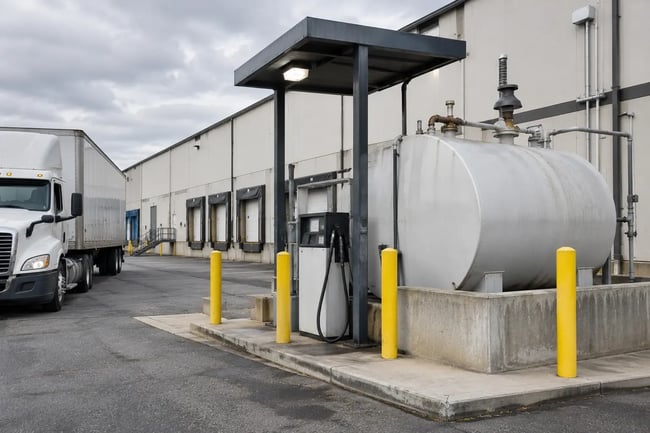
Who Is Responsible for an SPCC Plan at a Leased Warehouse, the Tenant or the Landlord?
Under the federal rule, the duty to prepare and carry out the plan falls on the owner or operator of the facility, not automatically on whoever holds title to a particular tank. EPA's guidance on leased property says you could be responsible for tanks already on a parcel you lease, and that the lease should say who is responsible for them. If the lease is silent, you should talk to the property owner and settle it. In a warehouse, that usually means the party that runs the building or uses the tank day to day is on the hook.
Pennsylvania's tank program looks at ownership and operation separately. The Storage Tank and Spill Prevention Act defines an operator as anyone who manages, supervises, controls, or has responsibility for the operation of a tank, and it also bars the owner or operator and the landowner or occupier from allowing a release. The tank owner registers the tank, and DEP's form asks for the owner, the operator, and the property owner. When something goes wrong, DEP can look at all of them. Here's how it usually shakes out in a leased distribution center:
| Tank |
Who often owns it |
Who often operates it |
What to settle in writing |
| Building generator that serves the whole property |
Landlord |
Landlord or property manager |
Who registers it, who inspects it, who orders fuel |
| Generator installed by the tenant for its own space |
Tenant |
Tenant |
What happens to the tank at move-out |
| Fire pump diesel tank |
Often the landlord, since it's part of the building |
Often whoever maintains the fire protection system |
Who counts it in the plan and who handles testing |
| Fleet fueling tank |
Tenant or a fuel supplier |
Tenant |
Who registers it and who responds to a spill |
Those are patterns, not rules, and a contract can shift the work but it can't stop EPA or DEP from holding the operator accountable. If a supplier owns a tank your crews run, our post on who's responsible when a fuel supplier owns the tank walks through the same questions. How a building with several tenants is treated under SPCC can depend on who controls what at the site, so that's a good conversation to have with a consultant before you assume one tenant's tank is someone else's problem.
What Should a Warehouse Lease Say About Fuel Tanks and SPCC Plans?
A lease can't move the legal duty away from the operator, but it can decide who pays for the work and who has to do it, and that's where most disputes start. Landlords and tenants usually find the gap after an inspection or a spill. A few clauses prevent most of that. Have your lease attorney review the exact wording, and consider including these:
- Which party owns each tank and who registers it with DEP, with a copy of the registration certificate shared with the other side.
- Which party prepares, updates, and keeps the SPCC Plan, and where the plan is kept on site.
- Who performs the monthly inspections, annual training, and any required integrity testing.
- Who orders fuel and who is responsible for overfill protection and delivery supervision.
- Who responds to and reports a spill, and who pays for cleanup.
- What happens to each tank when the lease ends, including closure, removal, or transfer to the next tenant.
Move-in and move-out are the moments when this goes wrong. A tenant that leaves behind a tank it installed can leave the landlord holding an unregistered or unplanned tank, and a new tenant that inherits one inherits the questions too. Our posts on transferring a facility with oil tanks and permanently closing a tank cover what each step looks like.
What Happens to Fuel Tanks and SPCC Plans When a Warehouse Is New or Changes Tenants?
A new facility that will store oil above the threshold should have its SPCC Plan prepared and in place before it starts operating, which means the plan needs to be on the schedule well before the first truck arrives. Construction itself is a different track. Building and fire permits for tank installation, erosion and sediment control, construction stormwater, and the tank installation work (which in Pennsylvania generally calls for a DEP-certified installer) are handled by your engineer, contractor, and the right construction-phase specialists. RMA doesn't prepare those permits or approvals. What we help with is what comes after, the operational side: the SPCC Plan or an amendment, DEP tank registration, inspections and integrity testing, training, and where it applies Tier II reporting. We can also help you work out what the construction phase needs and point you toward the right people for it.
Existing buildings change too. A new tenant with a different fueling setup, a generator added during an expansion, or a tank taken out of service all affect the plan, and the SPCC rule expects it to be amended when a change materially affects your spill potential. Plans also need a review at least every five years. A calendar of recurring tasks helps, and our monthly SPCC inspection checklist is a practical place to begin.
What Does an SPCC Plan Cost for a Warehouse With Generators and Fleet Fueling?
RMA's SPCC plans run roughly $1,500 to $15,000 overall, and a simple Tier I plan typically falls between about $1,500 and $4,000. A warehouse with a generator, a fire pump tank, and a fueling station usually sits in the middle of that range, and the price moves with how many containers you have, whether a Professional Engineer has to certify the plan, and whether secondary containment needs to be evaluated or sized. Our post on SPCC plan costs breaks down the drivers, and why PE-certified plans cost more explains the biggest jump. DEP fees are separate, and the annual registration fees above are the main ones to budget for. Initial SPCC training is free with a new RMA plan.
If you'd like a ballpark for RMA's help with your own building, the pricing calculator below takes a couple of minutes and doesn't need a call. It's also available on its own page as the SPCC plan pricing calculator.
How Does RMA Help Lehigh Valley Warehouses With Oil Spill Plans?
RMA is a family-run firm, and our senior staff do the actual SPCC work. For a warehouse, we start by counting your tanks and equipment, working out where you land on the federal threshold, and checking which tanks fall under DEP's registration rules. We write the plan, bring in an outside Professional Engineer when one is required, and walk you through who should be doing what, including how to divide the work between landlord and tenant. We also tell you plainly if a simpler route works. A small site that qualifies for Tier I can sometimes handle its own plan, as we explain in how to determine whether your facility needs an SPCC plan.
There's no pressure and no obligation in a first conversation. You can call, email, or fill out the form on our website, tell us what's on the property and who runs it, and we'll give you a straight read on where you stand. If that would help, contact RMA whenever you're ready.