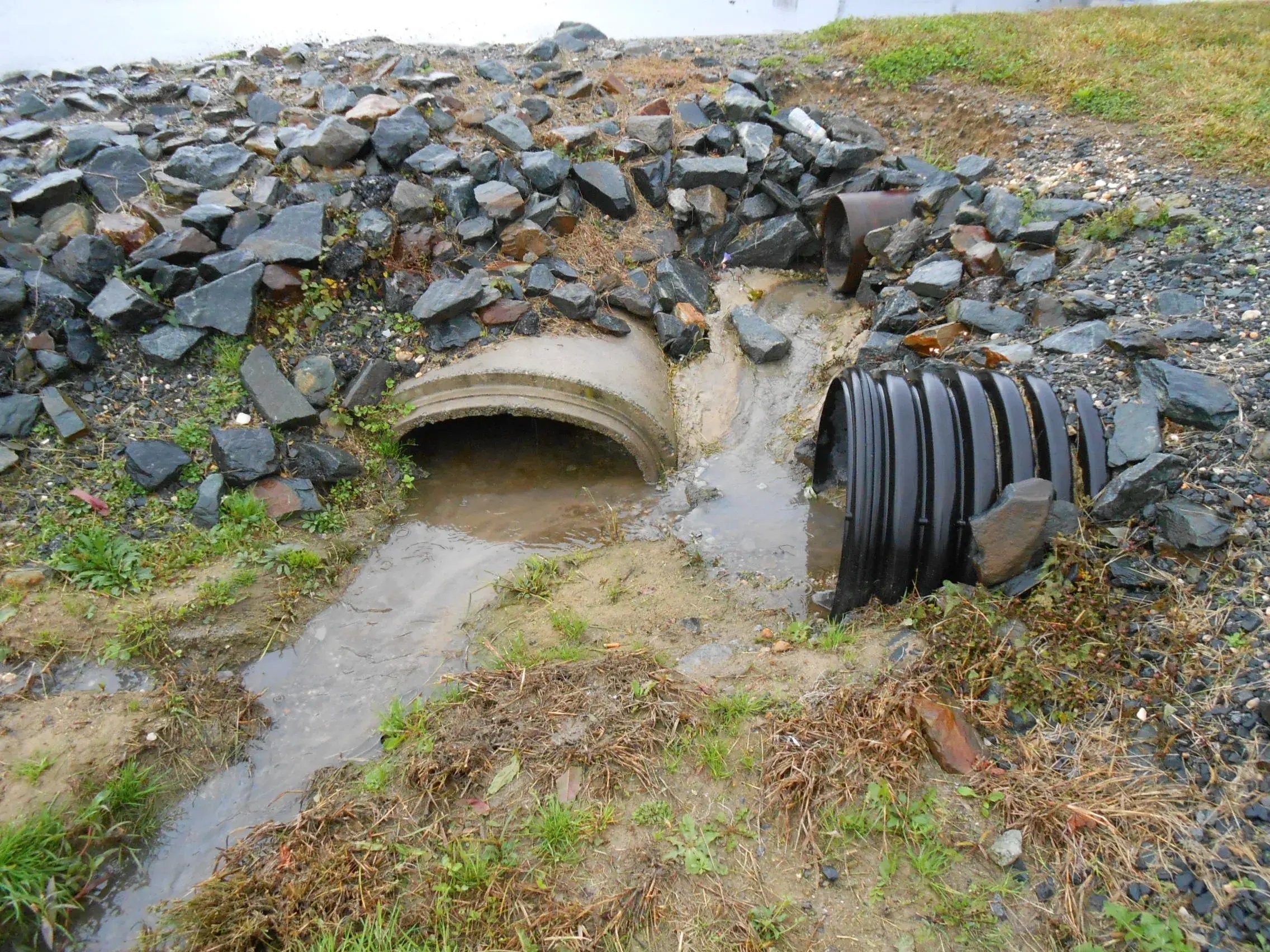
A Step-by-Step Decision Tree: SIC Code, Exposure, Industry Permits, and Where Your Runoff Goes
Most New Jersey facility managers don't set out looking for an NJPDES stormwater permit. A letter from NJDEP, a landlord's question, or a customer asking for a permit number sends them looking, and they learn that New Jersey doesn't have one industrial stormwater permit. It has several, plus an exclusion for sites with nothing exposed. Your SIC code decides whether you're in the program, what's exposed to rain decides whether you need a permit, your industry decides whether you get a specialized one, and what's left usually lands on the 5G2 or an individual permit.
This guide turns that into a five-step decision tree you can run on your own facility, then explains each step and the traps in it. If you'd rather have someone look at your site with you, you can reach out to RMA at any point.
Table of Contents
TL;DR
Start with your SIC code to see whether you're in New Jersey's industrial stormwater program. If everything is inside a permanent building, Permanent No Exposure applies. If your industry has its own general permit, like concrete, asphalt, mining, scrap, or wood waste, that's usually the fit. Otherwise it's the 5G2 when you can cover or move all exposure within six months, or an individual permit when you can't. Check where your water goes before you commit, because sewers, groundwater, and process wastewater can change the answer.
Decision Tree: Which NJPDES Stormwater Permit Fits Your Facility?
New Jersey's Department of Environmental Protection (NJDEP) regulates rain and snowmelt that touches industrial activity through the New Jersey Pollutant Discharge Elimination System (NJPDES). Work through the five questions below in order and stop at the first answer. Read Step 5 either way, because where your water goes can change the result.
Step 1
Is your facility's main industrial activity, as shown by its SIC code, in a category NJDEP regulates for industrial stormwater?
Yes
Go to Step 2. |
No
You probably don't need an industrial stormwater permit. Check for outdoor maintenance, equipment cleaning, fueling, or deicing areas, then jump to Step 5. |
↓
Step 2
Are all of your industrial materials and activities inside a permanent, fully roofed and walled building on a permanent foundation?
Yes
A Permanent No Exposure Certification may fit. It's an exclusion, not a permit. Still read Step 5. |
No
Go to Step 3. |
↓
Step 3
Is your operation one of the industries with its own NJDEP general permit: concrete products, hot mix asphalt, mining and quarrying, sand and gravel, scrap metal, vehicle recycling, or wood waste and leaf composting?
Yes
That industry's permit (CPM, R4, R13, RSG, SM2, RVR, or WRC) is the likely fit, once you confirm it's open to new authorizations. Then read Step 5. |
No
Go to Step 4. |
↓
Step 4
Can you cover or move all exposure indoors within six months of authorization, with your stormwater kept separate from process wastewater?
Yes
The Basic Industrial Stormwater General Permit (5G2) is the likely fit. Then read Step 5. |
No
An individual NJPDES permit, written for your specific site, is the likely path. Then read Step 5. |
↓
Step 5: Check before you commit
Where does your water go, and do you have any special discharges?
Sewer-only drainage can shift the rules to your sewerage authority. Groundwater-only discharge can change which industry permit applies. Process wastewater, such as washout or wash water, usually needs its own answer. Streams, municipal storm sewers, and regional rules can add conditions.
Treat the result as a strong lead, not a ruling, since NJDEP decides what a facility is covered by. For background, see why New Jersey has more than one industrial stormwater permit and how to tell whether you need a permit at all. The rest of this article explains each step.
Step 1: Does Your SIC Code Put You in the Industrial Stormwater Program?
NJDEP sorts facilities by what they do, using Standard Industrial Classification (SIC) codes and the matching NAICS codes. The code that counts describes your primary industrial activity, not necessarily the one on your business license or insurance policy, and a wrong code can point you at the wrong permit. Our post on finding your SIC code shows where to look.
The regulated categories are broad: heavy and other manufacturing, mining, waste facilities and recycling, power generation, sewage treatment works, and transportation operations, which are covered only for maintenance, equipment cleaning, fueling, and deicing areas.
If your code isn't in a regulated category, the usual answer is that you don't need an industrial stormwater permit. That's common for offices, retail, many warehouses, data centers, body shops, dealerships, and quick-lubes. The exception is outdoor work. A warehouse that fuels trucks, washes equipment, or runs deicing operations outside can bring those areas into the program. And if NJDEP sent you a letter, don't set it aside because your code looks safe.
Step 2: Is Anything Exposed, and Does Permanent No Exposure Apply?
Exposure means industrial materials or activities that can touch rain, snow, snowmelt, or runoff. NJDEP defines the materials broadly: raw materials, products, by-products, waste, machinery, fuels, lubricants, solvents, and their containers, plus loading, unloading, and moving them. An aggregate pile counts, and so do outdoor drums, steel racks, and a generator in the yard.
If none of it is outside, New Jersey offers a Permanent No Exposure Certification under N.J.A.C. 7:14A-24.6. It's an exclusion from the permit requirement, not a permit. Everything industrial has to sit inside a permanent, fully roofed and walled structure on a permanent foundation. A canopy or a tarp doesn't qualify. The rule allows narrow exceptions for covered, watertight dumpsters holding only your own waste, well-maintained material-handling vehicles, and pipe that isn't leaking or deteriorated. The test covers the whole facility, so one exposed item can disqualify the site. You file the certification every five years, it doesn't transfer to a new operator, and NJDEP can inspect. If you already hold a permit, it stays enforceable until NJDEP finishes removing your discharge from it. Our guide to checking for Permanent No Exposure covers the site walk.
| |
Permanent No Exposure |
5G2 general permit |
| What it is |
An exclusion from permitting |
A general permit you request authorization for |
| Exposure |
None, with everything inside a permanent building |
Covered or moved indoors within six months of authorization |
| Ongoing paperwork |
Certification every five years |
A stormwater plan, annual inspection, and annual certification |
That middle row trips people up. A cover over a pile satisfies the 5G2 but not no exposure, so plenty of sites that feel fully covered fit the permit and not the exclusion.
Step 3: Does Your Industry Have Its Own NJPDES General Permit?
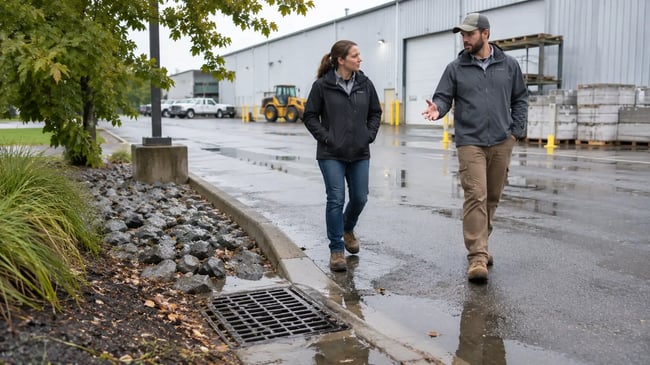
For several industries, NJDEP wrote a general permit around that industry's activities. If your operation matches one, it's usually the place to start instead of the 5G2. The match depends on what happens on the site, not on what the company calls itself.
| Permit |
Who it's for |
Worth knowing |
| CPM, Concrete Products Manufacturing |
Ready-mix, block, and brick plants |
Washout and process water need their own attention. |
| R4, Hot Mix Asphalt Producers |
Hot mix asphalt makers, SIC 2951 and NAICS 324121 |
Stockpiles, recycled asphalt, and tank areas drive the work. |
| R13, Mining and Quarrying |
Mines and quarries |
Covers certain process wastewater to surface water. Not authorized under the 5G2. |
| RSG, Sand and Gravel |
Sand and gravel sites whose stormwater goes to groundwater with no surface discharge |
The R13 and RSG split is about where the water goes. |
| SM2, Scrap Metal |
Scrap yards, with or without vehicle recycling |
Includes quarterly inspections and quarterly sampling. The original SM permit has expired. |
| RVR, Vehicle Recycling |
Sites that only recycle vehicles |
Quarterly inspections. Check the permit for sampling duties. |
| WRC, Wood Waste Recycling and Leaf Composting |
Private wood yards and municipal leaf composting |
Stormwater only. Your right to operate comes from a separate solid waste approval. |
Each one has more depth than a table holds. Start with our concrete, asphalt, and quarry guide, the R13 versus RSG comparison, or the scrap and vehicle recycling breakdown. Wood yards can read our wood waste post.
Is the Industry Permit Open to Your Facility?
An industry permit can match on paper and still be unavailable. Some general permits have expired or aren't taking new authorizations. A brand-new concrete or asphalt plant may find an individual permit is the route. Check NJDEP's current permit pages before you build a plan around any of these. Mixed sites, like a quarry with a ready-mix plant, don't have a simple rule. Expect a site walk and a direct conversation with NJDEP.
Step 4: When Does the 5G2 Fit, and When Do You Need an Individual Permit?
If you're regulated, can't reach no exposure, and no industry permit fits, you're choosing between two. The Basic Industrial Stormwater General Permit (5G2) is what NJDEP calls a "remove and cover" permit. It's available to regulated facilities that have eliminated, or can eliminate within six months of authorization, all exposure of industrial materials and activities to stormwater.
The 5G2 asks for a stormwater pollution prevention plan, which NJDEP's documents often call an SPPP and which people also call an SP3 or just a stormwater plan. We'll use SWPPP. It also requires an annual inspection and certification, and you request authorization through a Request for Authorization (RFA) on NJDEP's online system. It's built around the plan and the inspection rather than routine sampling, which some industry permits add. See our 5G2 explainer and the 5G2 sampling post, and our online training library if your team needs training.
The 5G2 has exclusions. Stormwater already authorized under another NJPDES discharge permit is out, as is stormwater mixed with domestic or process wastewater before treatment and stormwater subject to federal effluent guidelines. Mines and quarries aren't covered, and construction stormwater falls under a separate permit, the 5G3.
An individual NJPDES permit is written for one site. NJDEP uses it for facilities that can't eliminate exposure and don't fit a general permit, and for discharges the 5G2 excludes. Metal fabrication, chemicals, plastics, and food and beverage operations with permanent outdoor activity are typical examples. Individual permits generally take longer and tend to carry more monitoring, so be sure before heading that way. Our posts on individual permits and leaving the 5G2 go further.
Step 5: How Do Special Discharges and Receiving Waters Change Your Permit?
The first four steps ask what you do and what's outside. This one asks where the water goes and what else leaves your site besides rain. A stormwater permit authorizes stormwater. Washout, wash water, dewatering, and other process discharges aren't covered just because you hold one. Some industry permits address certain process water, and the 5G2 excludes stormwater that mixes with process wastewater before treatment. If you wash trucks or run any production water, ask where it goes before you call your permit choice settled.
| Where the water goes |
What it can mean |
| Storm drain, ditch, or stream |
The usual setting for industrial stormwater permits. |
| Groundwater or infiltration basin |
Can affect which industry permit fits. The RSG is built for groundwater-only discharge. |
| Sanitary or combined sewer |
Stormwater sent to these sewers generally falls outside NJDEP's industrial stormwater rules. Your sewerage authority sets its own terms. |
| More than one of these |
Common. Runoff that reaches a drain, ditch, stream, or groundwater can still need a permit even if part of the site drains to a sewer. |
The sewer question trips up more facilities than any other. A building with floor drains tied to the sanitary sewer may fall under the local sewerage authority, but the lot and the yard probably drain somewhere else. Trace the drains and confirm with the authority or NJDEP. We can't say that a facility in any particular city does or doesn't need a permit, because it depends on how that site drains. See our sewer drainage guide and the post on combined sewers.
Receiving waters rarely flip the basic answer. A nearby Category One stream doesn't by itself decide whether an existing facility needs a stormwater permit, though it can come into play for process or treated wastewater. See our Category One waters post. Sites in the Pinelands, Highlands, or Meadowlands may face separate provisions.
Which NJPDES Permit Fits Common New Jersey Facilities?
A few situations we see often, run through the tree. Each is a likely outcome, not a guarantee.
| Facility |
Likely outcome |
Why |
| Warehouse, all inside, no outdoor fueling or washing |
Often no industrial stormwater permit |
Not a regulated activity unless outdoor maintenance, cleaning, fueling, or deicing happens. |
| Regulated manufacturer with pallets outside under tarps |
Probably the 5G2 |
A tarp is cover, which satisfies the 5G2 but not no exposure. |
| Scrap yard that also dismantles vehicles |
SM2 |
NJDEP has indicated the SM2 is built for the combined operation. |
| Metal fabricator with outdoor steel storage and no industry permit |
Likely an individual permit |
Exposure can't be eliminated and no general permit fits. |
The answer often turns on one detail, like a tarp, a drain, or a second activity on the property.
What Should You Check Before You File for an NJPDES Permit?
Start with the permit's current status on NJDEP's pages, since a permit can close to new authorizations or change. Then match the permit to your plan. Operating without valid coverage, missing sampling duties your permit does require, and a SWPPP that doesn't match the permit are the wrong-permit problems we see most.
If you already have an authorization that seems wrong, don't drop it on your own. Coverage stays enforceable until NJDEP formally changes or revokes it, so finish any switch, including a move to no exposure, with NJDEP first. The same goes for new outdoor activity. Get coverage in place before it starts.
If you're building or expanding, there are two phases. Construction stormwater coverage under the 5G3, soil erosion and sediment control certification through the Soil Conservation District, and stormwater management design under N.J.A.C. 7:8 belong to the construction phase. Your engineer, contractor, or a soil erosion specialist usually handles those, and RMA doesn't prepare construction-phase permits or approvals. Once the facility is running, it almost always needs the operational coverage this tree sorts out: the right NJPDES industrial permit or a no exposure exclusion, a SWPPP, inspections, annual certification, and sampling where your permit requires it. That's where we help, and we can point you toward the right construction people.
If you'd like to file yourself, our do-it-yourself filing guide walks through it, and our NPDES resources page collects the rest. If your situation is simple, we'd rather you handle it than pay us for something you don't need.
How Does RMA Help You Choose and Keep the Right NJPDES Permit?
We're based in New Jersey and work with NJDEP's permit categories all the time, so we know where this tree usually leads and where it doesn't. A senior member of our team can walk the site with you, read your SIC code, exposure, and drainage, and tell you which permit looks right. Sometimes the answer is that you don't need one, and we'll say so. After you're permitted, we help with the plan, inspections, annual certification, and questions between filings. Where your permit requires sampling, you take the samples and we train your team to do it correctly. We're also upfront when we're not the right fit, such as for engineering design, treatment system construction, or construction-phase permits.
There's no pressure and no obligation. You can call us, email us, or fill out the form on our website. If you'd like a second opinion on where your facility lands, contact RMA whenever you're ready.