Why Some New Jersey Facilities End Up With a Site-Specific NJPDES Stormwater Permit Instead of a General Permit, and What Triggers It
Most New Jersey facility managers who look into industrial stormwater expect to sign up under a general permit, a ready-made set of rules NJDEP wrote once for a whole category of sites. Then they learn the facility is headed for an individual permit instead, one NJDEP writes for a single site, and the first question is almost always why. Did we do something wrong? Is this a penalty? The short answer is no, not usually. An individual permit is where a facility lands when it doesn't fit any general permit, or when NJDEP decides on its own that a general permit won't adequately control that site's discharge.
In this article we'll walk through the situations that most often lead there: activities and discharges that fall outside general permit eligibility, receiving waters and pollutant loads that raise NJDEP's concern, changes at the facility, and compliance problems. We'll also cover what NJDEP's written notice looks like and how long you have to respond. If you'd rather talk through your own site with someone who does this every day, you can reach out to RMA at any point.
Table of Contents
TL;DR
NJDEP puts a facility on an individual stormwater permit for two broad reasons. Either the facility can't use any general permit, usually because it can't keep industrial materials and activities out of the rain, no industry-specific permit fits, or the discharge is one general permits exclude. Or NJDEP decides case by case that a general permit won't control the discharge, based on things like the receiving water, the size of the site, the pollutants involved, changes at the facility, or compliance problems. NJDEP has to put its reasons in writing and give you a deadline to apply, so don't let that deadline pass.
What Is the Difference Between an Individual and a General NJPDES Stormwater Permit?
NJDEP regulates rainwater that touches industrial activity at businesses through NJPDES, the New Jersey Pollutant Discharge Elimination System, which is the state's version of the federal NPDES permit program. Instead of one permit for every industrial site, NJDEP sorts regulated facilities into four paths: the Basic Industrial Stormwater General Permit (5G2), a set of industry-specific general permits (Concrete Products Manufacturing (CPM), Hot Mix Asphalt (R4), Mining and Quarrying (R13), Sand and Gravel (RSG), Scrap Metal (SM and SM2), Vehicle Recycling (RVR), and Wood Waste Recycling and Leaf Composting (WRC)), individual permits, and an exclusion for facilities with no exposure of industrial materials or activities to the weather.
A general permit is one master permit written for a whole category of facilities. You sign on by submitting a Request for Authorization (RFA), and NJDEP's rules are the same for everyone covered. An individual permit is written for one specific site. NJDEP describes individual permits as the tool it typically uses to set site-specific conditions at facilities that aren't eligible for a general permit. Our guide on whether you need an individual NJPDES industrial permit covers the basic decision. This article covers the reasons behind it.
| Feature |
General Permit |
Individual Permit |
| Who it's written for |
A whole category of facilities |
One specific facility |
| How you get covered |
Request for Authorization under the master permit |
Full application to NJDEP under N.J.A.C. 7:14A-4, followed by a draft permit |
| Conditions |
The same for everyone authorized |
Tailored to your site, so they can differ from a similar facility's |
| Typical timeline |
Generally faster |
Generally slower, since NJDEP reviews the site on its own |
There are two roads to an individual permit. Either you never fit a general permit, or you fit on paper and NJDEP decides a general permit isn't the right tool for your site.
Which Facilities Fall Outside General Permit Eligibility for Stormwater?
The most common reason is the 5G2's core condition. NJDEP makes the 5G2 available to regulated industrial facilities that have eliminated, or can eliminate within six months of authorization, all exposure of industrial materials and activities to stormwater. Plenty of facilities can't meet that. If you store materials outdoors, work outdoors, or run equipment that rain and snowmelt can touch, you can't use the 5G2. If your industry also has no permit of its own (metal fabrication, chemicals, plastics, food and beverage, and printing are typical examples), there's no general permit left to try. We explain the 5G2 test in our plain-English guide to the 5G2 and walk through who gets steered where in who qualifies for the 5G2 and who gets pushed to an industry-specific permit.
The second reason is the discharge itself. Every general permit lists discharges it doesn't authorize, and stormwater that mixes with process wastewater before treatment is a common example. A site with that kind of discharge can't cover it under the general permit, whatever its industry. The specific exclusions are written into each permit, so check the current permit text for yours.
The third reason is that your industry has a general permit, but you can't use it. The permit may not be open to new authorizations right now, the site may not meet its conditions, or the permit may not cover your particular activity. Mining and quarrying, for instance, now has its own R13 permit rather than the 5G2. Our guide to which New Jersey stormwater permit fits a concrete, asphalt, or quarry operation shows how those industry permits compare. The rules back this up from NJDEP's side: under N.J.A.C. 7:14A-6.13(m), NJDEP has to deny a request for general permit authorization when the discharge isn't eligible, which is often how an applicant finds out an individual permit is the only option.
Can NJDEP Require an Individual Permit for a Facility That Qualifies for a General Permit?
Yes. New Jersey's rules give NJDEP two ways to do it. Under N.J.A.C. 7:14A-2.4(c), NJDEP can decide case by case that a facility otherwise eligible for a general permit must get an individual one because of its contributions to water pollution. And under N.J.A.C. 7:14A-6.13(e), NJDEP can require a facility that already has general permit coverage to apply for an individual permit or a different general permit when certain circumstances exist. The rule lists them, and we've put them in plain words below.
| What NJDEP Can Point To |
What It Means in Practice |
| The facility may be a significant contributor of pollutants |
NJDEP weighs the site's location, size, the amount and nature of pollutants, and the quality of the receiving water |
| The facility is out of compliance with the general permit |
Conditions of the permit aren't being met |
| Circumstances changed |
The discharge is no longer adequately controlled under the general permit |
| New information |
NJDEP learns the facility wasn't eligible for the general permit |
| Changes in the rules or planning |
New technology or practices, new effluent limitation guidelines, or an adopted Water Quality Management Plan imposes different requirements |
The same rule lets any person petition NJDEP to take this action, so a complaint from outside the facility can feed into the process too. Our post on what happens when a neighbor complains to NJDEP about your runoff shows how that usually plays out.
What Does NJDEP's Written Notice Say, and How Long Do You Have to Respond?
NJDEP can't do this quietly. It has to notify you in writing, state its reasons, and include an application or authorization form and a deadline. Under N.J.A.C. 7:14A-2.4(c), the deadline is 60 days from receiving the notice, or 180 days for stormwater dischargers covered by the stormwater subchapter, unless NJDEP approves a later date. NJDEP can extend a deadline if you ask. If the deadline passes without a response, your general permit authorization is automatically revoked at the end of that day, which leaves you with a discharge and no coverage. Comments on whether requiring an individual permit is appropriate can be submitted during the public comment period and at any later hearing.
Put the deadline on a calendar the day the notice arrives, ask for more time early if you need it, and keep your current coverage in place until NJDEP confirms something else is in force. Rules change, so confirm the current text of the sections cited above before acting on a real notice.
How Do Receiving Waters, Site Size, and Pollutant Load Affect NJDEP's Decision?
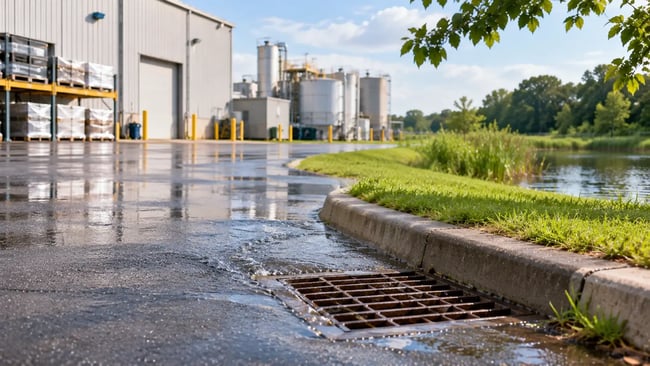
Where your water ends up, how much of it there is, and what's in it all carry weight. The rules name location, size, the quantity and nature of the pollutants, and receiving water quality as the factors NJDEP looks at when it asks whether a facility may be a significant contributor of pollutants. The same factors show up in N.J.A.C. 7:14A-6.13(m), which lets NJDEP deny authorization under a general permit when the discharge isn't appropriately regulated by it. The rules list these factors without a formula, so the call is NJDEP's judgment about your specific site. A large yard with a lot of exposed material draining to a small stream looks different to a reviewer than a small, tidy site, and a general permit's one-size-fits-all conditions may not match that.
Sensitive waters are part of that picture. Category One waters, the streams, lakes, and reservoirs NJDEP protects most strictly under its antidegradation rules, don't by themselves decide which permit an existing facility needs, but receiving water quality is one of the listed factors. Our guide to Category One waters explains where those protections do and don't reach. Location inside a regional protection area such as the Pinelands, Highlands, or Meadowlands can add rules of its own, which we cover in why location matters for Pinelands, Highlands, and Meadowlands businesses. NJPDES also covers discharges to groundwater, so a site that sends runoff into the ground rather than a stream is part of the same analysis.
How Do Facility Changes and Compliance Problems Lead to an Individual Stormwater Permit?
Plenty of facilities start on a general permit and drift off it. A 5G2 holder that adds outdoor storage, moves a process outside, or starts handling a new material may no longer meet the permit's no-exposure condition. NJDEP can learn that from an annual certification, an inspection, a complaint, or any other new information, and N.J.A.C. 7:14A-6.13(e) lets it act when it learns the facility isn't eligible. In many cases a change points to a different general permit rather than an individual one. Outdoor scrap processing generally points to the SM2 permit, vehicle recycling to the RVR permit, and some other industries to CPM, R4, R13, RSG, or WRC. An individual permit becomes the answer when none of those fits. Our guide to leaving the 5G2 walks through how to switch without a gap in coverage, and the short version is to apply for the new coverage before the change and keep the old coverage until NJDEP confirms the switch.
Compliance is the other side of it. Being out of compliance with a general permit's conditions is one of the grounds the rules list for requiring an individual permit. The stormwater pollution prevention plan (SWPPP, which New Jersey's program often calls an SPPP, and which people also call an SP3 or just a stormwater plan), the inspections, the annual certification, and any sampling the permit requires are the kinds of conditions that matter here. Our explainer on New Jersey's stormwater pollution prevention plan covers what NJDEP expects that plan to contain. If your notice follows a violation, or you're worried about enforcement exposure, an environmental attorney may be appropriate alongside any permit work, and we describe the enforcement side in what happens if a New Jersey business ignores stormwater rules.
What Does an Individual Stormwater Permit Mean for Your Facility Compared to a General Permit?
The permit itself is built around your site. You submit a full application under N.J.A.C. 7:14A-4, NJDEP reviews it, and NJDEP prepares a draft permit that goes through public notice before it's finalized. That's why individual permits take longer than general permit authorizations and generally ask more of you. The conditions can differ from those of a similar facility down the road, because NJDEP wrote yours for your discharge. Annual fees follow NJDEP's fee schedule by permit category, so check the current schedule for yours. Beyond fees, cost depends on the permit category, the sampling required, the size and complexity of the site, and whether you already have a SWPPP in good shape.
Sampling deserves a note, because an individual permit's monitoring conditions are written for your site and we can't tell you in advance what they'll be. Whatever they are, we're firm believers in taking your own samples, since you know your facility and storm windows don't wait for a consultant's calendar. We explain why in why you need to take your own stormwater samples, and our online environmental training library can help get your team ready.
You also don't always have to wait for NJDEP. Under N.J.A.C. 7:14A-6.13(g), a facility with general permit coverage can ask to be excluded by applying for an individual permit or another general permit, giving its reasons, and NJDEP grants the request if it finds the reasons adequate.
And sometimes the honest answer is that you don't need an individual permit at all. If you can move everything indoors and keep it there, you may qualify for the no exposure exclusion or the 5G2, and our guide on checking your facility for permanent no exposure shows how to test that yourself.
One more note if the permit question comes up because you're building or expanding. Construction-phase requirements, such as construction stormwater coverage under the 5G3 general permit, Soil Conservation District soil erosion and sediment control certification, and stormwater management design for major development under N.J.A.C. 7:8, are handled by your engineer, contractor, or a soil erosion specialist. RMA doesn't prepare those. What a new or expanded facility almost always needs once it's running is the right NJPDES industrial permit or a no exposure exclusion, a SWPPP, inspections, annual certification, and often other programs like SPCC, and that's where we help. We can also point you toward the right construction-phase professionals.
How Does RMA Help With Individual NJPDES Stormwater Permits?
We're based in New Jersey and work with NJDEP's permit categories every day, so a lot of our work starts with the question you're asking here: which permit does this site really need, and why? We help you sort out whether an individual permit is unavoidable, whether a facility change would put you on a general permit or the no exposure exclusion instead, and what the permit will ask of you if an individual permit is the answer. Senior staff do the work, we'll tell you plainly if a simpler route exists, and we train your team to handle sampling and inspections themselves. We're not the right fit for major engineering design or treatment system construction, and we'll say so up front.
If you've received a notice from NJDEP, or you just want a second opinion on where your facility lands, there's no pressure and no obligation. You can call us, email us, or fill out the form on our website, and we'll talk it through. When you're ready, contact RMA and tell us what you're seeing at your site.