Why Old Pennsylvania SPCC Plans Are a Common Inspection Finding, How Far Out of Date Matters, and the Fastest Way to Get Current
An SPCC Plan, short for Spill Prevention, Control, and Countermeasure Plan, is the written oil spill plan EPA requires from facilities that store more than 1,320 gallons of oil aboveground (counting only containers of 55 gallons or more) or more than 42,000 gallons buried. If your Pennsylvania facility has one, somebody wrote it a while ago, it went into a binder, and nobody has opened it since. Then a customer, an insurer, or a new safety manager asks about the five-year review. You check the date on the cover and it says 2016. Or you find that the plan lists a 5,000 gallon diesel tank that was hauled off years ago and never mentions the two newer ones sitting behind the shop.
The short answer is that an overdue plan is a violation of the federal oil spill rule, but it's also one of the most fixable problems in oil compliance, and facilities that move quickly are in a very different position from facilities that wait for an inspector to find it. If you'd like help sorting out where your plan stands, you can reach out to RMA at any point. In this article we'll cover why overdue plans turn up so often, how the review rule works, how far out of date really matters, what to do when the plan describes tanks that no longer exist, and the fastest path back to a current plan.
Table of Contents
TL;DR
Federal rules require you to review your SPCC Plan at least every five years and to amend it within six months of a change that materially affects your spill risk. A plan that's years behind is a violation, and the rule has no grace period, but your real exposure depends on how far the plan has drifted from what's on your site today. The fastest way back is to walk the site, count your oil containers again, decide whether to patch or rebuild the plan, sign and date a real review, and fix any physical gaps you find. You don't need to wait for an inspector to start.
Why Are Overdue SPCC Plan Reviews Such a Common Inspection Finding?
Most overdue plans come from the same set of ordinary causes. The plan was written once to satisfy a lender, an insurer, or an inspector, and then it went on a shelf. Nothing in the plan sends a reminder, and the review requirement sits in a single paragraph of the rule, so it's easy to never hear about it. The person who wrote or managed the plan changed jobs, and nobody inherited the responsibility. Tanks were added, removed, or moved by people running the operation, and none of them thought of the plan as something that had to change when the yard did. We've written about how to keep a Pennsylvania SPCC Plan alive after the person who wrote it leaves, and a handoff like that is where most gaps start.
It also shows up often because it's easy for an inspector to check. EPA Region 3 enforces the SPCC rule in Pennsylvania, and an inspector who asks to see the plan can look at the review record and then look at the site. EPA's own quality review of 120 SPCC-regulated facilities noted plans with missing or inadequate documentation of the five-year review, and plans that owners hadn't amended when the rule required it, among a long list of recurring deficiencies. If you want the enforcement picture, our articles on who enforces SPCC plans and the top SPCC plan violations and fines cover it in more depth.
How Does the Five-Year SPCC Plan Review Work?
Under 40 CFR 112.5, you have to review and evaluate your SPCC Plan at least once every five years. The clock runs from your last review, or from the date your facility first became subject to the rule if you've never done one. The review doesn't mean rewriting the plan. It means sitting down with the plan and the site and asking two questions: does the plan still describe what's here, and is there newer, field-proven spill prevention technology that would significantly reduce the chance of a discharge? If the answer to the second question is yes, you amend the plan within six months of the review and put the change in place within six months after that.
The rule also asks you to put the result in writing. You document that the review happened and sign a statement saying whether you'll amend the plan. That statement can sit at the front or back of the plan, or in a log or appendix, and it's the piece most often missing when we open an older plan.
The five-year review is only one of two separate obligations. The other is an event-driven amendment. Whenever a change in design, construction, operation, or maintenance materially affects your potential for a discharge, you have to amend the plan within six months of the change, no matter where you are in the five-year cycle. Adding or removing a container, rerouting piping, changing the secondary containment, or switching what you store can all qualify. Technical amendments generally need Professional Engineer certification, with one common exception: a Tier I qualified facility, which is generally one with 10,000 gallons or less of aboveground oil storage and a clean spill history, can usually self-certify as long as it stays within those limits. Our article on how long a Pennsylvania SPCC Plan is good for walks through the review cycle step by step, and this piece on five-year reviews covers the update, renew, or redo question.
How Far Overdue Is Too Far for an SPCC Plan?
The rule doesn't have a grace period or a sliding scale. The day after your five-year mark passes without a documented review, you're out of compliance, and it stays that way until the review is done. In practice, though, a plan that's three months late and a plan that's nine years late are very different problems, because the longer a plan sits, the more likely it is that your site has changed under it. The table below shows how we think about the common situations.
| Where You Are |
What It Usually Means |
Typical Path Back |
| Just past five years, site unchanged |
The plan is accurate but the review record is missing |
Walk the site, confirm the plan still matches, then sign and date the review |
| Past five years, a few changes since the plan was written |
Missed review plus technical amendments the rule wanted within six months of each change |
Amend for each change, with PE certification unless you're a Tier I qualified facility |
| Many years overdue, tanks added or removed along the way |
The plan describes a facility that no longer exists, and its inspection and containment sections probably don't match the site |
Usually a rebuild rather than a patch |
| Plan can't be found, or the author is gone and nobody knows what it says |
Functionally the same as having no plan |
Treat it as a new plan and start from a fresh inventory |
On penalties, the Clean Water Act sets maximums for oil pollution violations, and EPA adjusts them for inflation every year under 40 CFR Part 19. The statutory figures run into the tens of thousands of dollars per violation or per day. What a facility pays for a paperwork finding like a missing review is a separate question and depends on the case, the inspector, and how the facility responds. Fixing the problem before anyone asks puts you in a stronger spot than explaining it afterward. If you've already received an inspection notice or an information request from EPA, talk to an environmental attorney before you do anything else, and treat the plan work as a second step.
The bigger risk is a spill. If oil leaves your containment and reaches a storm drain or a creek, the plan and your inspection records get read against what happened, and a plan that describes the wrong tanks won't help you.

What If Your SPCC Plan Describes Tanks That No Longer Exist?
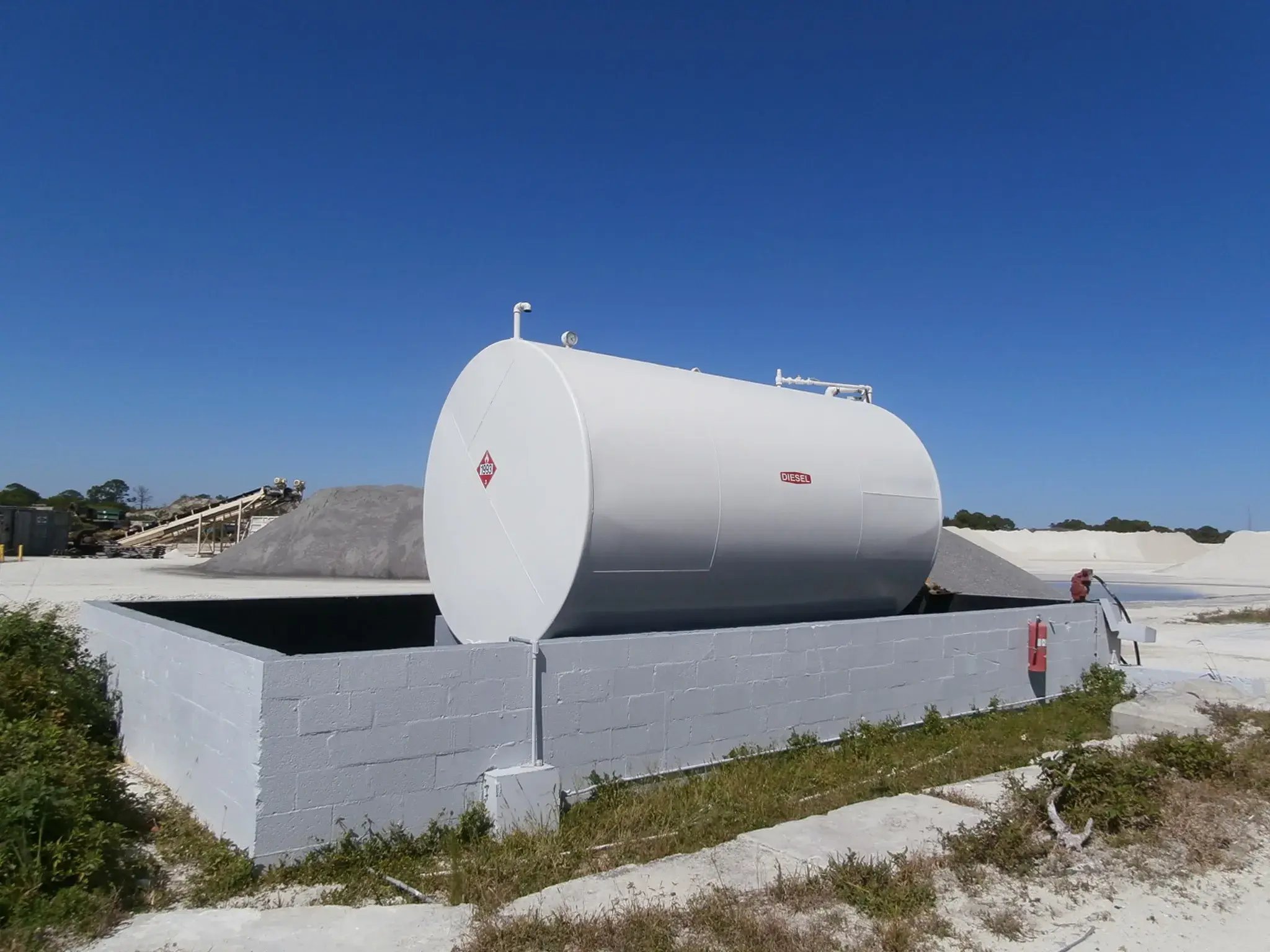
This is the version of an overdue plan we run into most, and it cuts both ways. Say your plan lists a 10,000 gallon aboveground tank that was taken out in 2020. If that was most of your oil storage, you may have dropped below the SPCC threshold and no longer need a plan at all. Before you assume that, count your capacity again. It's total capacity that counts, not how full the containers are, and only containers of 55 gallons or more count toward the aboveground total. Oil-filled equipment like transformers and hydraulic systems counts, and so do animal fats and vegetable oils. Our guide to inventorying oil tanks, drums, and equipment shows how to do the count properly. If you're under the threshold, we'll tell you so.
More often the plan is missing tanks rather than listing extra ones. A generator added in 2021, a new fuel skid, a larger bulk oil tank, or a few more totes can change both your total capacity and the kind of plan you need. A facility that was a Tier I qualified facility when the plan was written can cross into PE-certified territory without anyone noticing, and we've covered how that happens in crossing 10,000 gallons and in the piece on adding a backup generator.
A plan that doesn't match the site creates knock-on problems, too. The inspection schedule, containment calculations, and integrity testing are all tied to specific containers, so every mismatch is a section that no longer applies or a container nobody inspects. The Pennsylvania layer matters here as well. If your tanks are registered with DEP, a tank that's been removed, replaced, or added may need to be reflected in the registration too, and whether a given tank has to be registered depends on its size, type, and use. Our article on Pennsylvania aboveground tank registration explains how to check, and integrity testing for bulk oil containers covers the testing side.
What's the Fastest Way to Get an Overdue SPCC Plan Current?
The fastest route is the one that starts with the site, not the document. Trying to fix the plan from the plan itself tends to carry old mistakes forward. Here's the sequence that gets most facilities current in one round of work.
Start With a Site Walk and a Fresh Inventory
Walk the facility with the current plan in hand and list every oil container and piece of oil-filled equipment you can find, with its size, what's in it, where it sits, and what's around it for containment. Note anything that's been added, removed, or moved. Take photos. That tells you how far the plan has drifted, and it's the same information a new plan is built from.
Decide Whether to Update or Rebuild
If the plan is still accurate and only the review record is missing, a documented review may be all you need. If there are a few changes, you can amend the plan for each one. If the site has changed substantially, or the plan was written by someone you can't reach, we usually recommend rebuilding. Patching a plan we didn't write means re-verifying every section anyway, and we'd rather start from the real site. That's also why most firms, including us, are cautious about updating another firm's plan, and our article on getting an SPCC plan updated explains when it works. To figure out which kind of plan you need once you've counted your capacity, see Tier I, Tier II, or PE-certified.
Document the Review and Close the Physical Gaps
Once the plan matches the site, sign and date the five-year review statement on the day you do it. Don't backdate it. A record claiming a review happened when it didn't is a problem of its own, and it's worse than a late date. Then deal with whatever the site walk turned up: a missing or undersized containment, a container nobody has inspected, a drain valve left open, a plan that needs PE certification. Restart your monthly inspections using a monthly SPCC inspection checklist, and get your oil-handling staff trained. Our online environmental training library has SPCC courses, and initial SPCC training is free when RMA builds your new plan. If you want a year-round rhythm so this doesn't happen again, the Pennsylvania SPCC compliance calendar lays one out.
What Does It Cost to Catch Up on an Overdue SPCC Plan?
Cost depends on how far the plan has drifted, how many containers you have, and whether the plan needs a Professional Engineer. RMA's SPCC plans overall run from about $1,500 to $15,000, and a Tier I plan runs about $1,500 to $4,000. RMA doesn't have a PE on staff. When a plan needs PE certification, we work with an outside professional engineer, and that review adds both a fee and some time. The table below shows what moves the number.
| Factor |
Pushes Cost Down |
Pushes Cost Up |
| Plan type |
Tier I qualified facility, self-certified |
PE-certified plan with an outside engineer's review |
| Number of containers |
A few tanks in one area |
Many tanks, drums, totes, and oil-filled equipment spread across the site |
| Condition of the old plan |
Accurate, with only a missing review |
Out of date enough that we rebuild from a fresh inventory |
| Secondary containment |
Already in place and sized correctly |
Containment needs evaluating, or something has to be built |
Fixing physical gaps, such as building containment, is a separate cost from the plan itself. Our posts on Tier I plan costs in Pennsylvania and why PE-certified plans cost more go into the numbers. If you'd like a price for your own site, the SPCC pricing calculator below gives you an estimate of what RMA's help would run.
How Can RMA Help With an Overdue Pennsylvania SPCC Plan?
We work with Pennsylvania facilities at every point on this spectrum. Some just need to know they're under the threshold. Some need a documented review and a couple of amendments. Some need a plan rebuilt. We'll tell you which one you are, and we'll tell you if you don't need us. Senior staff do the work, we don't use AI to produce your plan, and we'll give you real numbers up front.
There's no pressure and no obligation. You can call us, send an email, or fill out the form on our site, and we'll talk through what you have, what you know about your tanks, and what a sensible next step looks like. When you're ready, you can contact RMA and we'll take it from there.