When Filing Your Own Pennsylvania No Exposure Certification Works Well, When Getting Help Makes Sense, and What DEP Expects in the Application
Often, yes. A No Exposure Certification is the simplest stormwater path in Pennsylvania, and plenty of facility managers with clearly indoor operations can prepare and file one themselves. It lets a facility in a covered industry skip PAG-03 permit coverage, DEP's general permit for industrial stormwater, by certifying that its industrial materials and activities are kept indoors or under cover where rain can't touch them. Where people run into trouble isn't usually the paperwork. It's deciding whether the site really meets the standard, because DEP's idea of "no exposure" is stricter than most people expect when they walk the yard for the first time.
This article covers when filing on your own works well, what DEP asks for in the application, which situations make it riskier, and when it makes sense to bring in help. We'll be straight about where you can handle it yourself, and if you'd rather not figure it out alone, you can reach out to RMA and we'll gladly take a look.
Table of Contents
TL;DR
Often, yes. A facility with clearly indoor operations and a simple site can usually prepare and file a Pennsylvania No Exposure Certification itself, since it's a certification the facility makes to DEP and the application is manageable for a straightforward site. Help is worth considering when exposure is borderline, the site is large or complicated, or DEP has already pushed back on an application. Either way, an expert is there if you want one.
Can You File a Pennsylvania No Exposure Certification Yourself?
A No Exposure Certification is a facility's own certification to DEP that stormwater leaving the site isn't contaminated by industrial materials or activities. Facility staff prepare these themselves all the time, and the process is less demanding than it sounds for the right kind of site. Compared with PAG-03 coverage, you skip the ongoing monitoring and reporting that come with a permit, and what DEP gets instead is one application every five years. That's the appeal, and it's a real one for a facility that qualifies.
Two things should come first. The first is whether your industry is covered at all. No Exposure is only available to facilities in the industrial categories that fall under the federal stormwater rules, and plenty of facilities, including many warehouses, aren't in those categories and need neither a permit nor a certification. Our guide on how to determine whether your Pennsylvania facility needs PAG-03 walks through that check. The second is who signs. The person who certifies for the facility needs to be someone DEP accepts, and our explanation of responsible officials covers who qualifies.
When Does Filing a No Exposure Certification Yourself Work Well?
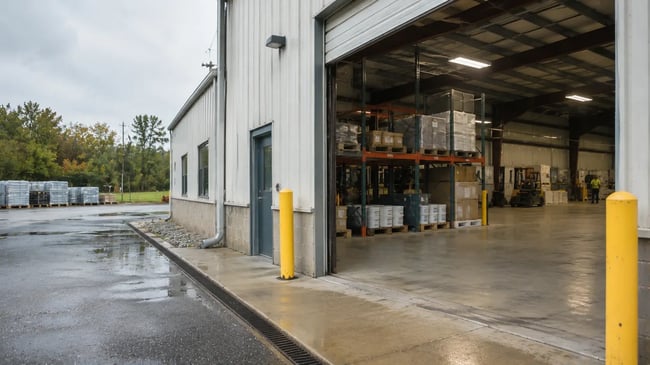
Doing it yourself works best when the answer to the exposure question is obvious. Picture a machine shop, assembly plant, or light manufacturer where all production, storage, and loading happens inside a building, the dumpsters have lids, any drums are sealed, and nothing sits outside but employee parking and delivery trucks. DEP's guidance treats those kinds of items as manageable. Covered dumpsters in good condition, tightly sealed drums, and well-maintained vehicles used for material handling don't need extra shelter, employee parking isn't treated as an industrial area, and deicing materials used for safety on walkways and parking areas don't disqualify a facility.
The other conditions that make filing on your own comfortable are practical ones. The site is a single building or a few simple ones, the drainage is easy to trace, you know where the water goes and it isn't headed to a High Quality or Exceptional Value stream, and nobody at DEP has raised questions about the facility. If that describes your site, our walkthroughs on who qualifies for No Exposure and DEP's No Exposure checklist will take you through the questions in plain language, and you may not need anything beyond those and DEP's own instructions.
What Does DEP Expect in a Pennsylvania No Exposure Certification Application?
The application is a package, and knowing what's in it helps you judge how much work you're signing up for. According to DEP's industrial stormwater FAQ, a No Exposure Certification submission includes the No Exposure Certification form, the PAG-03 Notice of Intent form, a General Information Form for new applications, a topographic map and a site map, the filing fee, evidence of notice to the local municipal separate storm sewer system (MS4) operator where that applies, and a PPC plan when the application's questions call for one. A PPC plan is Pennsylvania's Preparedness, Prevention and Contingency plan, which describes pollutant sources, drainage, and spill response at the site.
Two parts of that package tend to take longer than people expect. DEP also asks existing facilities for analytical results from their current discharges, which means collecting stormwater samples and getting lab results before you file. Our posts on taking your own stormwater samples and choosing a water testing lab cover that step. The other is the site map and, where one is required, the PPC plan. We have guides on creating your own site map and on DEP's PPC plan template, and both are doable for a simple site.
On cost, DEP's FAQ lists a $500 fee due every five years with the application, and there's no separate annual fee for a No Exposure Certification. The certification is generally valid for five years, and the renewal application is due no later than 180 days before the expiration date, so it's smart to mark that date as soon as DEP approves the certification.
Which Exposure Situations Make a Do-It-Yourself No Exposure Certification Riskier?
Most of the risk in filing yourself sits in a handful of situations where reasonable people disagree about whether something counts as exposed. The table below pulls together how DEP's guidance treats common ones. It's a starting point and not a ruling, since DEP says its FAQ answers are interpretations and it can deviate from them.
| Situation at the site |
What DEP's guidance says |
DIY or get help? |
| Dumpster with a lid, in good condition |
Qualifies without extra shelter |
Usually a comfortable DIY call |
| Dumpster without a lid |
Qualifies only under a storm-resistant shelter |
Check the shelter carefully |
| Outdoor fueling area with no roof or cover |
Makes the facility ineligible |
No Exposure likely isn't the right path |
| Above-ground fuel tank with exposed containment |
Ineligible unless the containment is protected from rain and blowing snow |
Worth a second set of eyes |
| Vehicle or equipment washing outside |
Wash areas need to be indoors to be eligible |
Not eligible as the site stands |
| Vehicles waiting for maintenance outdoors |
Maintenance needs to be indoors, and outdoor vehicles awaiting it make a facility ineligible |
Fix the practice first |
| Tarps over outdoor materials |
Acceptable only as a temporary measure |
A real gray area |
Two rules catch people more than any single item in that table. No Exposure is all or nothing, which means DEP won't approve it for only part of a site, so one uncovered area can sink the whole application. And a facility that discharges to High Quality or Exceptional Value waters isn't eligible at all, so it's worth checking your stream's classification before you spend time on the application. Our post on High Quality and Exceptional Value streams explains how to find out. For everyday items like forklifts, loading docks, and parking, our guide to what DEP counts as stormwater exposure goes into more detail, and what No Exposure looks like in practice shows how pass-or-fail setups play out.
When Is It Worth Getting Help With a Pennsylvania No Exposure Certification?
Getting help makes sense in a few situations, and none of them mean you did anything wrong. The first is borderline exposure. If you're looking at the table above and half your site lands in the gray rows, an outside review before you certify is cheaper than a denied application or a certification that doesn't hold up. The second is a larger or more complicated site, such as several buildings, multiple outfalls, a mix of indoor and outdoor operations, or shared drainage with a neighbor, where it's easy to miss an area and the all-or-nothing rule leaves no room for a miss.
The third is a facility that DEP has already pushed back on. According to DEP's FAQ, if a No Exposure request is denied, the facility has to continue with permit coverage, so a denial can leave you on the path you were trying to avoid. Understanding what DEP objected to, and whether the site can be changed to fix it, is the kind of work where experience pays off. The same goes for an existing PAG-03 permittee who wants to switch to No Exposure, since DEP's FAQ describes that as its own process with a notice of termination and annual report, and for any facility that isn't sure its industry is covered in the first place. And sometimes the reason is simpler: the site manager has a full plate and would rather hand it off. That's a perfectly good reason to hire someone. If you're weighing that, our guide on choosing a Pennsylvania stormwater consultant covers what to look for and what to ask, and comparing No Exposure and PAG-03 can help you see what the alternative looks like.
What Happens After DEP Approves a Pennsylvania No Exposure Certification?
Approval isn't the end of the job, because the certification only stays true if the site does. DEP's approval carries an expiration date, and the renewal application is due at least 180 days before it. In between, the facility needs to keep the conditions it certified. That means lids stay on, drums stay sealed, maintenance and washing stay indoors, and a temporary tarp doesn't turn into a permanent storage solution. If conditions change so the facility no longer qualifies, DEP's FAQ says the facility must notify DEP immediately and submit a Notice of Intent or permit application.
That's the part we'd encourage every facility to treat seriously, whether it filed on its own or with help. A new outdoor storage rack, a trailer parked for months, or a relocated dumpster can change the answer without anyone deciding to change it. A short walk of the yard every few months, checking against what you certified, goes a long way. If you're not sure whether a change affects your certification, that's a good moment to ask someone before DEP does.
How Can RMA Help With a Pennsylvania No Exposure Certification?
We work with Pennsylvania facilities all the time, and No Exposure Certifications are a regular part of that. If your site is simple and clearly indoors, you may not need us, and we'll tell you that. If you'd like a second set of eyes, we can review your site and your draft before you file. If you'd rather hand it off, we can prepare the application, the site map, and the PPC plan where one is needed, and help with follow-up if DEP has questions. And if a walk through your site shows that No Exposure isn't going to work, we can help you move to PAG-03 coverage instead. Our guide on getting a PAG-03 permit yourself covers that side of the question too.
You can browse our Pennsylvania NPDES and stormwater services, our broader NPDES permitting resource library, and the full set of Pennsylvania NPDES articles whenever you like. If you want to talk through your site, there's no pressure and no obligation. You can call, email, or fill out the form on our website, and you can contact RMA whenever it suits you.