Why Quick-Lube Shops Usually Fall Outside PAG-03, and the Used Oil, Storage Tank, and Spill Rules That Apply Instead
Oil change shops go through gallons of fresh and used oil every day, and the service bays, floor drains, and parking lot all sit close to a storm drain. It's natural to wonder whether that puts you under Pennsylvania's industrial stormwater permit. For most oil change and quick-lube shops, the answer is no. That doesn't mean you're off the hook for oil, though, because the rules that do apply to you are about used oil, tanks, and spills.
Below, we'll explain why quick-lube shops usually fall outside DEP's industrial stormwater permit, the few situations that can change that, and what you're responsible for instead: used oil handling, storage tank registration, spill prevention, and keeping oil out of storm drains. If you'd like a second opinion on your own shop, you can reach out to RMA and we'll talk it through.
Table of Contents
TL;DR
Most oil change and quick-lube shops in Pennsylvania don't need a stormwater permit, because DEP's industrial stormwater permit (PAG-03) covers listed industrial categories and these shops are classified as automotive services. The exceptions are a lube bay that sits on a covered site, like a trucking terminal, or a case where DEP decides a specific site's runoff needs coverage. What shops do have are used oil rules, possible storage tank registration and spill plan duties, and a legal obligation to keep oil out of storm drains and report spills that reach them.
Does an Oil Change Shop Need PAG-03 Stormwater Coverage?
PAG-03 is the general permit DEP issues for stormwater runoff from industrial sites. It covers facilities in the industrial categories listed in the federal stormwater rules (40 CFR 122.26(b)(14)), which include manufacturing, mining, waste handling, transportation facilities, and similar operations. To figure out where a facility lands, DEP looks first at its primary SIC code, the Standard Industrial Classification code for whatever brings in the most revenue, or at a listed activity that's defined by what the site does instead of by a code. A shop that mainly changes oil and lubricates vehicles is normally classified under SIC 7549, automotive services except repair and carwashes, and that code isn't on the list. Our plain-English guide to PAG-03 covers the permit itself in more detail.
DEP's industrial stormwater FAQ doesn't single out auto repair shops, but the logic holds. A facility outside the listed categories generally doesn't need PAG-03 coverage, and it doesn't file a No Exposure Certification either, since that option exists only for facilities that would otherwise need coverage. DEP does keep the authority to require coverage for a facility outside the listed categories if it decides the site's runoff is causing pollution under the Clean Streams Law, so a shop with a history of oil problems at its drains shouldn't treat the SIC code as a shield.
When Could a Quick-Lube Shop Still Fall Under PAG-03?
The answer changes if your lube bays sit on someone else's regulated site. A fleet maintenance garage at a trucking terminal, bus yard, or similar transportation facility is treated as part of that facility, and DEP expects an on-site vehicle maintenance shop to be covered by the permit or a No Exposure Certification. Our posts on trucking companies and the SIC code test show how that plays out, and this guide to finding your SIC code shows where to look yours up. Local rules can add their own requirements on top of DEP's, including municipal stormwater fees (see stormwater fees versus stormwater permits), so confirm your situation with your township or sewer authority.
The code is based on what your site mainly does, so it needs to match reality. A shop that has grown into heavier work, like maintaining and repairing vehicles for fleet customers, may have a different primary activity than the one on its paperwork. If you're unsure which code DEP would assign to your operation, check it before assuming you're outside the permit.
Can Oil Reach a Storm Drain Even Without a Stormwater Permit?
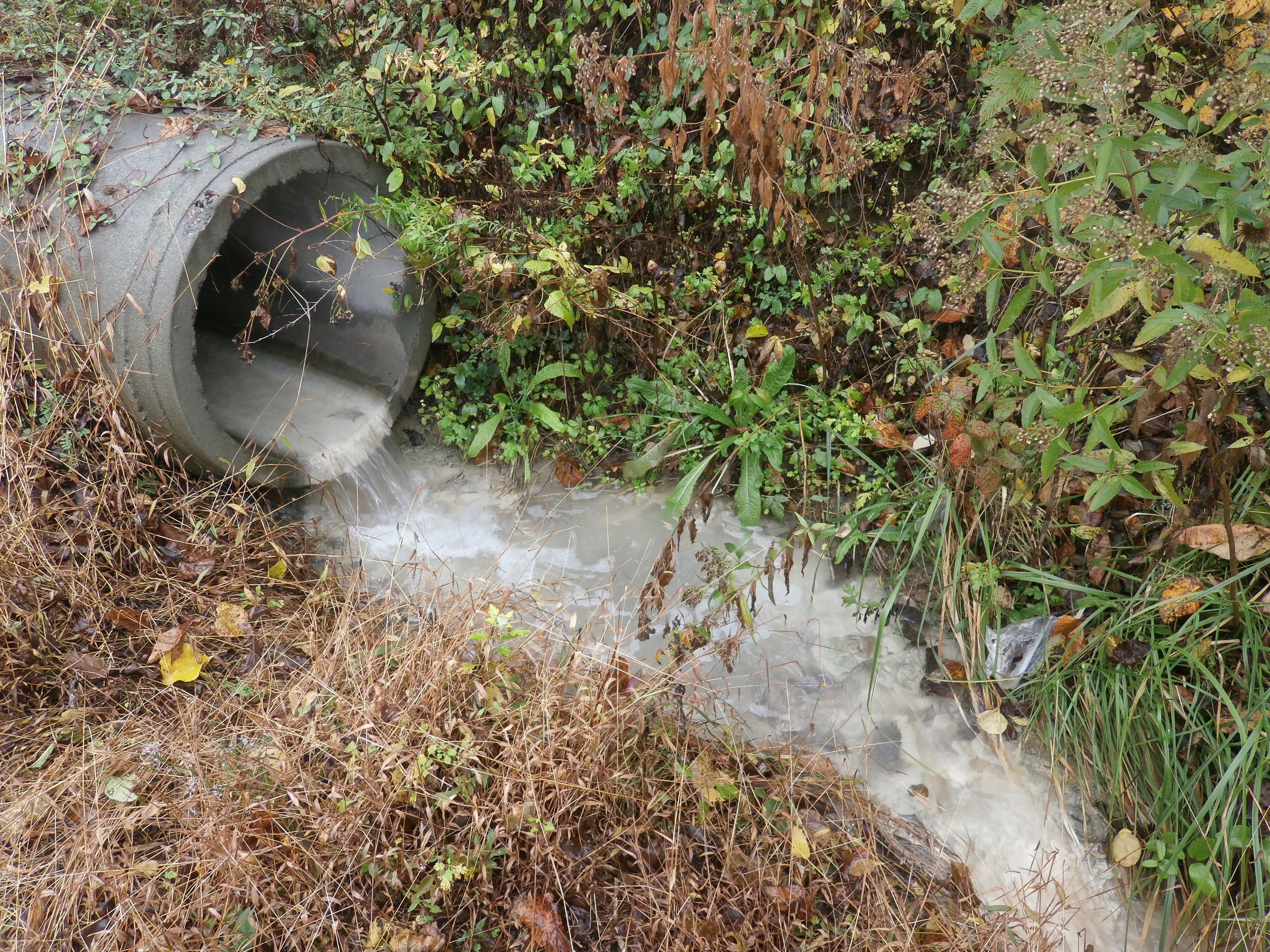
No permit doesn't mean no rules. Pennsylvania's Clean Streams Law prohibits polluting the state's waters, and it applies to every business whether or not a stormwater permit is involved. Oil is about as clear a case of pollution as there is. In most places, a parking lot storm drain empties into a nearby creek or river without any treatment, although older cities with combined sewers work differently, so a quart of oil that washes into one has left your property and entered a stream. Our post on where a parking lot storm drain goes follows that path.
If a spill does reach a drain or a stream, DEP's rules (25 Pa. Code § 91.33) require the person responsible to notify DEP by phone right away when an incident causes or threatens pollution. A sheen on the water is a common trigger, and when a facility has to report an oily sheen is worth reading before it happens to you. Townships that run municipal storm sewer programs (called MS4s) commonly prohibit dumping oil, fluids, and wash water into storm drains through local ordinances, and our post on how township MS4 programs overlap with industrial permits explains where the township's authority starts.
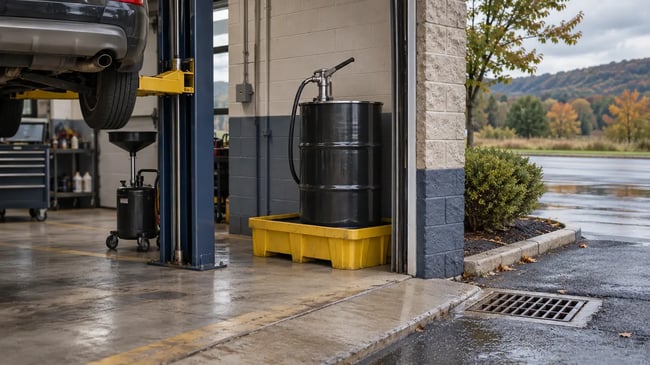
In practice, that means knowing where every floor drain and bay pit drain in your shop goes, whether it's the sanitary sewer, a holding tank, or a storm drain. It means keeping spill kits and drain covers where an employee can reach them in seconds, storing drums and totes under cover, and wiping up leaks from customers' vehicles before the next rain. If a drain turns out to connect to the storm system, fix that first, and check with your sewer authority about where it should go instead.
What Are Pennsylvania's Used Oil Rules for Oil Change Shops?
Used oil is where most of a quick-lube shop's day-to-day obligation sits. Pennsylvania's rules for it are in 25 Pa. Code Chapter 298, the state's counterpart to the federal used oil standards in 40 CFR Part 279, and the state calls the material "waste oil." For a shop that generates it, the basics are straightforward. Containers and aboveground tanks that hold it have to be in good condition, with no severe rust, structural defects, or visible leaks, and the state rule says they must be marked "waste oil." That wording differs from the federal "used oil" label, so we'd use the Pennsylvania wording on every container and tank at your shop. A leaking container or tank has to be repaired or replaced before it goes back into service, and a release has to be stopped, contained, and cleaned up.
Oil filters, antifreeze, brake cleaner, and parts washer solvent each have their own handling rules, and mixing used oil with solvents can change how the whole container has to be managed. Keep those streams separate, and keep the pickup paperwork from your hauler. Our waste and hazardous waste resources page is a good place to start, and this five-minute self-check covers the other DEP programs that could apply.
Do Oil Change Shops Need Storage Tank Registration or an SPCC Plan?
Possibly, and it depends on your tanks. DEP's Storage Tank Program regulates underground tanks over 110 gallons and stationary aboveground tanks over 250 gallons that hold regulated substances, a category that includes petroleum products. Owners register those tanks with DEP and pay an annual fee per tank. Many quick-lube shops have a used oil tank plus bulk tanks or totes for new oil, so check each one against those size thresholds. Underground tanks that hold waste oil fall under DEP's storage tank rules in Chapter 245 whether or not the oil has any hazardous characteristics. Aboveground tanks and tanks holding new oil come with more exceptions that depend on size and use, so we'd rather look at your actual setup than give a blanket answer.
Separately, the federal SPCC (Spill Prevention, Control, and Countermeasure) rule requires a written oil spill plan when a facility's total aboveground oil storage is more than 1,320 gallons, counting only containers of 55 gallons or larger, and when a spill could reasonably reach a waterway, which a shop with storm drains nearby has to consider. Add up your new oil tanks, totes, drums, and used oil tank, and some shops will land over that line while others are well under it. Our post on SPCC and PPC plans in Pennsylvania explains how the federal plan relates to Pennsylvania's own spill planning, and our Pennsylvania SPCC plan page shows what a plan involves.
How Can RMA Help Oil Change and Quick-Lube Shops in Pennsylvania?
We work with Pennsylvania facilities all the time, and for oil change shops the help that's useful is usually narrow. We can check your SIC code and site to confirm you're outside PAG-03, review how you're handling used oil, add up your oil storage to see whether an SPCC plan applies, and tell you plainly when you don't need us. You can call, email, or fill out the form on our website, and you can contact RMA with no obligation. For background on how Pennsylvania's industrial stormwater program works, our Pennsylvania NPDES and stormwater page collects everything in one place, and our general NPDES resources library covers the national picture.