What PCBs Are and Why They Still Matter at Electrical and Industrial Sites
If you work in manufacturing, power generation, electrical transmission, or heavy industry, you’ve probably heard the term “PCBs.” And if you’re buying or redeveloping a property with that kind of history, you might be seeing it show up in reports or conversations that feel a little too serious a little too fast. Even though PCBs were banned decades ago, they’re still one of the most common issues we see during site evaluations and property transactions.
That’s frustrating, because nobody wants to inherit an environmental problem from the 1970s. But this is one of those legacy issues that can sneak up on projects, especially when a site looks clean on the surface. The good news is that PCBs are manageable when you understand what you’re dealing with and you catch it early.
In this article, we’re going to break down what PCBs are, why they’re still a concern at electrical and industrial sites, how they can move through the environment, and what options you have if they’re found. And if you want help figuring out whether PCBs might be an issue at your site, you can reach out to RMA here.
Table of Contents
What PCBs Are and Where They’re Commonly Found
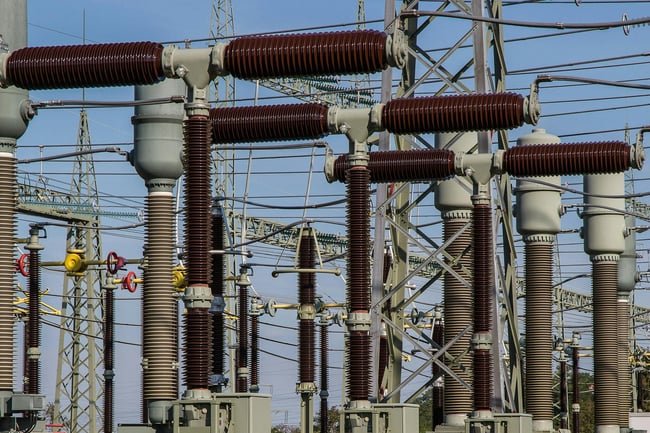
PCBs, short for polychlorinated biphenyls, are man-made chemicals that were widely used from the 1930s through the late 1970s. They were basically the “perfect” industrial fluid because they were stable, non-flammable, and great at handling heat. Those qualities made them popular in electrical equipment like transformers, capacitors, and switchgear.
But PCBs didn’t just live inside transformers. Over time, they also showed up in hydraulic systems, cable insulation, fluorescent light ballasts, and even some older building materials like caulking. That’s one reason they’re tricky, because the source isn’t always obvious when you walk a site today.
The biggest problem is that PCBs don’t break down easily. Once they get into soil, dust, or groundwater, they can hang around for decades and keep causing headaches long after the original equipment is gone. That persistence is a big reason the EPA banned PCB production in 1979 under the Toxic Substances Control Act, also known as TSCA.
Why PCBs Keep Showing Up at Electrical and Heavy Industrial Properties
If a property ever manufactured, generated power, transmitted power, or supported heavy industry, PCBs were almost certainly part of the story. Leaking equipment, oily residues from maintenance, storage of used transformer oil, and disposal practices that were common back then all added up over time. Even old building sealants can be part of the problem, which surprises a lot of people.
It’s also worth remembering that containment practices decades ago weren’t what they are today. Small drips might’ve been ignored, floor drains might’ve carried oily water where it shouldn’t go, and disposal pits were sometimes treated like a normal operational feature. Nobody was thinking, “This is going to be a redevelopment issue in 2026,” but here we are.
Fast forward a few decades, and the same spots keep popping up: transformer pads, drainage pathways, utility corridors, and areas where equipment was stored or serviced. We’ve seen properties that look spotless until soil samples say otherwise, and that’s why history matters just as much as what the site looks like today. If you’re looking at a site like this and want a gut-check, start a conversation with us here!
Who Regulates PCBs and What Levels Trigger Requirements
In the U.S., PCBs are regulated by the Environmental Protection Agency (EPA) under the Toxic Substances Control Act (TSCA), specifically 40 CFR Part 761. Now, that's a lot of acronyms, but here's the gist: that regulation lays out how PCB materials are managed, how cleanup works, and what counts as regulated PCB waste. For property owners and buyers, it matters because the numbers can quickly determine what you’re allowed to do and what you’re required to do.
The common thresholds are pretty straightforward.
-
Less than 50 parts per million (ppm) is generally considered non-PCB.
-
Between 50 and 500 ppm is considered PCB-contaminated.
-
Above 500 ppm is regulated PCB waste, which is where requirements get strict quick.
Those numbers might sound tiny, but PCBs are persistent and they don’t just disappear with time. Even lower concentrations can create real concerns depending on the site setting, nearby waterways, or sensitive receptors. Also, some states layer on stricter expectations than the federal baseline, which is why it’s smart to make sure you're covering all your bases when assessing PCBs!
Do PCBs “Stay Put” or Can They Spread?
One of the biggest misconceptions we hear is that PCBs “stay put.” It’s true that PCBs tend to bind strongly to soil, which means they don’t behave like a super-mobile solvent that takes off overnight. But that doesn’t mean they’re frozen in place forever.
Over time, rainfall, erosion, sediment movement, and groundwater flow can move impacted soil or carry contaminated particles farther than you’d expect. We’ve seen situations where a few oily stains near an old substation pad decades ago ended up showing measurable impacts in nearby drainage ditches later on. It’s not dramatic in the moment, but it can be meaningful when you’re trying to redevelop or get a clean bill of health.
This is why “low-level” impacts shouldn’t automatically be brushed off. Even when the numbers aren’t sky-high, the location and the pathway matter, especially if the site drains toward a water body or has ongoing disturbance from construction. If you’re unsure whether what you’re seeing is a small issue or the start of a bigger one, that’s exactly the kind of conversation we have every day.
PCBs During Property Transactions: Phase I and Phase II ESAs
If you’re buying, selling, or financing an electrical or industrial property, PCB risk should be part of your due diligence from the start. During a Phase I Environmental Site Assessment, (which will almost certainly be required), the consultant looks for historical indicators like transformer use, substation activity, equipment storage, or heavy industrial operations. If that history exists, potential PCB contamination often shows up as a Recognized Environmental Condition, or REC.
A REC doesn’t confirm contamination. It’s basically a big flag that says, “There’s enough history here that we should treat this as a real possibility.” That’s helpful because it keeps everyone from pretending the risk doesn’t exist until after closing, when the leverage is gone and the budget suddenly gets tight.
If the risk is meaningful, a Phase II ESA may include targeted sampling to confirm whether PCBs are present and at what levels. The goal is simple: understand what you’re dealing with before you sign, not after you inherit it. If you’re in a transaction and PCB language is starting to appear, it’s a good time to talk to us so you can make decisions with your eyes open.
We've included some additional Phase I ESA resources at the bottom of this article.
What Happens If PCBs Are Found: Practical Cleanup and Management Options
If PCBs are found, it’s not automatically the end of the project. What happens next depends on the concentrations, where the impacts are located, and what you’re trying to do with the property. In many cases, there are multiple ways to manage the issue without grinding everything to a halt.
Common options include excavating and disposing of impacted soils, installing a clean soil or concrete cap, or managing the site through a state voluntary cleanup program. In some cases, EPA’s self-implementing cleanup approach under TSCA can apply, and that can be a workable path when it’s handled correctly. The right approach is the one that balances compliance requirements with real-world construction plans and budget reality.
At RMA, we help clients evaluate these options and choose the most practical route (and avoid the most stressful one). We look at what the numbers mean, what the regulators are likely to expect, and how to keep the project moving while reducing long-term liability. If you’ve got PCB results in hand and you want someone to translate them into a real plan, reach out here.
How to Protect Your Project From PCB Surprises
PCBs are a legacy issue that still shows up at electrical transmission, substation, and industrial facilities across the country. They persist for decades, they can move slowly through soil and sediment pathways, and they can create long-term liability when they’re ignored. If your property has a history involving electrical equipment or heavy industry, PCB risk shouldn’t be an afterthought.
When PCBs pop up during due diligence, the best move is to treat it like a business decision, not a panic moment. Figure out whether they’re present, understand the concentrations, and map out what management or cleanup would realistically look like for your project. The worst-case scenario usually isn’t “PCBs exist,” it’s “PCBs exist and nobody dealt with them until it was too late to negotiate or plan.”
We’ve spent decades helping clients identify, assess, and manage PCB issues from early due diligence all the way through cleanup and closure. If you’re seeing “PCBs” in your reports or you’re just not sure what the findings mean, reach out to RMA. Because what you don’t know can hurt you, but with the right partner, you can manage the risk and move forward with confidence.