How the Federal Oil and Gas Exemption, DEP's Oil and Gas Program, and PAG-03 Fit Together for Pipe Yards, Laydown Yards, and Equipment Maintenance Sites
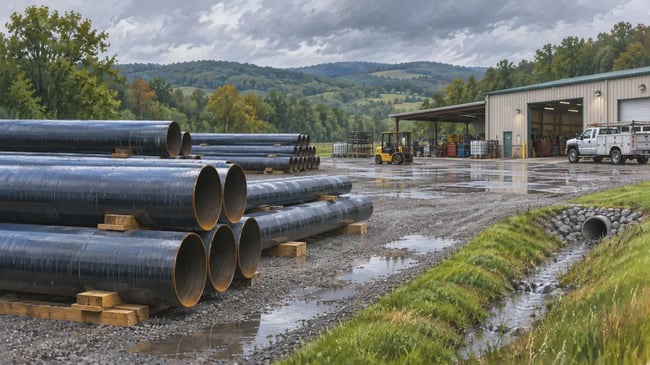
Drive through the gas-producing parts of Pennsylvania and you'll see them everywhere: fenced gravel lots stacked with steel pipe, rows of trailers and pumps, and equipment yards where service crews park and maintain their trucks. Whether those yards need a stormwater permit isn't a yes-or-no question, and anyone who gives you a flat answer without looking at the site is guessing. The short version is that it depends. Oil and gas field operations have a federal exemption from stormwater permitting as long as their runoff stays clean, Pennsylvania DEP regulates well sites and pipeline construction through its own oil and gas program, and a separate pipe yard or equipment maintenance facility may or may not land under DEP's industrial stormwater rules depending on its industry code and what happens outdoors.
This article walks through how the federal exemption works, what DEP's oil and gas program covers, how DEP decides whether an industrial stormwater permit applies to a yard, and what a site-specific review looks at. Because the right answer turns on your yard's activities and the permits it already holds, we'll stick to the questions that decide it rather than pretend there's one rule for every site. If you'd like someone to look at a particular yard, you can reach out to RMA at any point.
Table of Contents
TL;DR
A natural gas pipe or equipment yard in Pennsylvania may or may not need a stormwater permit. A yard that's truly part of oil and gas field operations and keeps its runoff clean can fall under a federal exemption and DEP's oil and gas program, while a separate pipe yard or equipment maintenance facility is usually judged like any other industrial site, based on its industry code and what happens outdoors. Spills, oily sheen, and polluted runoff can change the answer either way, so a site-specific review is the best way to know where your yard stands.
What Does the Federal Oil and Gas Stormwater Exemption Cover?
Most industrial stormwater in Pennsylvania is regulated through the National Pollutant Discharge Elimination System, or NPDES, the federal permit program that Pennsylvania DEP runs for the state. Oil and gas operations get special treatment under it. Section 402(l)(2) of the Clean Water Act says EPA can't require an NPDES permit for stormwater runoff from oil and gas field operations when that runoff is made up entirely of precipitation and hasn't been contaminated by contact with materials on the site. The regulation that carries this out, 40 CFR 122.26(a)(2)(ii), covers field activities and operations associated with oil and gas exploration, production, processing, and treatment. EPA's guidance lists well sites, drill pads, access roads, gathering and transmission lines, and compressor stations as examples. Refineries and refined products pipelines are not in that group.
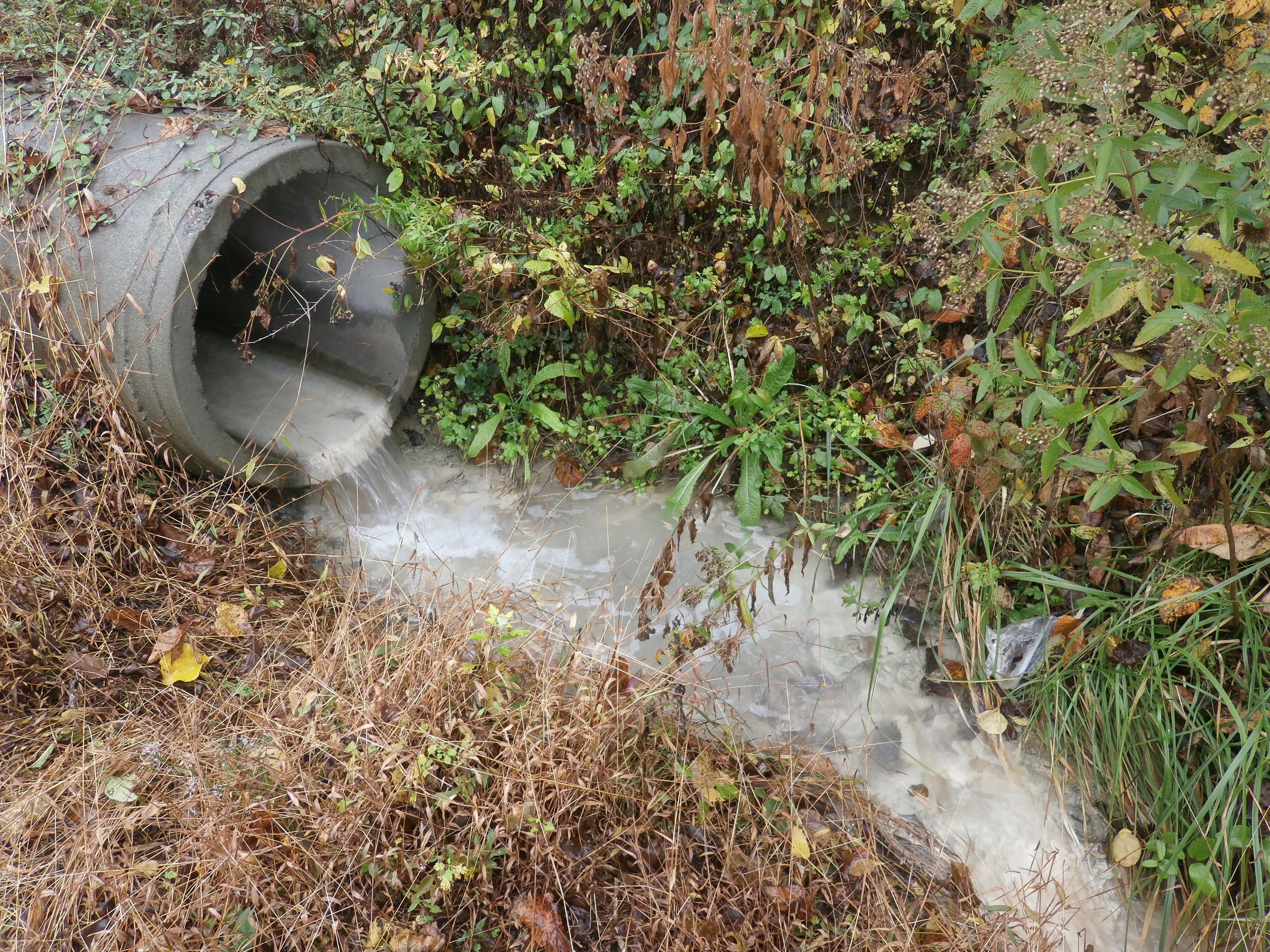
The exemption has a limit, and the limit is where yards get complicated. It stops applying when runoff is contaminated. EPA ties that to three situations: a release of oil or a hazardous substance at or above a reportable quantity since November 16, 1987, a discharge of oil that leaves a film, sheen, or discoloration on the water surface, or runoff that contributes to a violation of a water quality standard. A pipe yard stacked with clean steel that has never seen a spill sits in a different place than a yard with a fuel tank, a maintenance bay, and a history of drips. It's also worth keeping in mind that this is a federal rule about what EPA can require. It doesn't stop Pennsylvania from applying its own authority, which is the next piece.
How Does PA DEP's Oil and Gas Program Handle Stormwater at Well Sites and Pipelines?
Pennsylvania doesn't leave oil and gas stormwater unregulated. DEP's oil and gas program applies 25 Pa. Code Chapters 78 and 78a (conventional and unconventional wells), Chapter 102 (erosion and sediment control), and Chapter 105 (dam safety and waterway management) to this work. Under Chapter 102, an oil and gas project that involves five acres or more of earth disturbance over the life of the project needs an erosion and sediment control permit before the work starts. That authorization can come through the Erosion and Sediment Control General Permit for oil and gas activities, known as the ESCGP, or through an individual erosion and sediment control permit. The ESCGP covers earth disturbance for exploration, production, processing, and treatment operations and for transmission facilities, which is why well pad and pipeline construction run through it.
That's construction-phase work, and it's outside what we do. RMA doesn't prepare erosion and sediment control plans, ESCGP applications, or Chapter 105 permits. Those usually go through the operator's engineer or an erosion and sediment control specialist. If you want the background on how construction stormwater differs from industrial stormwater, our comparison of PAG-02 and PAG-03 covers it. What we can do is help you work out whether a yard needs an operational stormwater permit or plan once it's running, and point you toward the right construction people when the project still needs them. The permits a site already holds also shape the yard question, because a laydown yard built under a project's erosion and sediment control authorization may be treated differently than a yard that was never part of one.
Is a Pipe Yard or Equipment Yard Part of Oil and Gas Field Operations?
This is the gray area, and DEP's own guidance shows why. In its industrial stormwater FAQ, DEP addresses ancillary facilities of oil and gas field services operations, such as maintenance buildings and warehouses, and says they don't meet the criteria for the federal exemption. DEP also keeps the ability to require permit coverage under the Pennsylvania Clean Streams Law when stormwater contributes to pollution, and it describes its FAQ answers as interpretations rather than regulations. A yard being close to gas development doesn't make it exempt, and a yard being tied to gas development doesn't automatically make it covered either.
The table below shows how we'd start sorting common yard types. It's a starting point for a conversation, not a determination, because each one can land differently depending on the operator, the activities, and the permits the site already holds.
| Type of yard |
How it's often approached |
Question that decides it |
| Well pad or drill site |
Regulated through DEP's oil and gas program and its erosion and sediment control permit, with the federal exemption as the backdrop |
Is runoff staying uncontaminated, with no reportable releases or sheen? |
| Temporary pipe laydown yard for a pipeline project |
Often handled under the project's erosion and sediment control authorization |
Is the yard inside the permitted area, and is it truly temporary? |
| Storage area at a compressor station |
Part of the gas operation, so the oil and gas framework is the likely starting point |
Do fuels, oils, or chemicals stored there come into contact with runoff? |
| Permanent pipe supplier or distributor yard |
Often classified as wholesale trade, which may fall outside PAG-03 |
What is the facility's primary industry code, and what happens outdoors? |
| Oilfield service company yard with a maintenance shop |
Maintenance and warehouse facilities don't automatically qualify for the exemption, so PAG-03 may need to be evaluated |
What does the primary industry code say, and is equipment maintenance done outdoors? |
| Trucking or hauling yard |
Transportation categories are generally covered only for vehicle maintenance and equipment cleaning areas |
Where do maintenance and washing happen, and is it indoors? |
If your yard looks like one of the last three rows, it helps to see how DEP treats similar sites. Our guides for trucking companies, steel service centers, and warehouses and distribution centers show how DEP weighs industry codes and outdoor activities for yards that share features with gas pipe and equipment yards.
How Do SIC Codes and Outdoor Activities Decide Whether PAG-03 Applies to a Yard?
PAG-03 is DEP's general permit for stormwater associated with industrial activity. A general permit is a standard set of conditions that facilities in covered industries can apply to join, rather than having a permit written from scratch. Whether a facility is in a covered industry comes down to its Standard Industrial Classification code, or SIC code, a four-digit number that describes the type of business, along with the activities happening on the site.
DEP's FAQ spells out how this works. Coverage generally depends on the facility's primary SIC code or primary industrial activity, and a secondary code on its own usually doesn't trigger coverage. The primary activity is the one that brings in the most revenue at the site, and on-site auxiliary operations like a warehouse or a vehicle shop are treated as secondary to it. That creates real differences between yards that look alike from the road. A pipe distributor's yard and an oilfield service company's yard may both be full of steel and trucks, but they can carry different primary codes and end up in different places. If you only know your NAICS code, a federal crosswalk converts it to an SIC code, and DEP points to that route in its FAQ.
Our guides on how to determine whether your Pennsylvania facility needs a PAG-03 permit and how to find the PAG-03 appendix for your industry walk through that lookup, and we explain what stormwater associated with industrial activity means for readers who want the background on the term. One caution applies even after you've checked your code. If your code isn't on the covered list, DEP can still require coverage under the Clean Streams Law when your runoff contributes to pollution, so an unlisted code isn't a permanent pass.
What Kinds of Runoff Contamination Can Pull a Natural Gas Yard Into Stormwater Permitting?
Whatever framework a yard falls under, the same physical question sits underneath it: what does rain touch before it leaves the site? At a natural gas equipment yard, the usual suspects are fuel and lubricant storage, hydraulic oil leaking from equipment, maintenance and washing areas, stored chemicals, and spills that soak into gravel and wash out later. Clean pipe stacked on racks is a lighter exposure than pipe stored next to a fuel tank and a service bay. Our post on whether storing materials outside needs a stormwater permit explains how rain contacting outdoor materials turns into a DEP issue, and whether you can wash trucks outside in Pennsylvania covers where wash water can and can't go.
Oil sheen comes up twice at these sites. As we described above, a discharge of oil that leaves a sheen is one of the triggers that ends the federal exemption, and it's also the kind of thing DEP inspectors notice on a walk through a yard. Our guide on when a Pennsylvania facility has to report an oily sheen separates a housekeeping issue from a sheen that calls for contacting DEP. Sediment is a separate conversation. Federal rules treat sediment from oil and gas construction differently from other pollutants, but Pennsylvania's Clean Streams Law and Chapter 102 still apply, and a gravel yard with bare ground and steep drainage can send plenty of sediment downstream.
Could a Natural Gas Equipment Yard Qualify for No Exposure or Need a PPC Plan?
If a yard is in an industry category that PAG-03 covers, there's an alternative to a permit called the No Exposure Certification. It's available when all industrial materials and activities are kept indoors or under cover so stormwater never touches them. It's all or nothing, and DEP won't approve it for only part of a site. It also isn't available to facilities that discharge to High Quality or Exceptional Value waters. For a pipe or equipment yard, those rules make it a hard fit, since outdoor storage is the point of the yard. DEP's FAQ says a transportation facility with all vehicle maintenance and equipment cleaning indoors should qualify, but that outdoor storage of materials or vehicles disqualifies it. Our walkthroughs on what No Exposure looks like at a Pennsylvania facility and choosing between No Exposure and PAG-03 go through the details.
When PAG-03 does apply, it comes with a PPC plan, Pennsylvania's Preparedness, Prevention and Contingency plan, which covers pollutant sources, drainage, and spill response at the site. A yard with fuel or oil storage often has other spill plans in the picture too, and our comparison of SPCC and PPC plans in Pennsylvania explains how they overlap.
What Does a Site-Specific Stormwater Review of a Natural Gas Yard Look At?
Since the answer turns on the details, a review of a specific yard starts with a handful of questions. What permits and authorizations does the yard already operate under, including any erosion and sediment control permit tied to the project that built it? Who operates the yard, what's their primary industry code, and which activity brings in the most revenue at the site? What's stored and done outdoors, including fueling, maintenance, washing, and chemical storage? Where does the water go, whether that's a stream, a storm sewer, or a combined sewer, and is the receiving stream classified as High Quality or Exceptional Value? And has the site had spills, sheen, or complaints in the past?
Local rules can add another layer, since townships and sewer authorities sometimes have their own stormwater requirements, so those are worth confirming too. You can also see what DEP has on file for a site by looking it up in eFACTS, which our guide on how to use eFACTS covers. If you're still unsure after that, DEP's regional office for your county is the authority on how it views a particular yard, and we're glad to help you prepare for that conversation.
How Can RMA Help With Stormwater at a Natural Gas Pipe or Equipment Yard?
We work with Pennsylvania facilities all the time, and yards like these are some of the harder calls because the answer depends on so much. We can help you work out whether a yard needs PAG-03 coverage, qualifies for a No Exposure Certification, or sits outside DEP's industrial stormwater rules altogether. If a permit applies, we can help with the PPC plan, sampling, and ongoing reporting. If one doesn't, we'll tell you that too. Erosion and sediment control permits, ESCGP applications, and other construction-phase approvals aren't something we prepare, but we can help you sort out what the construction phase needs and point you toward the engineers and specialists who handle it.
You can browse our Pennsylvania NPDES and stormwater services, our broader NPDES permitting resource library, and the full set of Pennsylvania NPDES articles any time. If you'd like someone to look at your yard, there's no pressure and no obligation. You can call, email, or fill out the form on our website, and you can contact RMA whenever it suits you.