When You Can Do It Yourself, What the Work Really Involves, and the Warning Signs That It's Time to Call for Help
Plenty of Pennsylvania facilities handle their own DEP stormwater paperwork, and plenty of them do it well. We're a consulting firm, and we'll still tell you that some sites don't need us. A small indoor shop that files a No Exposure Certification once every five years is a different job from a multi-outfall plant that samples twice a year and answers to DEP's reporting system, and the right answer depends on which one you're running.
This article lays out who can reasonably go it alone, what the workload looks like once you add up the understanding, the documents, the sampling, and the reporting, and the signs that a site has outgrown a do-it-yourself approach. If you read it and decide you're fine, great. If you'd like a second opinion first, you can reach out to RMA and we'll give you a straight read on your site.
Table of Contents
TL;DR
Simple sites, clear No Exposure candidates, and facilities with capable, organized staff can often handle DEP stormwater paperwork themselves. A No Exposure Certification is the easiest case, since it's mostly a one-time filing every five years. PAG-03 coverage is more work, with a pollution prevention plan up front and sampling and online reporting every six months after that. Help makes sense when a site drains to a protected stream, has several outfalls, keeps exceeding benchmarks, or has gotten a letter from DEP.
Who Can Handle Pennsylvania DEP Stormwater Paperwork Without a Consultant?
Start with the paperwork you have. Pennsylvania facilities in an industrial category usually end up in one of two places. They file a No Exposure Certification, which says everything industrial is kept under cover and out of the rain, or they sign onto PAG-03, DEP's general permit for industrial stormwater, which is a standard permit many similar facilities join by filing a Notice of Intent. A few sites need an individual permit written for them, and that's a different animal we'll come back to. Our guide to choosing between No Exposure and PAG-03 explains how that decision gets made.
Three things tend to separate the facilities that manage fine on their own from the ones that struggle. The first is simplicity, meaning one outfall or a small, easy-to-map site with limited outdoor activity. The second is a clear category, where you know your primary SIC code and DEP's rules fit your situation without much gray area. The third is people, specifically someone with the time to learn the requirements and the discipline to keep up with a calendar of deadlines. If you have all three, you can probably do this. If you have one or none, keep reading.
Which Pennsylvania Facilities Can Handle a No Exposure Certification Themselves?
No Exposure is the easiest case to do yourself. DEP's FAQ says an applicant submits the No Exposure Certification form, the PAG-03 Notice of Intent form, a topographic map, a site map, and the filing fee. Existing discharges also need analytical results for the parameters listed on the form. The fee is $500 every five years, with no annual fee, and renewal is due no later than 180 days before the certification expires. After that, there's no sampling schedule and no monthly reporting to keep up with.
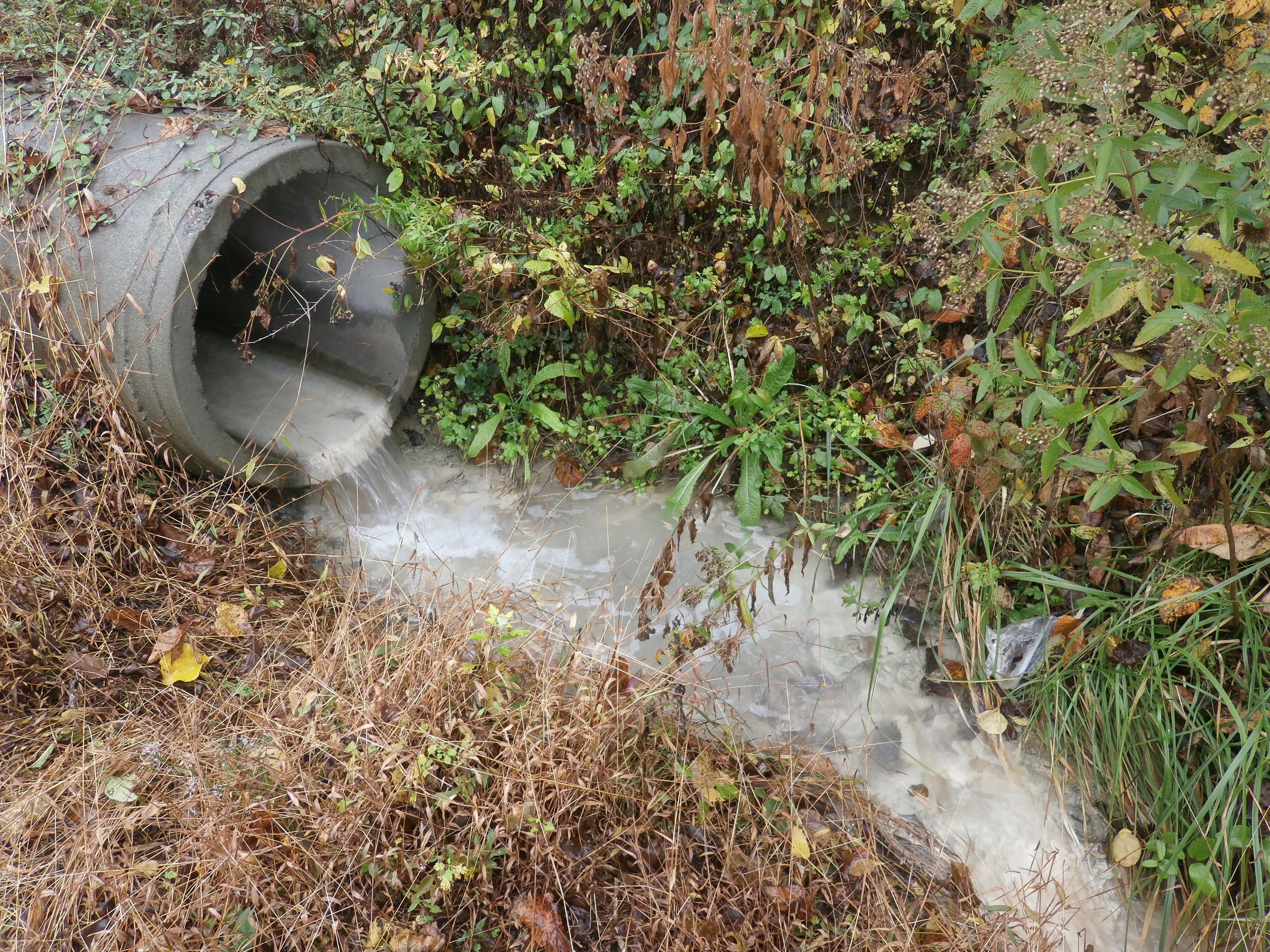
The catch is that the standard is strict. All industrial areas at a site that are subject to permit requirements have to meet the no exposure test, and DEP won't approve it for only part of a site. Materials have to sit under storm-resistant shelter, with exceptions such as sealed containers. Facilities that discharge to High Quality or Exceptional Value waters aren't eligible. A small indoor machine shop, an all-indoor assembly operation, or a woodworking shop with covered storage are the typical candidates. We walk through the checklist in our question-by-question guide and show examples in what no exposure looks like in practice.
Where people go wrong is on the walk-through. A dumpster without a lid, a pallet of product by the dock door, or a forklift charging station outside can undo the whole claim. If you walk your site and find nothing outside, you're likely a good DIY candidate. If you find yourself explaining why something doesn't count, that's worth a second look before you file. Our post on everyday things DEP counts as exposure covers the common surprises.
What Does the Up-Front Work Look Like for PAG-03 Coverage?
PAG-03 is a bigger job, and most of the effort comes before you file. You have to understand the permit's general rules and the appendix for your industry, work out your outfalls and drainage areas, and write a Preparedness, Prevention and Contingency Plan, called a PPC Plan, that maps your pollutant sources and the controls you use. Then you file the Notice of Intent with DEP, along with the site information it asks for. The fee is $500, and DEP's incomplete-application returns are common enough that we wrote about what DEP asks for on the Notice of Intent.
| Task |
When it happens |
What makes it harder |
| Confirm SIC code and which permit applies |
Once, before filing |
Mixed operations, or a primary activity that isn't obvious |
| Map outfalls and drainage areas |
Once, updated when the site changes |
Multiple outfalls, shared drainage, or runoff that leaves the site in sheets |
| Write the PPC Plan |
Before or with the filing, then kept current |
Picking controls that fit the site instead of copying a generic list |
| File the Notice of Intent |
Once, then at renewal |
Incomplete or inconsistent site information |
| Sample, report, and respond |
Every six-month monitoring period |
Weather, lab timing, and benchmark exceedances |
The PPC Plan is where do-it-yourselfers spend the most time, and where the quality gap shows up. DEP provides material to start from, and we've written guides for people who want to build one, including a step-by-step walkthrough and a look at what DEP's template does and doesn't do for you. A template gives you the structure. It can't tell you where your water goes or which of your outdoor activities matter, and a plan that describes a generic site instead of yours is what draws questions during an inspection. If you're tempted to have an AI tool draft it, read our take on where AI falls short on a PPC Plan first.
What Do Sampling and eDMR Reporting Take Year After Year Under PAG-03?
Getting coverage is a one-time project. Keeping it is a calendar. PAG-03 runs on six-month monitoring periods, and in each one you collect samples, get them analyzed, and report the results through DEP's electronic discharge monitoring report system, called eDMR. A discharge monitoring report, or DMR, is the form where you report your lab results. Since the 2023 reissue, every industry appendix also includes Total Nitrogen and Total Phosphorus, so the lab list is longer than it used to be. The permit also sets target quantitation levels, which are detection thresholds the lab has to be able to meet, so your choice of lab counts.
The sampling itself is a skill. Rain doesn't follow your schedule, samples have time limits, and a good result depends on getting the right container to the lab at the right time. Many facilities do their own collecting, and we have guidance on taking your own samples. The reporting side requires a GreenPort account and eDMR access, and our guides to GreenPort and eDMR reporting cover the setup.
Then there's the part that catches people. Benchmark values aren't permit limits, so a high result isn't a violation. Two consecutive exceedances of the same pollutant at the same outfall, though, require a Corrective Action Plan, which is due to DEP within 90 days of the end of that monitoring period. Someone also has to keep the PPC Plan current when the site changes, keep an eye on the annual fee due each March 23, and be ready for renewal when the current permit term ends on March 23, 2028. None of this is hard in isolation. It's the combination, repeated for years, and through staff changes, that wears people down. See how benchmarks work and when your plan needs an update.
What Warning Signs Mean It's Time to Get Help With Your Stormwater Permit?
Needing help doesn't mean you failed. It usually means the site has grown more complicated than the paperwork assumed. These are the signs we see most often, roughly in order of how strongly they point toward getting help.
The strongest ones involve DEP itself. If you've received a letter, a notice of violation, or word that DEP wants to move you from PAG-03 to an individual permit, you're no longer in routine-paperwork territory. We explain why that happens in why DEP moves facilities to individual permits. The same applies if you're facing an inspection and don't know what to expect, and what happens during a DEP inspection is worth reading first. Results that keep exceeding benchmarks, or a corrective action plan you aren't sure how to write, belong on the same list.
The second group is about the site. A discharge to a High Quality or Exceptional Value stream, or to an impaired stream, changes which permits you can use and how closely DEP looks at your results, as we cover in our post on stream classifications. Several outfalls, a lot of outdoor activity, process wastewater alongside stormwater, or an expansion that adds pavement or changes drainage all make the mapping and the plan harder to get right. So does a primary activity that doesn't fit neatly in one category.
The third group is about your own capacity. If the person who owns this job is also running production, if they're leaving, or if nobody has time to learn the system before the next monitoring deadline, the risk isn't the first filing. It's the third missed sample, or the unread eDMR notice. If you've already inherited a permit and aren't sure what's in it, our guide for new environmental managers is a good first stop.
How Does the Cost of Doing It Yourself Compare to Hiring a Consultant?
The DEP fees are the same either way. A new PAG-03 filing is $500 and then $500 a year, due each March 23 beginning after your first full year of coverage, with no NOI fee to renew. A No Exposure Certification is $500 every five years. Doing the work yourself saves the consulting fee, but it isn't free, because your time and your lab costs are real. Sampling and lab work run roughly $250 to $750 per outfall each time you sample, whether you hire someone or not.
For a relatively straightforward Pennsylvania facility, our published ranges are about $5,000 to $10,000 one time for a PAG-03 application package, about $2,000 to $5,000 for a standalone PPC Plan, and about $3,000 to $6,000 a year for ongoing permit support. Those numbers are why a simple site that can do its own work should, and why a complicated one often comes out ahead hiring help once you count the cost of a rejected filing or a missed deadline. Our post on what RMA charges breaks down what moves a price up or down, and the calculator below will give you a figure for your own site. If you do hire someone, how to choose a PAG-03 consultant covers what to ask before you sign.
How Can RMA Help If You Handle Most of It Yourself?
We work with Pennsylvania facilities all the time, and a good share of our conversations end with us telling someone they can do this on their own. If that's you, we'd rather you succeed than pay us for something you don't need. Many facilities that handle most of the work still want a few specific things, such as a review of a PPC Plan before it goes to DEP, a second set of eyes on a No Exposure checklist, or help with a single corrective action plan. We're glad to do just those pieces, with senior staff doing the work.
If you're not sure which camp you're in, there's no pressure and no obligation. You can call us, email us, or fill out the form on our website, and you can start with our Pennsylvania NPDES and stormwater resources, our NPDES permitting resources, or the full list of Pennsylvania NPDES articles. When you're ready, contact RMA and tell us about your site.